The network for creativity
Join 1.25M professional creatives like you
Connect with clients, get discovered, and run your business 100% commission-free
Creatives on Contra have earned over $150M and we are just getting started
Back to feedPost

Lately I’ve been spending most of my time on CRE automation and operating systems, and it keeps reinforcing one thing:
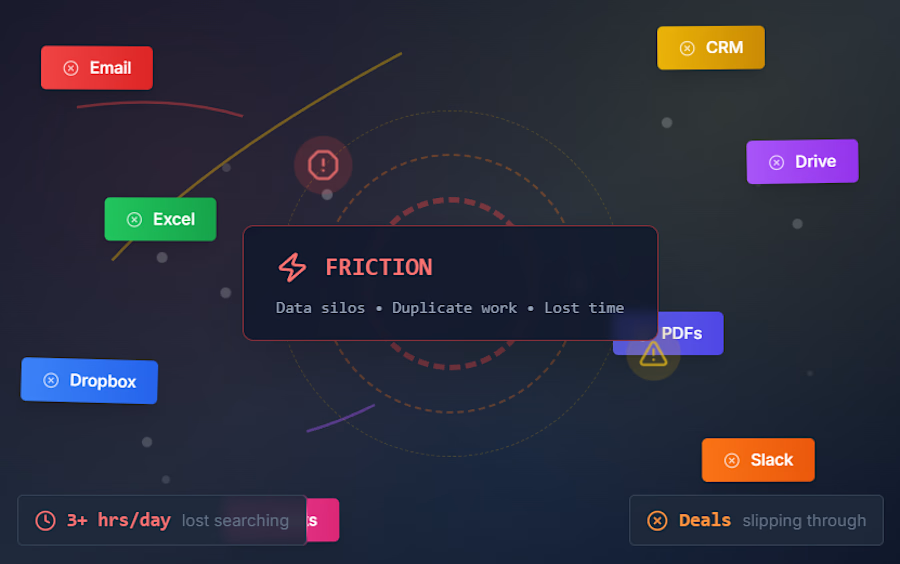
Most CRE teams don’t have a data problem.
They have a systems problem.
Deals, investor data, underwriting models, documents, emails, CRM notes, tasks — everything lives in different tools that barely talk to each other. The result is manual glue work, context switching, and a lot of “tribal knowledge”.
That’s actually why I started building CZ·One — not as another dashboard, but as an operating layer that connects deal data, workflows, documents, and decision logic in one place.
Curious how others here see it:
In CRE (or adjacent ops-heavy industries), what’s the biggest thing still done manually that shouldn’t be?
The network for creativity
Join 1.25M professional creatives like you
Connect with clients, get discovered, and run your business 100% commission-free
Creatives on Contra have earned over $150M and we are just getting started





Related posts


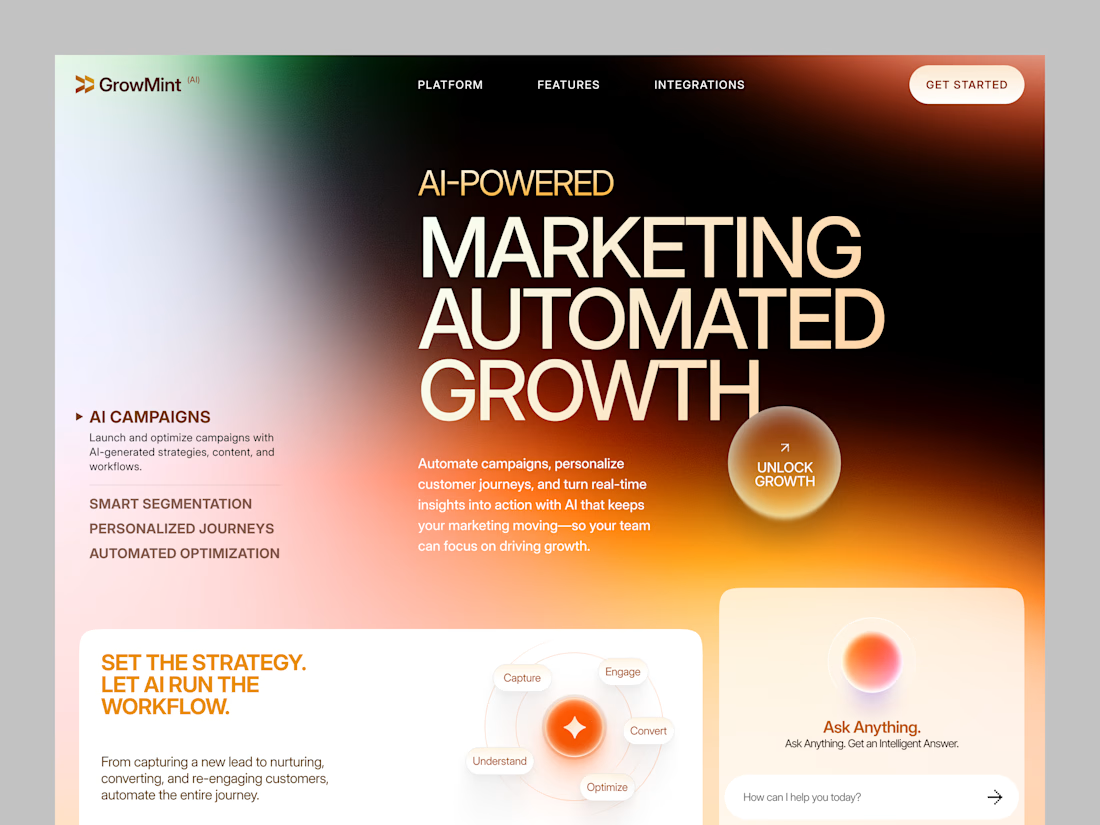
GrowMint AI - AI Marketing Automation Website
An AI marketing automation experience designed around the needs of marketing teams, growth marketers, and digital businesses.
The interface brings campaign management, customer journeys, analytics, and AI-driven optimization into a focused SaaS product experience, making complex automation easier to understand and navigate.

Nice design


Building a 4-role real-time SaaS taught me one uncomfortable lesson: the hard part was never the code.
I've been building RestaurantOS — one platform connecting Owner, Kitchen, Waiter, and Cashier in a single live workflow (Table → Order → Kitchen → Serve → Billing → Reports).
The tech stack was the easy part. The real challenge: keeping 4 different roles in sync in real time without any of them stepping on each other's data — a waiter updating a table while the kitchen marks an item ready while the cashier is mid-billing.
That forced decisions most tutorials never cover:
⚡ How much state should live client-side vs. source-of-truth server-side
⚡ What "real-time" actually needs to mean per role (a kitchen screen needs sub-second updates, a report dashboard doesn't)
⚡ Designing failure states — what happens when the waiter's app loses connection mid-order
Currently redesigning the UI/UX layer too (motion, better visual hierarchy) while keeping this real-time core intact.
If you've built multi-role or real-time systems — curious what broke first for you. And if you're a founder who needs something like this built, my DMs are open.


the role based flow is easy to follow. what part was hardest to keep real time?


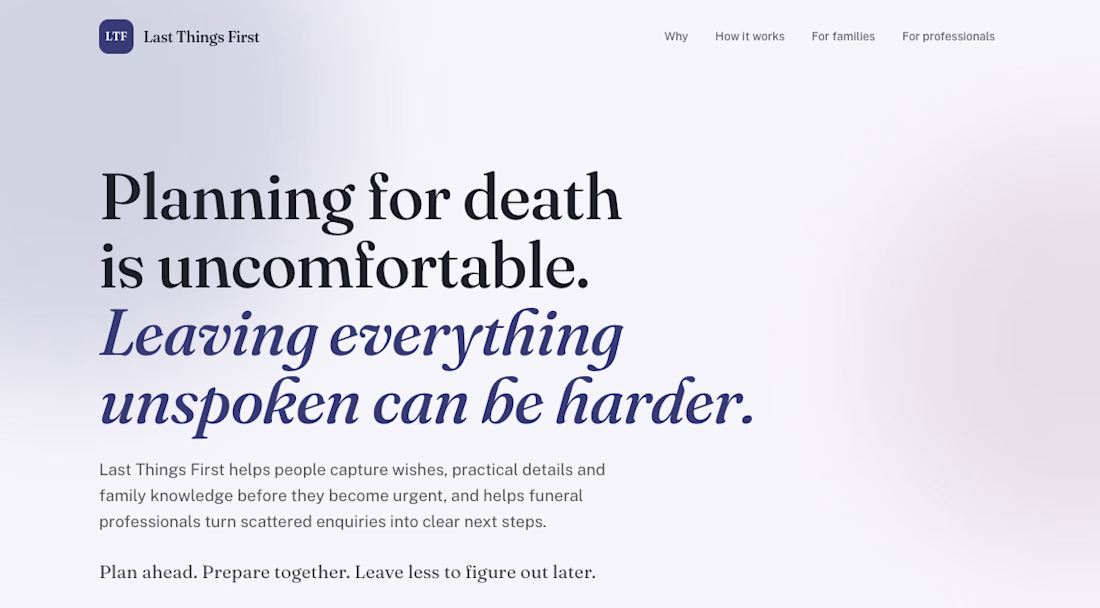
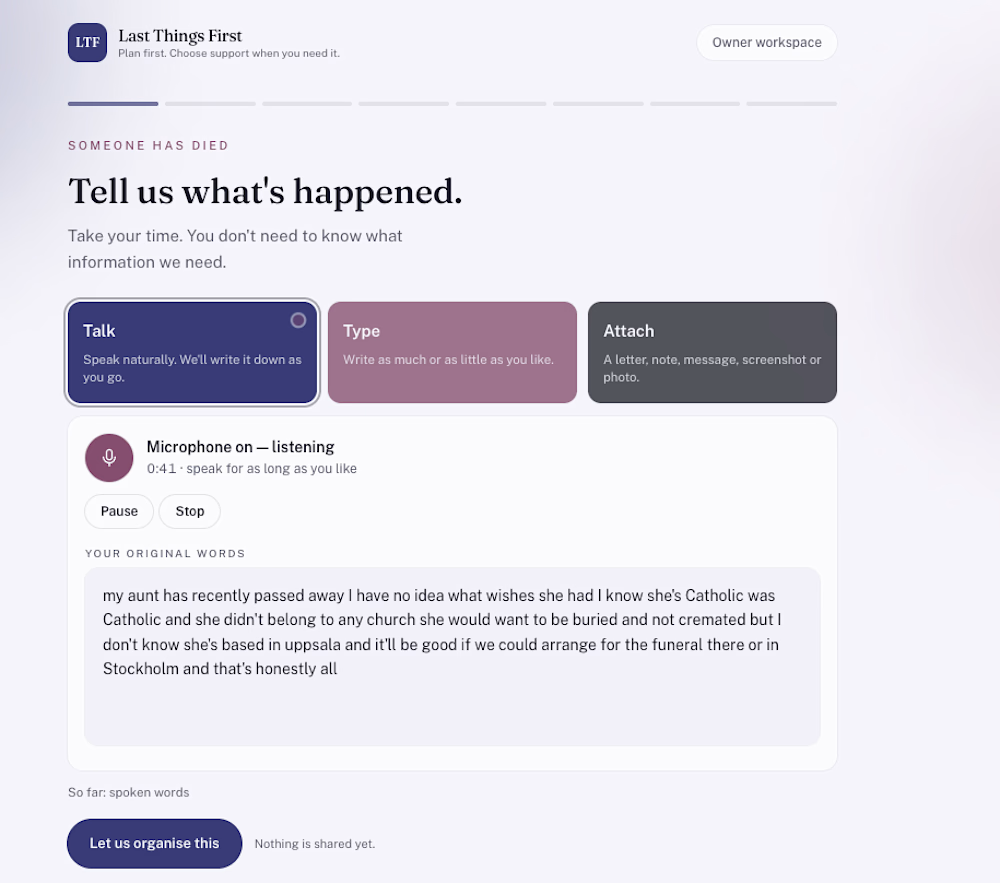
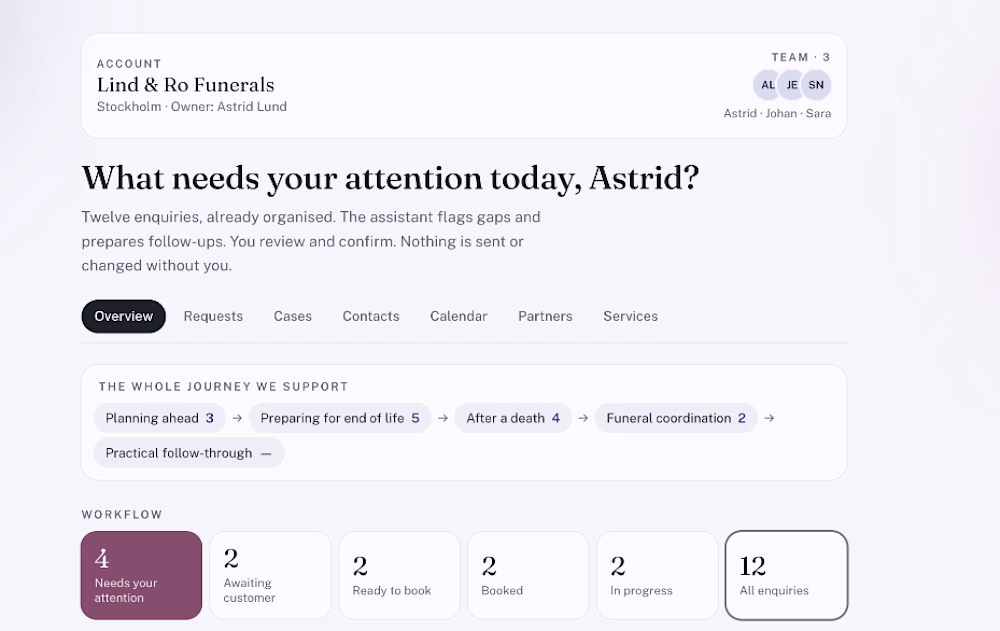
Last Things First is a booking and workflow platform for funeral providers, designed to make the journey from first enquiry to confirmed consultation clearer for both the family and the business.
The real bottleneck is not always the booking itself. It is everything that has to happen before the appointment can actually be useful. Last Things First reduces that work before the consultation begins.
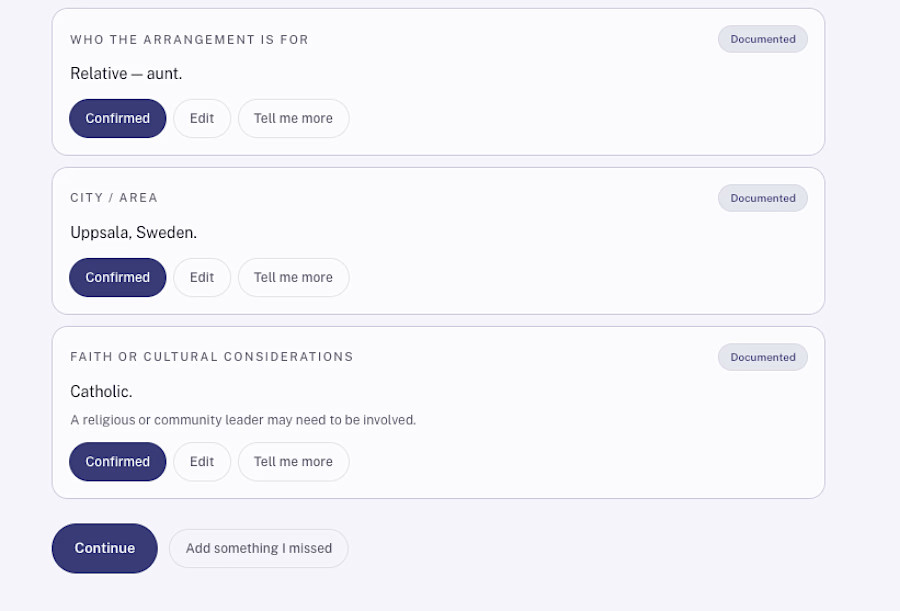
Customers can talk, type or attach what they know. AI organises the information, identifies gaps and preserves uncertainty instead of turning assumptions into facts. Once something has been confirmed, the family should not have to repeat it.
What I did not get to show in the walkthrough is that the prototype also extends into planning ahead, family collaboration, case management, partner coordination, repatriation, practical after-death tasks, services and AI-assisted follow-up with human review before anything is sent.
The bigger idea is that this information does not have to start with a death. Someone can begin planning earlier, update it over time and leave the people around them with less to figure out later.
AI organises. People decide.
LINK TO FULL VIDEO WALKTHROUGH: https://share.detail.co/c7262da21cddb5b651ae2d7bc5c2936c