The network for creativity
Join 1.25M professional creatives like you
Connect with clients, get discovered, and run your business 100% commission-free
Creatives on Contra have earned over $150M and we are just getting started
Back to feedPost

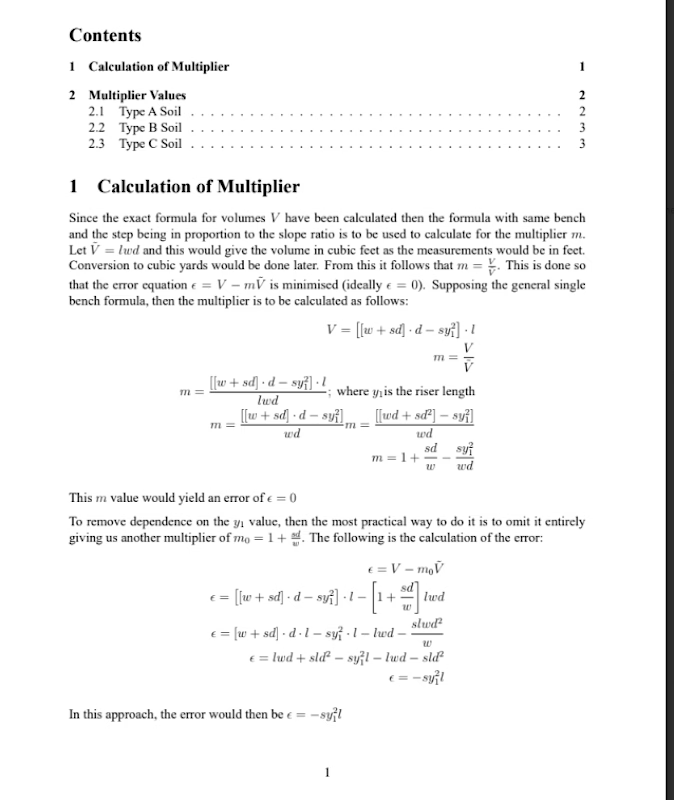
Performed mathematical calculations for construction estimation software.
The network for creativity
Join 1.25M professional creatives like you
Connect with clients, get discovered, and run your business 100% commission-free
Creatives on Contra have earned over $150M and we are just getting started





Related posts

Title: SmartAI Factory: AI-Powered Industrial Machine Monitoring
Factory downtime is expensive, and most teams only find out about a problem after a machine fails. For my Final Year Project, I built SmartAI Factory, a platform that lets teams see problems coming and fix them early.
It streams live temperature, vibration, and current data from industrial machines to a real-time dashboard that flags anomalies as they happen. An Autoformer-based AI model then forecasts machine behavior 15, 30, 45, and 60 minutes ahead, each with a confidence score.
What I built:
Live monitoring dashboard with anomaly-marked charts and status badges
AI forecasting across 4 time horizons
Secure device onboarding: unknown machines stay Pending until an admin approves them
Per-machine alert thresholds with in-app and email notifications
Role-based access, user management, and light/dark mode
My role: Full-stack development, UI/UX design, and AI model integration, end to end.
Result: A complete predictive-maintenance workflow, from onboarding a device to getting an alert, in one clean interface.
Open to freelance work on AI dashboards, IoT monitoring systems, and full-stack web apps. Let's talk.


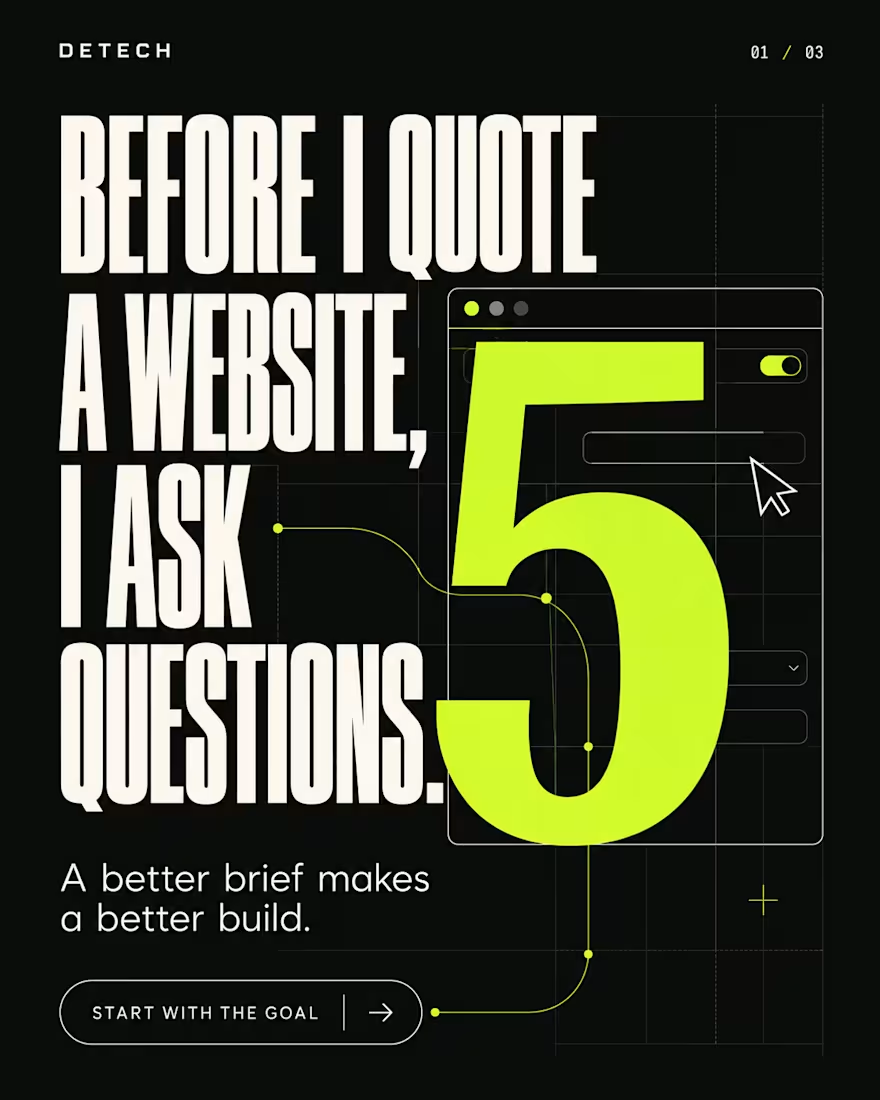
“How much does a website cost?”
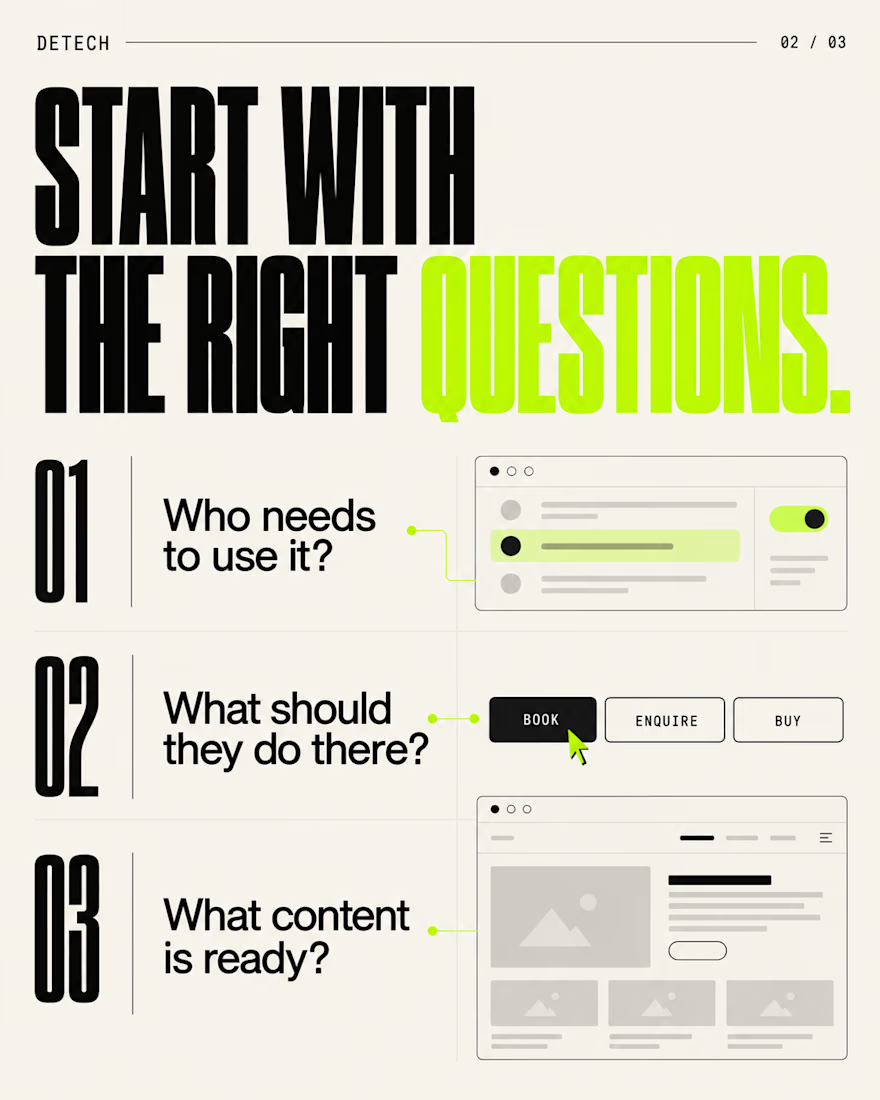
Before I give a quote, I ask five questions:
Who needs to use the website?
What should they do there: book, enquire, buy, or learn about the business?
What content and images are ready?
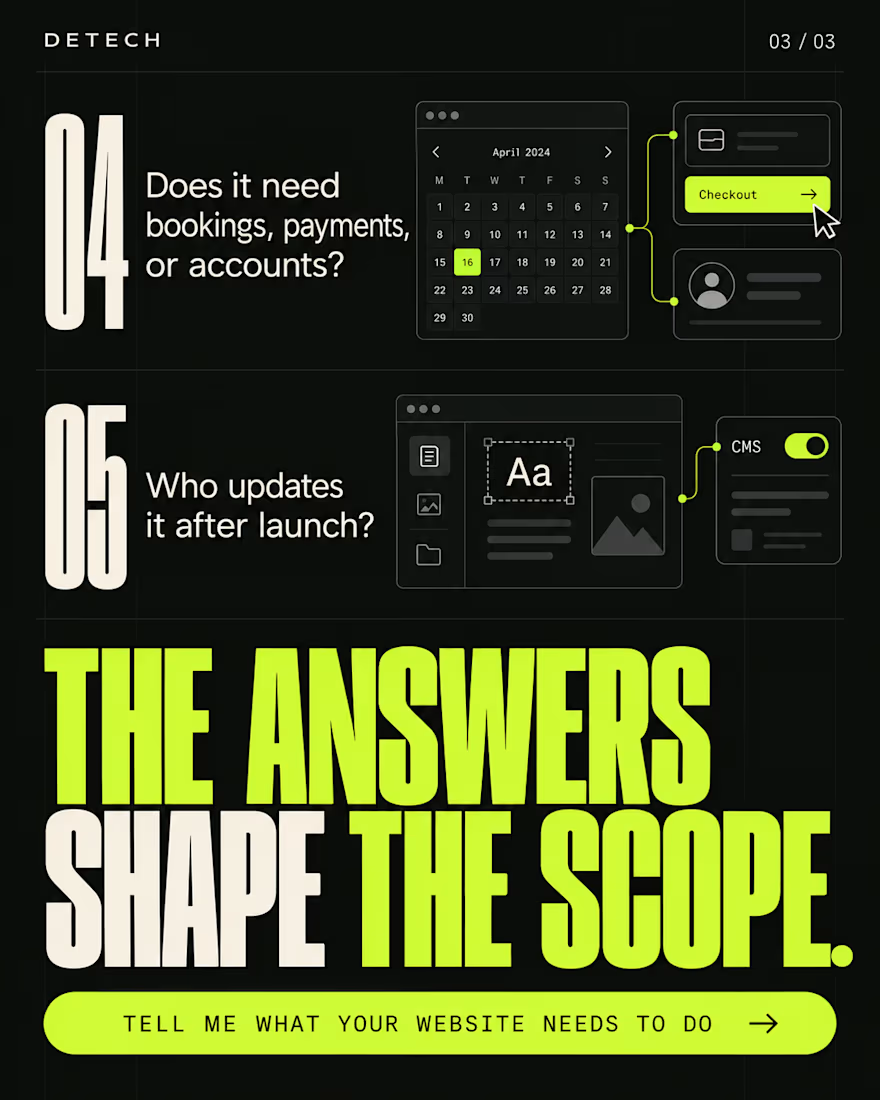
Does it need bookings, payments, customer accounts, or other functionality?
Who will update it after launch?
The answers shape the pages, the build, the timeline, and the price. A site that introduces your services has a different scope from one that manages bookings.
If you’re planning a website, tell me what your business does and the one action you want visitors to take. I’ll share what I’d prioritize first.
#WebDesign #BusinessWebsite #WebsiteStrategy

This summer my dad wanted a new fence and deck. The quotes took over a week. Looking at it from the carpenter's side, the hard part isn't the calendar, it's driving out to measure before you can even write a quote.
So I built Karlsson Staket & Altan, a made-up solo carpenter in Kristianstad, Sweden, where the customer does the measuring by drawing.
For the customer:
Search the address and draw the fence or deck on a satellite map – length and area are measured automatically
Shape it in 3D: height, material, railings, stairs
Instant price with the Swedish ROT tax deduction
Pick a build week with live availability and get a booking reference and a calendar file
For the owner
A 12-week season board with drag-and-drop and capacity per week – full weeks disappear for customers
Material lists calculated from the drawing, merged into one order with stock deducted and rounded to full packs, plus a shopping list
One page per project: quote, booking confirmation, work order and draft invoice
Adjust the customer's 3D model and send it back with a comment to their personal project page
How I built it
I planned first: chat mode in Lovable, a starter prompt written with Claude Opus 5.5, a hand-drawn design sketch, and a plan I approved before any code. Version 1 stopped at a price, nobody actually got booked, so I kept iterating in small steps. The hardest part was the 3D model. It was bout 10–15 hours in Lovable, using Lovable Cloud and Google Maps, with prices recalculated on the server.
Try the guided tour: https://karlsson.lovable.app/demo (demo mode, nothing is saved)
Note: the project photos are AI-genera::ted, and the before/after numbers on the site are estimates, not measured data.

love the 3D part - something I rely heavily on in this commercial app/system I built https://fairdinkummechdecks.com.au
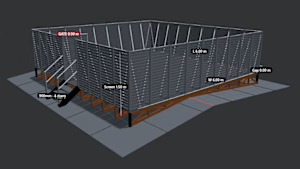
fairdinkummechdecks.com.au
Fair Dinkum Mechdecks — Design to Delivery
Draw standard or custom HVAC platforms, place equipment, check loads and clash zones, price the job and share an interactive 3D client review from one Australian-built estimator.