The network for creativity
Join 1.25M professional creatives like you
Connect with clients, get discovered, and run your business 100% commission-free
Creatives on Contra have earned over $150M and we are just getting started
Back to feedPost

Every day a new AI emerges to "kill" someone. In this post, I'll show you how I use it to make my daily life as a web designer easier.
This was a landing page project for a marketing agency that works in the restaurant niche.
I received the entire visual identity ready and well-documented from the client, which was a huge help.
First, I sent Claude all the landing page references the client had and asked him to do a SWOT analysis of each one.
Then I sent the copy I had created with the client to GPT to refine and use on the page.
I sent Claude the client's brand manual and asked him to organize everything and save it for our use.
I asked Claude to "generate a landing page using only the strengths from the analysis we did and applying the client's visual identity."
Claude generated the layout for the first post, and this helped me in the process of creating the landing page in Framer. This "opened my mind," and I was able to use this layout as a reference for creating.
This is how I've been using AI in my daily work; to facilitate and scale processes.
See how the landing page turned out at the link: www.umamiassessoria.com.br


Nice!


I visited the website via the link, and I can say it is a fantastic work.

The way you used SWOT analysis to bridge the gap between references and the final Framer build is genius!
As a Social Media Manager, I’m curious did you find that refining the copy with GPT first helped Claude better understand the 'hierarchy' of the visual layout? It...

I REALLY LIKE COLORS 🔥
The network for creativity
Join 1.25M professional creatives like you
Connect with clients, get discovered, and run your business 100% commission-free
Creatives on Contra have earned over $150M and we are just getting started



Related posts

Landing page design for Matterlane, an AI tool for law firms.
Matterlane’s agents turn client files into a brief, draft using the firm’s precedents, and flag what needs a lawyer’s decision. The whole matter moves forward in one place.


Great work! I appreciate how clearly the design prioritizes usability without compromising its visual appeal.

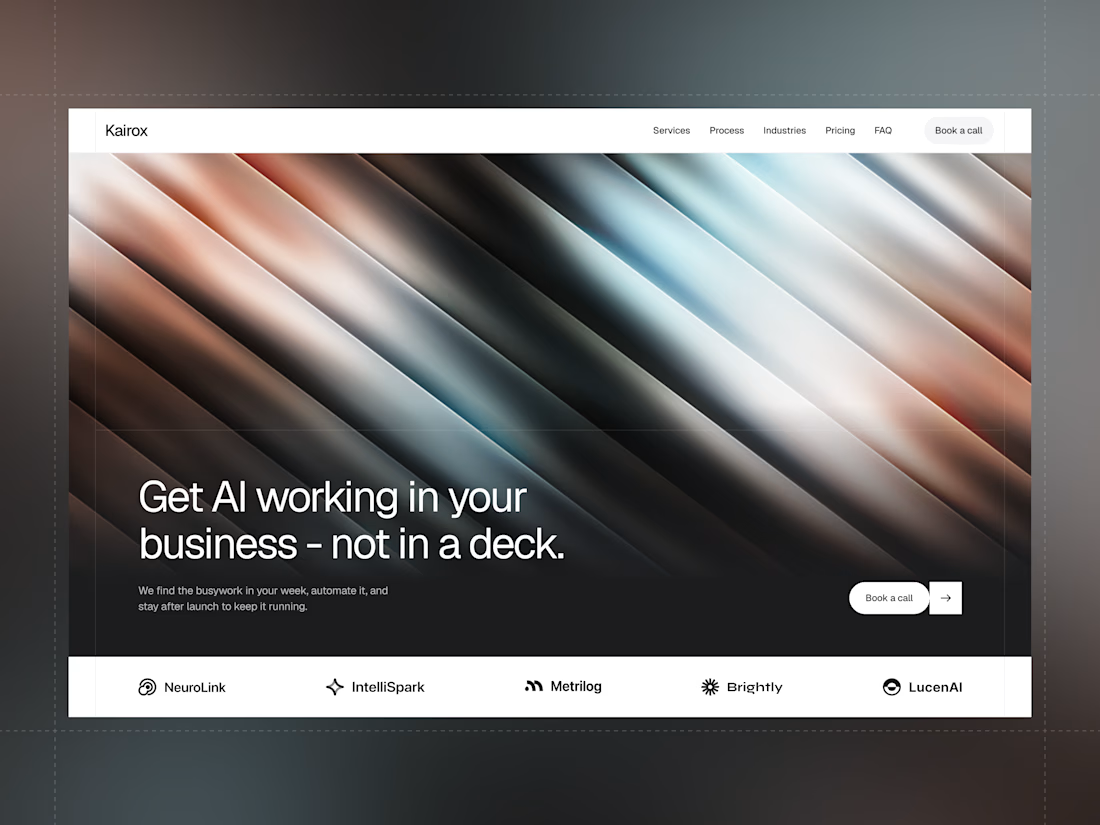
Goooood morning ☀️ I just dropped my new free Framer template: Kairox, for AI automation agencies.
Check it out: https://kairoxx.framer.website
Congrats on releasing Kairox!

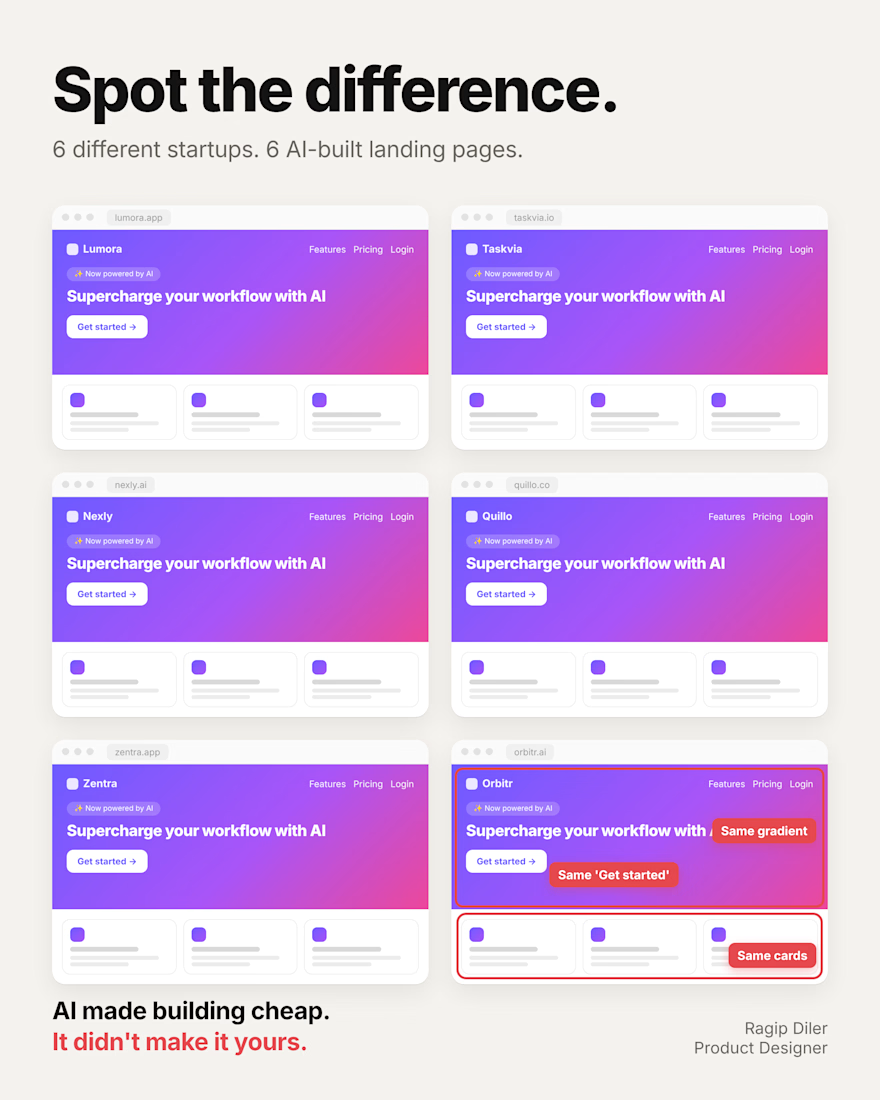
You can spot a vibe-coded app in 2 seconds.
Same gradient. Same cards. Same “Get started.”
It’s not a coincidence.
When you ask AI to “make it look modern,” it gives you the average of every landing page it has seen. The average is safe. It’s also invisible.
And it costs you more than looks:
→ Visitors can’t tell you apart from the 10 other tools they opened today.
→ “Supercharge your workflow” says nothing about the problem you solve.
→ A generic page feels like a weekend project. People don’t trust weekend projects with their data or their card.
The good news: you don’t need to rebuild anything. Three changes go a long way:
Write the headline yourself. Name your user and their problem in plain words.
Pick one thing only your product does and make it the first thing people see.
Replace the three feature cards with a real screen of your product.
AI can build the page in minutes. Deciding what it should say is still your job.
What’s the first thing you’d change on your own landing page?