The network for creativity
Join 1.25M professional creatives like you
Connect with clients, get discovered, and run your business 100% commission-free
Creatives on Contra have earned over $150M and we are just getting started
Back to feedPost

A polished explanation can still misdiagnose a learner’s writing.
Illustrative QA case — synthetic content, not a real learner or vendor result.
The learner writes: “I look forward to hearing from you.”
An AI reviewer calls “hearing” a grammar error and changes it to “hear”. The original phrase is appropriate. The suggested correction introduces a problem.
A plausible overall score would not make that feedback acceptable. I would log a false correction, preserve the exact input and output, and add a retest that checks whether the system leaves the valid phrase intact.
Three useful checks for a writing-feedback team:
• Does each claimed error have evidence in the learner’s actual response?
• Does the proposed revision preserve the intended meaning and valid language?
• After a prompt change, do previously accepted cases still pass?
Keep feedback accuracy separate from score agreement. A system can pass one check and fail the other.
For EdTech teams preparing a writing-feature release, I offer a bounded review of rubric alignment, scoring consistency and feedback defects, with an evidence workbook and acceptance tests.
Tell me what your scorer measures, which rubric it follows and what concerns you want to investigate.
contra.com
AI Writing Assessment and Feedback Quality Audit by Suliman Abdelaty
Read more about AI Writing Assessment and Feedback Quality Audit by Suliman Abdelaty on Contra.
The network for creativity
Join 1.25M professional creatives like you
Connect with clients, get discovered, and run your business 100% commission-free
Creatives on Contra have earned over $150M and we are just getting started






Related posts

CRAG — Self-Correcting Research Assistant
Overview
A research-assistant project exploring how AI applications can retrieve information and improve the quality of their responses through a self-correction workflow.
Project focus
Python-based AI application development.
Retrieval and research workflow design.
Improving answer reliability through evaluation and correction.
Technologies: Python, AI, retrieval-augmented generation.


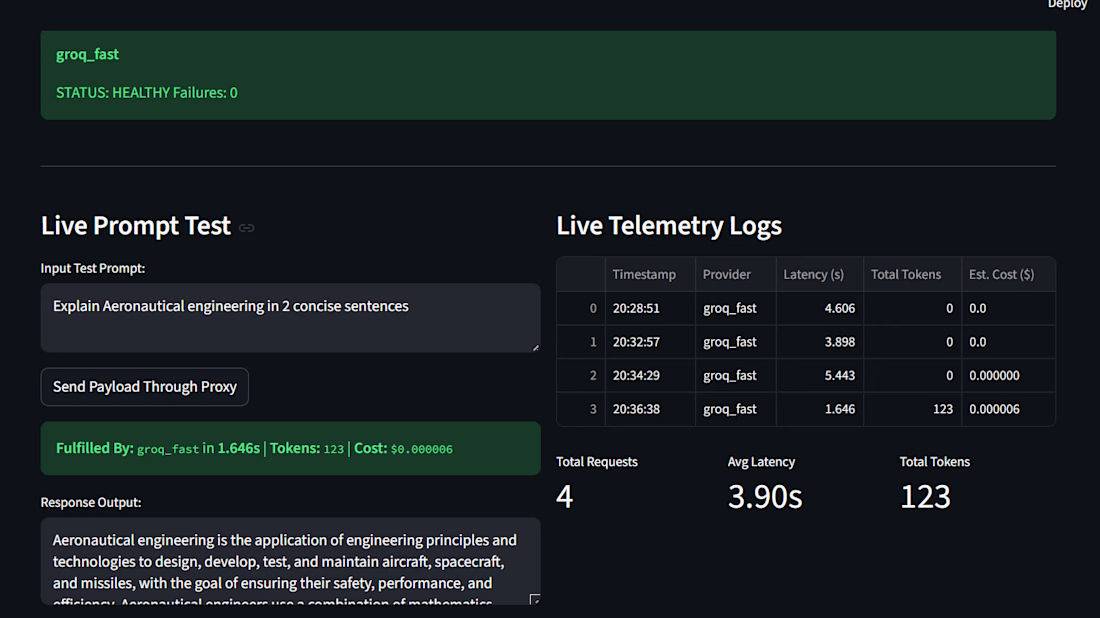

Self correction is where RAG gets useful. How do you judge a retrieved chunk as bad enough to trigger a new search?

A chatbot can sound helpful and still create a messy order.
When a customer changes a quantity or delivery detail, the real test is whether the system keeps the context, checks the information, and records the right request for the team.
In an 80-hour WhatsApp automation project, I built the conversation flow with structured AI output, input validation, order recording, logging, and error handling. The client rated the completed work 5.0.
That’s the part I care about most: turning a chat into a record people can actually work from, with errors visible when something goes wrong.
If your team takes orders through WhatsApp, what happens between the AI’s reply and the order record?


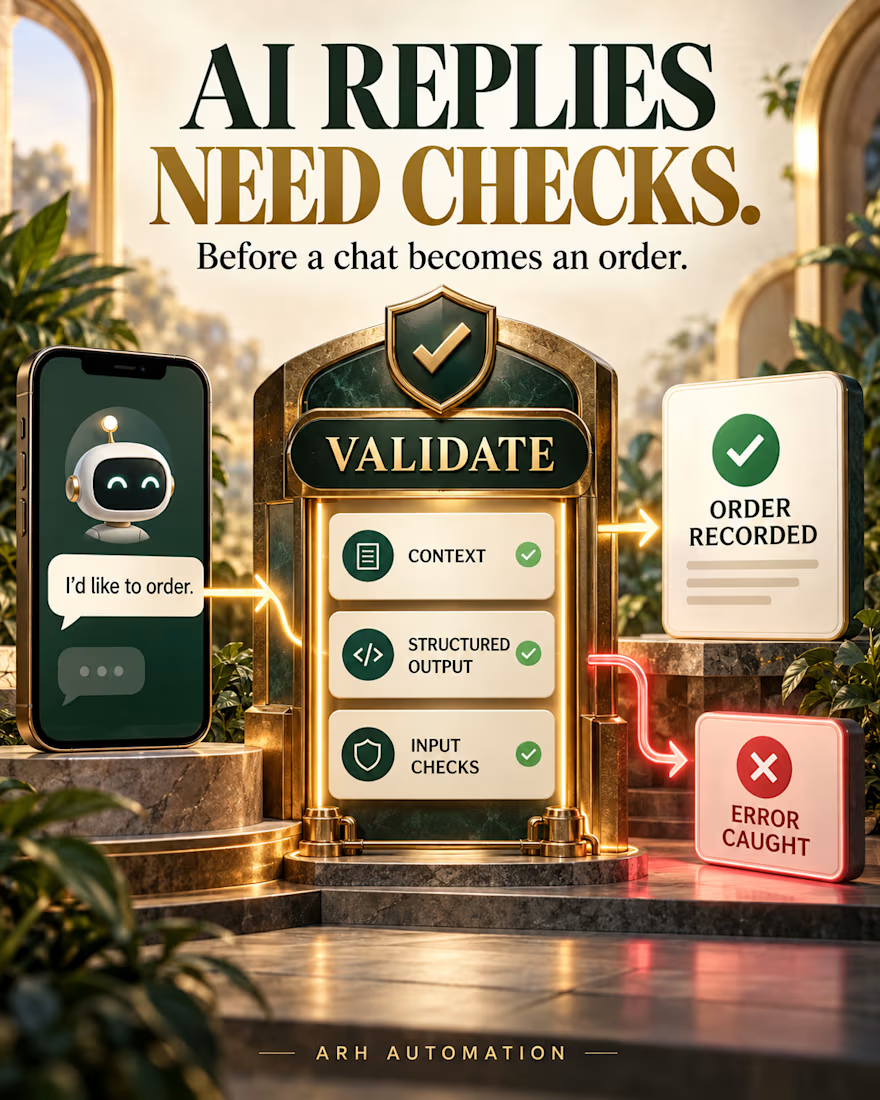
Order changes mid chat are where most WhatsApp bots fall apart. Did you confirm the changed details back to the customer before recording, or validate silently?

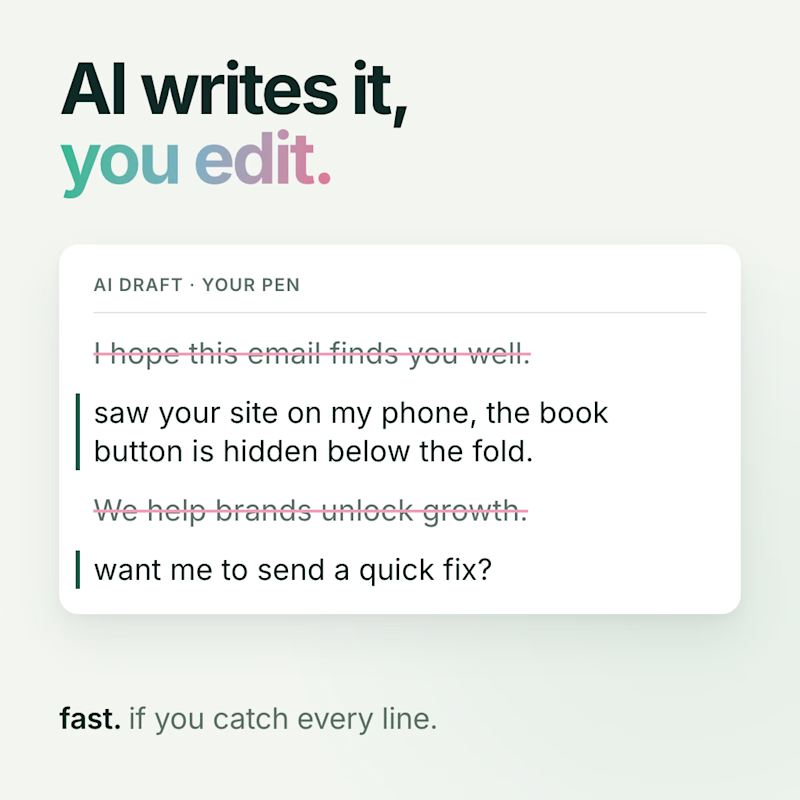
would you let ai write your cold emails?
0 voted
0%
1 voted
100%
1 vote
Closed