The network for creativity
Join 1.25M professional creatives like you
Connect with clients, get discovered, and run your business 100% commission-free
Creatives on Contra have earned over $150M and we are just getting started
Back to feedPost

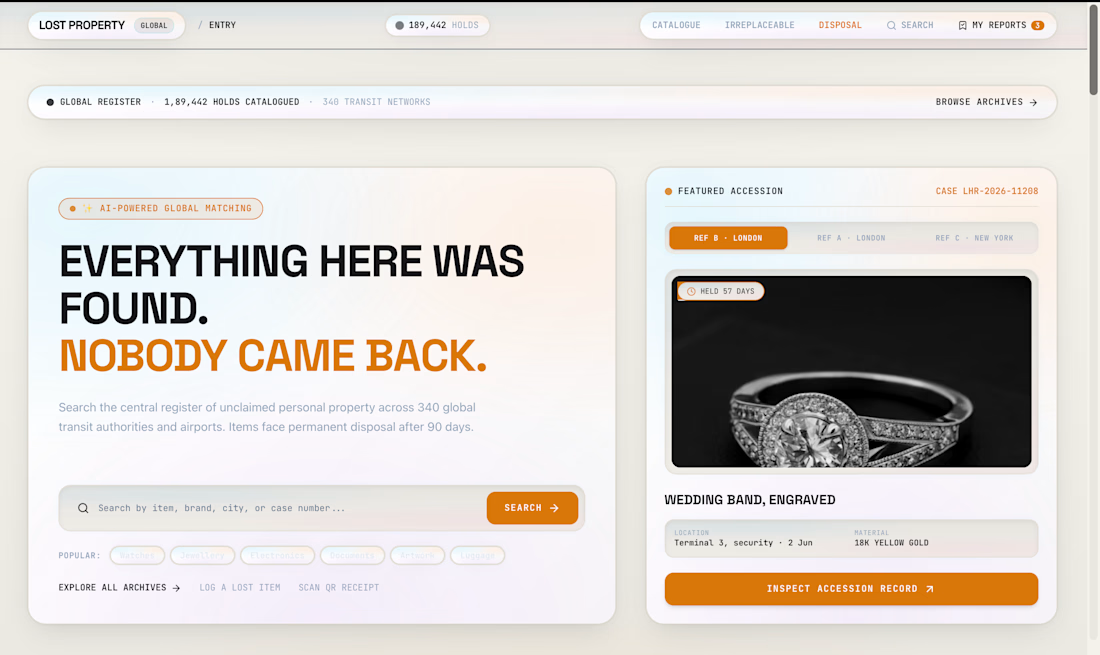
LOST PROPERTY — a public register of the world's unclaimed things
Every airport, train line, hotel and park has a room full of things nobody came back for.
They're held about ninety days, then auctioned or destroyed.
Almost none of it is searchable. You have to know which office to phone, call in hours, and hope.
So the thing gets written off — not because it wasn't worth anything, but because there was no way to look.
LOST PROPERTY is the catalogue that should already exist.
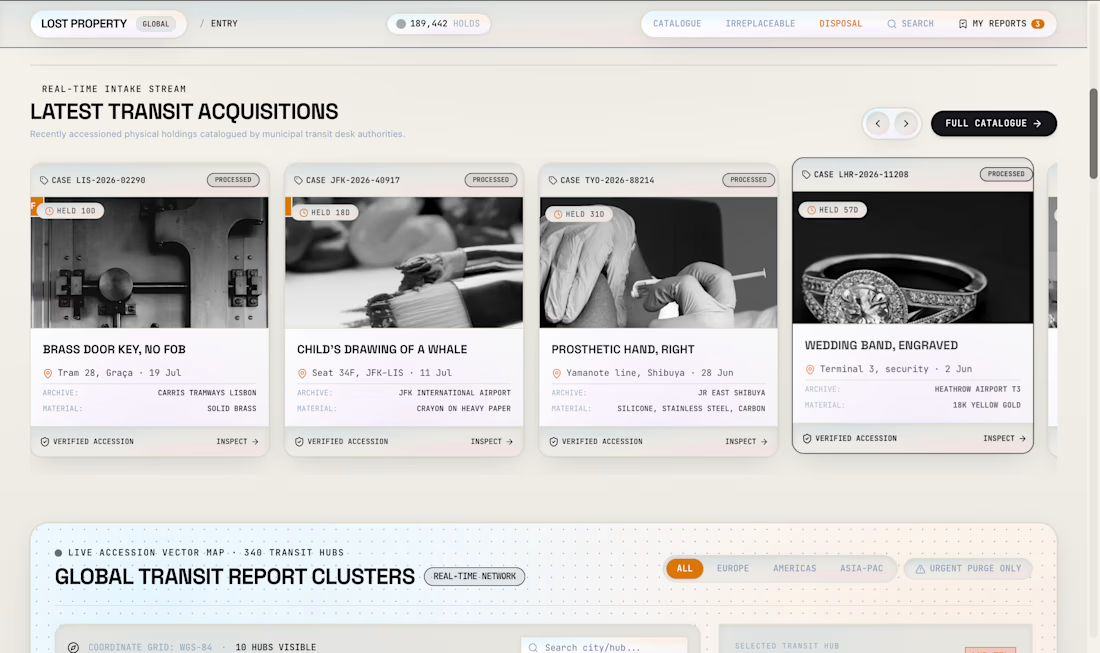
Every object held across fourteen archives, photographed and public. Browse it, search by description, claim something you recognise, or register a loss and the archive checks it against every new object each night.
I built it because the worth of these things rarely matches their price.
A single glove is worth nothing and irreplaceable at once. A wedding band is a few grams of gold and the only one with that engraving inside.
A child's drawing of a whale has no resale value — which is exactly why a resale-driven system throws it away.
So objects with no substitute are held twice as long.
And to claim anything, you describe it first. Anyone can see a photograph. Only the owner knows what's written inside.
The screen I care about most is the disposal schedule. What's about to be destroyed, with a countdown, and no button on it.
It offers you nothing. That felt like the honest thing to build.
How I built it
Run entirely from Claude Code with the Flowstep MCP server connected.
I planned first — twenty screens with real copy, a full design system, every transition named.
Then I found update-design-guidelines in the tool list. Registering the system once meant every screen inherited it, so each prompt carried only layout and content.
That's why twenty screens were affordable, and why they hold together instead of drifting.
The loop: generate one screen, pull the render back with get-screen-image, fix with edit-design rather than regenerate.
Photography followed the same discipline. One locked master reference, every object generated against it, four variants each — chosen on whether the ground stayed flat and whether it survived at grid size.
Built with: Flowstep, Claude Code, Flowstep MCP.
Flowstep Project Link: Lost Property
Website: Lost Property

The network for creativity
Join 1.25M professional creatives like you
Connect with clients, get discovered, and run your business 100% commission-free
Creatives on Contra have earned over $150M and we are just getting started
Trending
retrofuturism
Share your favorite designs from the past exploring the distant future. Or your own take on the aesthetic 🚀
halftone
Dots. Texture. Grain. Let's see your designs using the halftone technique.

Midjourney
Creatives are showing off what they're making with Midjourney.
colorgrade
Video editors sound off: How do you enhance the mood of your video in color grading?





Related posts

Two days
Two projects
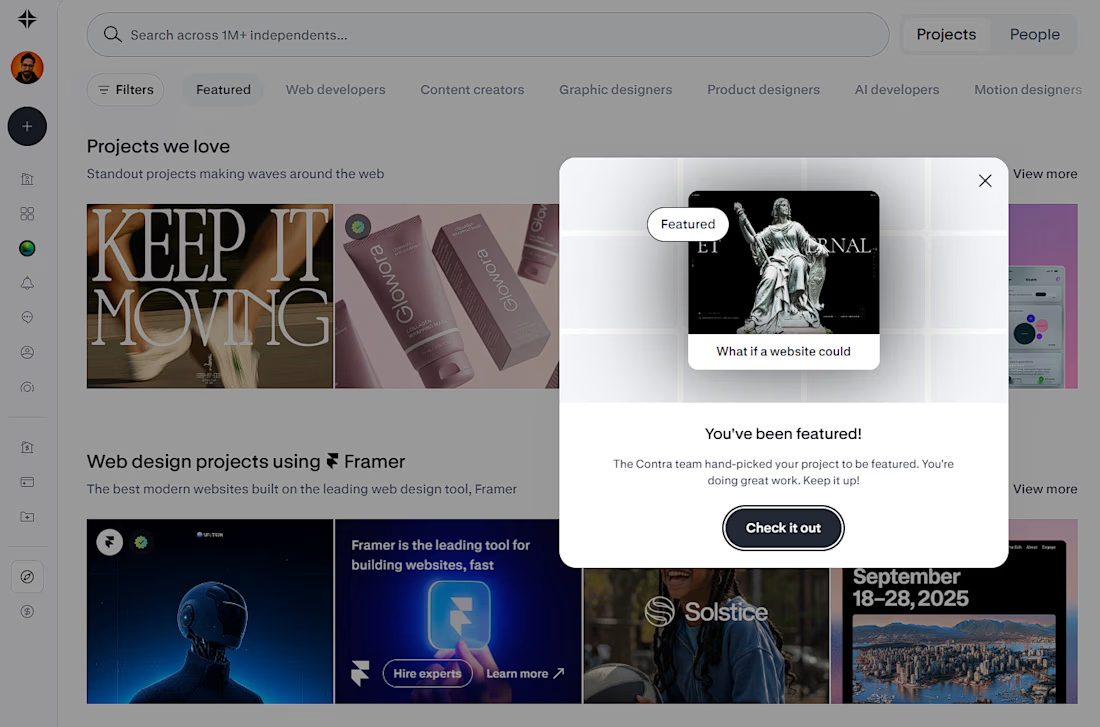
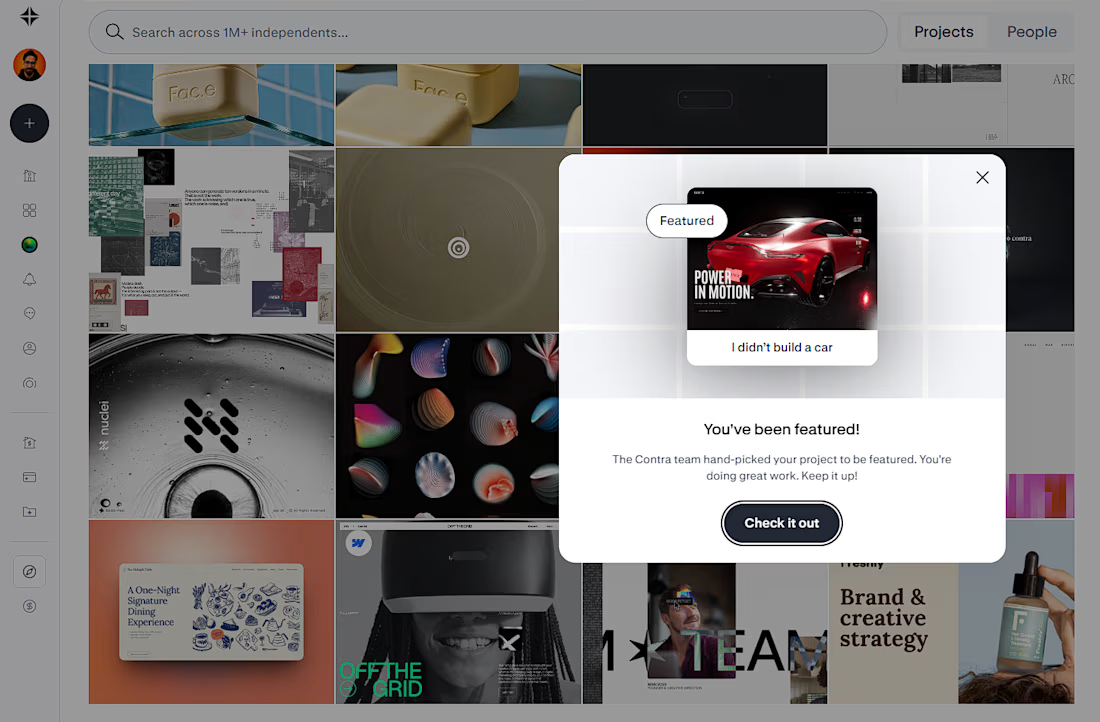
Two times featured on Contra. 😍
Seeing my work featured is exciting but what matters more to me is why it got there.
I’m focused on building digital experiences that don’t just look good, but make people stop, explore, and remember.
And getting two projects featured within 48 hours feels like a pretty good sign that I’m heading in the right direction.More projects coming soon.
A big thank you to the Contra team for the recognition and for creating a platform where independent creatives can showcase work they’re proud of.




Thats incredible! Wish you more features.


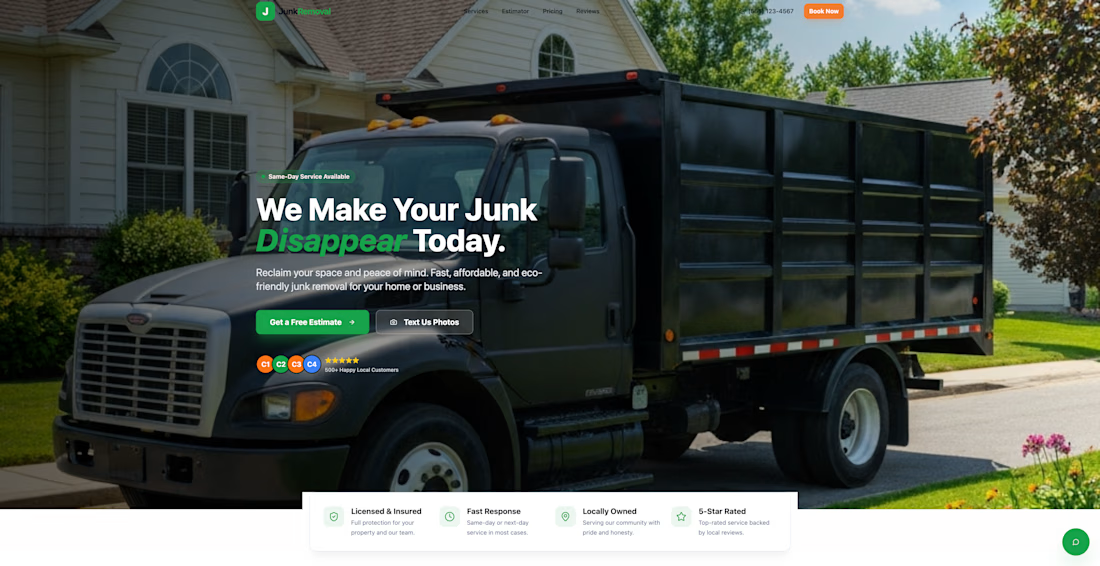
This is actually a website's first fold for a junk removal company
👍 . I created it using Go High Level.




I wanted to see if Midjourney V8.2 could pull off a very specific crossover.
BoJack Horseman and Rick Sanchez, sitting at a bar.
But with one little switch: Rick’s portal gun in BoJack’s hand, and the Bojack's poison in Rick’s.
I wanted to visualize the scene where the liquids that began their slip into darkness exchanged between them.
So I gave V8.2 the characters, a few references, and increasingly specific action items.
Watching it work its way toward the image in my head was honestly the fun part, specially when it got one thing right and somehow broke three others. 😂
What impossible crossover would you try?

This looks absolutely fabulous! And what a niche and personal concept to build on🫶🏻