The network for creativity
Join 1.25M professional creatives like you
Connect with clients, get discovered, and run your business 100% commission-free
Creatives on Contra have earned over $150M and we are just getting started
Back to feedPost

41% of projects were approved below viable contribution thresholds because sales incentives rewarded topline growth — not margin quality.
Revenue increased every year. Yet EBITDA weakened year after year.
Traditional reporting often hides these fractures until scale itself becomes the problem.
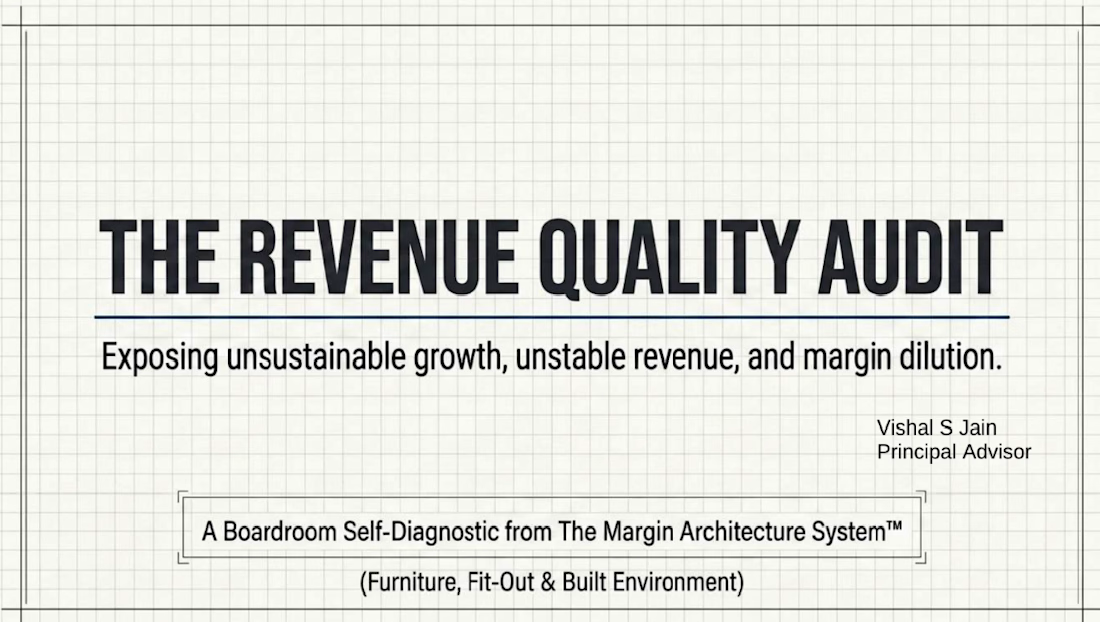
The Revenue Quality Audit
-Self-Assessment for B2B Built Environment Businesses
https://drive.google.com/file/d/1A5kEwbuhdN-6dUNbY5TvjW7CdnCtW2NH/view
A boardroom self-diagnostic within: The Margin Architecture System™
Designed to expose:
-unstable revenue
-hidden EBITDA erosion
-execution fragility
-governance weakness
-structural scaling risks
Because a business does not scale simply because revenue grows.
This assessment is not an accounting exercise.
It is a structural profitability diagnostic.
The network for creativity
Join 1.25M professional creatives like you
Connect with clients, get discovered, and run your business 100% commission-free
Creatives on Contra have earned over $150M and we are just getting started





Related posts

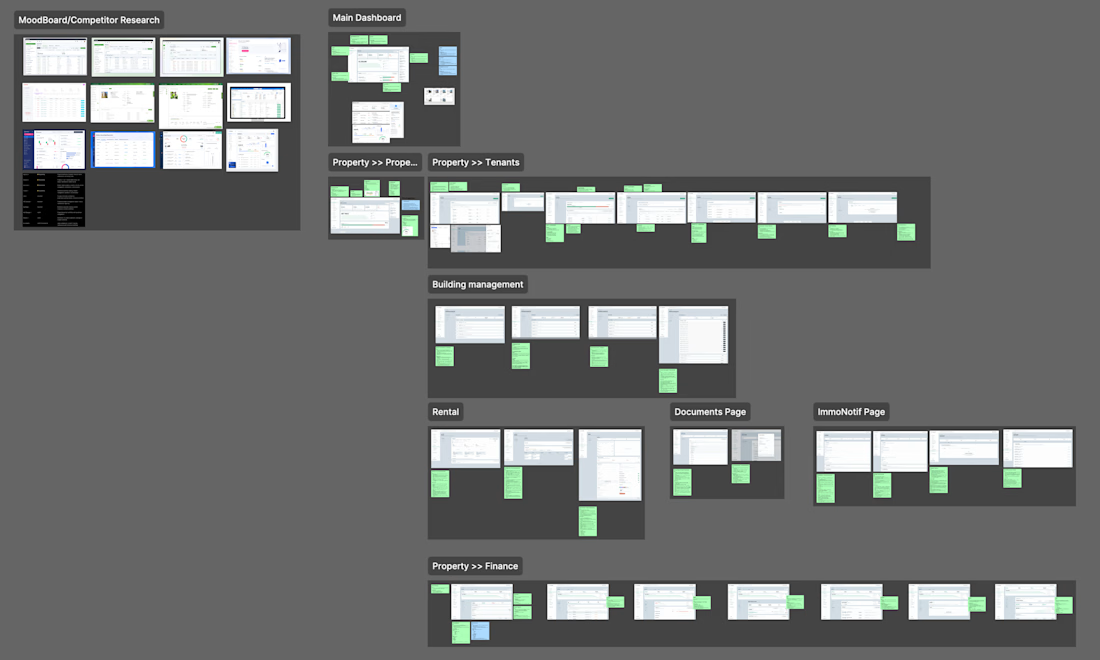
UX Audit: ImmoAdmin (Property Management SaaS)
-> UX issues mapped with improvement notes
-> Competitor research & mood board
-> 8 modules audited screen by screen
-> Wireframes with cleaner flows


Really thoughtful approach to simplifying complex SaaS flows. 👏

Episode 2: Your Numbers Should Make a Sense!
Your sales are growing, but are you actually making more money?
Sales up 40%. Profit down 7%. 😬
Same business, six months later:
Sales: 100K → 140K a month
Profit: 15K → 14K a month
Profit margin: 15% → 10%
More revenue doesn't mean more money. Three things quietly eat the difference:
1️⃣ Margins shrink. Discounts, supplier price rises and delivery costs.
2️⃣ Overheads outgrow sales. Hires, rent and software.
3️⃣ Cash gets stuck. Unpaid invoices and unsold stock.
Track these 3 numbers every month:
✅ Gross margin %
✅ Net profit margin %
✅ Profit vs cash in the bank
Growth without margin is just a busier business.


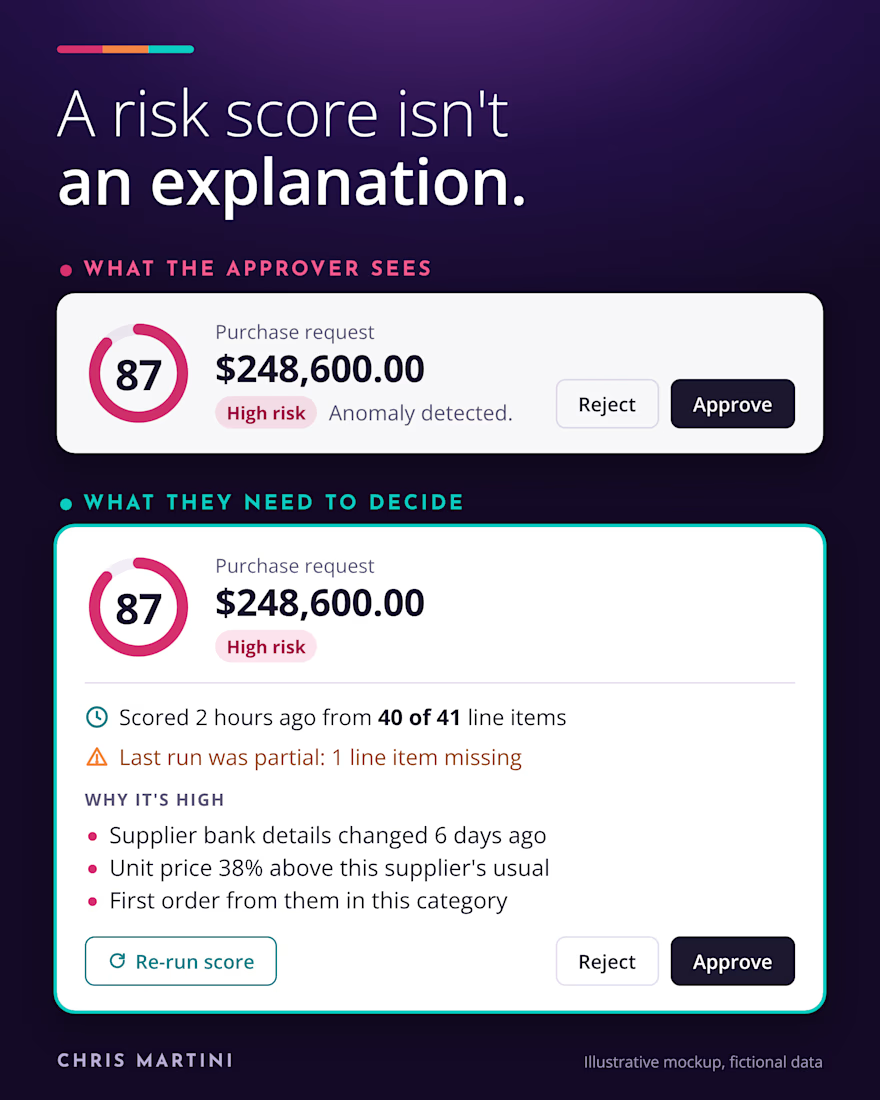
An AI risk metric/score of 87 tells an approver almost nothing.
It says the model is worried. It doesn't say why, how fresh the number is, or whether the data behind it was complete. If the pipeline failed 17 times this month, the 87 looks exactly the same.
That's a design problem, not a model problem. The fix is mostly disclosure: say where the number came from, show the signals behind it, put partial runs on the decision screen, and let the approver re-run it before signing off on $248,600.
The person clicking Approve owns the decision. The interface owes them the evidence.

Chris, this is spot on. On a payments agent we built, approvers only started trusting the flags once each one showed the reason behind it and when it last ran. A bare number just made people click Approve faster, which is the opposite of what you want.