The network for creativity
Join 1.25M professional creatives like you
Connect with clients, get discovered, and run your business 100% commission-free
Creatives on Contra have earned over $150M and we are just getting started
Back to feedPost

An AI risk metric/score of 87 tells an approver almost nothing.
It says the model is worried. It doesn't say why, how fresh the number is, or whether the data behind it was complete. If the pipeline failed 17 times this month, the 87 looks exactly the same.
That's a design problem, not a model problem. The fix is mostly disclosure: say where the number came from, show the signals behind it, put partial runs on the decision screen, and let the approver re-run it before signing off on $248,600.
The person clicking Approve owns the decision. The interface owes them the evidence.
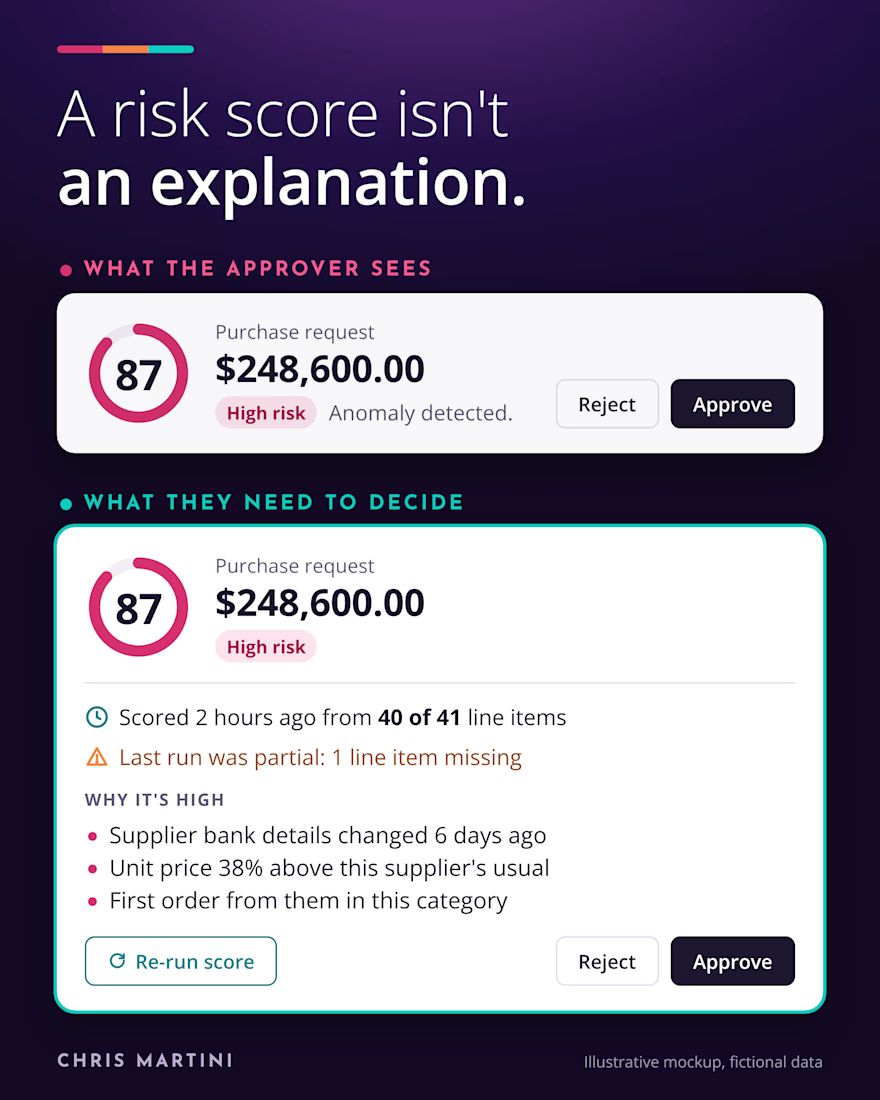

This is the core issue with single-number risk scores: a stale or pipeline-broken 87 looks identical to a healthy 87. Approvers need provenance, not just anxiety.

Chris, this is spot on. On a payments agent we built, approvers only started trusting the flags once each one showed the reason behind it and when it last ran. A bare number just made people click Approve faster, which is the opposite of what you want.
The network for creativity
Join 1.25M professional creatives like you
Connect with clients, get discovered, and run your business 100% commission-free
Creatives on Contra have earned over $150M and we are just getting started





Related posts

I’ve always liked products that solve a very specific problem instead of trying to do everything.
So for the Lovable Challenge, I picked a simple question that event-tent rental businesses hear all the time:
“Can I book a tent for my wedding?”
The problem is… a tent can’t really be booked until you know if the whole event will work.
How many guests?
How much usable space?
Tables? Dance floor? Bar? Stage?
Will the layout actually fit?
Can the crew set it up and pick it up on time?
Usually, the owner has to figure all of that out manually through messages, calls and calendar checking.
So I built TentFit — a spatial booking experience for event tent rentals.
The customer starts by planning the event, then maps out the space and everything they want inside it. TentFit checks the layout and highlights conflicts.
And instead of just saying “doesn’t fit,” it helps solve the problem:
Switch the tent. Move the layout. Remove an element.
Once everything works, TentFit checks the logistics and turns the final setup into a booking.
The goal was simple:
Make the customer’s decision easier, and make the owner’s job easier.
The flow is basically:
FIT → FEASIBLE → BOOKED
I had a lot of fun building the spatial planning part of this one.
X/Twitter post: https://x.com/brjanov/status/2105630218492731501?s=20
Built with @Lovable
#LovableChallenge #ProductDesign #UXDesign #NoCode #SaaS #WebDesign





Nice stuff!

IPO Coins landing page web design 3D animation website icons


Great Design, R

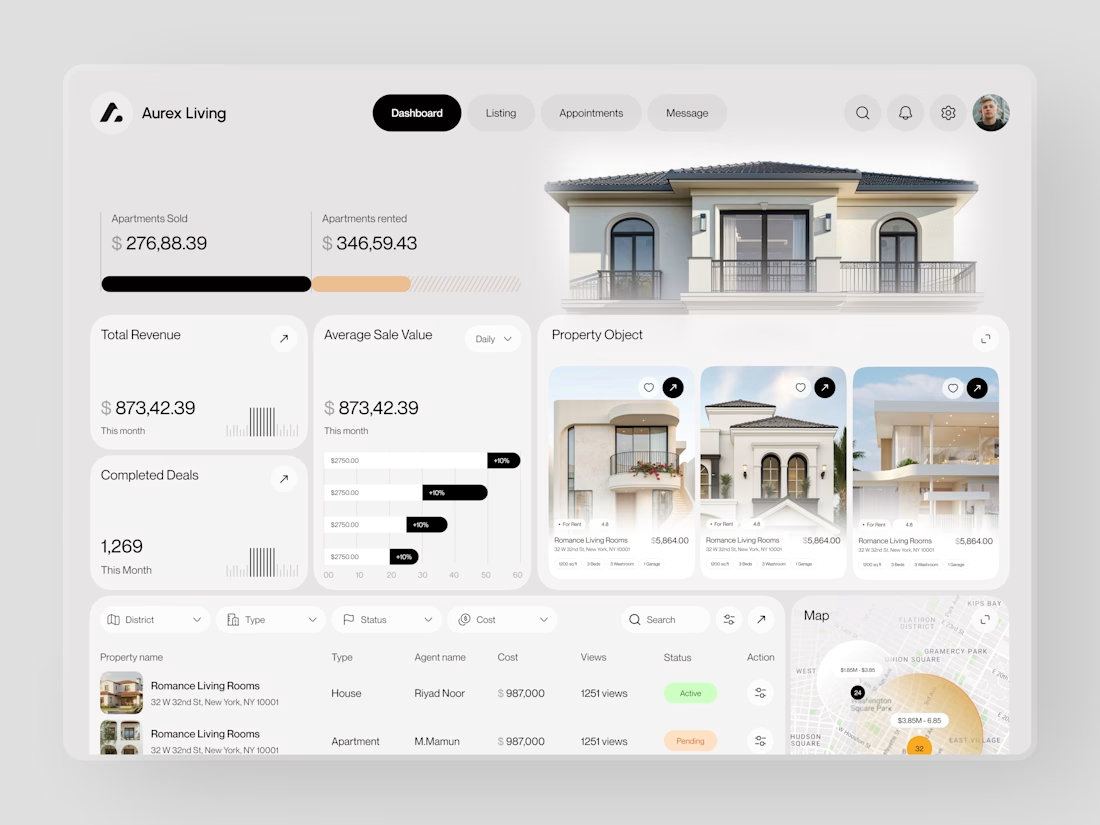
Real estate dashboards are usually built for data entry. Aurex Living was built for decision-making.
$873,42.39 total revenue. 1,269 completed deals this month. $276K sold, $346K rented. Property cards, agent tracking, map view, average sale value trending +10% - every number a real estate operator actually needs, on one clean white canvas.