The network for creativity
Join 1.25M professional creatives like you
Connect with clients, get discovered, and run your business 100% commission-free
Creatives on Contra have earned over $150M and we are just getting started
Back to feedPost

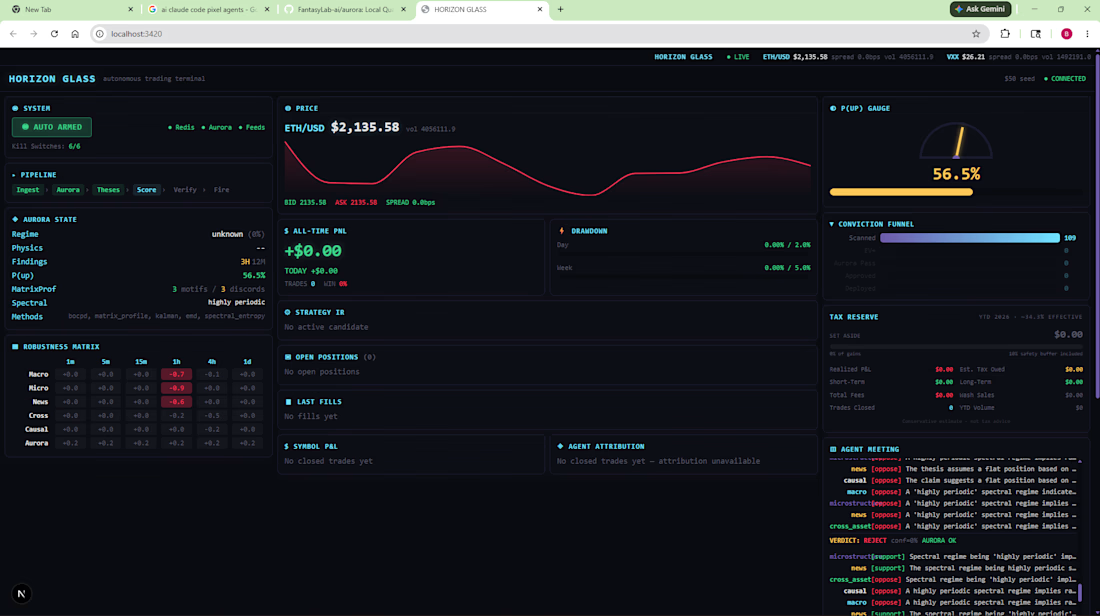
Horizon: Local AI Quantitative Investment Engine (Powered by Aurora).


The network for creativity
Join 1.25M professional creatives like you
Connect with clients, get discovered, and run your business 100% commission-free
Creatives on Contra have earned over $150M and we are just getting started





Related posts

This project focused on building and testing a practical AI security assessment lab for evaluating LLM defenses against prompt injection and jailbreak attacks.
I integrated Spikee by Reversec with a locally hosted cybersecurity model running through LM Studio, then added NVIDIA NeMo Guardrails to compare model behavior under three conditions: no guardrails, input filtering, and combined input/output protection.
The work included configuring the local model environment, building a custom FastAPI gateway, integrating NeMo Guardrails, troubleshooting model latency and timeout issues, creating a reusable Spikee target, and analyzing attack results using Spikee’s built-in reporting tools.
The project also explored different adversarial testing approaches, including prompt injection datasets, obfuscation, encoded attacks, Best-of-N testing, synthetic canary leakage tests, and structured benchmark comparisons.
The objective was to measure how much the guardrails reduced successful attacks while keeping the model, dataset, and testing conditions consistent.
Tools used: Spikee, NVIDIA NeMo Guardrails, LM Studio, Python, FastAPI, PowerShell, Parrot OS, local LLMs, JSONL datasets, and custom security testing scripts.
This project demonstrates a hands-on approach to LLM red teaming, AI safety testing, prompt-injection assessment, and guardrail validation for organizations deploying generative AI systems.


pretty cool tbh. testing the same attacks with different guardrail setups makes the results way more interesting.

The problem
AI tools changed how fast good work gets made, but hiring still looks like 2015: long specs, hourly guesses, and no clear line between a prompt and a finished product. Clients want the result. Skilled people who build with AI want to be paid for outcomes, not hours.
What we built
VibeBay is a two-sided marketplace for finished AI work. A client posts what they need in plain words. Matched talent reply with a price, a delivery date and real samples. The client picks one, pays into escrow, and the money is released when they approve the work, or 7 days after delivery.
Inside the product:
Explore and search across six kinds of work, with talent profiles, portfolios, levels and reviews
Task posting, proposals with milestones, and checkout with escrow through Stripe
Real-time messaging between clients and talent
An AI assistant that helps clients describe the work and find the right person
Skill tests graded by AI, and profile import that turns an existing portfolio into a VibeBay profile
A full admin panel: approvals, moderation, support, orders and live campaign numbers
A pre-launch system with founding seats per country, referral codes and a countdown to opening day
How it's built
Next.js on Netlify, Supabase for the database, sign-in and file storage, Stripe for payments and escrow, Claude for the AI features, and Resend for email. Every page is checked automatically on each change at four screen sizes, from a small phone to a wide desktop, for accessibility and for broken buttons and links.
Where it is now
Founding seats are opening country by country, and the full marketplace opens on 31 October 2026.
Designed and built by Dreamec Studios.:


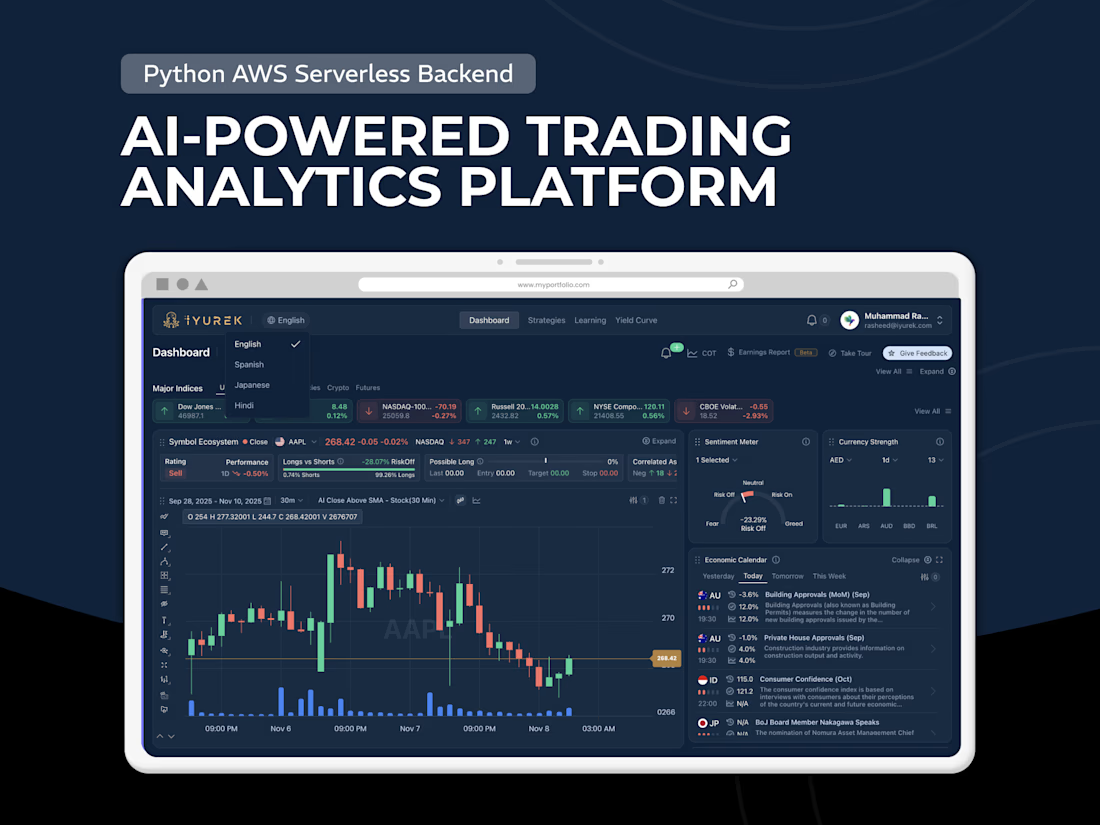
𝐀𝐈-𝐏𝐨𝐰𝐞𝐫𝐞𝐝 𝐓𝐫𝐚𝐝𝐢𝐧𝐠 𝐀𝐧𝐚𝐥𝐲𝐭𝐢𝐜𝐬 𝐏𝐥𝐚𝐭𝐟𝐨𝐫𝐦 | 𝐏𝐲𝐭𝐡𝐨𝐧, 𝐅𝐚𝐬𝐭𝐀𝐏𝐈 & 𝐋𝐋𝐌
𝐌𝐲 𝐫𝐨𝐥𝐞: Python Backend Engineer focused on AWS serverless architecture
𝐏𝐫𝐨𝐣𝐞𝐜𝐭 𝐝𝐞𝐬𝐜𝐫𝐢𝐩𝐭𝐢𝐨𝐧:
I built a serverless backend for an AI-driven trading platform handling real-time market data and analytics. I used AWS services like Lambda, API Gateway, RDS, and S3 to create a system that scales without manual infrastructure management. I designed pipelines for ingesting and processing live data to support trading signals and sentiment analysis. My focus was on keeping latency low, handling high concurrency, and ensuring the platform remained stable for global users.