The network for creativity
Join 1.25M professional creatives like you
Connect with clients, get discovered, and run your business 100% commission-free
Creatives on Contra have earned over $150M and we are just getting started
Back to feedPost

I don't open Webflow when I receive a Figma design.
Before building, I review the design system: typography, colors, spacing, components, and breakpoints. This defines how the site should be structured, not just how it looks.
Next, I assess feasibility: Webflow limitations, custom functionality, and CMS needs.
I look for gaps early—missing states, unclear mobile behavior, undocumented interactions, and expected CMS content volume. These are easier to solve before building.
My process starts with the design system: style guide, variables, and reusable components. CMS comes before templates. Desktop first, responsive after. Then interactions, custom work, QA, and optimization.
My design background helps. I’m not just building the design—I’m preserving the intent behind it.
The network for creativity
Join 1.25M professional creatives like you
Connect with clients, get discovered, and run your business 100% commission-free
Creatives on Contra have earned over $150M and we are just getting started








Related posts


This is the kind of work I want to do more of.
A strong visual direction and plenty of room to get creative with the development. Built in Webflow, animated with GSAP.
Here’s a look around.


Outstanding Work❤️

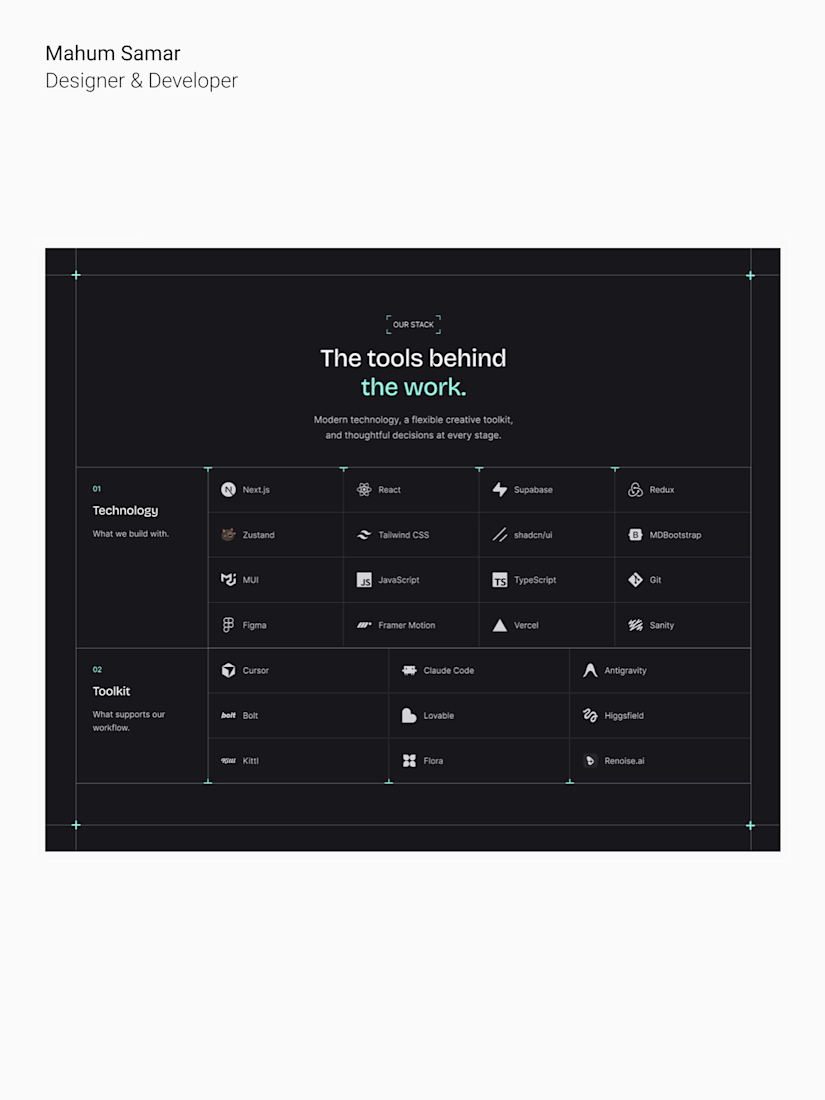
Designed a tech stack and toolkit section for a web design and development agency.
The goal was to present the technologies and creative tools behind the agency's work in a clean, structured, and easy-to-explore layout.
A clear visual hierarchy, grid-based layout, subtle dividers, and teal accents keep everything consistent with the overall brand identity.
For agencies and SaaS founders, a website should do more than look good. It should communicate expertise, build trust, and make it easy for potential clients to understand what you offer.
That's the thinking I bring to every design.
Designed in Figma.

A tech stack section is where most agency sites get cluttered, Mahum. The grid-based layout with those subtle dividers keeps every tool readable, and the teal accents tie it all back to the brand. Sharp work.

Introducing Nexus Analytics, a self-directed SaaS website concept bringing custom branding and CMS-driven Webflow development together.
I transformed Atelier Axiom, a cultural-platform project from Flux Academy’s “Scaling Up / Big Websites” class, into a marketing website for an e-commerce analytics brand.
My work included:
• Custom brand identity and logo design.
• SaaS-focused messaging and visual direction.
• Adapted CMS content for resources, events, and company information.
• Responsive layouts and product imagery.
• A transparent-to-solid navbar transition.
The goal was to go beyond changing colors and content to create a cohesive experience for a completely different audience and product story.
Built with Webflow, Figma, and Adobe Illustrator. Final testing and remaining section interactions are in progress.


The transparent-to-solid navbar transition is such a nice detail, Michael. Transforming Atelier Axiom beyond colors and content into a cohesive SaaS experience for a completely different audience is exactly what separates a rebrand from a real redesign.