The network for creativity
Join 1.25M professional creatives like you
Connect with clients, get discovered, and run your business 100% commission-free
Creatives on Contra have earned over $150M and we are just getting started
Back to feedPost

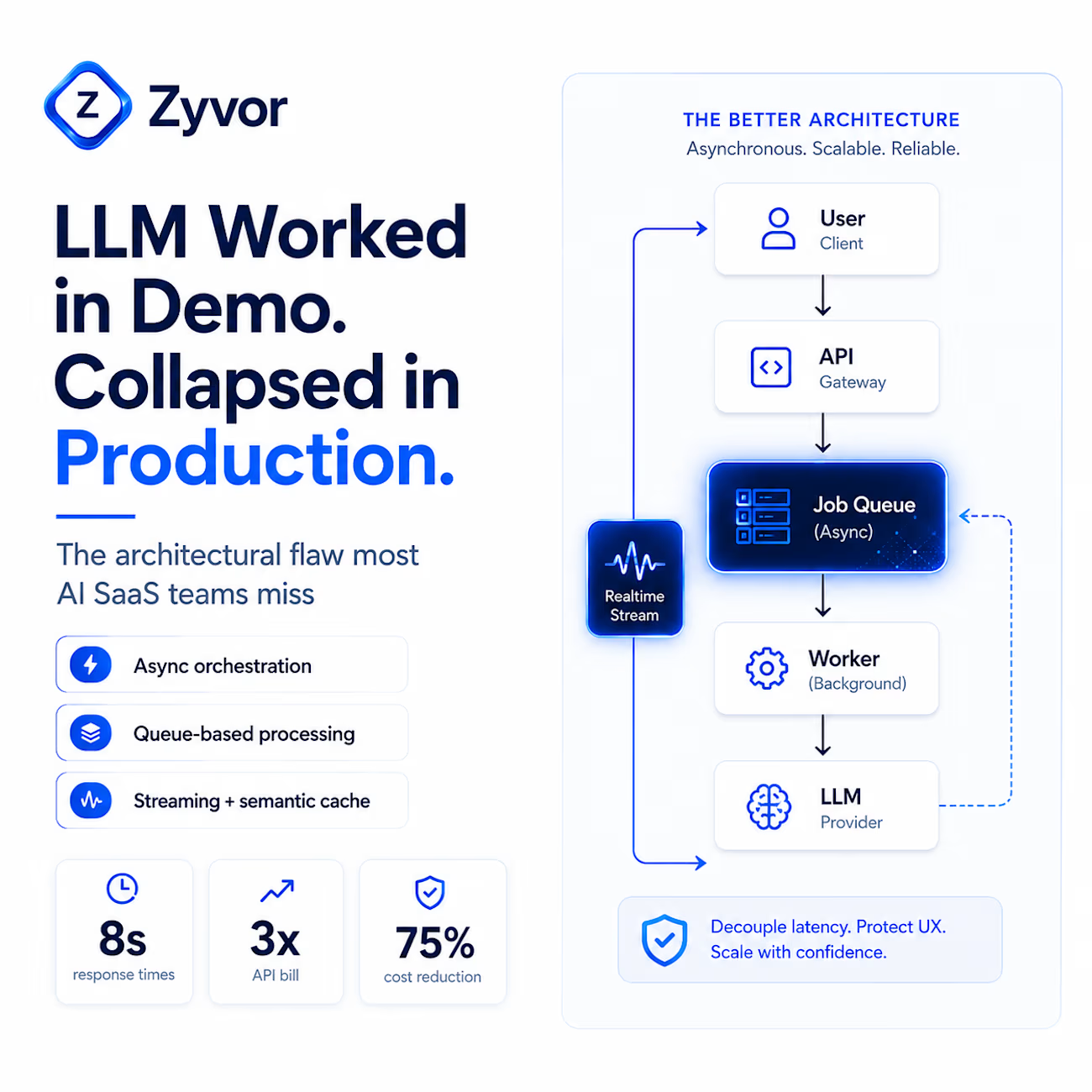
Every AI-powered SaaS I've audited this year had the same architectural flaw. The LLM worked in demo. It collapsed in production.
The pattern is always the same. A founder builds an AI feature, ships it, gets excited. Then real users show up. Response times hit 8 seconds. Timeouts start stacking. The OpenAI bill triples in a month. And the engineering team can't figure out why it worked perfectly in staging.
I can tell you why. It's the same mistake every time.
The problem: synchronous LLM calls in the request path.
User clicks a button. Your server sends a request to OpenAI. Your server waits. The user waits. The load balancer waits. At 10 concurrent users, it's fine. At 100, your server is holding open connections for 3-8 seconds each. At 1,000, you're dead.
This isn't a scaling problem. It's an architecture problem. And throwing more servers at it just makes it an expensive architecture problem.
The fix: async orchestration with queue-based processing and streaming responses.
The request flow should look like this:
User triggers the AI action
Your API accepts the request, drops it into a job queue, and returns immediately
A background worker picks up the job and calls the LLM
Results stream back to the client via WebSocket or SSE
The user sees tokens appearing in real time instead of staring at a spinner
The user experience actually gets better. Instead of waiting 6 seconds for a wall of text, they see the response building in real time. Same latency, completely different perception.
The caching layer most teams miss.
Before your worker even hits the LLM, check an embedding similarity cache. If someone asked a semantically similar question in the last 24 hours, serve the cached response. Most B2B SaaS products have surprisingly repetitive query patterns. Support tools, analytics summaries, report generation. The same questions come back with minor variations.
One client I worked with was spending $12K/month on OpenAI API calls. We added embedding similarity caching with a 0.92 cosine threshold. Their bill dropped to $3K. Same feature. Same user experience. 75% cost reduction.
The infrastructure pattern that holds up at scale:
Redis or BullMQ for the job queue
Dedicated worker processes (not your API server) for LLM calls
Supabase Realtime or a lightweight WebSocket layer for streaming responses back
pgvector or Pinecone for the embedding cache
Circuit breakers on every external AI call (OpenAI goes down more than people admit)
The monitoring most teams skip.
Track these 4 metrics from day one:
P95 LLM response time (not average, P95)
Cache hit ratio (target: 40%+ within the first month)
Queue depth (if it's growing, your workers can't keep up)
Cost per AI interaction (not monthly total, per interaction)
If you're not measuring these, you're flying blind. And you'll find out your architecture is broken when your users tell you, not when your monitoring does.
The bottom line.
AI architecture isn't software architecture with an API call bolted on. The failure modes are different. The cost dynamics are different. The scaling patterns are different. And the gap between "works in demo" and "works in production" is wider than any other feature category in SaaS.
I've architected AI systems for 80+ clients across SaaS, enterprise, and automation platforms. The problems are predictable. The fixes are proven. The only variable is whether you find them before or after your users do.
If your AI feature works in staging but your production users are complaining about speed, your OpenAI bill is climbing faster than your revenue, or you're about to launch an AI product and want the architecture right from day one, that's exactly what I do.
The network for creativity
Join 1.25M professional creatives like you
Connect with clients, get discovered, and run your business 100% commission-free
Creatives on Contra have earned over $150M and we are just getting started
Trending
retrofuturism
Share your favorite designs from the past exploring the distant future. Or your own take on the aesthetic 🚀
halftone
Dots. Texture. Grain. Let's see your designs using the halftone technique.

Midjourney
Creatives are showing off what they're making with Midjourney.
colorgrade
Video editors sound off: How do you enhance the mood of your video in color grading?


Related posts

Every SaaS promises efficiency.
The challenge is showing where the bottleneck actually is, and why your product is the solution.
That's what I enjoy creating most 🚀


the bottleneck framing is the whole thing tbh

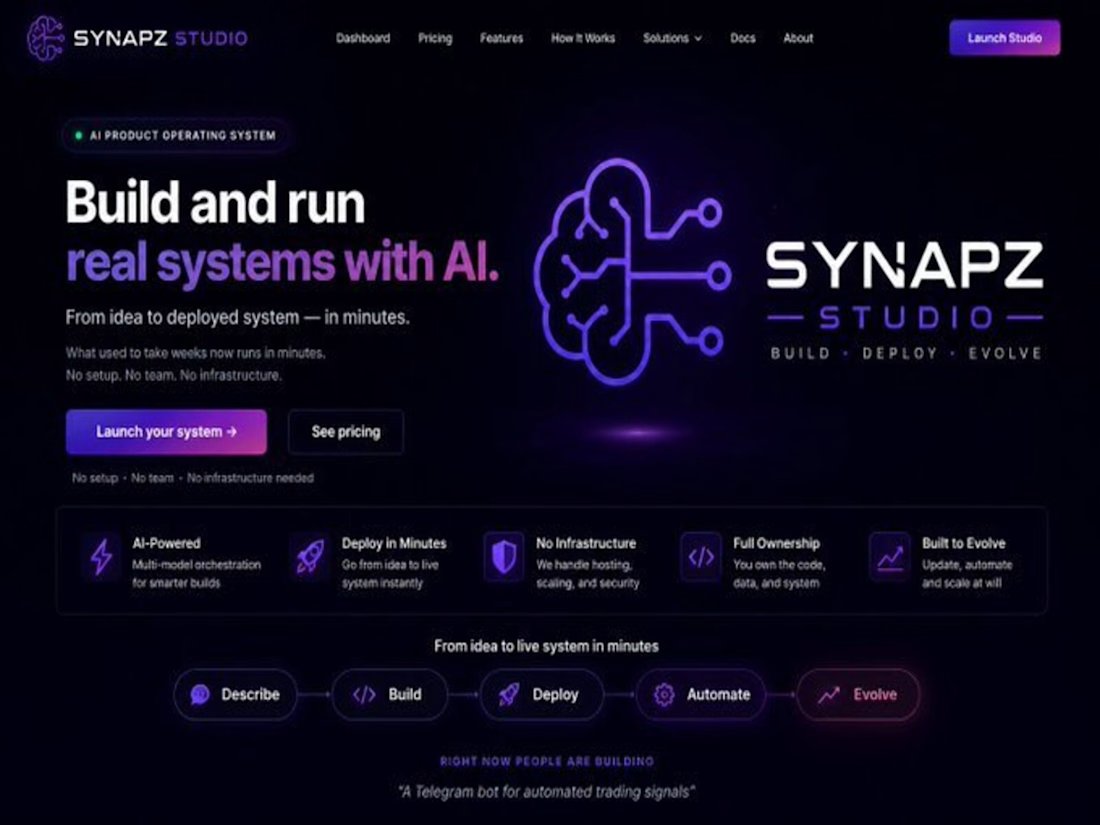
I designed and developed an AI-assisted application-building system that supports product definition, architecture, code generation, testing, review, deployment and controlled iteration.
Unlike unrestricted code generation, the platform uses structured workflows, specialist agents, human approvals, validation gates and deployment controls to create more accountable and reproducible software builds.



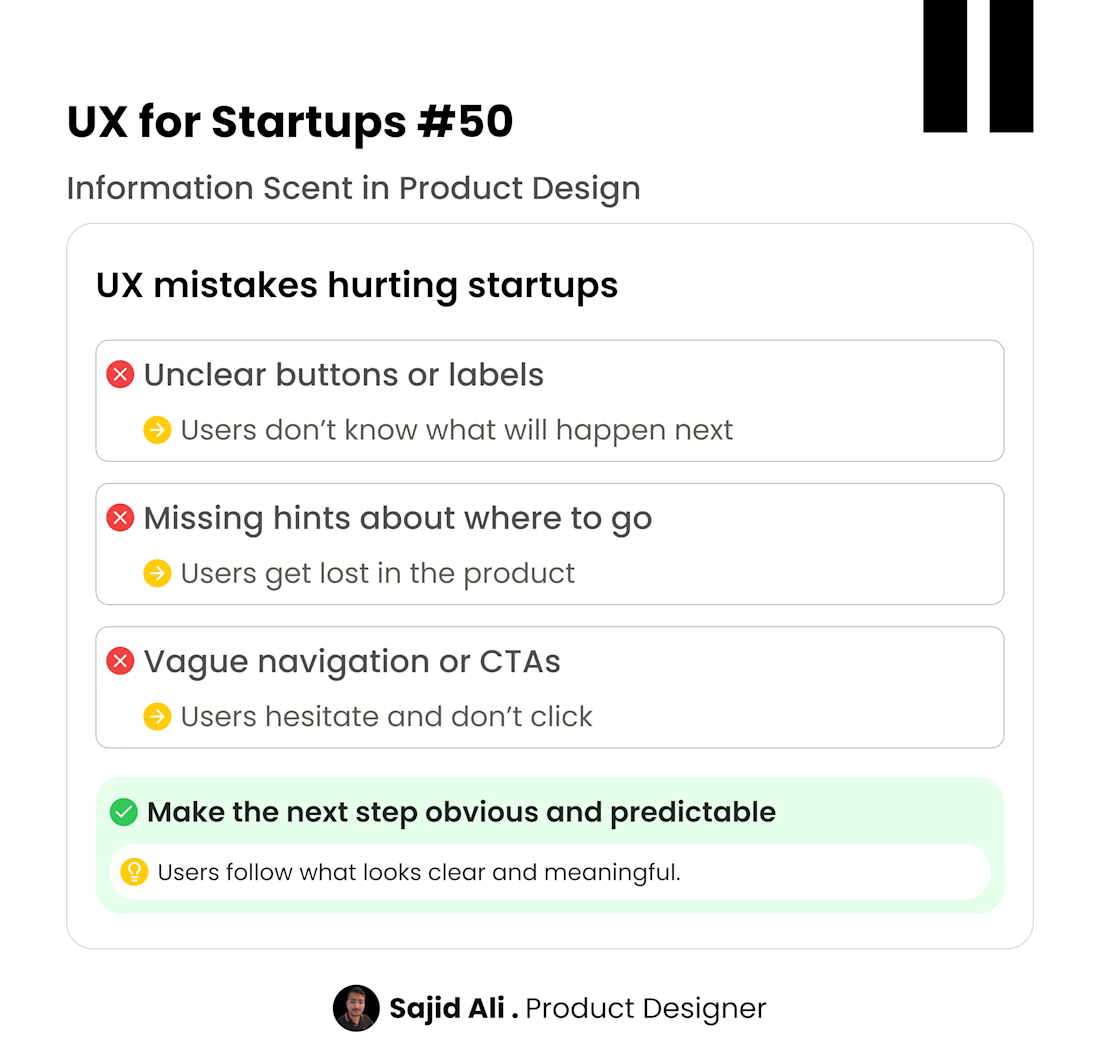
Users don’t explore products randomly. They follow clues.
If a button, label, or section doesn’t clearly show what will happen next, users hesitate or ignore it.
That clarity the small signals that guide users forward is called information scent.
When the scent is strong, users feel confident clicking and exploring. When it’s weak, they get lost or drop off.
Good UX makes every action predictable and easy to understand without explanation.
I help startups design product experiences that improve clarity, navigation, and user engagement.
DMs open for product design collaborations.

Oh, where did this come from? Do you have a particular example?