The network for creativity
Join 1.25M professional creatives like you
Connect with clients, get discovered, and run your business 100% commission-free
Creatives on Contra have earned over $150M and we are just getting started
Back to feedPost

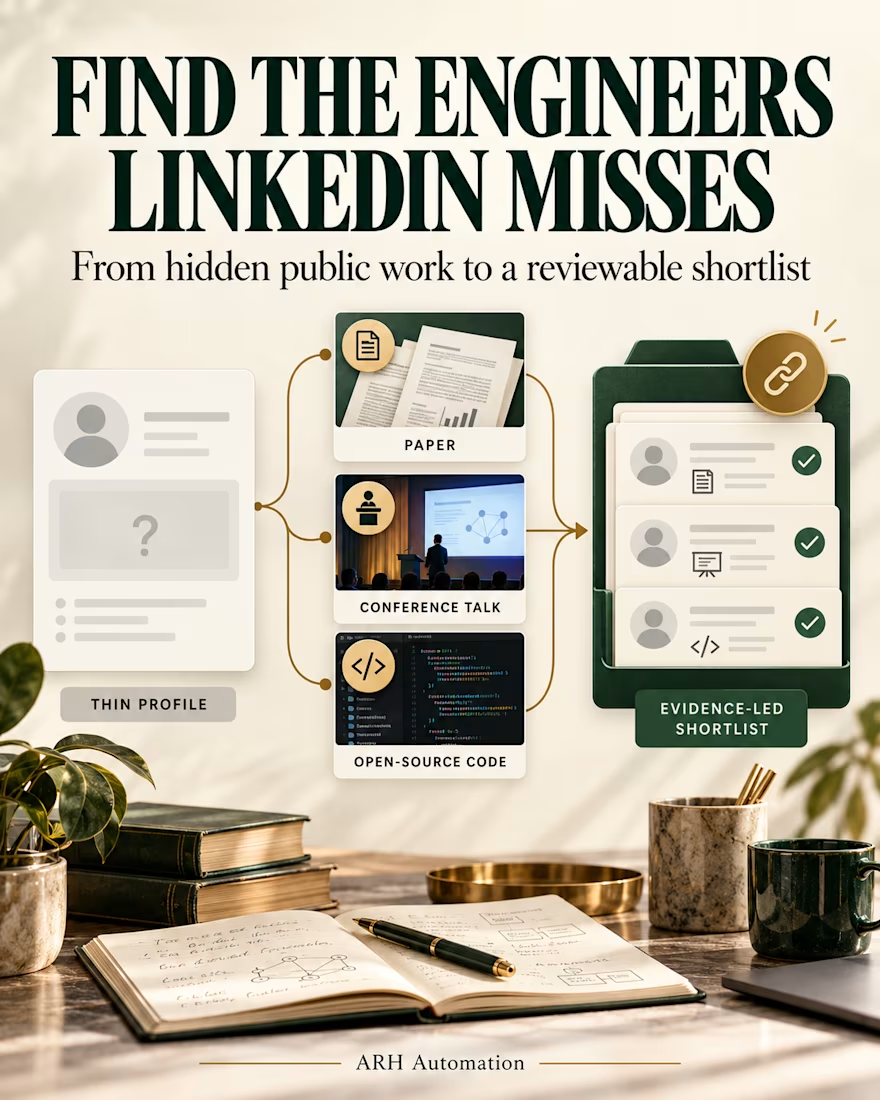
A thin LinkedIn profile can hide a strong technical candidate. Their real work may be in a university paper, a conference talk, or an open-source contribution.
A recruiting shortlist should show that evidence, not just a name and job title.
In a separate contact-research project, my n8n system delivered 50 ready records and rejected 143 weak or duplicate matches. That result came from checking source details before a record was marked ready.
I’d apply the same discipline to specialist sourcing: collect public work signals, verify identity and relevance, keep source links attached, and route uncertain matches for human review. The recruiter still makes the decision.
If your team is searching for hard-to-find engineers, tell me the role and what a credible match would look like.

The network for creativity
Join 1.25M professional creatives like you
Connect with clients, get discovered, and run your business 100% commission-free
Creatives on Contra have earned over $150M and we are just getting started



Related posts

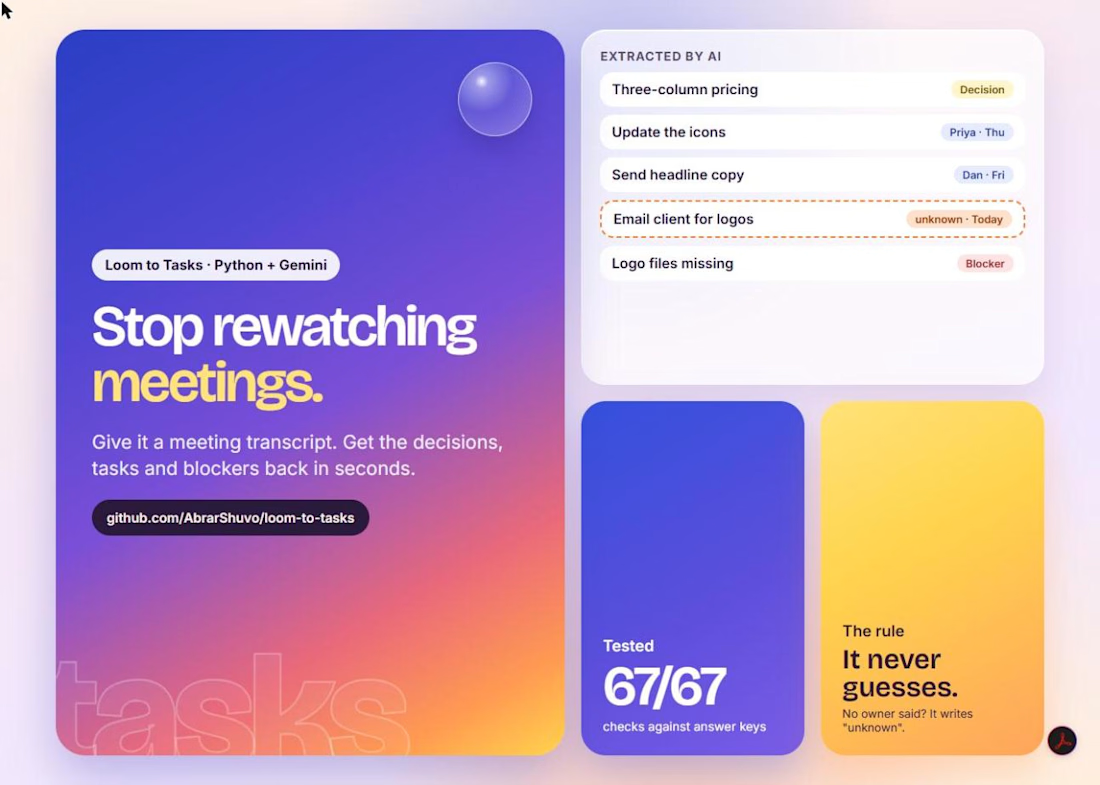
Nobody should have to rewatch a 30-minute call to find out what they're supposed to do.
So I built Loom to Tasks. Paste in a meeting transcript and it pulls out the decisions, tasks (with owner and deadline) and blockers in seconds. Python + Gemini with structured outputs.
The rule I cared most about: it never guesses. If nobody said who owns a task, it writes "unknown" instead of inventing a name. Tested against hand-written answer keys and passed 67/67 checks.
Code's on GitHub: github.com/AbrarShuvo/loom-to-tasks
If your team lives in meetings, I can set this up for your workflow.



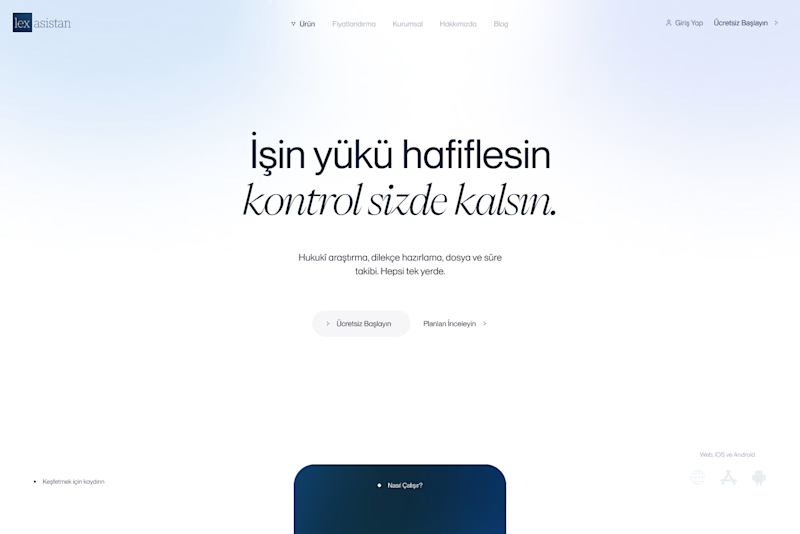
Exploring hero backgrounds for an AI assistant landing page. Which one feels more trustworthy?

9 voted
100%
0 voted
0%
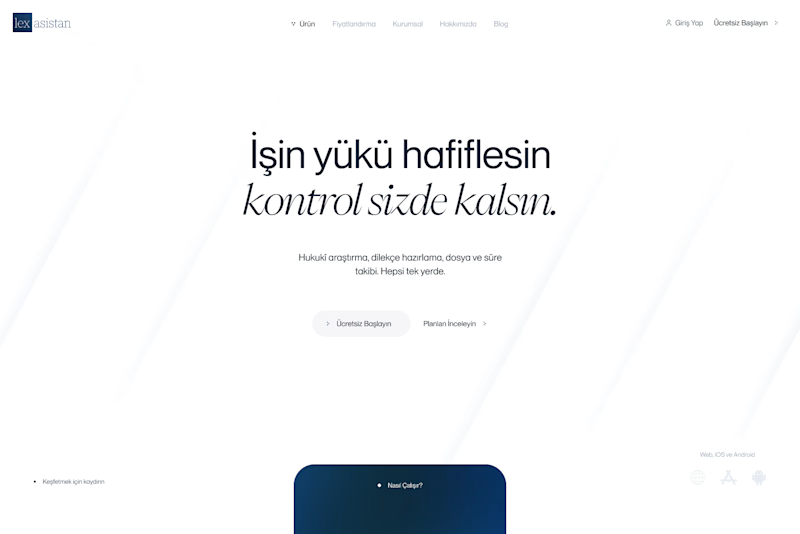
9 votes
Closed

Aura feels more trustworthy and calm.


I think we're heading towards a stage where everyone will have their own unique tools and workflows, which they won't even bother sharing or selling, knowing others can simply reverse-engineer and adapt them. Feels like we're entering an era of truly unique creativity.