The network for creativity
Join 1.25M professional creatives like you
Connect with clients, get discovered, and run your business 100% commission-free
Creatives on Contra have earned over $150M and we are just getting started
Back to feedPost

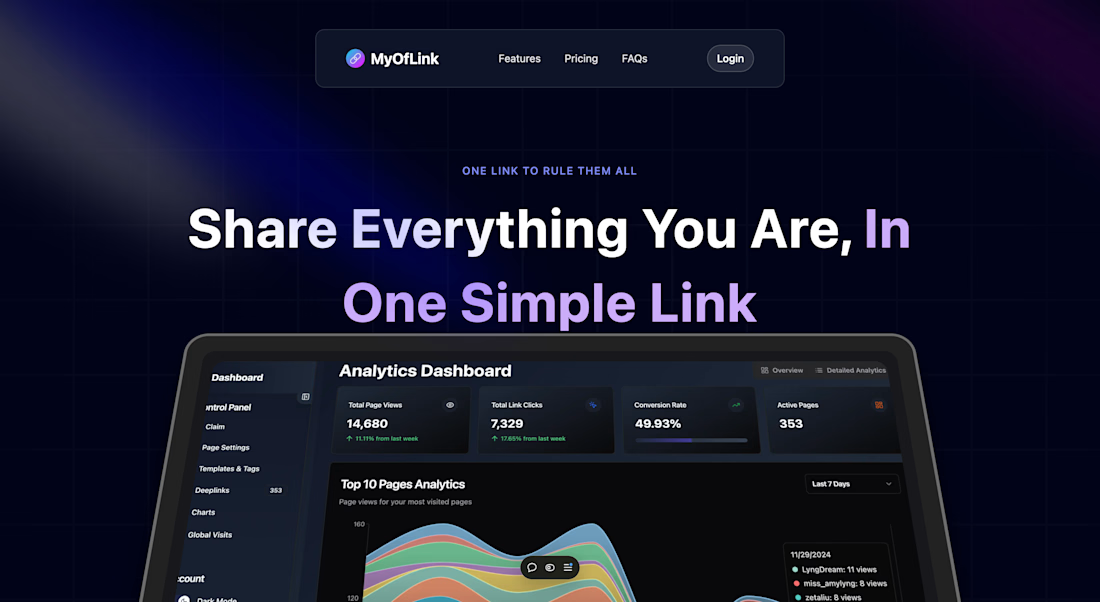
I led the development of MyOfLink as founding engineer, building a full-scale SaaS platform designed to help creators and businesses manage their online presence through advanced link infrastructure, analytics, and monetization.
The goal was to go beyond traditional “link-in-bio” tools by creating a high-performance platform that improves engagement, tracks user behavior, and enables scalable monetization.
I architected and built the platform end-to-end using Next.js, TypeScript, and Tailwind CSS, leveraging server-side rendering and React Server Components to significantly improve performance. The result was a fast, responsive product achieving a 95–98+ Lighthouse score and noticeably reduced load times.
A core innovation was the deep-linking system. I engineered a solution to bypass in-app browser limitations on platforms like Instagram, Reddit, and TikTok using intelligent user-agent detection and platform-specific routing. This improved link conversion rates and overall user engagement by approximately 40 percent.
I also built a real-time analytics dashboard to give users actionable insights into their traffic and performance. This included click-through rates, conversion metrics, and geographic data, enabling more informed decision-making for creators and businesses.
On the monetization side, I implemented a full Stripe-based billing system with subscription tiers, usage-based pricing, and webhook-driven automation. The checkout experience was designed to be seamless, secure, and optimized for conversion.
The final product is a high-performance SaaS platform that combines advanced linking technology, real-time analytics, and scalable monetization into a single cohesive system.
This project highlights my ability to design and deliver complex SaaS products from the ground up, with a strong focus on performance, user experience, and real business outcomes.


The network for creativity
Join 1.25M professional creatives like you
Connect with clients, get discovered, and run your business 100% commission-free
Creatives on Contra have earned over $150M and we are just getting started





Related posts

A few things we’ve been working on this month.
Different industries, different problems, but the same goal: making complex products feel simple, clear, and trustworthy.
Fintech → Investment Banking → Geospatial AI
More projects are still in progress.
Full case studies coming soon.


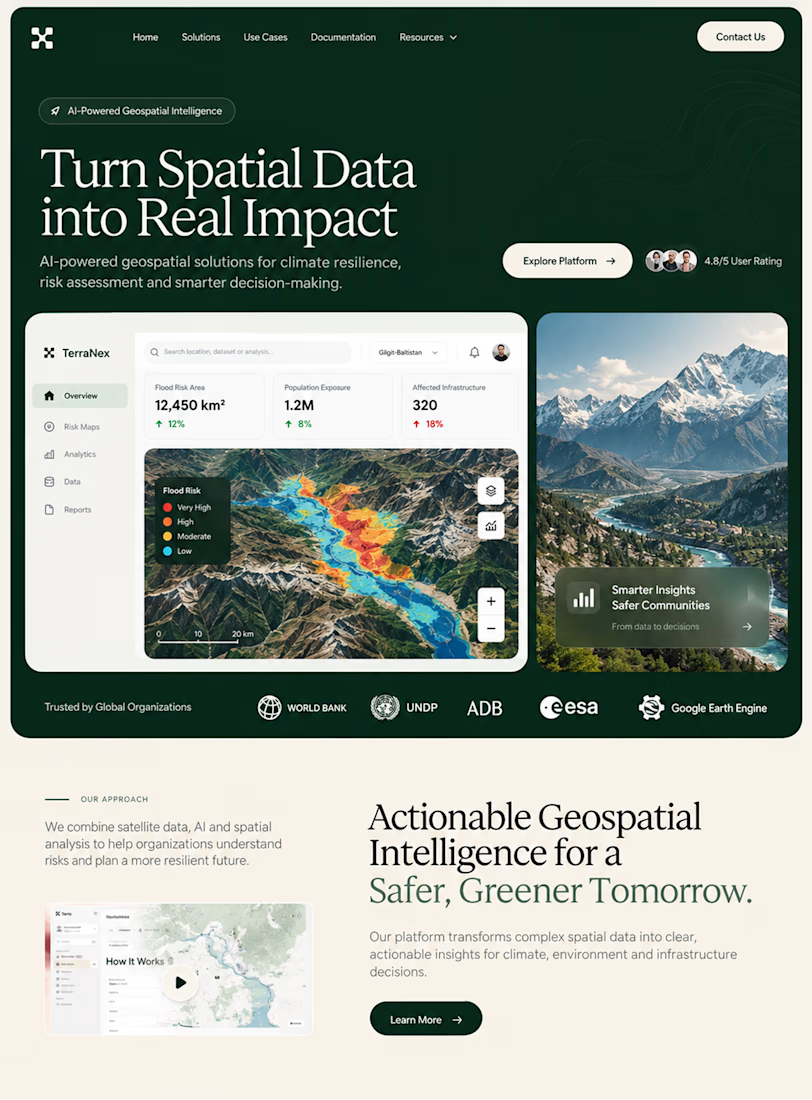
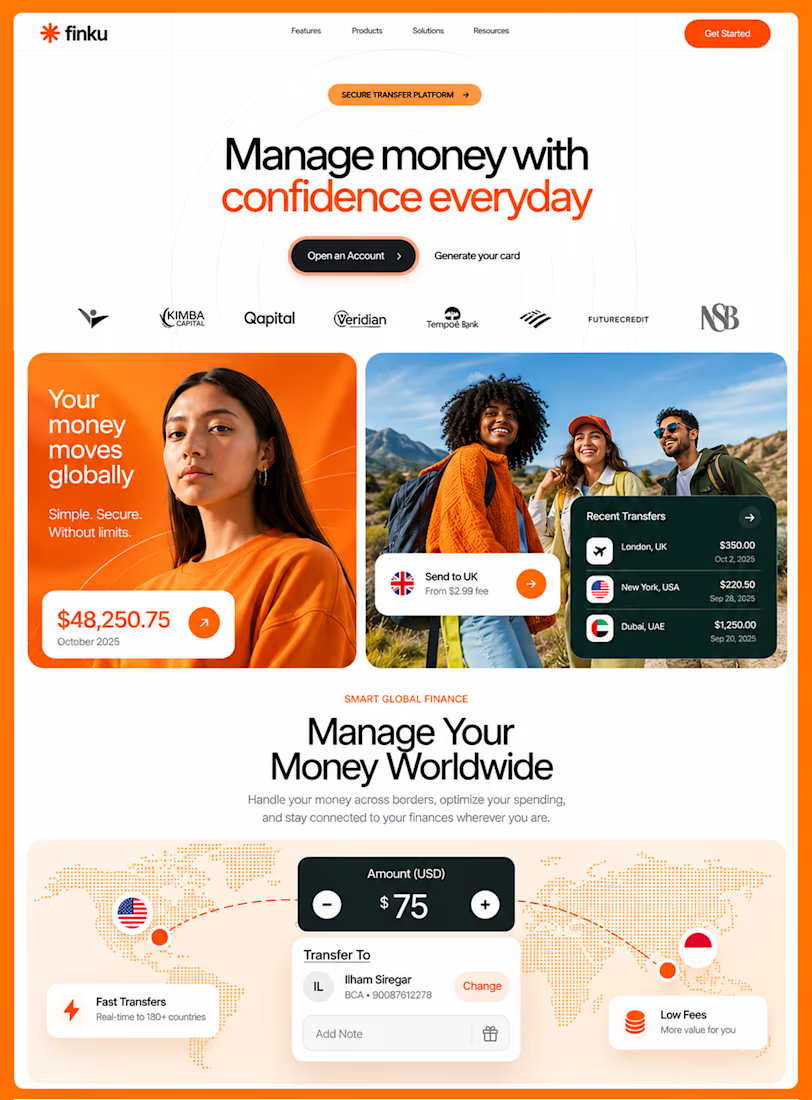
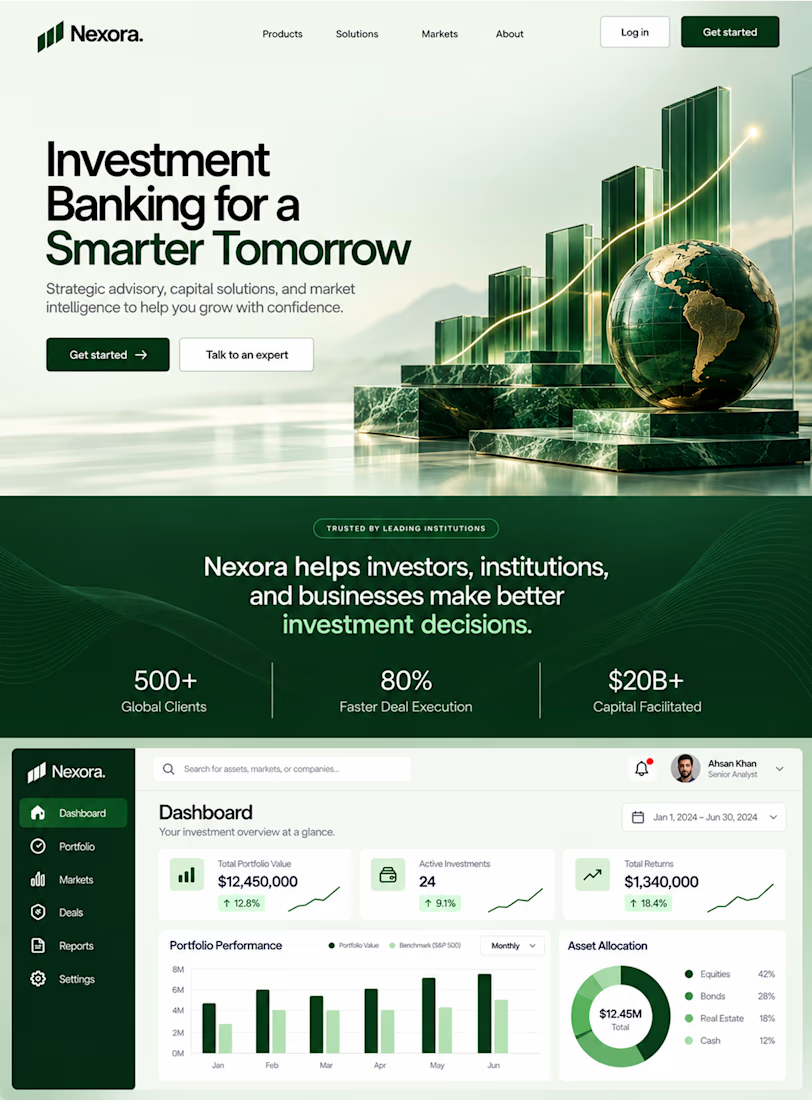

This is the kind of work I enjoy seeing — simple, focused, and actually thought through.

A three-card tarot spread where every face is unique procedural sigil-art, woven into one reading.
I built this project to test a three-card tarot spread where every face is unique procedural sigil-art, woven into one reading. The goal was simple: push interactive browser rendering using HTML5 Canvas and see how smoothly the system responds to direct user interaction.
WHAT I WAS TESTING:
I wanted to focus on two core engineering aspects:
Procedural generation of unique runic card sigils from mathematical formulas
Dynamic typography and card flipping choreography without heavy 3D frameworks
THE TECHNICAL SIDE:
The card faces render directly onto an HTML5 Canvas using polar coordinate trigonometric curves and procedural geometry. Every draw call is computed dynamically without image textures or external SVGs.
Everything runs in the browser using HTML5 Canvas, Procedural Sigil Geometry, Seeded Randomness. No plugins, no heavy dependencies, and no external tracking.
WHAT I LEARNED:
Balancing procedural symmetry with organic irregularity was the main hurdle. Pure mathematical curves looked too synthetic, so adding minor pseudo-random offsets gave the sigils their handcrafted appearance.
Finding the sweet spot between mathematical precision and tactile visual feedback took several iterations, but the end result runs consistently at 60 FPS.
TRY IT YOURSELF:
The live experiment is deployed on Netlify. You can open it in any modern browser, interact with the controls, and test the response times.
If you are working on similar 3D, physics, or creative web projects and want to collaborate, message me here on Contra.


cinematic💯 . Nice work😍

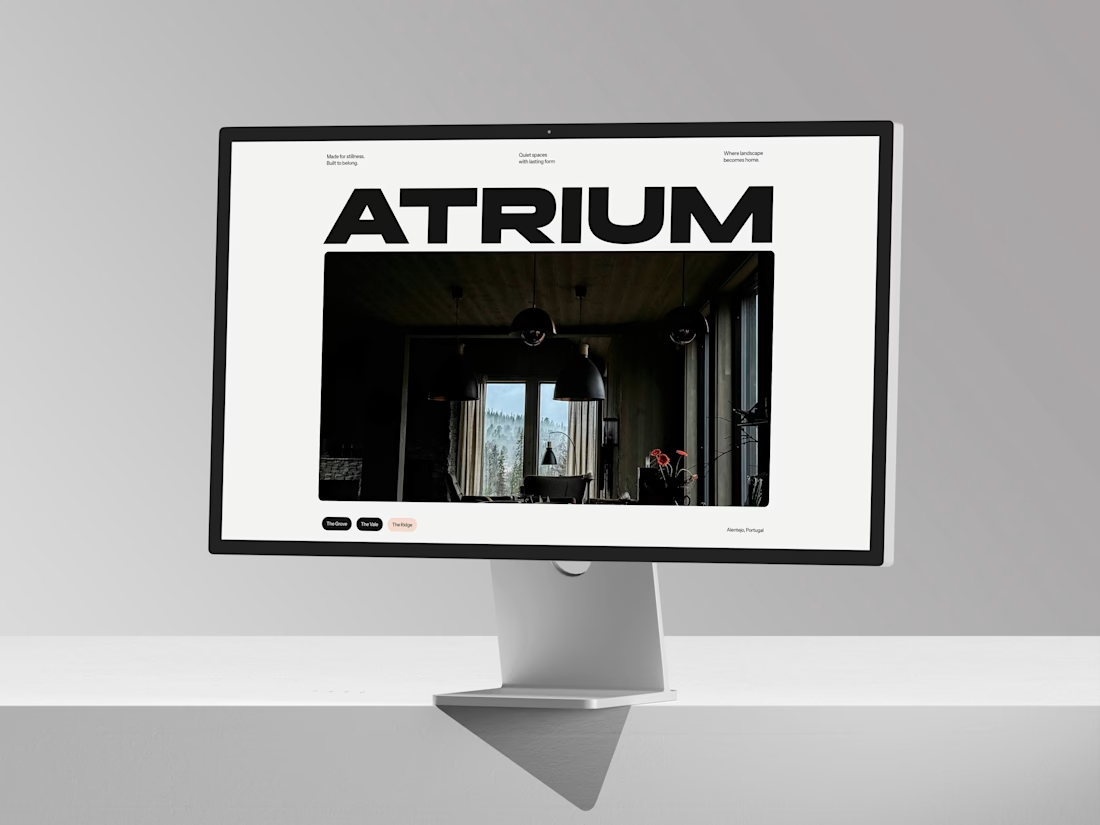
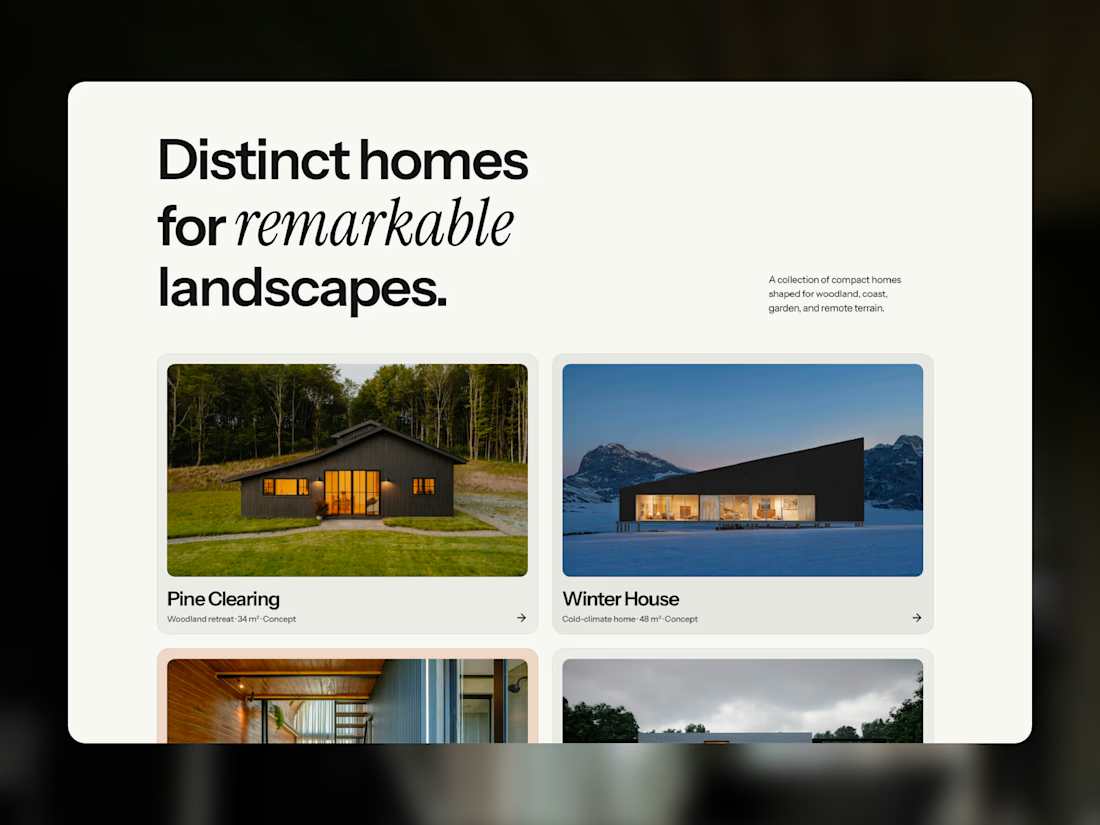
Meet Atrium Studio, my latest Framer template for architects, interior designers, and modular home studios.
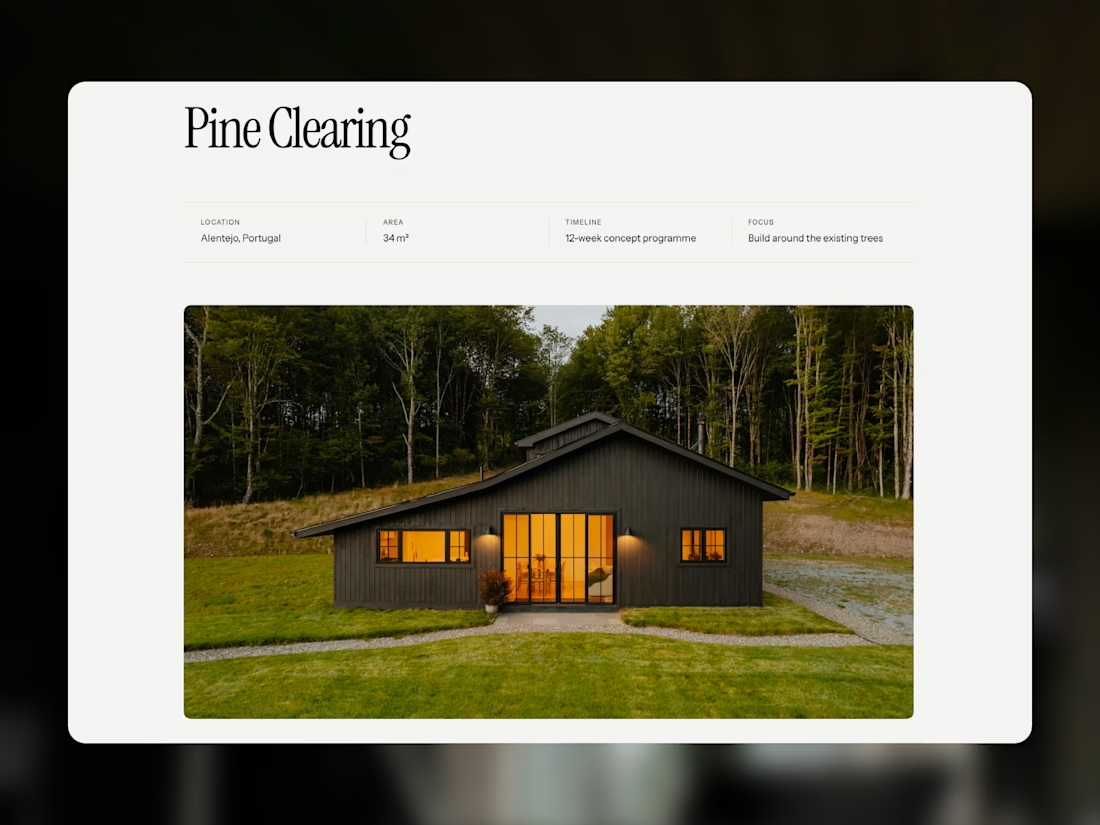
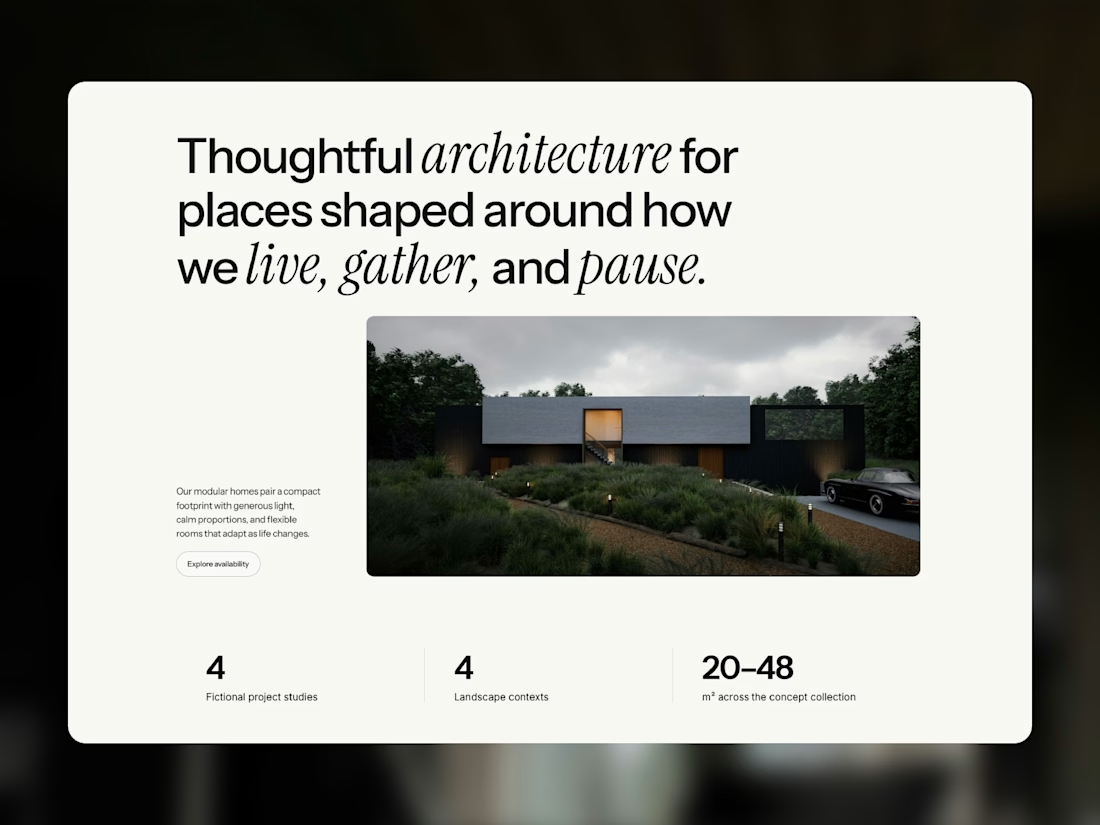
Bold typography, generous whitespace, and immersive photography create an editorial feel that gives each project room to stand out. Dedicated garden room pages and a CMS project portfolio let you share the spaces you create and the thinking behind them.
Designed for desktop, tablet, and mobile, with reusable components and customizable colors and typography.
Take a closer look at Atrium, or make it your own.



But this feels too premium 🙄