The network for creativity
Join 1.25M professional creatives like you
Connect with clients, get discovered, and run your business 100% commission-free
Creatives on Contra have earned over $150M and we are just getting started
Back to feedPost


BoviNest: Building a Production RFID Workflow for Mobile
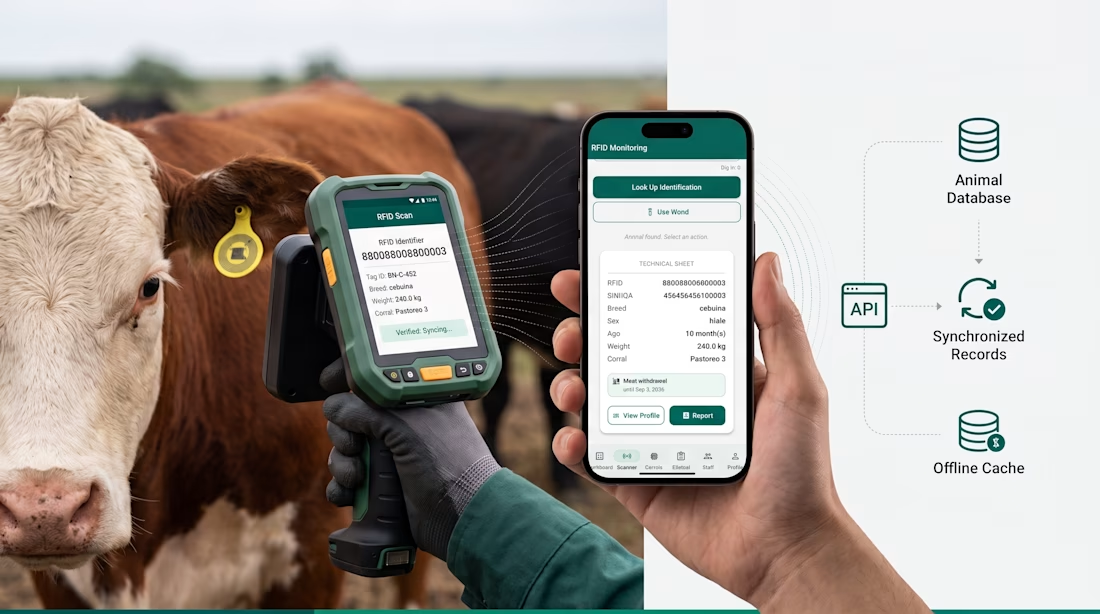
One of the most interesting parts of building BoviNest has been integrating physical RFID hardware into a mobile application without making the hardware feel like a separate system.
The goal was simple:
Scan an animal → identify it immediately → continue with the correct workflow.
The implementation was not quite as simple.
>> The Core Architecture
Each animal has two important identifiers:
- A stable UUID that represents the animal record.
- A 15-digit FDX-B RFID identifier that can be associated with that animal.
This distinction is important because the RFID tag is an attribute of the animal, while the UUID represents the actual database record.
That allows the system to preserve the animal's clinical and operational history even when its RFID relationship changes.
>> Three Ways to Enter an RFID
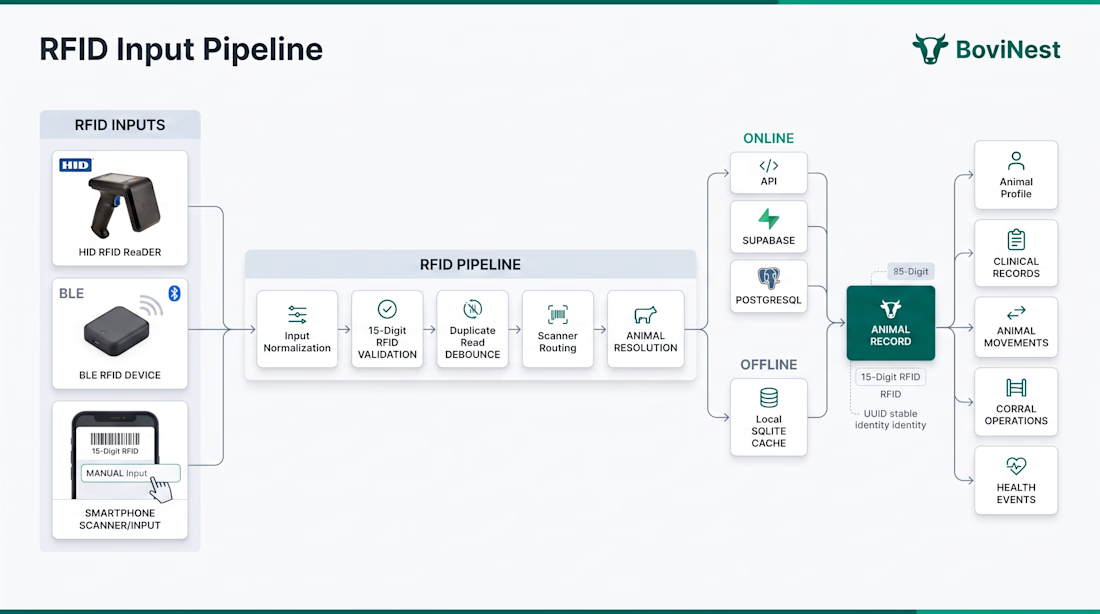
The application supports a common processing pipeline regardless of how the RFID arrives.
1. HID RFID Readers
Many physical readers behave like a keyboard.
BoviNest captures the incoming digit sequence, recognizes a valid 15-digit RFID, and routes it into the same scanner workflow used by other input methods.
This was especially useful because it avoids requiring a dedicated Bluetooth workflow for compatible HID readers.
2. BLE
The application also contains a BLE integration layer capable of receiving RFID data from compatible hardware.
The BLE path is currently prepared for future hardware workflows while the production configuration prioritizes the HID approach.
3. Manual Input
Users can also enter an RFID manually.
This is important for field operations because hardware should never become a single point of failure.
All three paths ultimately converge into the same application flow.
>> The Important Part: Normalization
A hardware reader can send the same RFID several times in a fraction of a second.
So the application doesn't simply react to every incoming value.
The central scanner pipeline:
- Receives the identifier
- Validates the 15-digit format
- Debounces duplicate reads
- Resolves the animal
- Opens the appropriate workflow
There is also an important UX rule:
If the user is actively typing into another field, the global RFID listener must not consume those digits.
That prevents a hardware integration from interfering with completely unrelated forms such as weights, capacities, or other numeric inputs.
Small detail, but extremely important in a real field application.
>> Online + Offline
BoviNest is designed for ranch environments where connectivity cannot be assumed.
When online, RFID resolution uses the backend.
When offline, the application can resolve previously synchronized animals from its local cache.
The RFID workflow therefore remains useful even when the ranch temporarily loses connectivity.
>> RFID Is Not the Identity of the Animal
Another important business rule is handling animals imported without RFID.
Those records can initially use a temporary visual identifier.
When the physical RFID is eventually assigned, the system links the RFID to the existing animal record instead of creating a duplicate animal.
This preserves:
- Clinical history
- Movements
- Weight records
- Events
- Existing relationships
The RFID relationship is also audited so changes remain traceable.
>> Hardware → Mobile → Backend
The final architecture looks roughly like this:
RFID Reader
↓
HID / BLE / Manual Input
↓
Central RFID Pipeline
↓
Validation + Debounce
↓
Scanner Workflow
↓
Local Cache / Backend
↓
Animal Record
↓
Clinical / Operational Actions
The important design decision was not simply making the reader work.
It was making the hardware integration transparent to the rest of the application.
The user scans an animal and BoviNest takes care of the rest.
That is the kind of hardware/software integration I enjoy building: physical devices feeding into a reliable software workflow without forcing the user to think about the complexity underneath.
>> Tech Stack
- Flutter
- Dart
- Riverpod
- GoRouter
- Supabase
- PostgreSQL
- FastAPI
- BLE
- Bluetooth HID
- SQLite
- Firebase
Building software for the field means designing for unreliable connectivity, imperfect hardware, and real users—not just ideal conditions.
® BoviNest is a product of GitbonNest.


The network for creativity
Join 1.25M professional creatives like you
Connect with clients, get discovered, and run your business 100% commission-free
Creatives on Contra have earned over $150M and we are just getting started
Trending
retrofuturism
Share your favorite designs from the past exploring the distant future. Or your own take on the aesthetic 🚀
halftone
Dots. Texture. Grain. Let's see your designs using the halftone technique.

Midjourney
Creatives are showing off what they're making with Midjourney.
colorgrade
Video editors sound off: How do you enhance the mood of your video in color grading?
Related posts


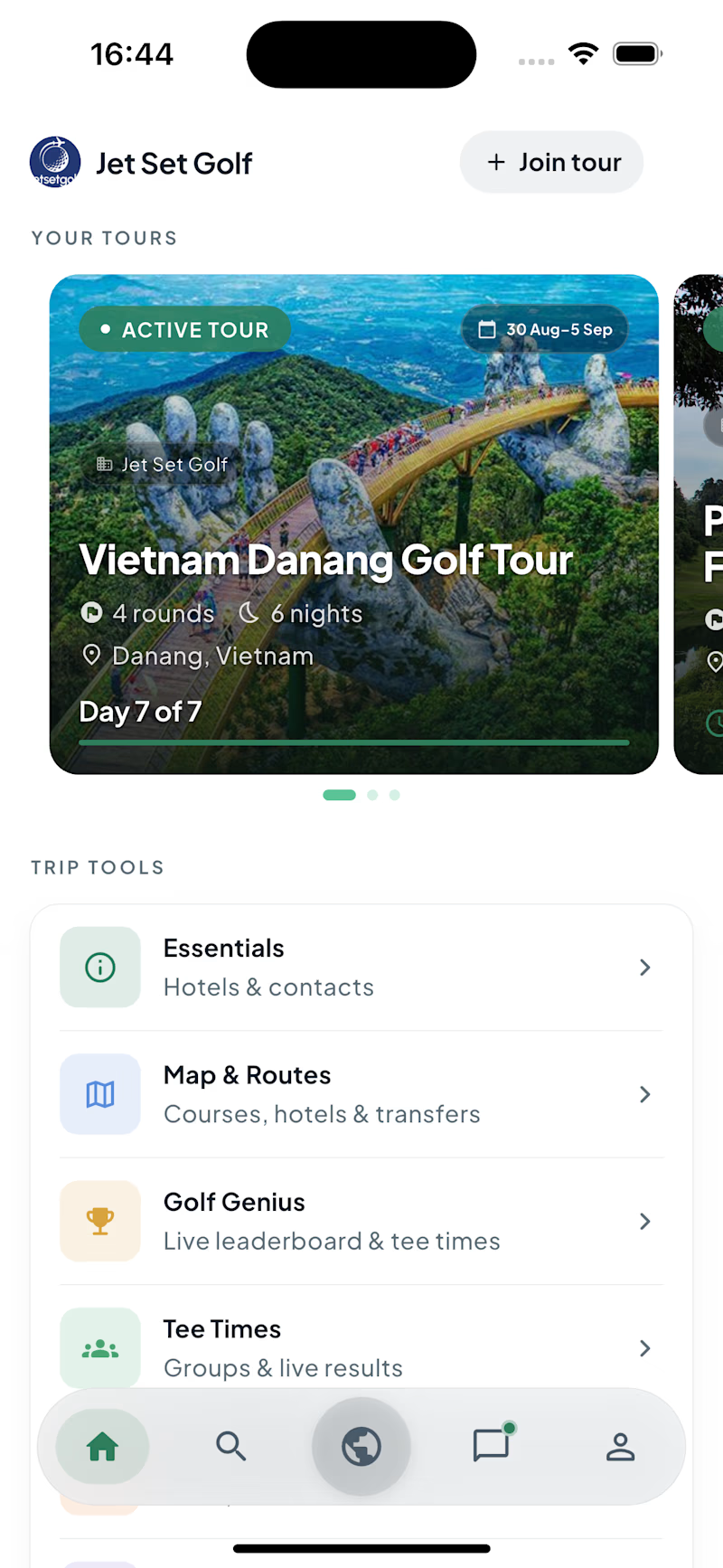
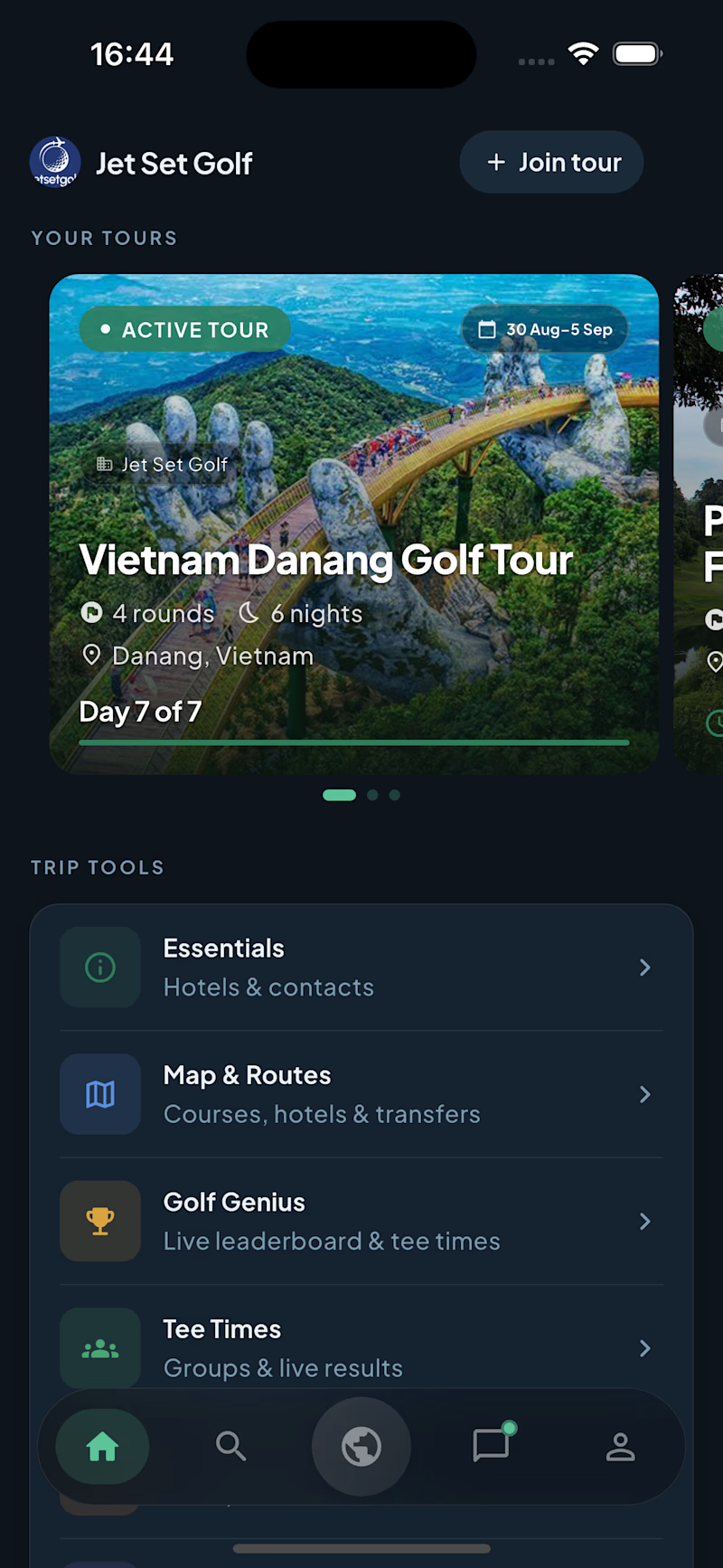
Light or dark? I shipped Golf Travel Passport with both, which one would you keep open on the first tee?

23 voted
59%
16 voted
41%
39 votes
Closed

White for me. It feels cleaner and easier to scan.

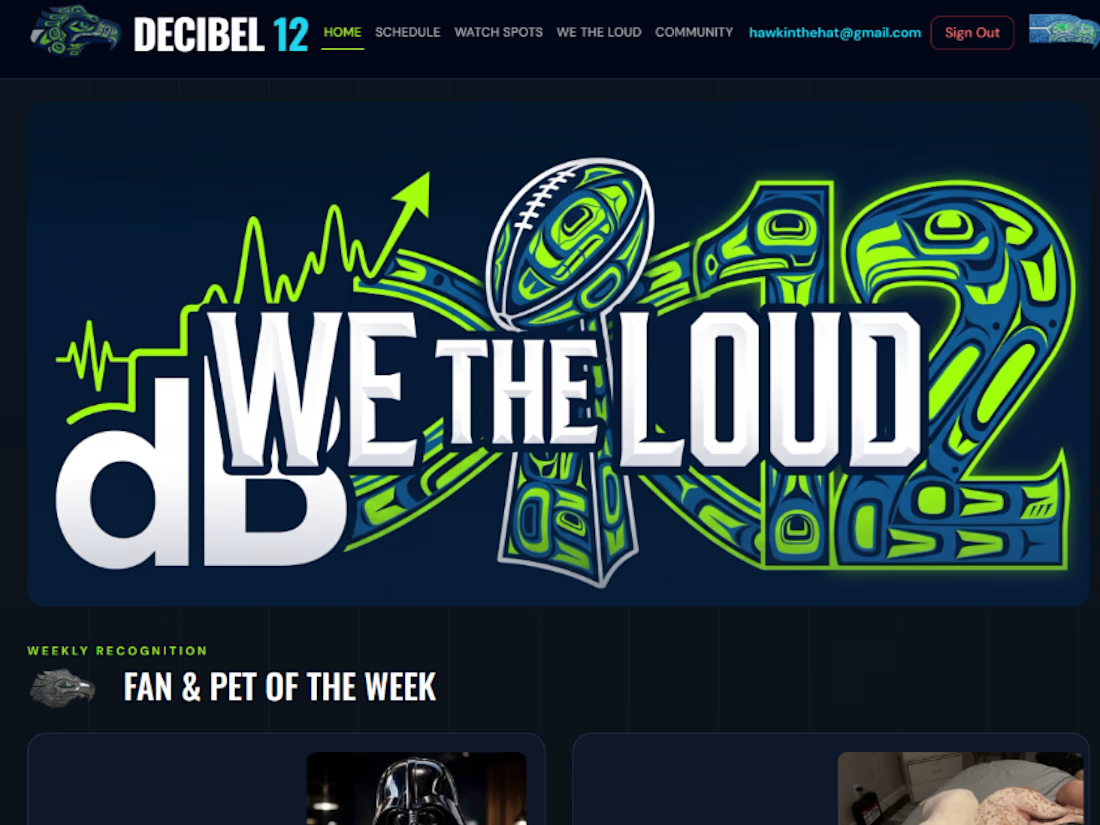
Case Study: Decibel 12 (db12fans.com)
Building the Ultimate Digital Home for Seattle Seahawks Fan Culture
Executive Summary
Decibel 12 is an independent, high-performance web platform designed specifically for Seattle Seahawks supporters ("12s"). Built to bridge the gap between stadium energy, community identity, and modern interactive web features, the platform combines real-time game-day tracking, interactive AI score predictions, custom Coast Salish-inspired superfan character branding, and community-driven content vaults.
The Challenge
Seattle Seahawks fans are globally recognized for setting world-record decibel levels, yet fan engagement tools are often fragmented across generic social media platforms, temporary group chats, and outdated forums.
The primary objectives for Decibel 12 were:
Establish an Authentic Digital Identity: Root the design language in authentic Pacific Northwest and Coast Salish artistic geometry rather than generic sports templates.
Streamline Game-Day Utility: Create a centralized hub for local watch spots, tailgate directories, and live countdowns ahead of the season opener.
Engage Community-Driven Content: Build secure, moderated photo vaults and interactive recognition systems (Fan & Pet of the Week, Hall of Fame) without relying on cluttered ad networks.
Deliver Fast, Frictionless Auth: Implement seamless passwordless authentication (Magic Links) that feel modern and trustworthy.
Key Features & Platform Architecture
1. Game Day Hub & Countdown Engine
Real-time countdown clock synced to kickoff schedules.
Interactive directory featuring local PNW sportsbooks, SODO tailgate basecamps, and partner venues (Touchdown's Sports Bar, Hatback Bar & Grille).
2. 12s Game Day Photo Vault & Moderation
Community image repository for tailgates, custom outfits, and fan pets.
Tech: Client-side NSFWJS filtering (TensorFlow.js) for automated pre-upload image moderation, backed by Supabase Storage and dynamic likes counter triggers.
3. Fan Authorities & Hall of Fame
Dedicated tribute section honoring iconic superfans and community legends (Patti "Mama Blue" Hammond, Lorin "Big Lo" Sandretzky, Save Our Seahawks, Blue Thunder Drumline).
Integrated community support features to drive awareness and fundraising for local fan figures facing medical recovery.
4. Interactive Engagement: "12s vs. The Machine AI"
Weekly score prediction module allowing fans to lock in game outcomes and compare football IQ against predictive analytics models on the "Wall of Sound" leaderboard.
5. Superfan Character Branding Services
Dedicated portal ("Build Your Superfan Identity") connecting fans with custom character design, gear sculpting, and formline artwork concepting for stadium outfits.
Tech Stack & Execution
Domain Technology / Tool Frontend Framework Next.js / React / TypeScript / Tailwind CSS Backend & Storage Supabase (PostgreSQL, Realtime Auth, Storage Buckets) Email Delivery Resend (Authenticated Custom SMTP Domain) Image Moderation NSFWJS / TensorFlow.js Content Production CapCut Desktop / Envato Elements / Rive Deployment Vercel
Results & Impact
Launch Readiness: Fully deployed ahead of the season opener against New England, complete with an automated multi-channel social media launch kit.
Brand Integrity: Custom Coast Salish formline artwork and action-green visual identity created a distinct platform identity recognized across local fan networks.
Zero-Friction Onboarding: Fully branded email delivery via custom Resend SMTP routing, eliminating spam flags and delivering single-click magic link logins.


This feels like a strong example of translating a community’s energy into a digital system. The bold visual language gives the platform a clear identity while the content structure keeps it useful.

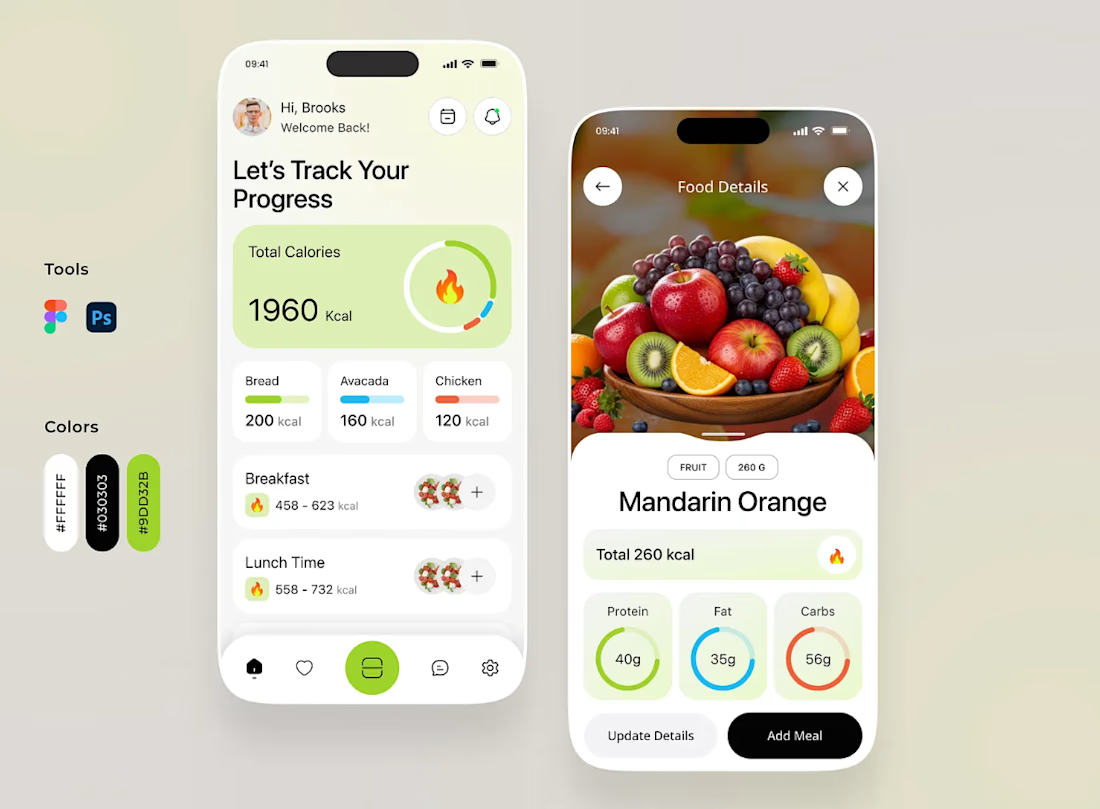
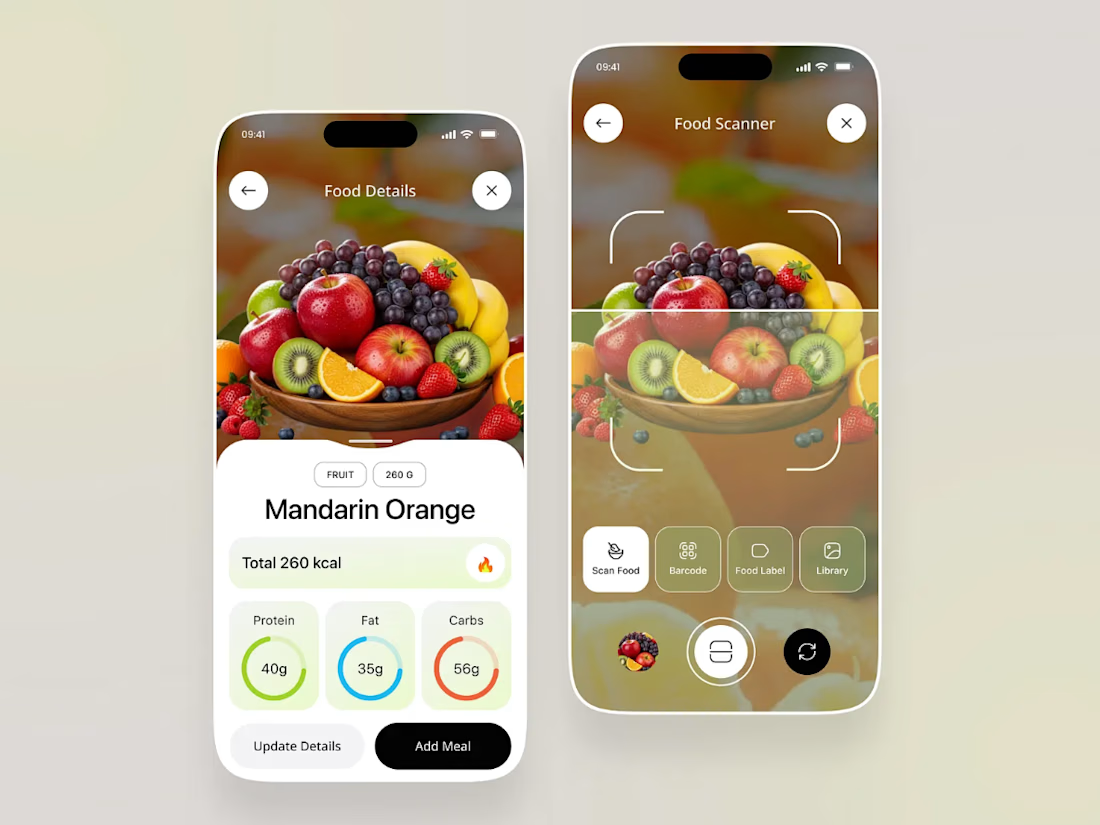
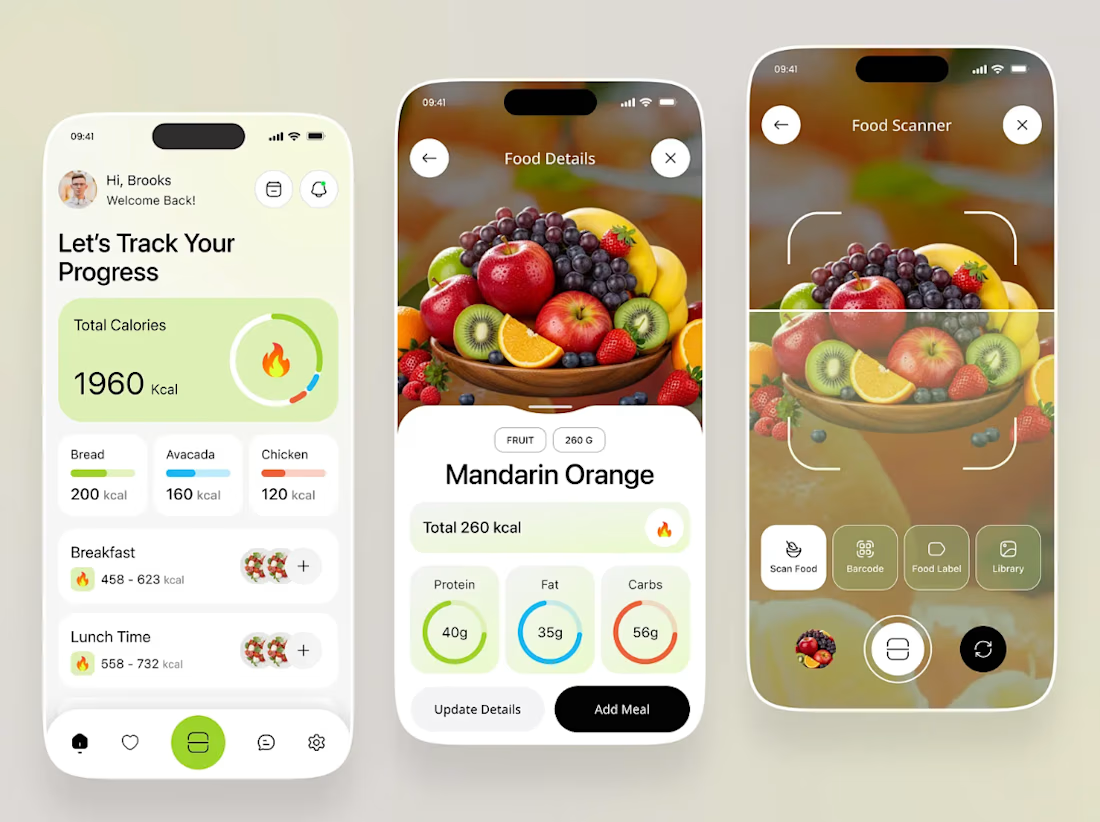
Recently designed and developed a calorie and nutrition tracking app from research and wireframes all the way through to a working, shipped product. Focused on making food logging fast and frictionless (quick-add for repeat meals, barcode scanning, and a calmer, trend-based progress view instead of the usual guilt-driven red bars), backed by a curated, accurate food database.
How do the designs look?

Great work 🎉