The network for creativity
Join 1.25M professional creatives like you
Connect with clients, get discovered, and run your business 100% commission-free
Creatives on Contra have earned over $150M and we are just getting started
Back to feedPost

A client came to me with a problem most people don't even realize they have.
Their leads were coming in fast. Facebook ads, website forms, referrals, all funneling into one place.
The problem wasn't volume. It was that every single lead got treated exactly the same.
A €50,000 opportunity and a €500 inquiry both landed in the same inbox, got the same generic email, and waited in the same queue for someone on the team to notice them.
Nobody was ignoring the big leads on purpose. There just wasn't a system built to catch the difference.
So I sat down and mapped out what "smart" lead handling should actually look like.
Here's what I built:
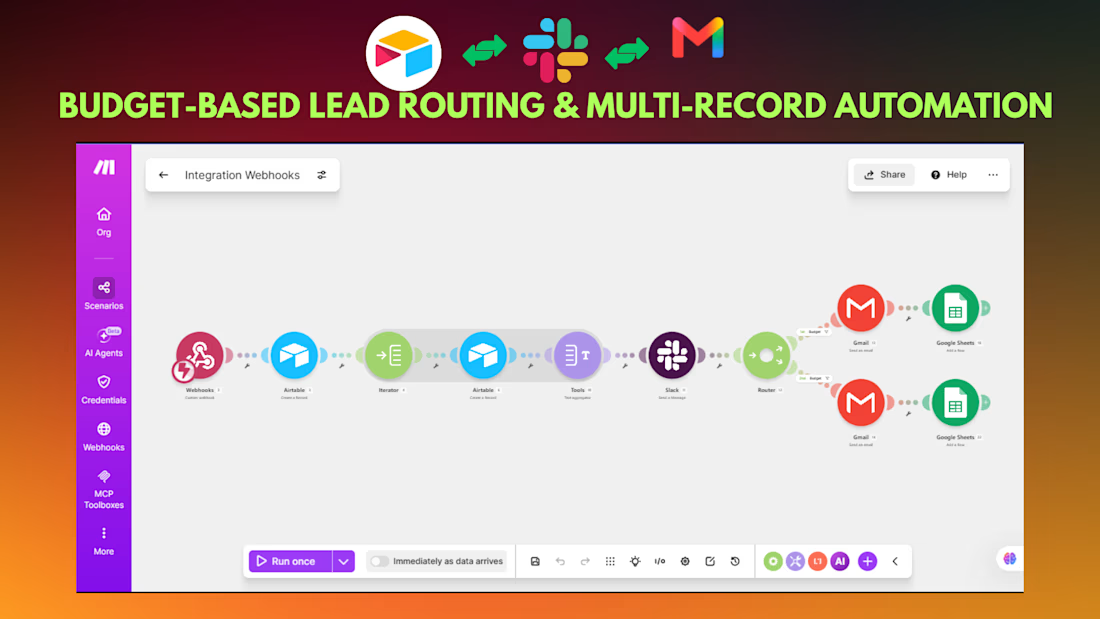
-The moment a lead comes in, a webhook grabs it instantly. No delay, no manual entry.
-That lead gets logged into Airtable as a record. Then a second, linked record gets created automatically for deeper tracking, so nothing about that lead's journey gets lost.
-The team gets pinged on Slack immediately. No one finds out about a hot lead by checking their inbox three hours later.
-Then the system does the smart part: it checks the lead's budget. High-tier leads go down one path. Standard leads go down another. Each path sends its own tailored email and logs into its own tracking sheet, automatically, with zero overlap.
The hardest part wasn't connecting the apps.
It was making sure two records could be created from one lead without duplicating data. It was getting the routing logic to split correctly, every single time, no exceptions. It was running two parallel branches side by side without them ever crossing wires.
That's the difference between "an automation" and a system you can actually trust with your revenue.
Now every lead gets exactly the attention it deserves. Automatically.
I'm curious: how is your business currently deciding which leads get priority? Manually? A gut feeling? Or does everything just land in one big inbox?
Tell me in the comments, I read every single one.


The network for creativity
Join 1.25M professional creatives like you
Connect with clients, get discovered, and run your business 100% commission-free
Creatives on Contra have earned over $150M and we are just getting started



Related posts

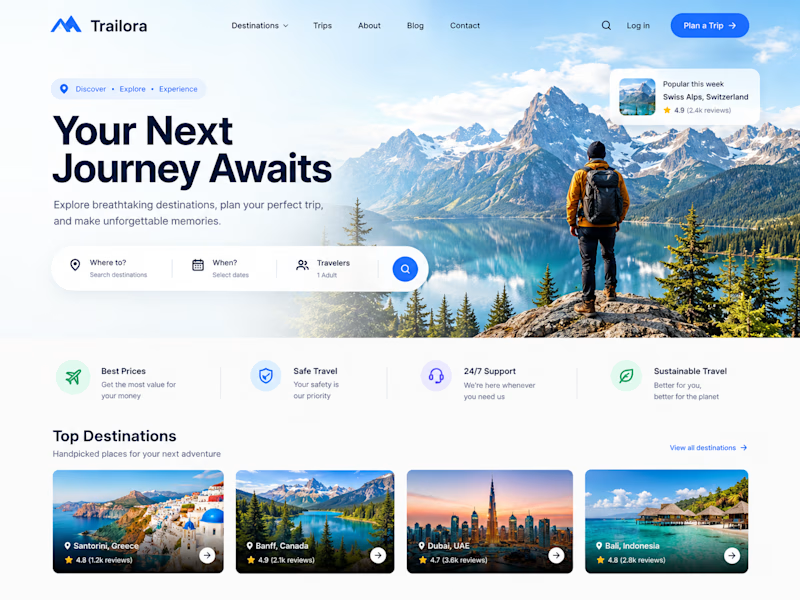
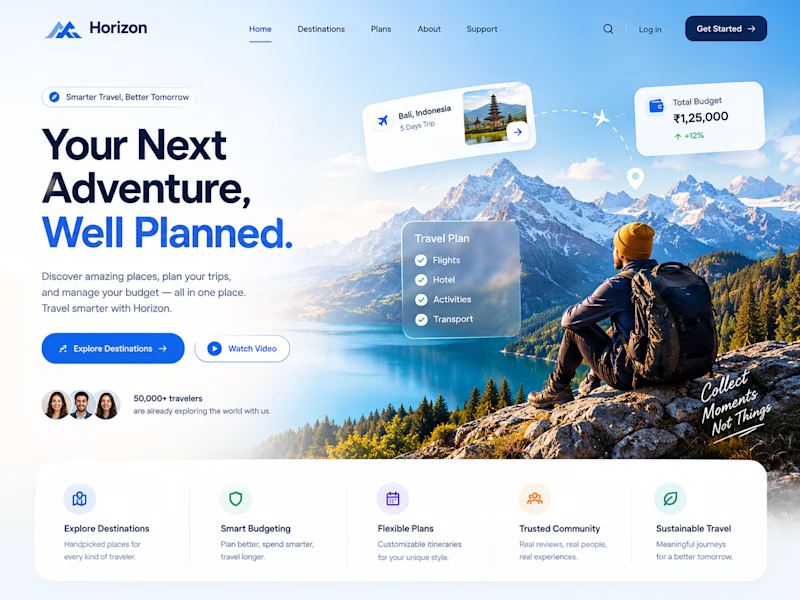
Two designs. One idea. Two different ways to experience travel. ✈️
What if planning your next trip felt less like managing a checklist and more like discovering a story waiting to unfold?
Trailora makes discovery feel effortless, while Horizon turns travel planning into a smarter, more structured experience.
Same industry. Different design directions.
Which direction would you choose: the freedom to explore or the confidence of a well-planned journey?
25 voted
71%
10 voted
29%
35 votes
Closed

Both are lovely! The second one feels more like an adventure, which fits travel well.


Thousands of searches. Almost no clients.
That's where Richard Reid's website was when we started working together. Richard is a psychology-led leadership coach for founders, CEOs and senior leaders, and his site was ranking. Just not for the right people.
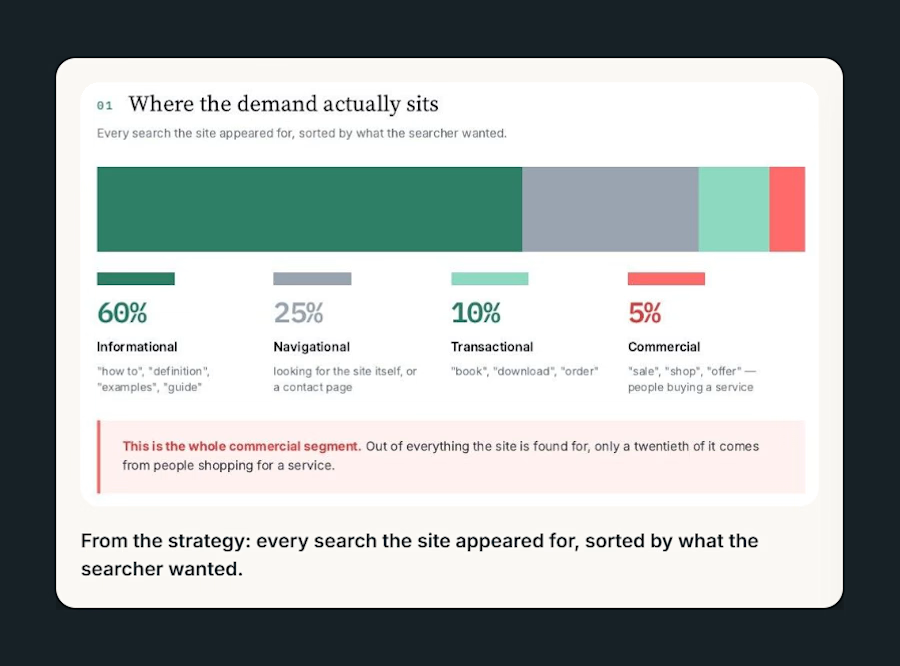
When I sorted every search the site appeared for by intent, 60% were people researching psychology topics. Only 5% were people actually shopping for a coach.
So instead of chasing more traffic, I rebuilt the strategy around that 5%:
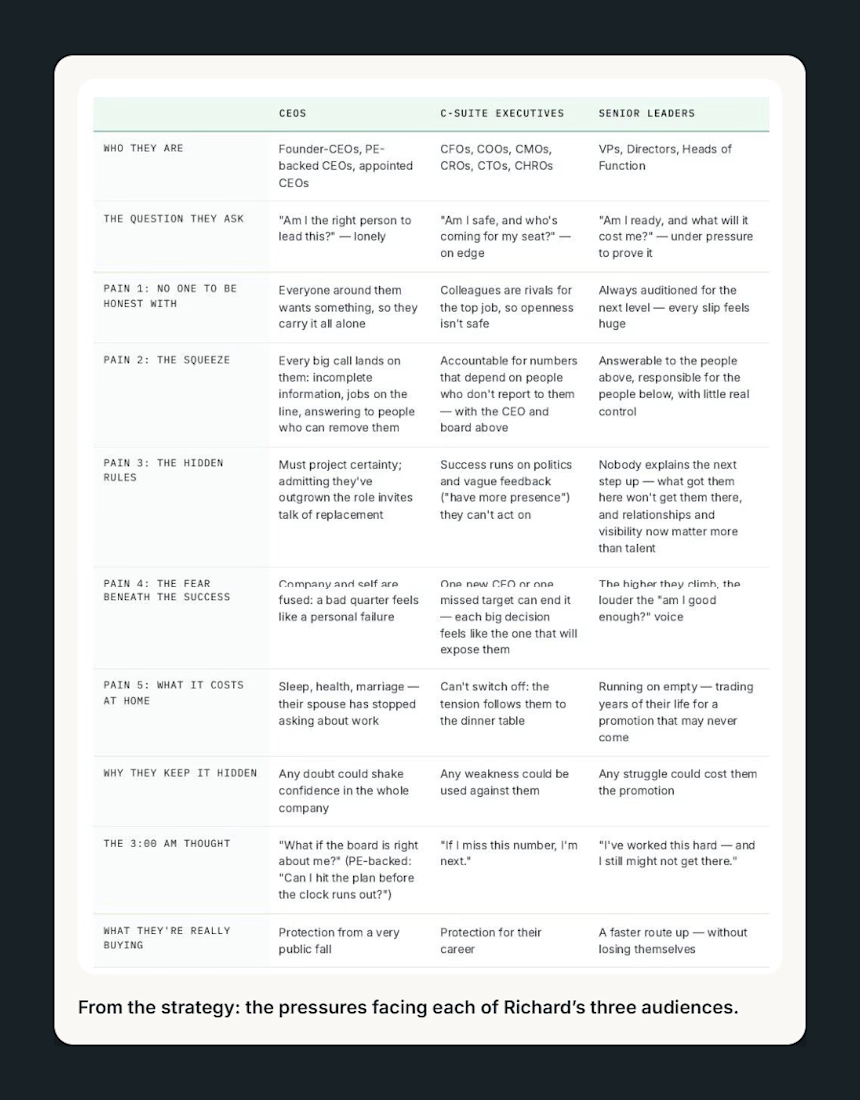
Mapped the private pressures each of his three audiences carries, from the 3am thought to what they're really buying
Separated his two sites so they stopped competing for the same searches
Restructured the service hubs
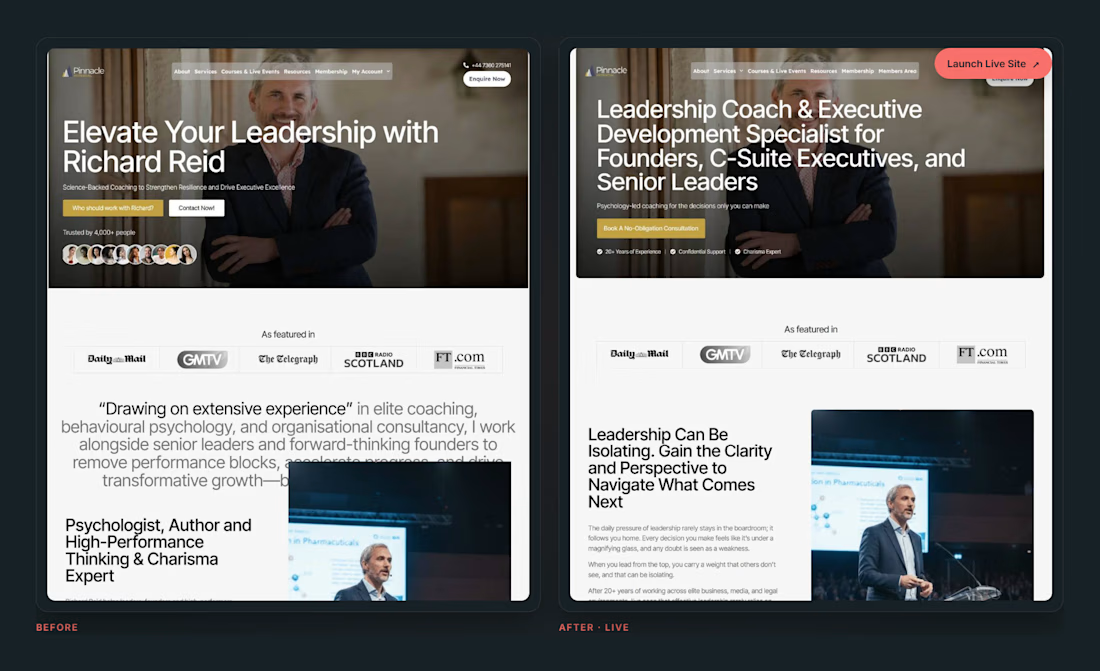
Rewrote the homepage and about page to lead with who he helps and what he solves, with one clear route to a consultation
The old homepage said "Elevate Your Leadership with Richard Reid". The new one tells a founder or C-suite leader, in the first line, that this is for them.
Both pages are live. Full case study on my profile.
If your site gets traffic but not enquiries, the fix usually isn't more traffic. It's knowing which visitors matter and writing for them.

So cool! It’s a great reminder that more traffic doesn’t always mean better results. Understanding search intent and speaking directly to the right audience really can make all the difference. I especially like how the strategy focused on turning the existing traffic into...