The network for creativity
Join 1.25M professional creatives like you
Connect with clients, get discovered, and run your business 100% commission-free
Creatives on Contra have earned over $150M and we are just getting started
Back to feedPost
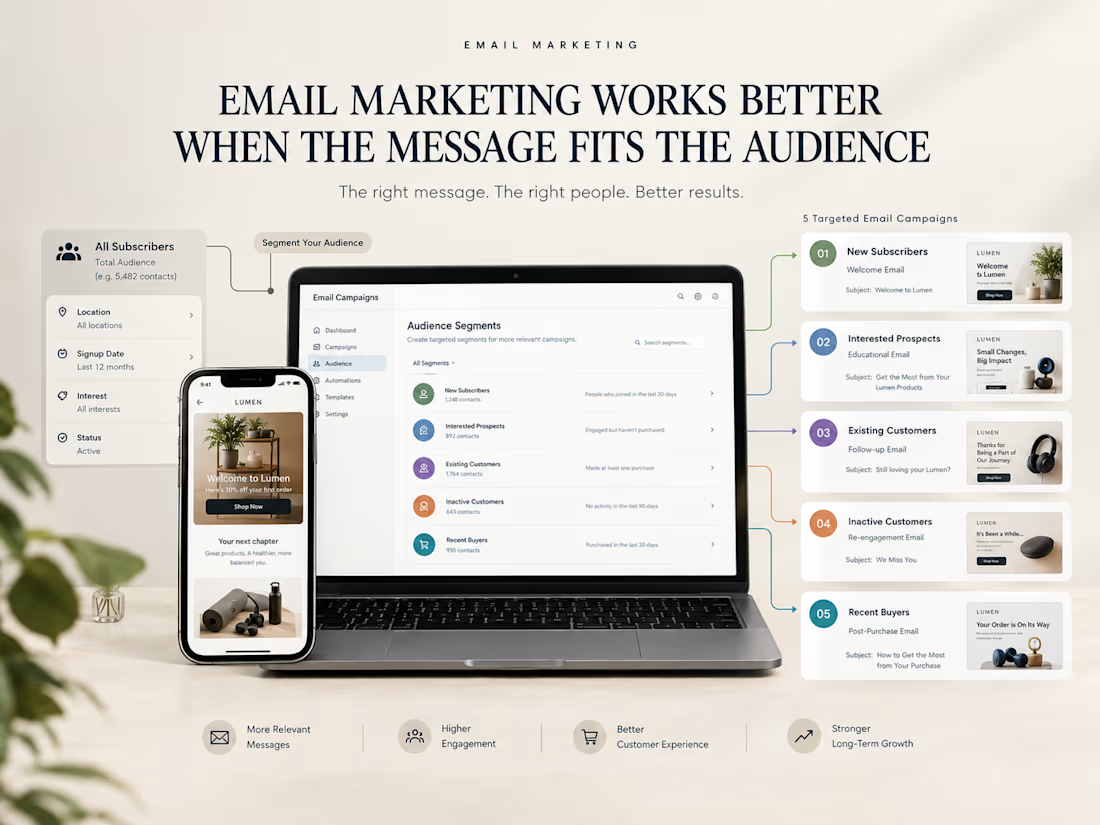
Sending the same email to everyone isn't always the best approach.
People can be at very different stages of the customer journey.
For example:
→ New subscribers may need a welcome email
→ Interested prospects may need more education
→ Existing customers may need follow ups
→ Inactive customers may need re-engagement
→ Recent buyers may need helpful post purchase content
That's where email segmentation becomes useful.
Instead of sending one message to everyone, you can make the message more relevant to each audience.
Better segmentation can lead to better communication.

Exactly. The more relevant the message is to where someone is in the customer journey, the more effective the email can be.

Absolutely. Relevance is what makes email communication feel more personal and useful.

Exactly. Segmentation helps turn one generic message into more relevant communication for each audience.
Well said. Sending the right message to the right audience can make a big difference.
The network for creativity
Join 1.25M professional creatives like you
Connect with clients, get discovered, and run your business 100% commission-free
Creatives on Contra have earned over $150M and we are just getting started





Related posts

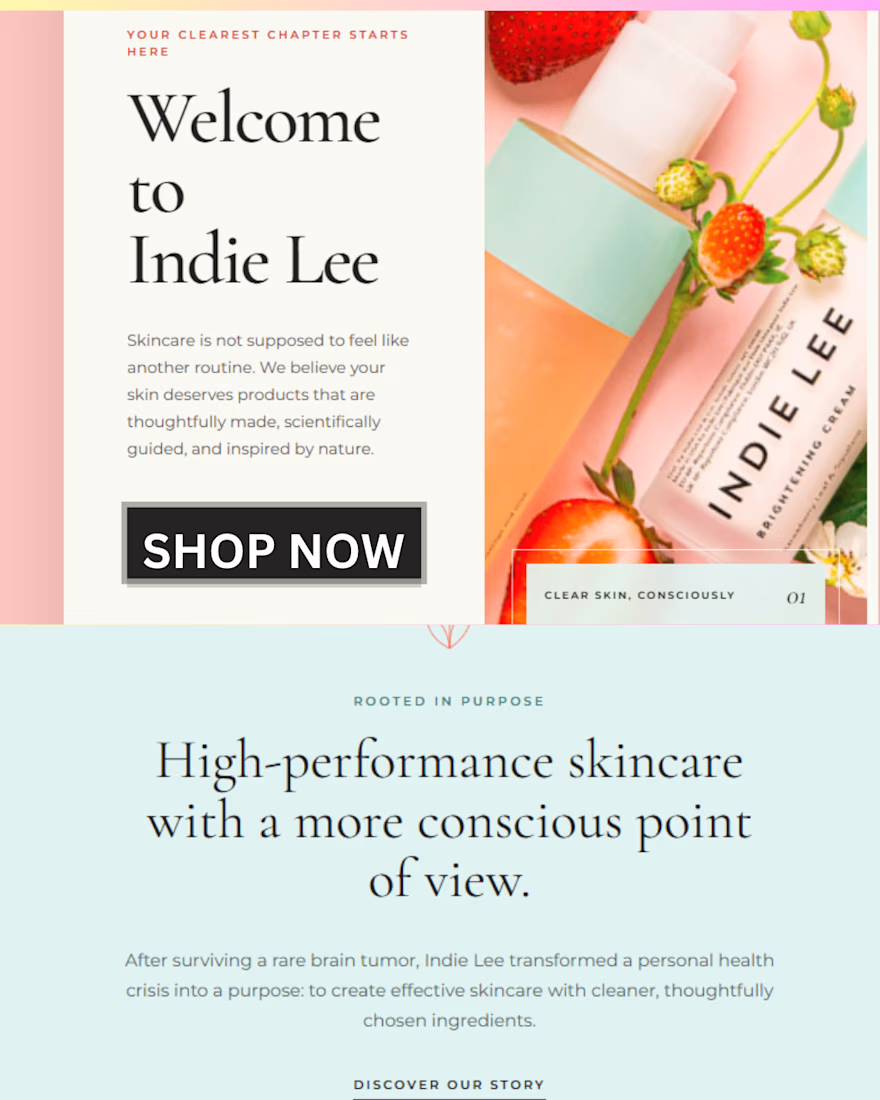
Indie Lee — Welcome Email Strategy & Redesign
Overview
A speculative email strategy and redesign project for Indie Lee, created to practice customer research, email strategy, copywriting, and email design for a beauty/skincare brand.
The Challenge
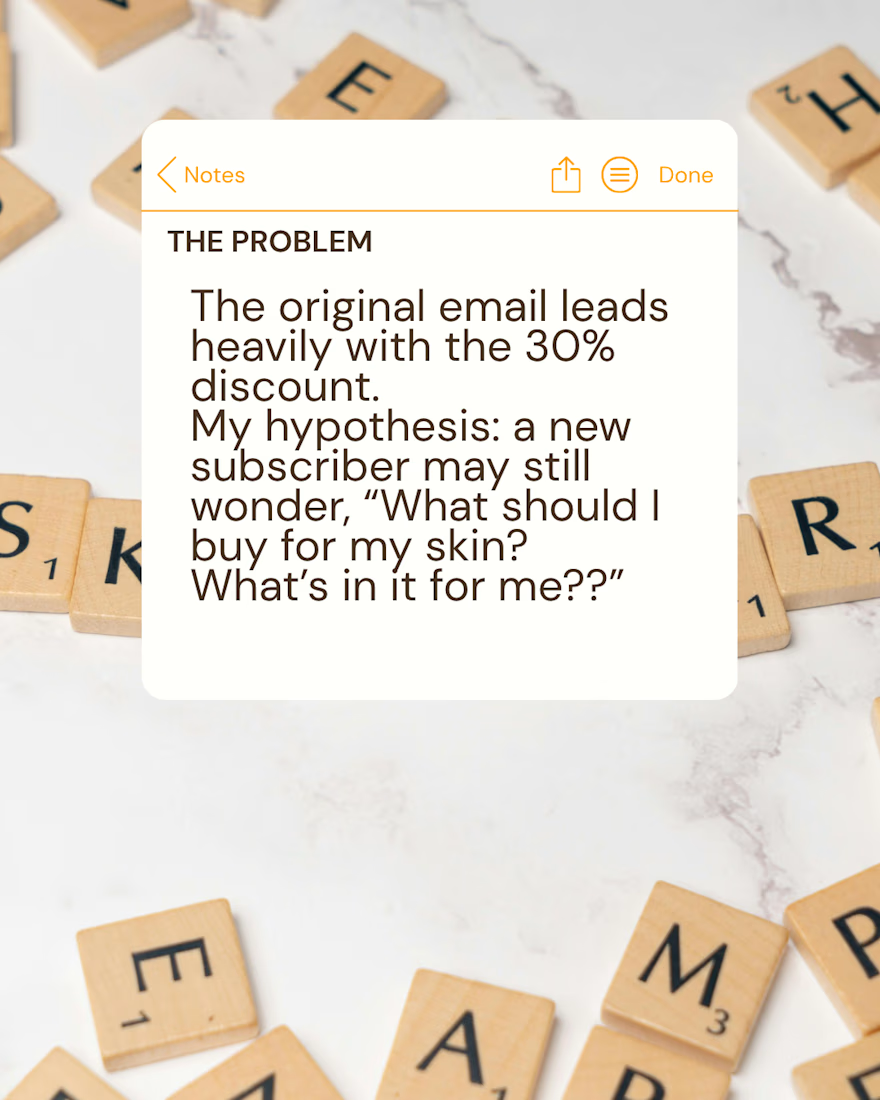
The original welcome email strongly emphasized the first-order discount and encouraged subscribers to shop.
I identified a potential customer barrier:
“What should I buy, and how do I know what's right for my skin?”
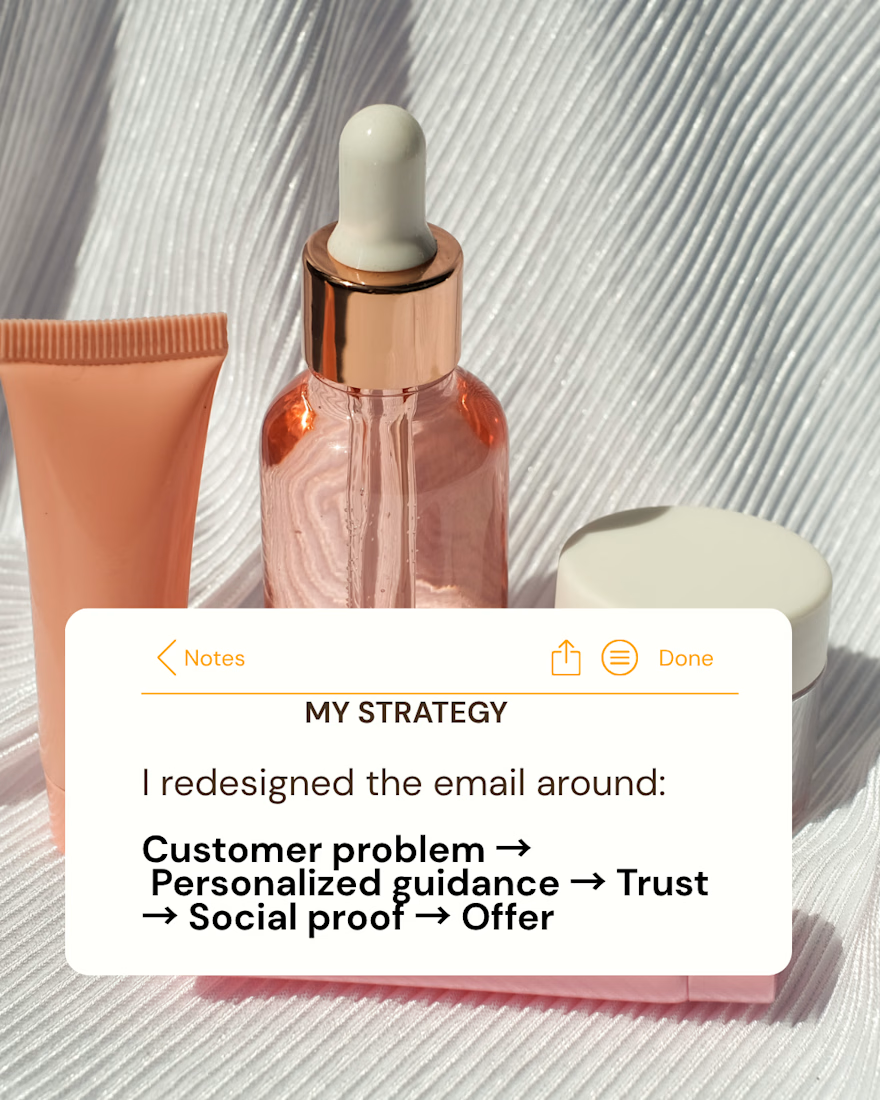
My Strategy
I redesigned the email around a more customer-focused journey:
Customer problem → Personalized guidance → Trust → Social proof → Offer
What I Changed
Added messaging around product-selection uncertainty.
Introduced personalized skincare consultation as a solution.
Strengthened the customer-focused messaging.
Added founder storytelling to build trust.
Added social proof around customer desires such as hydration and glow.
Kept the 30% first-order offer as a conversion incentive.
Reorganized the email to create a clearer path toward purchase.
Speculative concept created for portfolio purposes. Not affiliated with Indie Lee.



Starting from the new subscriber's question is a smart way to frame the welcome email.

Would you send an email with 0 errors and 0 warnings?
I made a three-minute “Would you send it?” exercise for Repeat Foundry using two fictional coffee welcome emails.
The cleaner version passes the implemented static checks. It still talks about a brew guide while its button leads to my marketing portfolio. That deliberate mismatch is enough to hold it.
The new copy adaptation puts the three brewing checks inside the email and removes the unrelated button. It still needs verified sender details, audience and timing checks, missing-data tests, and an authorized test send.
My takeaway for Shopify founders: ask what evidence sits behind “ready.” Static checks inspect supplied files; they cannot establish that the live journey is ready to send.
Try the exercise and copy the release-decision note:
https://github.com/Nimrodogachi/Journey-/blob/main/docs/would-you-send-it.md
This is self-directed, AI-assisted work with fictional examples. Native platform tests are NOT RUN; no client results or performance gains are claimed.
If you need a focused post-purchase copy review, send the email count, goal and the question you want answered. Repeat Foundry’s starting scope is one journey, up to three emails, with scope and price agreed before work starts.


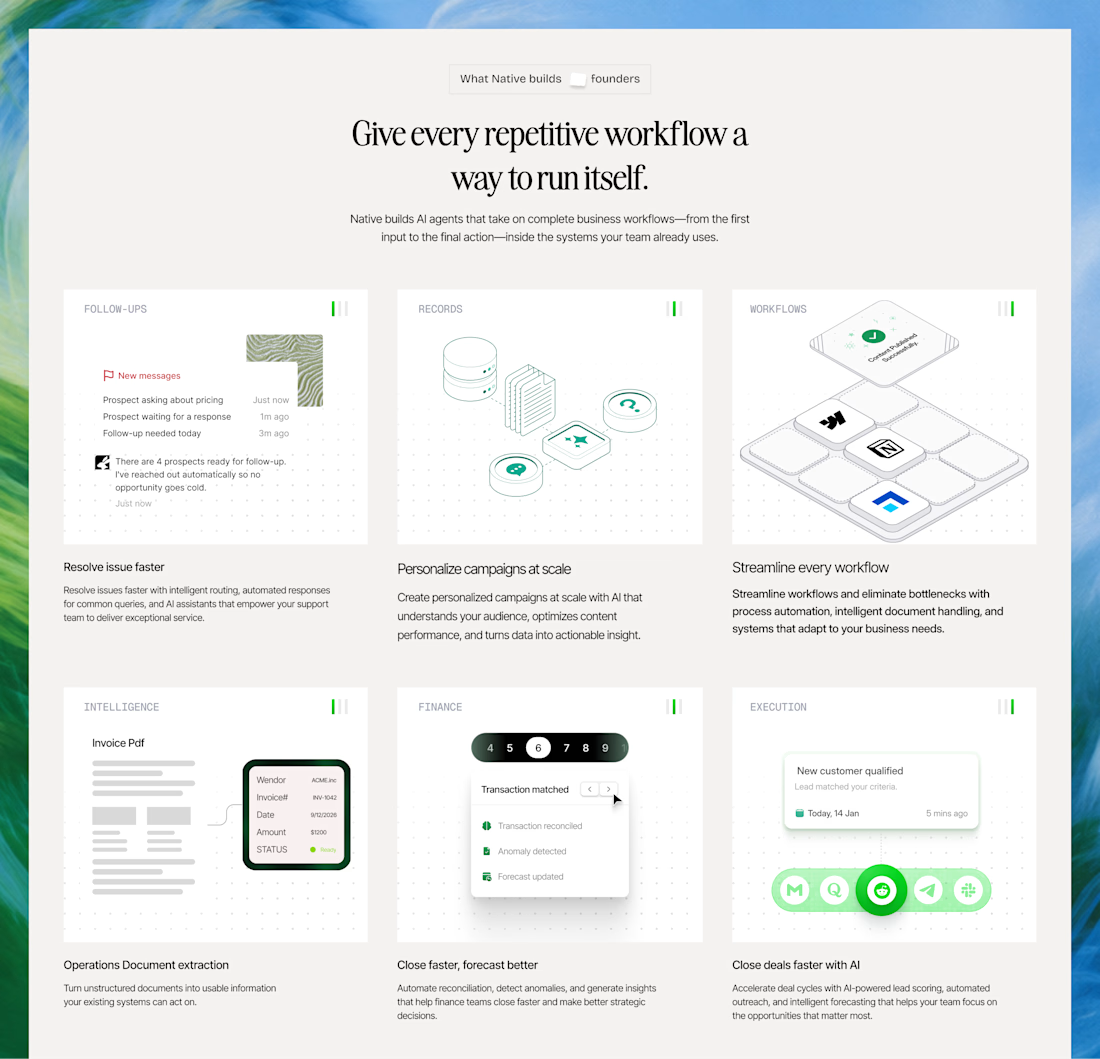
Founders, your visitors don't read websites.
They scan them in 3 seconds and decide.
One good bento card explains more in that scan than three paragraphs explain in a full read.
A great bento section instantly answers:
What your product does
Why it matters
Why they should trust you
Less text. More clarity.
That's how SaaS landing pages actually convert.