The network for creativity
Join 1.25M professional creatives like you
Connect with clients, get discovered, and run your business 100% commission-free
Creatives on Contra have earned over $150M and we are just getting started
Back to feedPost

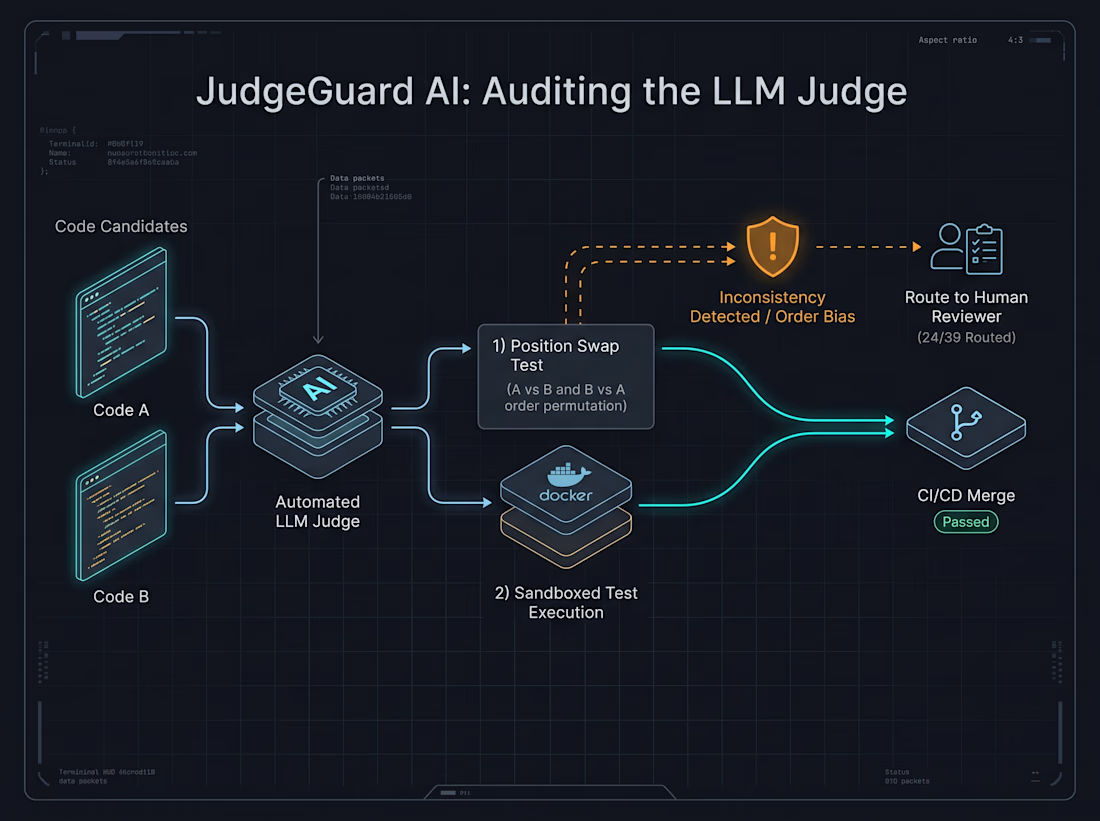
Using an LLM to evaluate code in your CI/CD pipeline sounds efficient until you realize the judge prefers broken code that looks clean over working code that looks verbose.
Teams rush to adopt "LLM-as-a-Judge" to score PRs and agent-generated patches. But automated evaluators suffer from severe cognitive distortions:
Position Bias: Swapping the order of candidates (evaluating Candidate B first instead of A) flips the model's preferred verdict up to 35% of the time.
Surface Fluency Bias: Models systematically award higher scores to elegant-looking code with formatted docstrings—even when it fails unit tests.
In our JudgeGuard AI benchmark across 13 evaluation tasks, automated judges favored failing implementations whenever formatting masked logic flaws.
To safely operationalize automated judges without breaking production:
Order Invariance Testing: Run dual evaluations (A vs B, then B vs A). If the preference flips, flag the evaluation as non-deterministic.
Sandboxed Test Grounding: Execute candidates in isolated Docker containers first. A candidate failing unit tests cannot receive a passing judge score.
Fail-Closed Human Routing: In our benchmark, 24 of 39 ambiguous or order-dependent evaluations were automatically routed to a human reviewer.
How does your team audit the accuracy and position bias of automated LLM judges?
#AIEngineering #DevOps #QA #DevSecOps #SoftwareEngineering
The network for creativity
Join 1.25M professional creatives like you
Connect with clients, get discovered, and run your business 100% commission-free
Creatives on Contra have earned over $150M and we are just getting started



Related posts

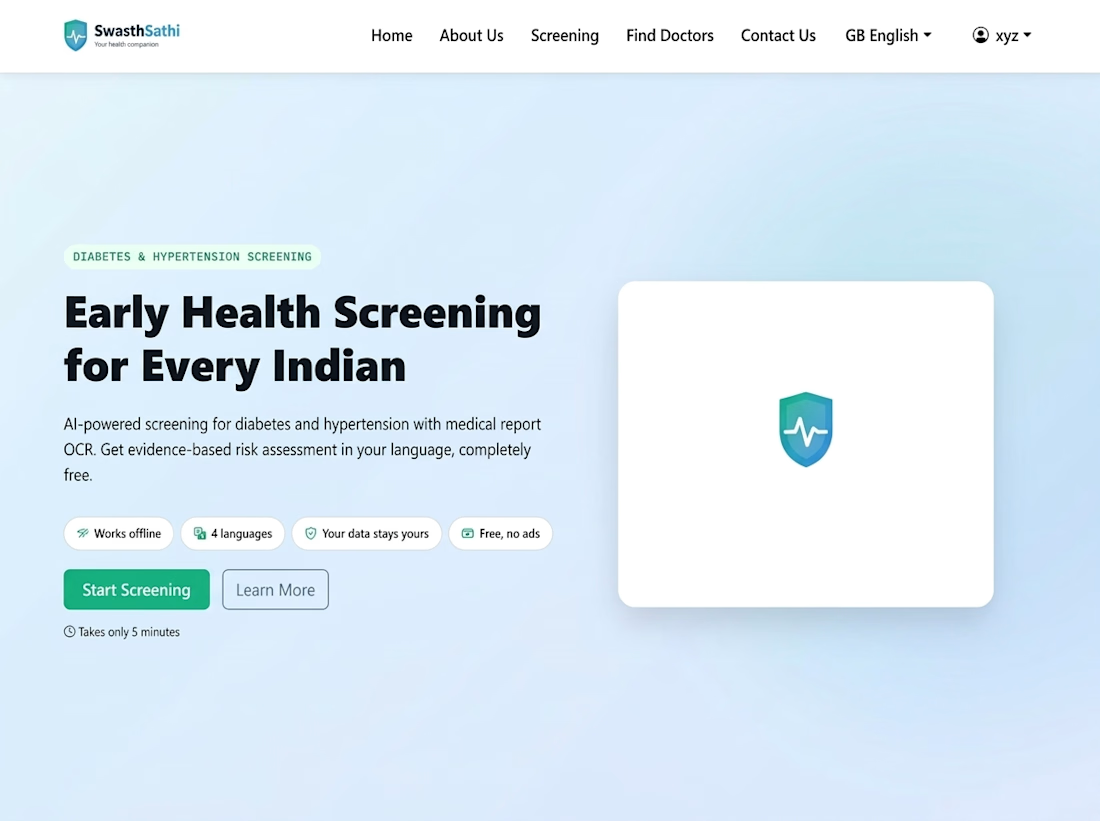
Most AI chatbots have the same problem: they can sound convincing even when they're wrong.
I wanted to build one that doesn't simply generate answers—but actually has evidence behind them.
That's one of the things I worked on with SwasthSathi, a health-screening platform that received a ₹10,000 prototype development grant.
For its AI assistant, I implemented a pipeline that:
→ Extracts information from uploaded medical reports using OCR
→ Retrieves relevant medical guidelines using embeddings and pgvector
→ Generates responses grounded in retrieved information
→ Uses layered cost controls to prevent unnecessary API usage
The goal wasn't to make AI sound smarter. It was to make its answers more grounded, useful, and responsible.
And in a healthcare context, knowing when the system shouldn't confidently answer is just as important as generating a good response.
SwasthSathi provides health information and screening support—not diagnoses.
Working on this made me more interested in building AI features that solve actual problems rather than adding a chatbot just because a product can have one.
I'm now open to AI engineering projects involving:
• RAG over company documents and knowledge bases
• AI features integrated into existing web applications
• Document processing and intelligent workflows
• AI-powered MVPs and prototypes
Not every problem needs RAG, though. Sometimes a simpler solution is better. I'd rather figure that out with you before writing code.
If you're building a product that works with documents, data, or complex workflows, what would you want AI to actually do in it?
Want to see it in action?


Your AI has a good track record. What should it be allowed to do next?
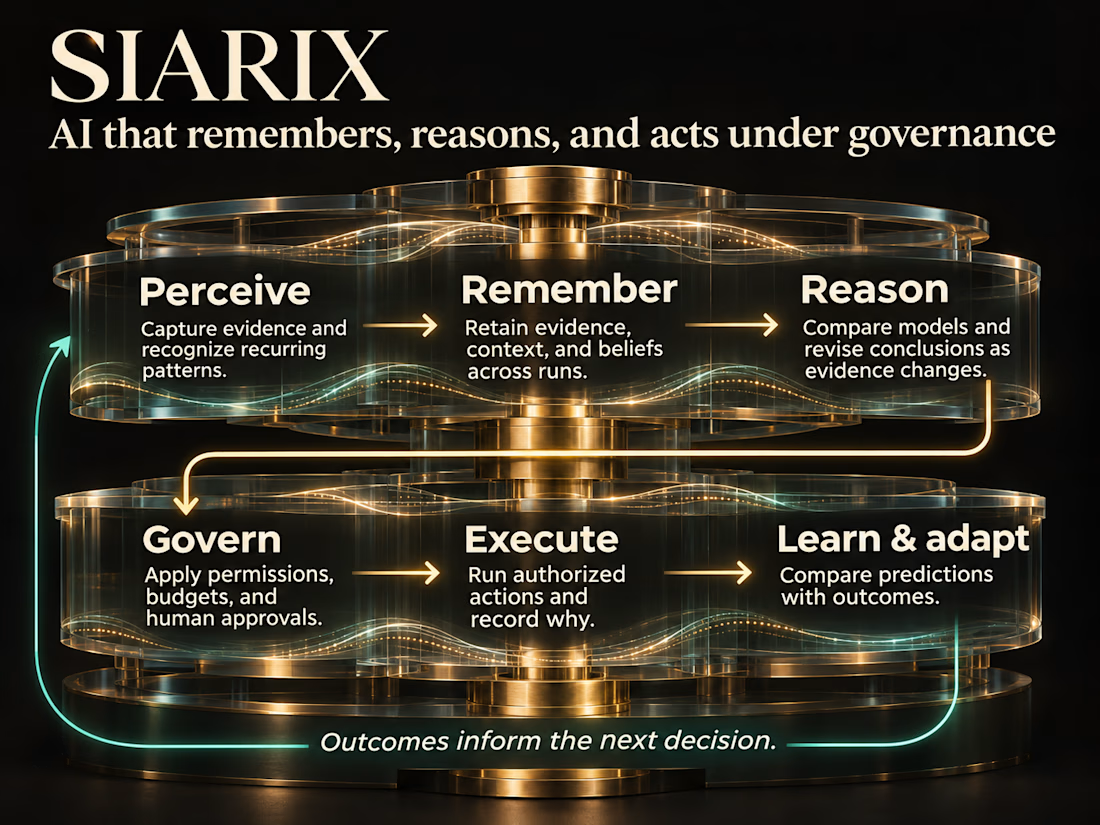
I’m working on Siarix, the software I built to help businesses give AI agents more responsibility without making their teams review every action.
Here’s a question I keep coming back to. If an AI agent correctly reviews 99 invoices, should it be able to change where the 100th payment goes?
Imagine the same agent keeps spotting a mismatch caused by how one supplier formats its invoices. That pattern can improve how it reviews the next batch. A request to change the supplier’s bank details calls for a different decision. The agent can gather the evidence and recommend a response. A person still authorizes the change.
That’s the work I’m doing with Siarix. Its Mind Twin engine carries evidence, patterns, and past outcomes across runs, so new information can change the next recommendation. Its governance layer sets what the agent can access, change, or spend, which actions need approval, and what gets recorded after it acts.
I’m now offering this as a founder-led AI governance assessment. Bring me one workflow your team wants to trust with more responsibility. I’ll help you decide what can run on its own, what still needs a person, and what evidence would justify giving the agent more room.
What’s one task you’d trust an AI agent to handle today? Where would you draw the line?

Bank detail changes would stay with a person for me, no matter how good the track record is. That's exactly what scammers go after

I provide professional AI engineering, AI automation, chatbot development, and full-stack web development services.
Project Services:
Custom AI Chatbots & AI Assistants
AI-Powered Web Applications
Business Process Automation
n8n Workflow Development & Integration
Full-Stack Website Development
API Integration & Backend Development
Custom Software Solutions
My Approach:
I focus on building practical, scalable, and user-friendly solutions that help businesses automate operations, improve productivity, and grow faster.
I prioritize clean development, reliable functionality, transparent communication, and on-time delivery.
Let's turn your ideas into powerful digital solutions.
Gourav Sharma
AI Engineer | Founder | Full-Stack Developer
APEX AI