The network for creativity
Join 1.25M professional creatives like you
Connect with clients, get discovered, and run your business 100% commission-free
Creatives on Contra have earned over $150M and we are just getting started
Back to feedPost


The 3 Phases of Onboarding That Most Products Get Wrong
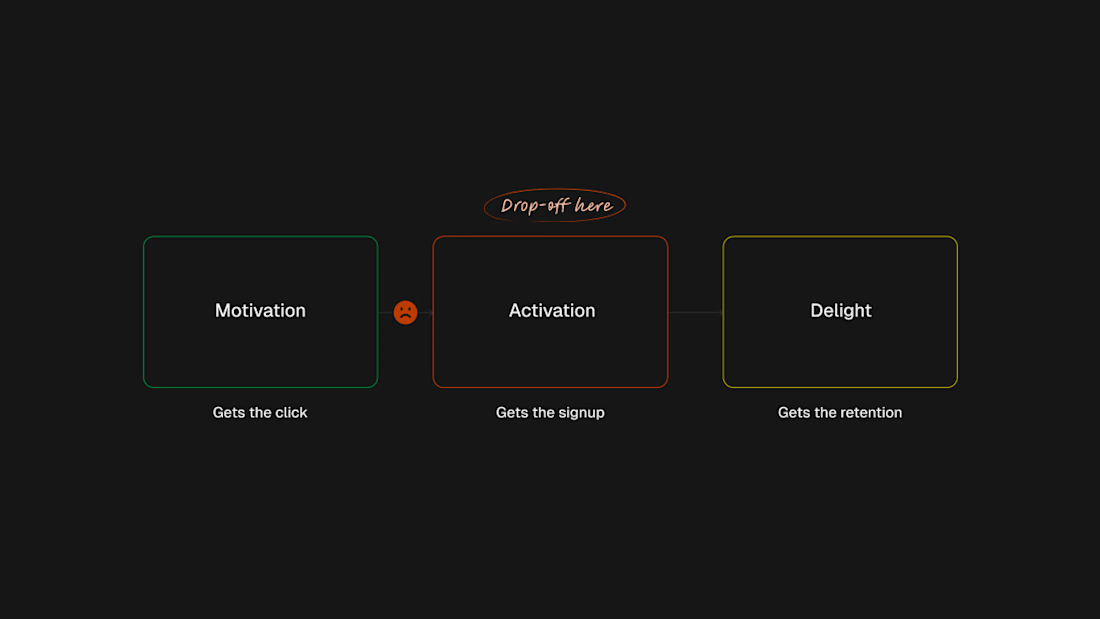
We break every onboarding flow into 3 phases. Motivation, Activation, and Delight.
Most products nail the first one and completely miss the other two. That's why a product can have a beautiful landing page, a strong value proposition, and solid traffic, and still lose half its users before they ever complete a single action.
Here's what each phase needs and where the drop-off actually happens.
Phase 1: Motivation
This is your landing page. Your hero section. Your value proposition. The part of the experience that answers "why should I care?"
Most products actually do this reasonably well. Compelling headlines, clean visuals, a clear promise. The user gets excited. They tap "Get Started."
And then they hit a wall.
Motivation is the easiest phase to design because you're selling a future state. You're painting a picture of what the user's life looks like after they use your product. It's aspirational. It's fun to design. And it has almost nothing to do with whether someone actually becomes a user.
Motivation gets the click. That's all it does. And a click without successful activation is just a bounce rate.
Phase 2: Activation
This is where the user has to actually do something. Create an account. Grant permissions. Set up a profile. Complete the first action.
This is where most products lose a significant portion of their users. Not because the product is bad, but because the activation phase was designed as a checklist of requirements instead of an experience.
What we've learned across multiple projects:
Every step needs its own reason to exist. If you can't explain in one sentence why a step is there and what the user gains from completing it, that step should be removed or combined with another.
Show progress clearly. A simple progress indicator costs almost nothing to build and fundamentally changes how the process feels. Users don't mind a multi-step flow. They mind not knowing how much further they have to go.
Reduce decisions wherever possible. New users need the path of least resistance. Default to the non-essential choices. Let power users customize later.
The goal of activation is not to educate the user on your entire product. It's not to collect every piece of information you might eventually need. The goal is to get them to one successful action, one moment of "this works" with the least possible friction.
Everything else can come later. The first session is about one thing only: getting through.
Phase 3: Delight
The user made it through. They completed the action. They arrived.
What happens next is the most neglected moment in product design.
Most products respond with a small confirmation message. A checkmark. A toast notification that disappears in a few seconds. That's it.
The user just did something that required effort, attention, and trust. And the product's response is almost nothing.
This moment is where delight lives. And delight is what turns a first-time user into a returning one.
What we design instead:
A response that feels proportional to what the user just accomplished. A subtle celebration. A small animation that rewards the moment. A haptic tap on a mobile that confirms the action physically, not just visually. Language that acknowledges the achievement rather than reporting the outcome.
"Welcome in" feels warmer than "Account created." "You're all set" feels better than "Setup complete." "Nice one," feels human. "Transaction confirmed" feels like a receipt.
Small touches of gamification work here too, when they fit the product. A progress milestone. A badge for completing the first key action. A visual moment that makes the user feel seen, not just processed.
Delight is not about confetti animations or over-the-top celebrations. It's about designing a moment that feels like the product is happy the user made it. That emotional acknowledgment is what builds the bond that brings them back tomorrow.
Without it, you spent all that effort getting someone through activation and gave them no emotional reason to open the app again.
Motivation gets the click. Activation gets the signup. Delight gets the retention.
Design every phase with the same precision and care you bring to the rest of your product. Reduce friction, deliver speed to value, and make progress feel intuitive from the first moment. When you do, users don't just arrive but they adopt, return, and never want to leave.
That's how the best tools are built.
If you want a fresh set of eyes on your onboarding flow, we run a free 20-minute audit against this exact framework. Map your current phases, spot the gaps, and walk away with a direction worth shipping.
Book a slot here → http://calendly.com/refinestudio/audit

well written sir

Nice work
The network for creativity
Join 1.25M professional creatives like you
Connect with clients, get discovered, and run your business 100% commission-free
Creatives on Contra have earned over $150M and we are just getting started
Related posts

Most UI/UX designers don’t have a design problem.
They have an idea problem.
Staring at a blank canvas → scrolling Dribbble → repeating the same patterns.
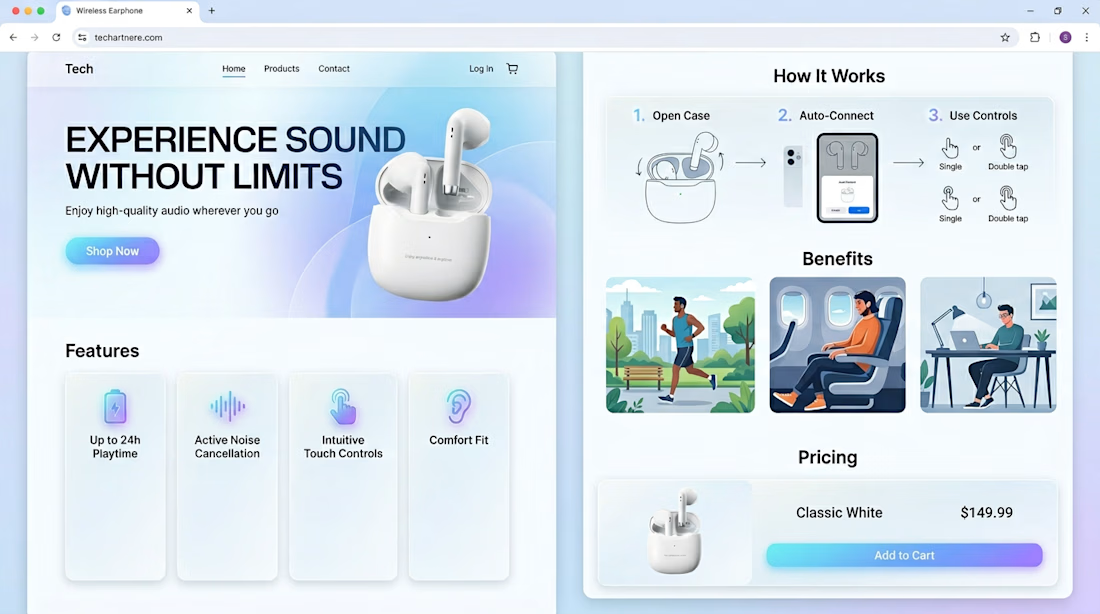
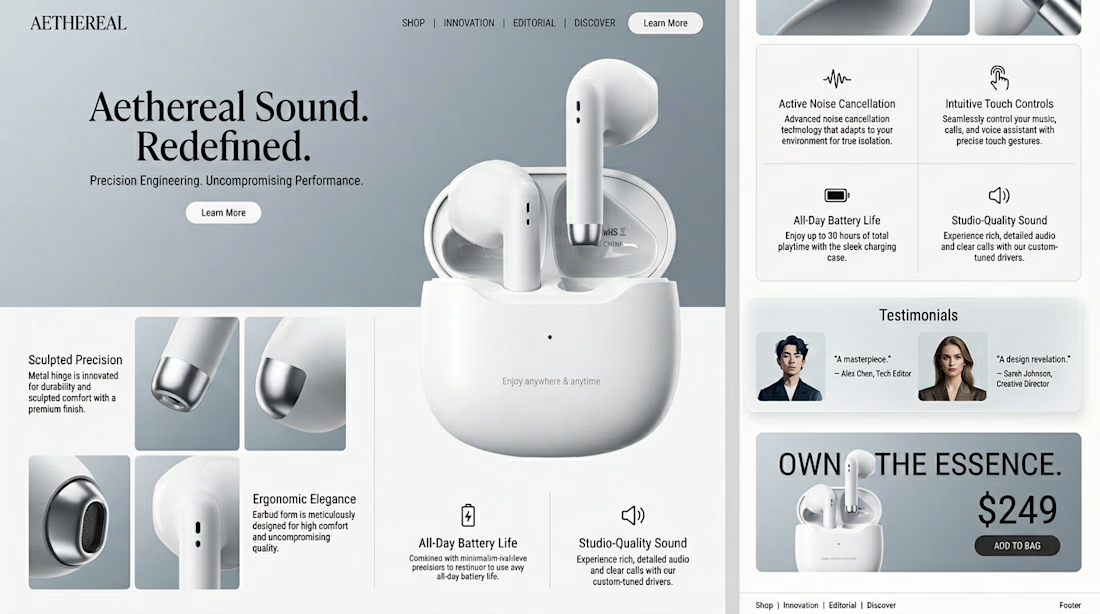
So I built something to fix that👉 UX Forge
Drop in any product, and it instantly generates:
• 2 website UI concepts
• 2 mobile app designs
• 1 cinematic 3D web experience
All with different styles, all based on the product’s actual visual identity.
No random inspiration.
No copy-paste designs.
Just structured, product-driven creativity.
It helps you:
→ Explore multiple design directions in seconds
→ Break creative blocks instantly
→ See how a single product translates across platforms
→ Push beyond safe, repetitive UI patterns
Try👉 https://app.flora.ai/techniques/ux-forge
This isn’t about replacing designers.
It’s about giving you better starting points—faster.
Because great design doesn’t start with pixels.
It starts with perspective.
And UX Forge gives you 5 at once.


finally something for web designers!



The most profitable brand project I shipped last year took 11 days and didn't include a single new logo concept.
The client had just raised, repositioned upmarket, and watched their sales cycle stretch by three weeks for no obvious reason. They came in convinced they needed a full rebrand. I sat in on two of their sales calls before quoting anything.
In both calls, the rep apologized for the website in the first 90 seconds. In both calls, the prospect went quiet for the rest of the demo.
That's one broken surface costing them deals on a loop.
We skipped the rebrand and locked the new narrative in two days. Rewrote and rebuilt the homepage in Framer in another nine.
The apology disappeared from sales calls inside the first week and that was the entire engagement.
The reason most brand work doesn't move the business is that it's solving the wrong layer of the stack. The bottleneck for a growth stage B2B company isn't usually "the brand" It's one surface, one sentence, one moment in the buyer journey where the story breaks.
Find that moment. Fix that moment. The rest can wait.
Most of the brand work I refuse is the work I could've sold the easiest.:















Trending

Runway
AI video generation is exploding. What are you dreaming up in Runway?

Contra University
Learn from expert creatives how to earn more using next-gen AI tools.
creativeaiflow
Creative AI workflows are evolving. What tools do you use, and what are their strengths and weaknesses?
portfolioreview
The best portfolios tell a story, not just show a grid. Share yours for feedback.
freelancerlife
Freelancer life is wins, pivots, and everything in between. What’s yours right now?