The network for creativity
Join 1.25M professional creatives like you
Connect with clients, get discovered, and run your business 100% commission-free
Creatives on Contra have earned over $150M and we are just getting started
Back to feedPost

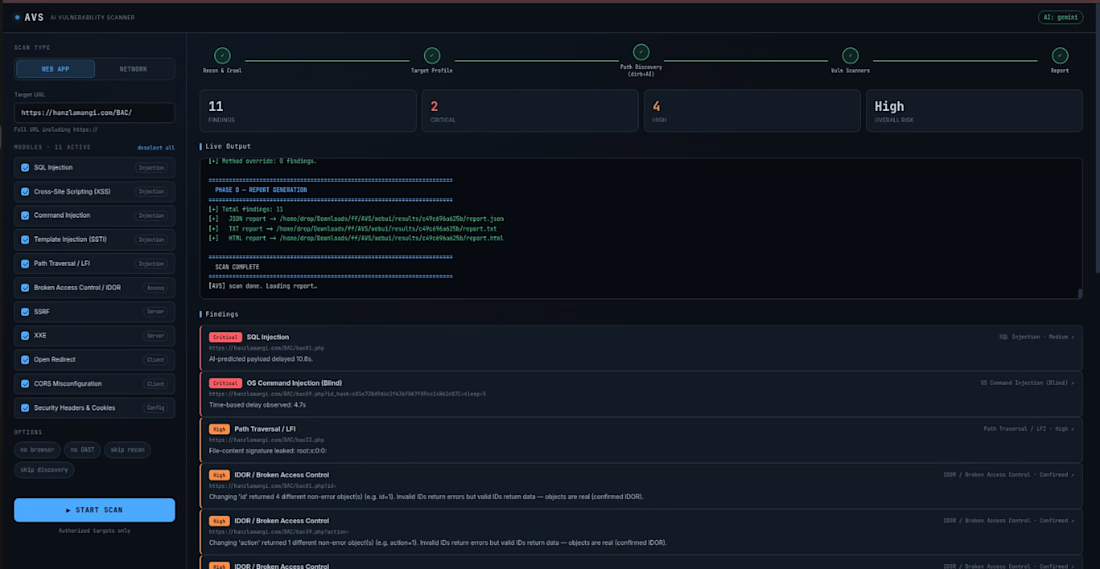
AI-Enabled Automated Vulnerability Scanner (AVS)
Project Overview
The AI-Enabled Automated Vulnerability Scanner (AVS) is a comprehensive cybersecurity application engineered to proactively identify, test, and evaluate complex network and web-based security risks. Built as a rigorous defense project, this tool streamlines the vulnerability management lifecycle by moving beyond basic static rule-matching. It leverages automated intelligence to map digital environments, expose critical security flaws, and deliver actionable, developer-ready risk assessments, enabling teams to secure their applications efficiently before deployment.
Core Architecture & Features
Intelligent Crawler Extraction: Automatically navigates and maps complex web architectures to discover hidden endpoints, directories, and exposed digital assets.
Dynamic Parameter Fuzzing: Systematically injects unexpected or malformed data into input parameters to expose unhandled exceptions and hidden injection vectors.
Method Overriding Detection: Analyzes HTTP method configurations to identify insecure API implementations, bypass attempts, and unauthorized access routes.
Contextual Risk Scoring: Evaluates discovered threats based on real-world exploitability, prioritizing critical vulnerabilities and generating structured defense documentation.
Vulnerability Detection Scope
The AVS engine is designed to automatically detect and evaluate 11 distinct classes of critical web vulnerabilities:
Injection & Execution: SQL Injection (SQLi), Cross-Site Scripting (XSS), Command Injection, and XML External Entities (XXE).
Access & Authentication: Broken Authentication, Broken Access Control, and Server-Side Request Forgery (SSRF).
System & Data Exposure: Security Misconfiguration, Insecure Deserialization, Sensitive Data Exposure, and Directory Traversal.


The network for creativity
Join 1.25M professional creatives like you
Connect with clients, get discovered, and run your business 100% commission-free
Creatives on Contra have earned over $150M and we are just getting started
Trending
retrofuturism
Share your favorite designs from the past exploring the distant future. Or your own take on the aesthetic 🚀
halftone
Dots. Texture. Grain. Let's see your designs using the halftone technique.

Midjourney
Creatives are showing off what they're making with Midjourney.
colorgrade
Video editors sound off: How do you enhance the mood of your video in color grading?
Challenges
View all


Related posts

Niva — AI Automation Agency Website Template (Framer)
Check it live: https://niva.framer.website/
Niva is a premium Framer template built for AI automation agencies, consultants, and AI-driven service businesses who want a website that actually converts — not just looks good in a screenshot.
Most templates in this category default to the same cyan-and-glow "tech startup" aesthetic. Niva takes a different approach: a warm, rose-gold accent on a deep charcoal base, paired with refined typography and generous spacing — designed to signal maturity and trust to enterprise buyers, not just early-stage hype.
What's inside:
— 13+ fully designed pages, including Home, About, Services, Case Studies, Blog, and Contact
— CMS-ready case study and blog collections
— Conversion-focused structure: clear funnel from problem → solution → proof → pricing → CTA
— Custom 3D iconography in a cohesive rose-gold material system
— Built-in accessibility (WCAG 2.1 AA) and performance optimization
Whether you're running an AI agency, automation consultancy, or AI strategy practice, Niva gives you a site that positions you as the premium option in a crowded, hype-driven category.
Interested in a custom version for your agency? Let's talk — DMs open.


Great Designing

Finding the right job often requires manually comparing a resume against dozens of job descriptions.
This project automates that process by:
Analyzing a resume against multiple real job postings
Generating AI-powered match scores
Identifying missing skills
Providing resume improvement suggestions
Storing results in a SQL database
Visualizing insights in Power BI
Offering a live Streamlit web application
🛠️ Tech Stack
Python
Pandas
SQLite
SQL
Google Gemini AI API
Streamlit
Power BI
VS Code
📊 Key Features
AI Resume Analysis
Resume-to-job match scoring (0–100%)
Missing skill identification
AI-generated recruiter feedback
Resume improvement recommendations
Database & SQL
Stores analyzed jobs in SQLite
Performs analytical queries
Identifies skill gaps
Finds best-fit companies and locations
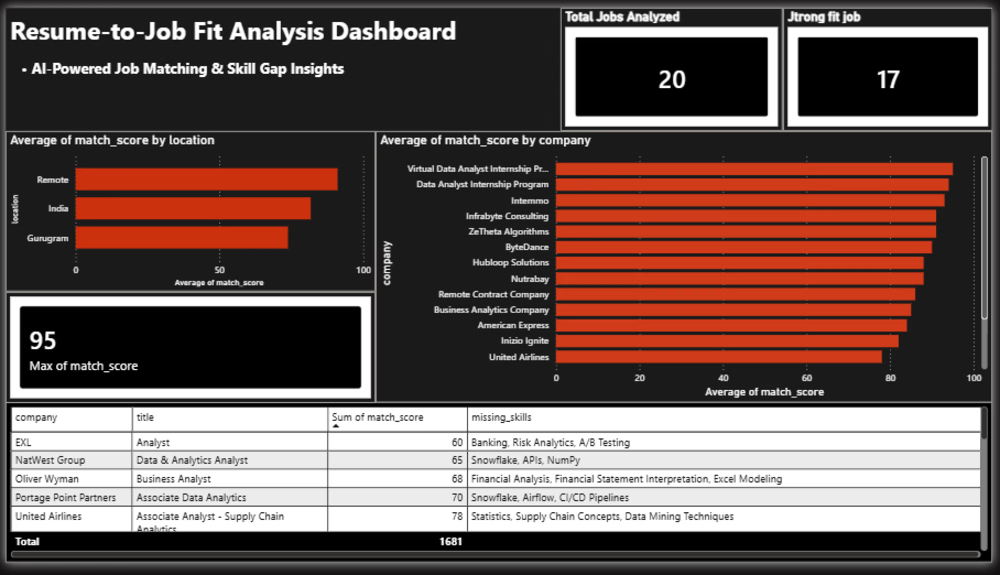
Power BI Dashboard
Average Match Score
Strong Fit Jobs
Top Match Score
Company Match Analysis
Skill Gap Analysis
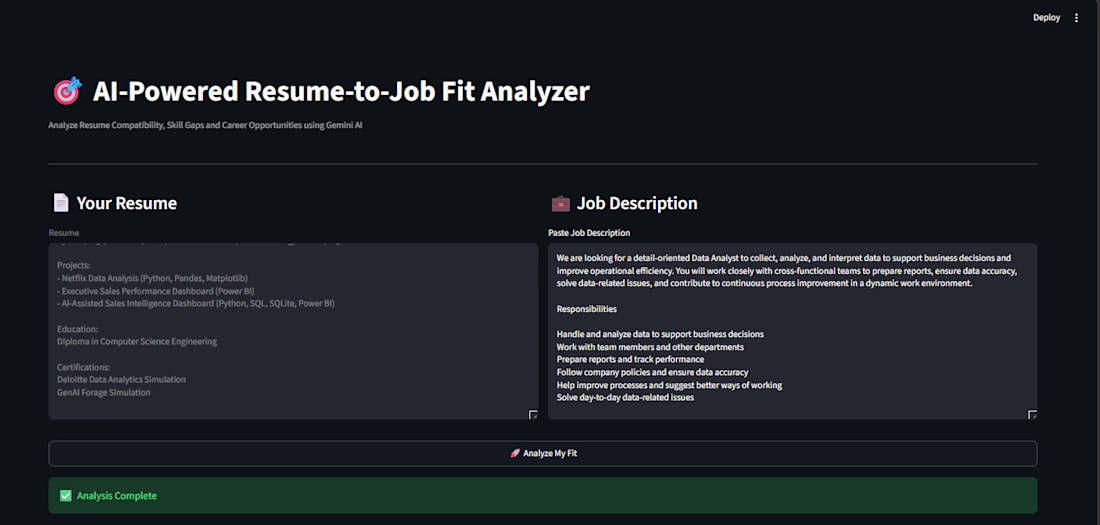
Streamlit Application
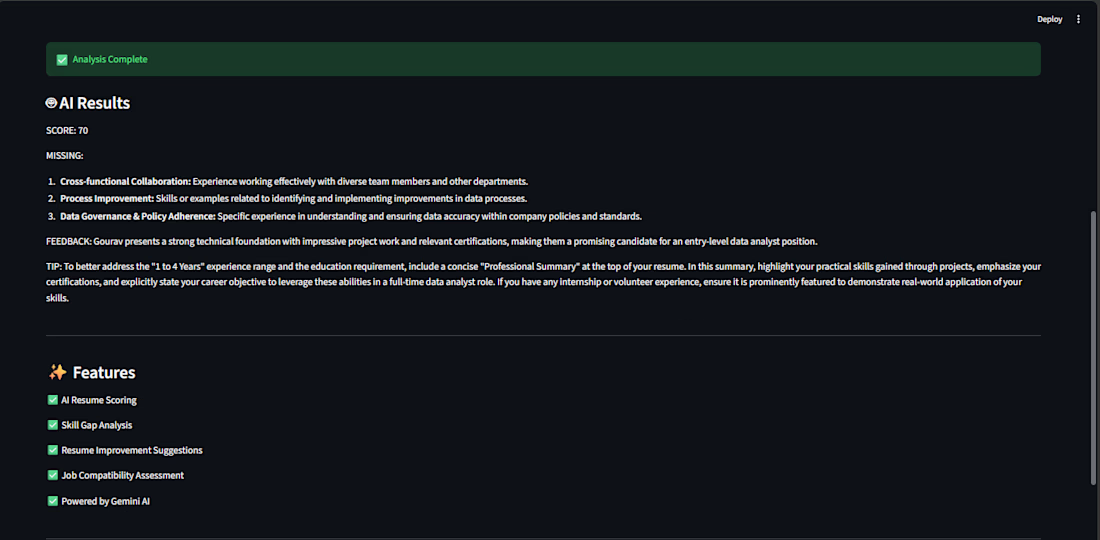
Paste any job description and instantly receive:
Match Score
Missing Skills
AI Feedback
Resume Improvement Tips
📈 Dashboard Insights
The dashboard provides:
Overall resume strength across jobs
Best matching companies
Skill gap analysis
Job fit distribution
Career improvement opportunities
🎯 Business Value
This project demonstrates:
Data Cleaning
Data Analysis
SQL Querying
AI Integration
Dashboard Development
Data Visualization
End-to-End Analytics Workflow
🔮 Future Improvements
Analyze 100+ job postings
Automated LinkedIn job ingestion
Multiple resume comparison
Industry-specific recommendations
Advanced skill trend tracking
👨💻 Author
Gourav Jangid
Aspiring Data Analyst passionate about transforming data into actionable insights using Analytics, SQL, Python, Power BI, and AI.



Awesome use case! Automating resume-job matching saves so much time.

A cinematic, scroll-driven luxury watch promo video/website designed to feel more like a product film than a traditional website. Built with a strong focus on:
• Smooth scroll-driven animations
• Cinematic product storytelling
• Premium visual design
• Interactive product reveals
• High-quality motion and transitions
