The network for creativity
Join 1.25M professional creatives like you
Connect with clients, get discovered, and run your business 100% commission-free
Creatives on Contra have earned over $150M and we are just getting started
Back to feedPost

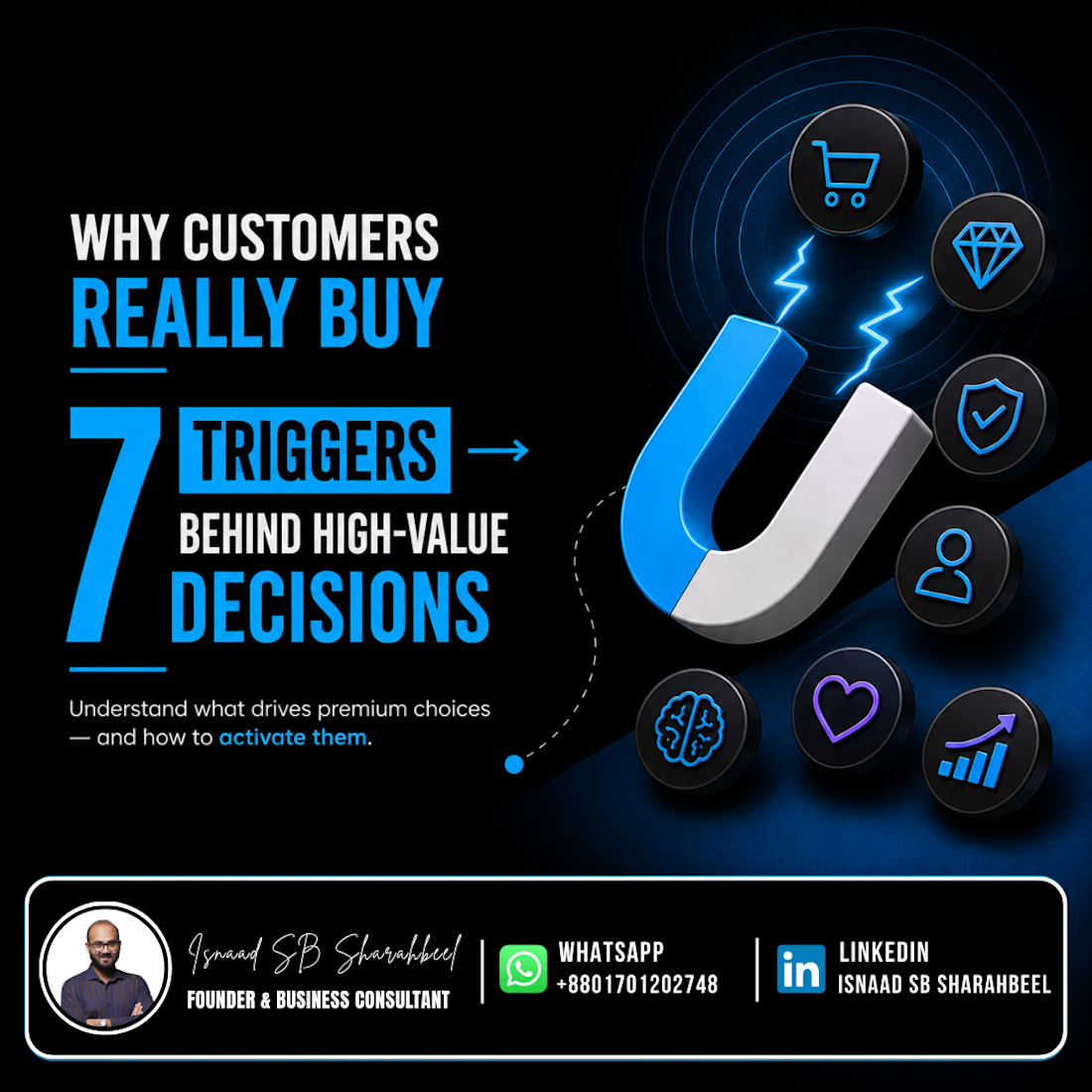
# 𝐖𝐡𝐲 𝐂𝐮𝐬𝐭𝐨𝐦𝐞𝐫𝐬 𝐑𝐞𝐚𝐥𝐥𝐲 𝐁𝐮𝐲: 𝟕 𝐓𝐫𝐢𝐠𝐠𝐞𝐫𝐬 𝐁𝐞𝐡𝐢𝐧𝐝 𝐇𝐢𝐠𝐡-𝐕𝐚𝐥𝐮𝐞 𝐃𝐞𝐜𝐢𝐬𝐢𝐨𝐧𝐬
Customers don't buy in large numbers because they "like" your product.
For most major purchases, the decision is fueled by a range of factors:
While price matters greatly, it is rarely the entire reason to move forward.
The following seven triggers are consistently at play when customers make a significant buying decision:
𝟏. 𝐀 𝐜𝐥𝐞𝐚𝐫 𝐩𝐫𝐨𝐛𝐥𝐞𝐦
Customers buy to solve their own personal pain points. High-value purchases are almost always connected to urgent, expensive, or highly bothersome challenges. The more painful the problem, the more compelling the need for a solution.
𝟐. 𝐀 𝐝𝐞𝐬𝐢𝐫𝐞𝐝 𝐨𝐮𝐭𝐜𝐨𝐦𝐞
Customers are not buying your product's features. They are buying an altered future state: lower costs, enhanced profit margins, reduced operational challenges, greater free time, or improved strategic positioning.
𝟑. 𝐏𝐞𝐫𝐜𝐞𝐢𝐯𝐞𝐝 𝐯𝐚𝐥𝐮𝐞
The value of a solution will dramatically alter the perception of its price. A $10,000 product will either seem cheap or incredibly expensive, depending on what customers will gain from it. They compare the price tag to the return on their investment.
𝟒. 𝐓𝐫𝐮𝐬𝐭
The more financially significant a purchasing choice becomes, the higher the perceived financial and psychological risks. Expertise, credibility, and transparency reduce the risks and build the necessary trust to pull the trigger.
𝟓. 𝐒𝐨𝐜𝐢𝐚𝐥 𝐩𝐫𝐨𝐨𝐟
Clients, case studies, success stories, referrals, and client results are essential because they address a burning customer question: Does your product work for people just like me?
𝟔. 𝐂𝐨𝐧𝐯𝐞𝐧𝐢𝐞𝐧𝐜𝐞
Even when the desired outcome is valuable, a challenging purchasing process can prevent a decision from being made. Complicated steps, poor communication, and undefined next actions can all create unnecessary buyer friction.
𝟕. 𝐔𝐫𝐠𝐞𝐧𝐜𝐲
A customer may clearly understand and appreciate the value, but still not purchase immediately. There needs to be an external trigger: an existing problem, an approaching deadline, a market shift, or the economic impact of prolonging the decision.
The bottom line is simple:
Customers do not purchase because of your product's features. They purchase because the decision logically makes sense to them.
𝐈𝐟 𝐲𝐨𝐮'𝐝 𝐥𝐢𝐤𝐞 𝐭𝐨 𝐠𝐚𝐢𝐧 𝐜𝐥𝐚𝐫𝐢𝐭𝐲 𝐨𝐧 𝐰𝐡𝐚𝐭'𝐬 𝐭𝐫𝐮𝐥𝐲 𝐝𝐫𝐢𝐯𝐢𝐧𝐠 𝐲𝐨𝐮𝐫 𝐜𝐮𝐬𝐭𝐨𝐦𝐞𝐫𝐬' 𝐛𝐮𝐲𝐢𝐧𝐠 𝐝𝐞𝐜𝐢𝐬𝐢𝐨𝐧𝐬, 𝐬𝐞𝐧𝐝 𝐦𝐞 𝐚 𝐃𝐌.
The network for creativity
Join 1.25M professional creatives like you
Connect with clients, get discovered, and run your business 100% commission-free
Creatives on Contra have earned over $150M and we are just getting started

Challenges
View all


Related posts

When a competitor changes its website, what actually deserves action?
I built the full Eris Agent application and website around a practical workflow:
• Compare your website with confirmed competitors.
• Review page and offer changes with source links and collection dates.
• Save findings as reports and follow-up actions.
• Keep incomplete checks clearly marked, so missing evidence does not look like a confident conclusion.
The product lesson: a monitoring dashboard becomes more useful when someone can trace a finding back to its source and decide what to do next.
Here is the application case study: https://contra.com/p/LQOEPvbB-eris-agent-competitor-intelligence-app-and-website
I build web apps, MVPs and scoped AI/agentic workflows for founders and agencies.
Which competitor change would you want flagged first: pricing, offers or positioning?


does it catch pricing changes? that's the signal i'd care about most

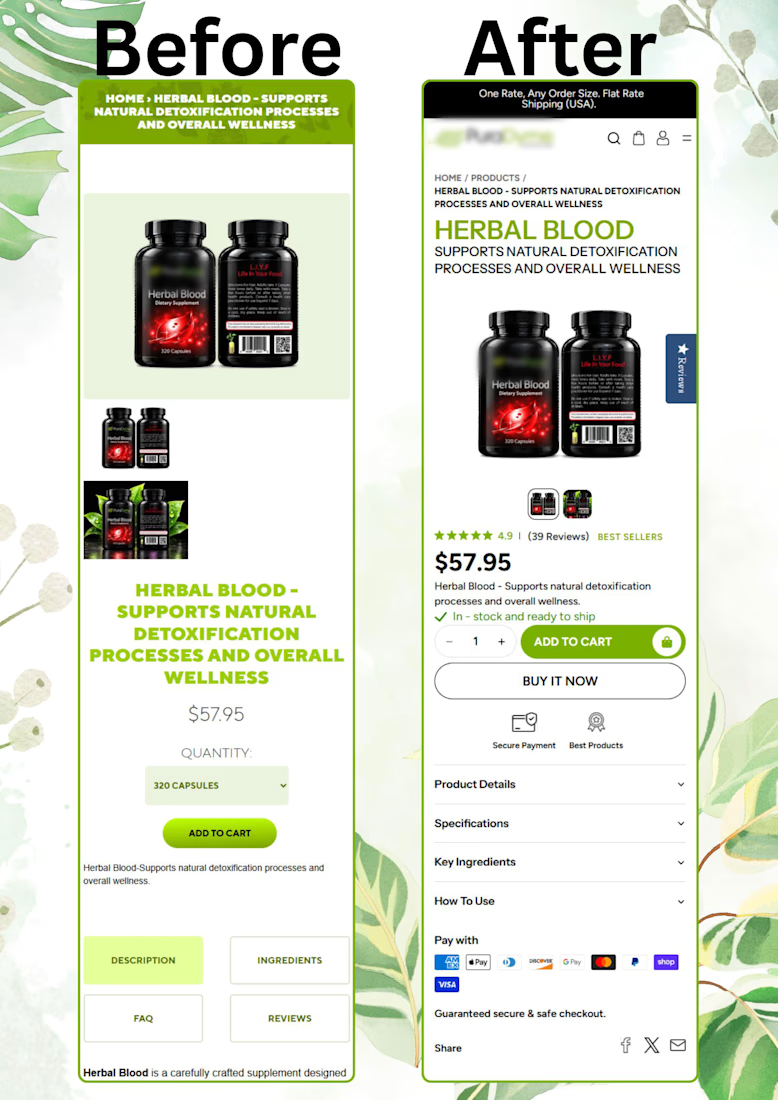
I redesigned a Shopify product page.
Same product. Same price. Completely different experience. 👀
The old page showed the product.
The new page makes it easier to understand, explore, and buy.
Because a product page isn’t just about how things look. It’s about how easily a customer can go from “just looking” to “add to cart.”
That’s the difference between a redesign and a better buying experience. 🚀
Before or after—which one would make you more likely to buy? 👇
#Shopify #ShopifyDevelopment #Ecommerce #CRO #WebDesign


Exactly. A good product page should do more than look good; it should make buying feel easy.

𝗪𝗵𝘆 𝗖𝘂𝘀𝘁𝗼𝗺 𝗖𝗼𝗱𝗲 𝗦𝗻𝗶𝗽𝗽𝗲𝘁𝘀 𝗜𝗻𝘀𝗶𝗱𝗲 𝗡𝗼-𝗖𝗼𝗱𝗲 𝗧𝗼𝗼𝗹𝘀 𝗠𝗮𝗸𝗲 𝗬𝗼𝘂 𝗮 𝟭𝟬𝘅 𝗗𝗲𝘃𝗲𝗹𝗼𝗽𝗲𝗿
You don't need to be a full-stack engineer to build custom digital products, but knowing basic HTML, CSS keyframes, and JavaScript webhooks will give you superpowers in:
𝗪𝗼𝗿𝗱𝗣𝗿𝗲𝘀𝘀: 𝗖𝘂𝘀𝘁𝗼𝗺 𝗖𝗦𝗦,𝗛𝗧𝗠𝗟 & 𝗦𝗵𝗼𝗿𝘁𝗰𝗼𝗱𝗲𝘀
𝗙𝗿𝗮𝗺𝗲𝗿: 𝗙𝗿𝗮𝗺𝗲𝗿 𝗖𝗼𝗱𝗲
𝗪𝗶𝘅: 𝗪𝗶𝘅 𝗖𝗼𝗱𝗲 (𝗩𝗲𝗹𝗼) 𝗮𝗻𝗱
𝗦𝗵𝗼𝗽𝗶𝗳𝘆: 𝗟𝗶𝗾𝘂𝗶𝗱 𝗖𝗼𝗱𝗲.
All allows you to create custom API forms, micro-animations, and tracking pixels that standard builder blocks can't do.
𝗗𝗼 𝘆𝗼𝘂 𝘄𝗿𝗶𝘁𝗲 𝗰𝘂𝘀𝘁𝗼𝗺 𝗖𝗦𝗦 𝗶𝗻 𝘆𝗼𝘂𝗿 𝗻𝗼-𝗰𝗼𝗱𝗲 𝗯𝘂𝗶𝗹𝗱𝘀? 𝗦𝗵𝗮𝗿𝗲 𝘆𝗼𝘂𝗿 𝘁𝗵𝗼𝘂𝗴𝗵𝘁𝘀!


Of course, Custom Codes gives flexibility to No-Code/Low Code Developer to build beyond restriction