The network for creativity
Join 1.25M professional creatives like you
Connect with clients, get discovered, and run your business 100% commission-free
Creatives on Contra have earned over $150M and we are just getting started
Back to feedPost

Migrated a 100k-row legacy system with zero downtime. Here's what actually worked.
A client's ASP.NET WebForms app was crawling — pages taking 8+ seconds to load under real production data.
The problem wasn't the framework. It was unindexed queries and client-side pagination trying to handle six-figure row counts.
What I did:
Migrated the backend to .NET 8 Core in phases, not a big-bang rewrite
Rebuilt pagination server-side with proper SQL indexing and query profiling
Kept the app live for users the entire time — zero downtime
Result: load times dropped from 8s to under 1s, and the client's support tickets for "slow dashboard" complaints disappeared entirely.
The lesson? Full-stack developer work isn't just writing React components — it's knowing when the real fix lives in the database layer.
If you're dealing with a legacy .NET system that's aging badly, or a React frontend that feels fast until real data hits it, I'd love to compare notes.
What's the oldest legacy stack you've had to modernize — and what broke first?
More on how I approach these migrations is on my profile 👇

asp.net
ASP.NET Core | Open-source web framework for .NET
Build web apps and services that run on Windows, Linux, and macOS using C#, HTML, CSS, and JavaScript. Get started for free on Windows, Linux, or macOS.
The network for creativity
Join 1.25M professional creatives like you
Connect with clients, get discovered, and run your business 100% commission-free
Creatives on Contra have earned over $150M and we are just getting started




Related posts

Most outreach tools make you choose: pay per contact, or send from shared servers and hope you don't land in spam.
So I built Knoock.
Upload a CSV/Excel contact sheet → personalize every email + SMS → send through YOUR own senders → track results in real time.
Why own senders matter: your domain, your reputation, your data. No shared-IP spam risk, no per-contact pricing.
Stack: Next.js + Node.js
Live: knoock.devifyo.cloud
If your team still copy-pastes outreach from a spreadsheet, or you need a custom campaign tool, CRM or SaaS MVP built, DM me. Taking on 1-2 new builds this month.
Quick question for founders: what's harder to fix?
A) Low open rates
B) Low reply rates
Drop A or B 👇

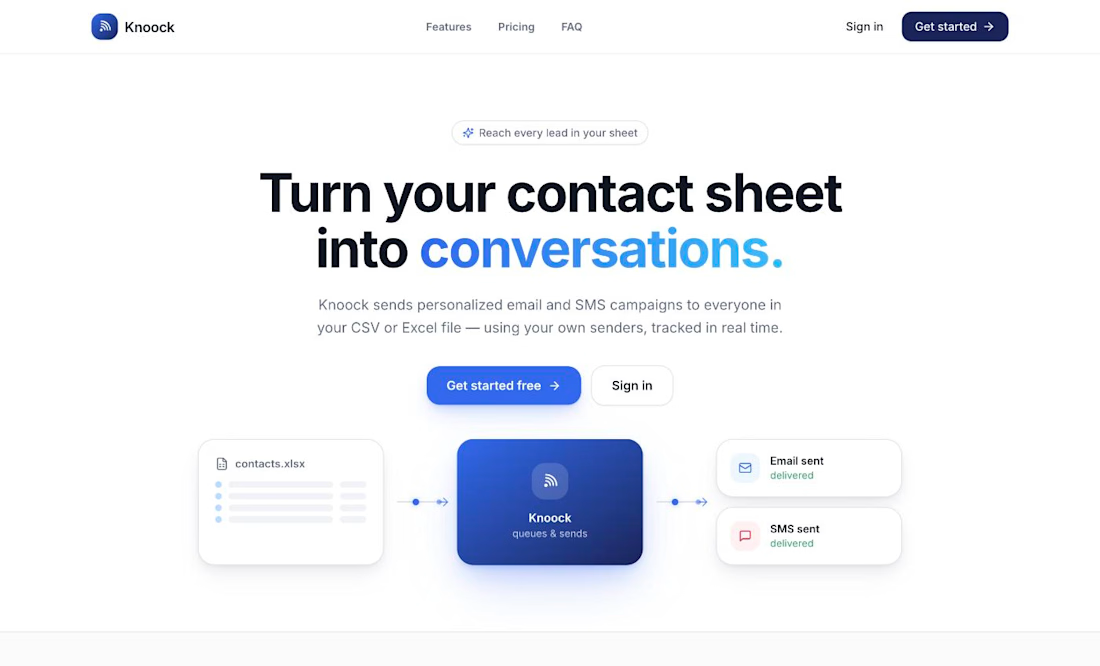

The product promise is direct and easy to understand.

breaking down high-retention launch motion: elevenlabs studio 4.0.

A multi-tenant inventory and accounting SaaS for retail, wholesale, distribution, and warehouse businesses. It replaces disconnected spreadsheets with one system for stock, purchases, sales, returns, quotations, dues, payables, and ledgers. Owners get dashboard analytics, downloadable reports, WhatsApp invoice sharing, and AI-assisted insights. Role-based access and organization management support multiple teams.
Built with Next.js, React, PostgreSQL, and Sequelize.


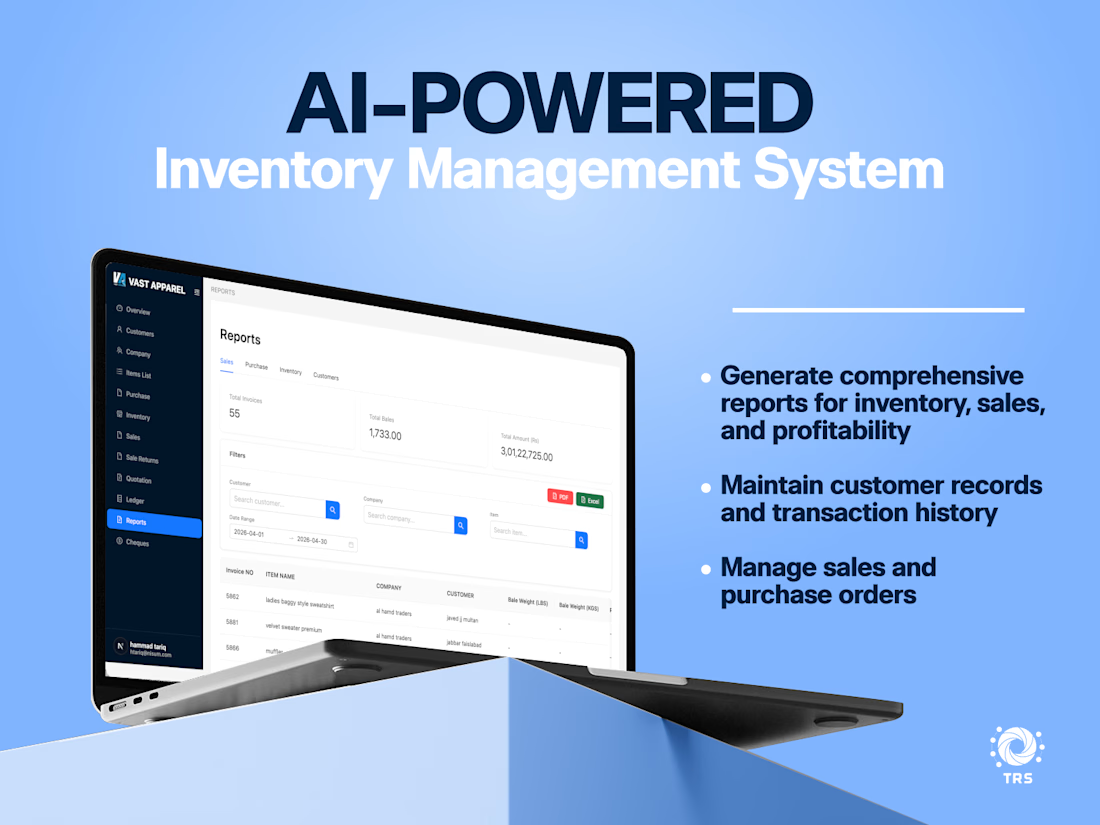
A strong use case for simplifying complex operations.