The network for creativity
Join 1.25M professional creatives like you
Connect with clients, get discovered, and run your business 100% commission-free
Creatives on Contra have earned over $150M and we are just getting started
Back to feedPost

Genially Interactive Design: Becoming the GOAT Curriculum
This module is part of the Becoming the GOAT Curriculum Professional Learning Series, designed for educators. Its primary purpose is to help teachers understand that every learner is unique and that effective teaching begins with recognizing, valuing, and responding to those differences rather than expecting all students to learn the same way.
The central message throughout the module is that learning should adapt to students—not the other way around. Instead of viewing learner differences as obstacles or deficits, educators are encouraged to see them as strengths that can be used to create more engaging, equitable, and successful learning experiences.
What Was Done
The interactive learning module was structured to guide educators through a progressive learning experience consisting of instructional content, practical classroom examples, learner reflection, and knowledge assessment.
1. Introduction to Learner Differences
The module begins by introducing the concept that every student enters the classroom with unique backgrounds, experiences, abilities, cultures, learning preferences, and cognitive differences. Rather than treating these as problems, the module emphasizes that they are valuable assets that shape how students learn.
2. Mindset Shift
A major section focuses on transforming educators' thinking by replacing traditional, deficit-based questions with more inclusive ones.
Instead of asking:
"Is this student ready for the learning?"
Educators are encouraged to ask:
"Is the learning ready for this student?"
This reframing promotes equitable access, higher expectations, and responsive instruction instead of tracking or labeling students.
3. Practical Classroom Applications
The module demonstrates how responsive teaching can be implemented across multiple subject areas through real classroom examples.
Examples include:
English Language Arts
Mathematics
Science
Social Studies
Classroom Environment
Each example compares a traditional teaching approach with a more responsive instructional strategy and explains the positive impact on student engagement and learning.
4. Research-Based Evidence
The curriculum reinforces its recommendations with educational research showing that responsive classrooms lead to:
Greater student engagement
Improved attendance
Stronger sense of belonging
Higher academic achievement
Better relationships between students and teachers
5. Real Student Perspectives
The module includes authentic student stories that illustrate the consequences of ignoring learner differences.
These examples demonstrate how students can experience:
Disconnection
Shame
Reduced participation
Lower achievement
Feeling excluded from learning
This section helps educators build empathy by connecting instructional decisions with students' lived experiences.
6. Knowledge Assessment
The learning experience concludes with a multiple-choice quiz that reinforces the module's key concepts, ensuring educators understand:
The shift toward GOAT-centered education
Asset-based thinking
Responsive instruction principles
Overall Learning Objective
By the end of the module, educators should understand that effective teaching is not about expecting students to fit a single instructional model. Instead, it is about designing learning experiences that recognize individual differences, remove barriers, and provide every learner with meaningful opportunities to succeed.
Genially Project Summary (Portfolio Style)
This interactive Genially learning module transforms a professional development curriculum into an engaging, self-paced experience for educators. The project combines visual storytelling, interactive content, real-world classroom scenarios, learner reflections, and knowledge checks to teach responsive instructional practices. Through guided progression, practical examples, and interactive assessments, the module encourages educators to adopt an asset-based mindset that values learner diversity and promotes equitable access to learning.
Overall, this project is less about presenting theory and more about changing educators' perspectives—helping them shift from asking whether students are ready for learning to designing learning that is ready for every student.

The network for creativity
Join 1.25M professional creatives like you
Connect with clients, get discovered, and run your business 100% commission-free
Creatives on Contra have earned over $150M and we are just getting started
Trending
retrofuturism
Share your favorite designs from the past exploring the distant future. Or your own take on the aesthetic 🚀
halftone
Dots. Texture. Grain. Let's see your designs using the halftone technique.

Midjourney
Creatives are showing off what they're making with Midjourney.
colorgrade
Video editors sound off: How do you enhance the mood of your video in color grading?
Related posts

The Hummock
In this video, I share a simple idea I use when designing learning: deliberately creating moments of curiosity, experience and discovery that give people something to remember, share, question or use beyond the session.
I call these moments “hummocks” — small unexpected points in a learning experience that give people somewhere to stop, notice and connect an idea to real life, while also creating space for the core learning to land.


Hi there! Please make sure your submission meets all requirements and resubmit to be considered for the prize

What do you think!
Which one do you like more? 🔥
7 voted
50%
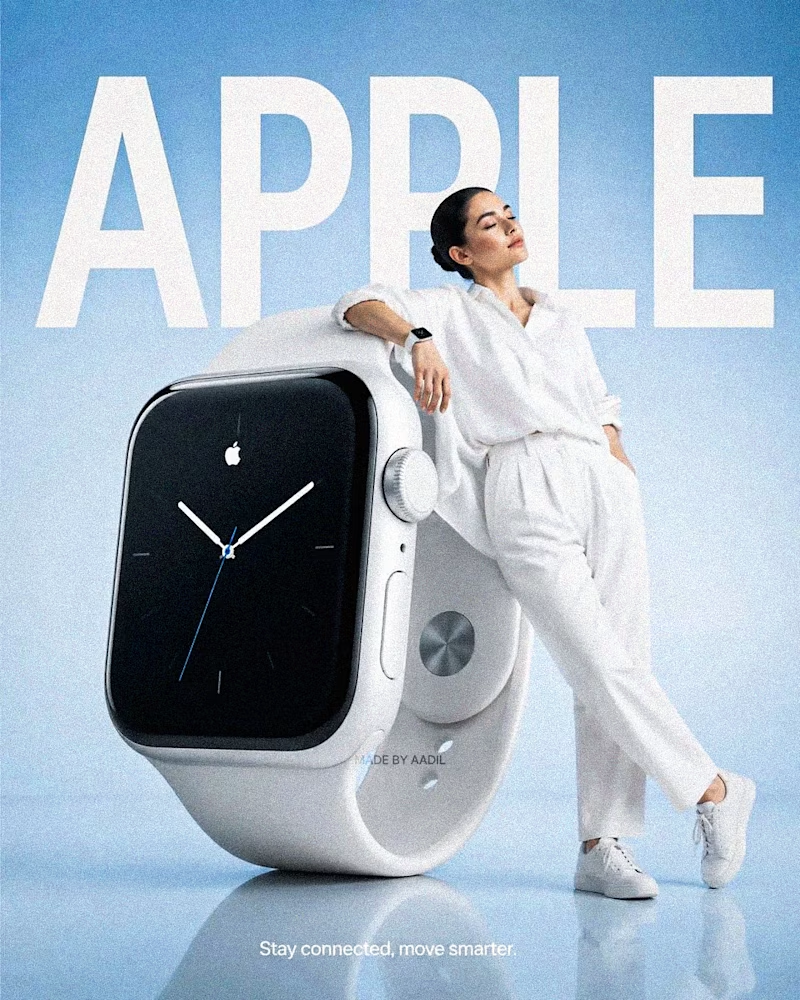
7 voted
50%
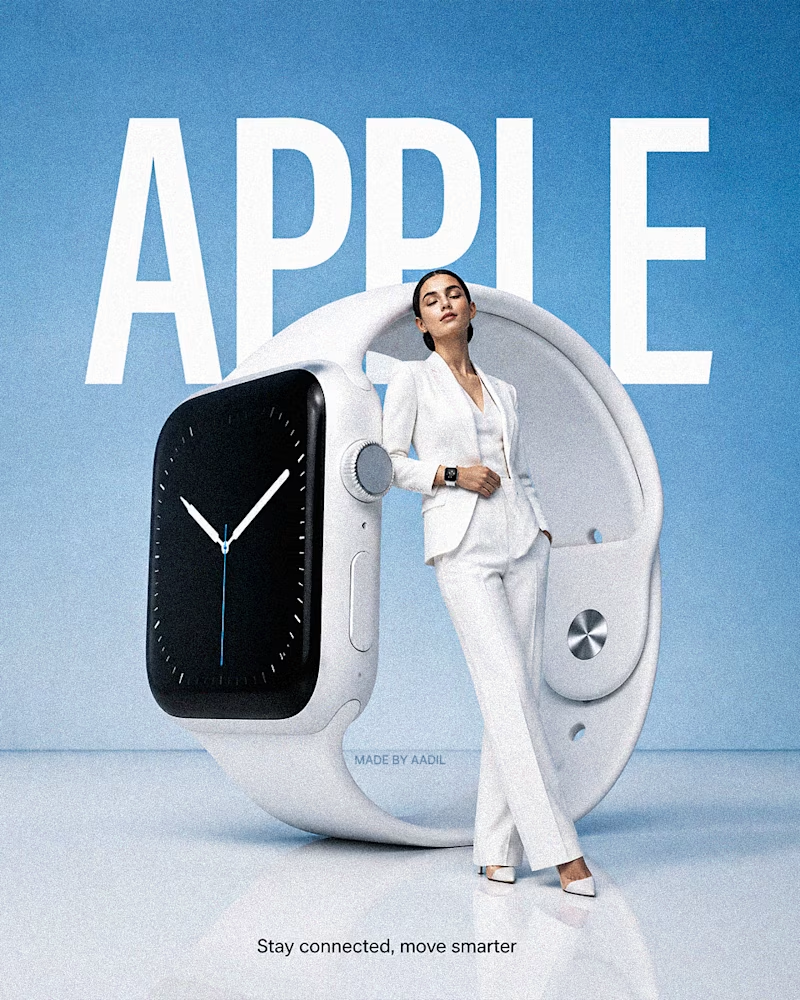
14 votes
Closed

Minimal keeps more focus on the product and also looks more balanced 😊

A unique testimonials section designed to build trust. ☘️
I created this testimonials section with the background generated using Vision Engine, while the rest of the layout was built in Framer.
⬇️ What would you rate it out of 10 ?
halftoneretrofuturismcolorgradeFramer Website DesignInteractive DesignMotion DesignFramerJitterMidjourney


