The network for creativity
Join 1.25M professional creatives like you
Connect with clients, get discovered, and run your business 100% commission-free
Creatives on Contra have earned over $150M and we are just getting started
Back to feedPost

Building an LLM application that doesn't hallucinate? It’s all about the context. 🧠
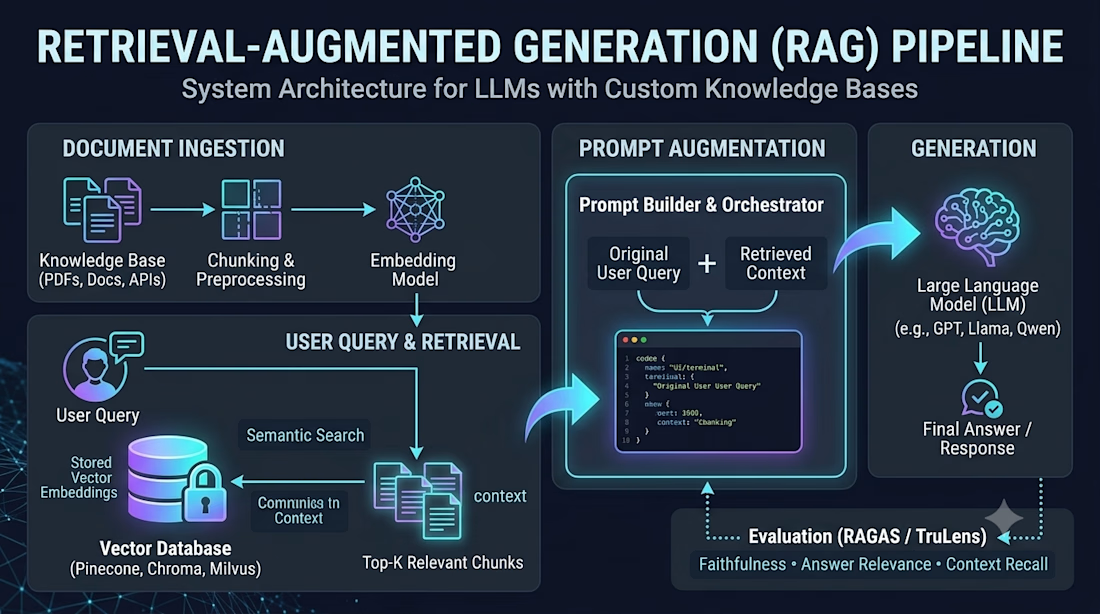
I put together this high-level architecture breakdown of a Retrieval-Augmented Generation (RAG) pipeline to visualize how we can ground large language models in custom, domain-specific knowledge bases.
While experimenting with these systems, here are the core stages I focus on to ensure accuracy:
1️⃣ Document Ingestion: Efficiently chunking and passing custom data (PDFs, APIs) through an embedding model into a vector database (like Pinecone or Chroma).
2️⃣ Semantic Search: Retrieving the 'Top-K' most relevant context chunks when a user submits a query.
3️⃣ Prompt Augmentation: Dynamically orchestrating the original query alongside the retrieved context.
4️⃣ Generation: Passing the enriched prompt to the LLM (like Qwen, Llama, or GPT) to generate a grounded response.
5️⃣ Continuous Evaluation: The most critical step. Using frameworks like RAGAS or TruLens to rigorously measure faithfulness, answer relevance, and context recall.
Building the pipeline is only half the battle; evaluating its true effectiveness is what makes it production-ready.
What frameworks are you currently preferring for your vector databases and RAG evaluation? Let’s discuss below! 👇
#GenerativeAI #MachineLearning #RAG #ArtificialIntelligence #LLM #DataScience
The network for creativity
Join 1.25M professional creatives like you
Connect with clients, get discovered, and run your business 100% commission-free
Creatives on Contra have earned over $150M and we are just getting started








Related posts

TripMate is an AI-powered travel recommendation platform designed to provide personalized travel suggestions based on user preferences and behavior. I developed the system using collaborative filtering, NLP-based aspect analysis, and emotion recognition to improve the personalization of recommendations. The application was built with Python and Django, with machine learning and deep learning models integrated into the recommendation workflow.


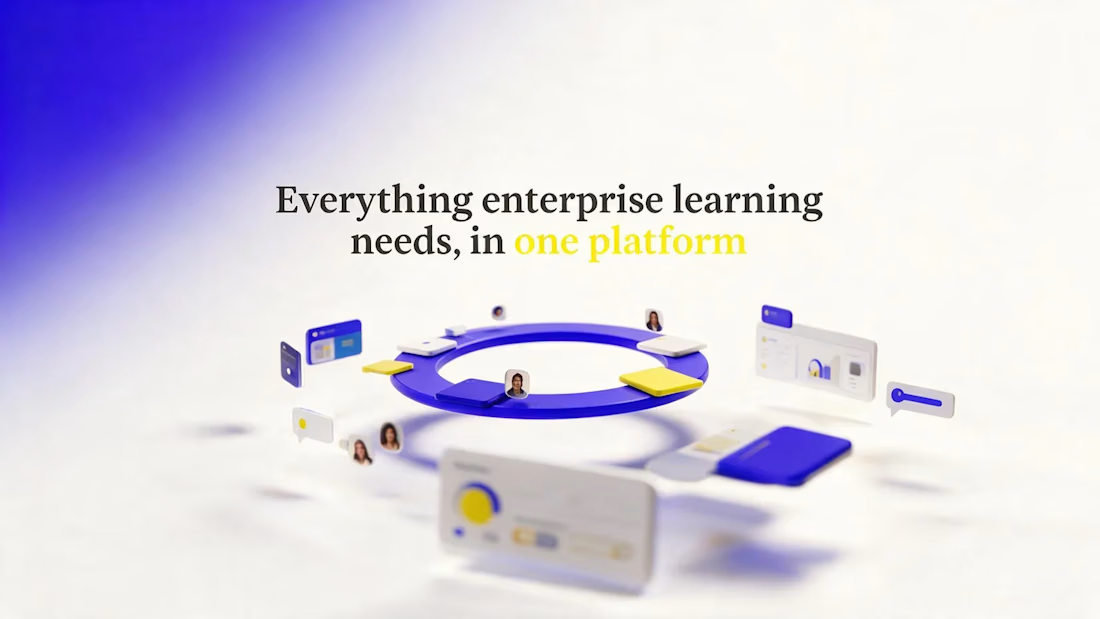
Nucleus OS is the AI-native learning platform that brings the best of an LMS, LXP, authoring tool, and virtual classroom into one product. Create beautiful content 10x faster, give every learner an AI tutor, run your admin on autopilot, and analyze granular insights in seconds.


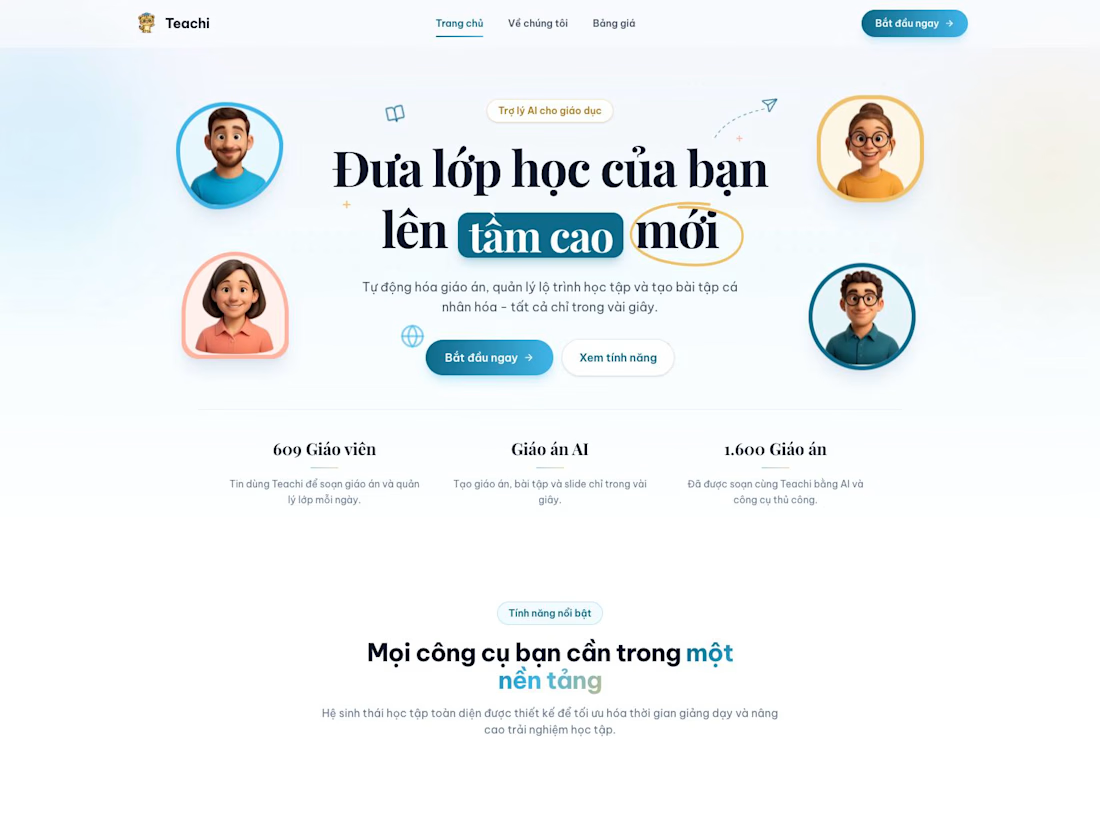
How I built "highlight → rewrite with AI" for Teachi, an AI lesson planner used by 600+ teachers.
Teachers wanted Google-Docs-style editing: type, bold, and rewrite any passage with AI, without wrecking the formatting they'd applied by hand.
What made it work:
• Tiptap editor with a floating toolbar on selection. Bold/italic apply instantly and never call an API.
• The selected range is flattened to plain text before it goes to the model. The AI reasons about words, not markup.
• The reply is inserted back at exactly that range, so every other paragraph keeps its formatting.
• Select fewer than two words and it asks for a full sentence: one word gives the AI no context.
• Plans stay in the same string field, now as HTML, so nothing needed a migration and old plans open as plain text.
• Debounced autosave (1.5s idle) persists edits once they settle.
Stack: Next.js, Supabase, OpenAI, Tiptap.
Building AI features into a Next.js app? Happy to swap notes.