The network for creativity
Join 1.25M professional creatives like you
Connect with clients, get discovered, and run your business 100% commission-free
Creatives on Contra have earned over $150M and we are just getting started
Back to feedPost

I spent this week trying to break my own AI system. mostly succeeded lol.
warrant is an ops assistant I built for a fictional hospitality studio — answers questions, looks up clients, drafts emails. nothing that reaches a real customer sends without a human approving it first.
sounds simple. getting it to feel trustworthy wasn't.
first version:
asked it "did we send that email today?" — it tried to draft a brand new email instead of just answering the question.
asked it retainer pricing — it gave me a vague non-answer instead of the actual number sitting right in front of it.
approved an email — it told me "sent successfully" before actually checking if it had been.
none of those are AI problems. they're architecture problems. so I rebuilt the decision layer: the system now has to ask itself "is this a new action, or a question about something that already happened" before it's allowed to touch a single tool. it verifies an action actually worked before reporting success. and when I asked it something it genuinely can't do (list every customer in the CRM) it didn't fake an answer. it said so, and told me what it could do instead.
picture a small studio running this in-house: every client email drafted and logged automatically, nothing sent without a human glance, and a full trace of every decision the system made, watchable live, not buried in a log file you check after something's already gone wrong. that's not a hypothetical productivity number — that's an afternoon of admin work turned into two minutes of approvals.
this is the part most AI demos skip: showing you when it was wrong, and what it took to make it trustworthy instead of just impressive.
built with groq, supabase, and pgvector. live: usewarrant.vercel.app
The network for creativity
Join 1.25M professional creatives like you
Connect with clients, get discovered, and run your business 100% commission-free
Creatives on Contra have earned over $150M and we are just getting started








Related posts

AI Automation SaaS Website Design
AUTONIX is a modern AI automation SaaS website concept designed to help businesses streamline workflows, automate repetitive tasks, and manage AI agents more efficiently.
The design combines a clean, minimal interface with bold typography, futuristic visuals, interactive UI elements, and a seamless user experience. From AI-powered task automation to real-time productivity insights, every section is designed to communicate the value of intelligent automation in a clear and engaging way.
This project explores how thoughtful UI/UX design can make complex AI technology feel intuitive, accessible, and easy to use for modern businesses.
Services: SaaS Website Design, UI/UX Design, Landing Page Design, AI Product Design.


SES AI is a battery technology company accelerating the energy transition through AI-powered material discovery, battery development, manufacturing, and management.
SES AI approached us with a website redesign driven by its new “All-in on AI” strategy. As AI became central to the company’s work across safety, manufacturing, and science, the existing website still focused primarily on its battery-hardware side. We redesigned the experience to clearly communicate the three AI pillars, while making the website simpler, more direct, and easier to navigate.


This looks insane. The robotic arm with the battery cell is such a strong visual. Love how clean you kept it despite it being AI heavy.

Most AI builds break at the wiring, not the model: no retries, no log of what the model actually did, and no clear line for what the agent may do without a human.
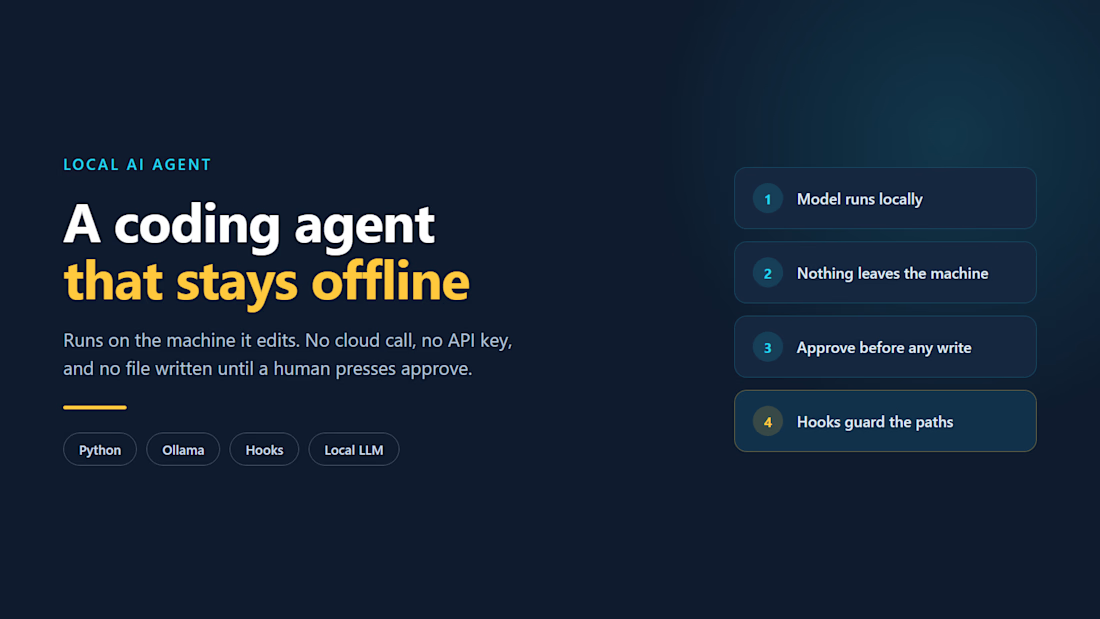
I build that layer. My own products run on it -- an ordering platform where an AI agent handles real orders, and a coding agent that writes no file until someone approves the change.
The question worth answering first is what your agent should never decide on its own.