The network for creativity
Join 1.25M professional creatives like you
Connect with clients, get discovered, and run your business 100% commission-free
Creatives on Contra have earned over $150M and we are just getting started
Back to feedPost

Have you ever wondered why some writers can write incredible pieces of text while others can barely form a string of words?
It has nothing to do with inner talent. While some people may be gifted with the ability to write fascinating prose, many great writers have built their writing careers on something else.
Is it hard work? In a broader sense, yes. However, once you understand this secret, your writing will improve overnight.
Edit Your Own Work
Write the piece and let it set still for one day. After that, open it and read it out loud. Some parts won't sound the way you wanted them to sound. That's okay, because you have a skill that will improve any piece of writing instantly.
I am talking, of course, about editing.
You see, most writers don't just sit at a chair, open a laptop, and start typing. No, for every great article you stumble upon on the internet, a person has written and rewritten that very piece.
Editing is what makes writing great, and if you take it seriously, it will help you deliver better work.
Do This Right
After you finish writing an article, set it aside for one day. Now, what you need to do is start editing it. But how?
Here are a couple of my methods of working on a piece of text.
1. Cut the unnecessary words from your text.
2. Choose concrete & precise language.
3. Prefer the active voice.
4. Shorten your sentences, and remove repeated words.
5. Start each paragraph with the most important information.
6. Read your work out loud.
These are the minimum requirements for good editing. Do this, and your writing will improve constantly.

The network for creativity
Join 1.25M professional creatives like you
Connect with clients, get discovered, and run your business 100% commission-free
Creatives on Contra have earned over $150M and we are just getting started

Challenges
View all


Related posts

If a brand hired me tomorrow, I wouldn’t start creating content. I’d start with research.
*And yes, initially, it’s not about writing three main hooks at all.
Before I write a single hook or film a single shot, I want to understand the brand.
I’d start with 3 simple questions:
1. Who is your target audience?
Who are we actually creating this content for?
2. What problem does your product solve?
Not just “what does it do?”, but why would someone care?
3. Who are your main competitors?
I always research competitors to understand what’s already being said, what’s missing, and where we can create a different angle.
Then I look at the product itself:
→ What is the biggest pain point?
→ What makes this product different?
→ What objections might a customer have?
→ What features are actually worth talking about?
→ What can we turn into a story, hook or visual?
Because I don’t believe in creating content just because a brand needs “another Reel”.
The content needs a reason to exist.
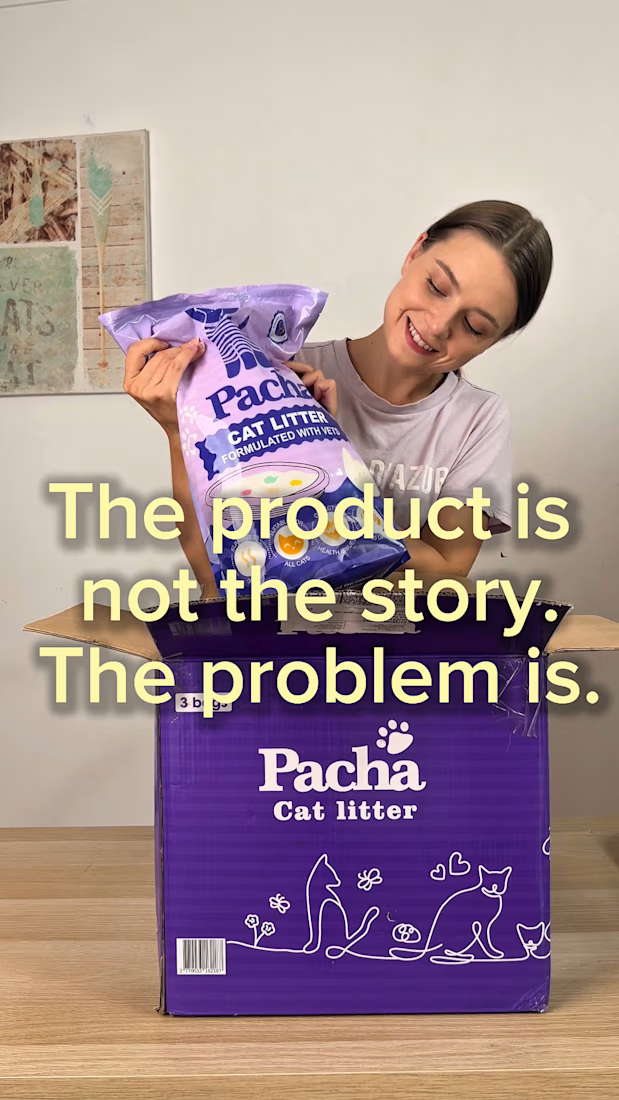
For example, when I created content for Pacha, I looked at the product from a cat owner's perspective.
The real problems weren't simply “cat litter”.
They were:
😩 Odor
😩 Constant cleaning
😩 Litter sticking to paws
😩 Running out of litter and having to buy more
So instead of simply showing the product, I could build content around the solutions:
Angle 1 — “What if you didn't have to clean the litter box for 30 days?”
Start with the pain point → introduce Pacha → demonstrate how it works → show the result.
Angle 2 — “Things cat owners are tired of dealing with.”
Odor. Mess. Litter everywhere. Constant cleaning. Then introduce Pacha as the solution.
Angle 3 — “Your cat's litter can tell you more than you think.”
Use the health-tracking feature as the unexpected hook and turn a product feature into something people actually want to learn about.
And then there are the additional selling points:
→ subscription & delivery straight to your door
→ no unpleasant odor
→ doesn't stick to paws
→ up to 30 days without changing the litter
→ health-tracking feature
That's how I approach content.
First, I understand the person. Then the problem.Then the product. Then I find the story.
Because the best content doesn't just show people what a product is. It shows them why they need it.
Before I create, I ask myself: What would make me stop scrolling? What would make me trust this product? What would make me think, “I actually need this”?
And if you’re a brand with a product that needs a fresh creative angle: I’d love to hear what you’re working on.


100%! "The problem is the story" is the golden rule of high-converting content. Diving into real pain points before shooting a single frame makes all the difference. Brilliant breakdown of the Pacha case study! 🐾🎯

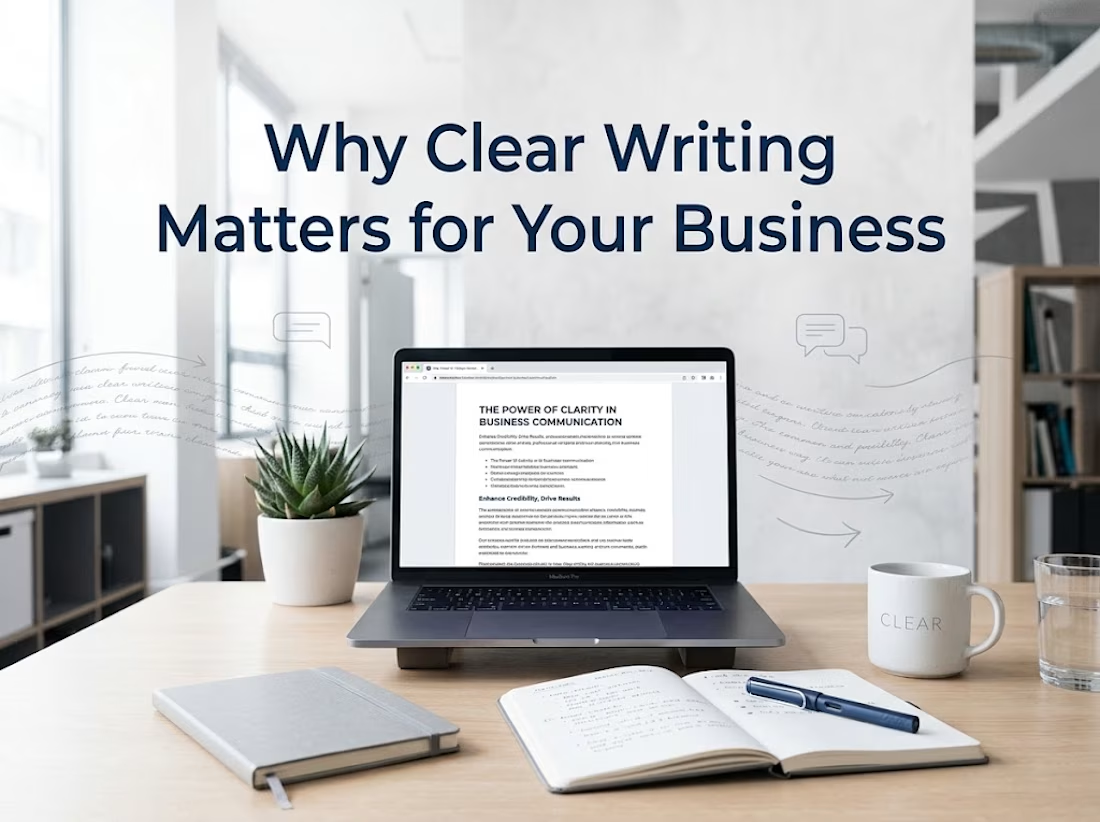
Good writing isn’t just about sounding professional.
It’s about making sure your audience understands what you’re saying — and knows what to do next.
Many businesses have great products and services, but their website content is confusing, too complicated, or simply doesn’t connect with the reader.
Clear business content should:
→ Explain your message in simple language
→ Answer the questions your audience actually has
→ Make information easy to scan and understand
→ Build trust with your readers
→ Guide people toward the next step
That’s the approach I take when writing website content, articles, and blog posts.
I focus on clear structure, natural language, useful information, and reader-friendly writing — because good content should communicate, not complicate.
If your business needs content that is simple, useful, and easy to connect with, let’s work together.
📩 Have a topic or content project in mind? Send me a message.
#ContentWriting #BusinessWriting #BlogWriting #WebsiteContent #Copywriting #ContentMarketing



Just finished editing this YouTube video 🎬
Focused on clean cuts, engaging captions, dynamic pacing, visual elements, and smooth storytelling to keep the audience engaged.
I’m currently available for YouTube videos, Shorts & social media content.
If you need a reliable video editor, feel free to reach out.

