The network for creativity
Join 1.25M professional creatives like you
Connect with clients, get discovered, and run your business 100% commission-free
Creatives on Contra have earned over $150M and we are just getting started
Back to feedPost

Most AI assistants wait for you to ask.
I built one that comes to you. Think Instinct, on steroids.
For the last few weeks I've been building a private AI chief of staff that lives in WhatsApp. Not another app to open. Just a contact that knows your world.
It connects to your Gmail, Outlook, calendars, Google Meet and Teams transcripts, Drive, OneDrive, Notion and your WhatsApp chats (read-only).
Then it does the work a great EA would:
→ A morning brief before your day starts
→ Prep notes before every meeting
→ "You haven't replied to these 3 people"
→ Promises you made in chats and emails, turned into tasks
→ An alert the moment someone you're waiting on finally writes
→ A 9pm check-in to close the day
It also remembers people, not just messages: who's who, how they're connected, what's pending between you. Ask "who's my bank manager?" or "anything new on my emails today?" and it answers from everything you've ever received, by meaning, not keywords.
Two things I refused to compromise on:
1. Privacy. It runs on your own server, not someone else's SaaS. Your data stays yours. The stack is open source, telemetry is off, and search runs locally. It's built to run fully on open-source models on a Mac mini on your desk.
2. Cost. Hosting runs on a free tier. $0 a month.
The people who need this most are the ones whose day runs on WhatsApp: founders, family-business owners, execs juggling ten threads at once.
I'm setting it up for a small number of them. If that's you, or someone you know, send me a message.
The network for creativity
Join 1.25M professional creatives like you
Connect with clients, get discovered, and run your business 100% commission-free
Creatives on Contra have earned over $150M and we are just getting started



Related posts

I built an invoicing app that does not send your invoices for you. That was on purpose.
When I started building Invoping, the obvious feature was automatic sending. The app creates the invoice and fires it off to your client on WhatsApp.
But WhatsApp is where people talk to their clients. It's where they say hello, negotiate, and follow up. A message that arrives without you touching it feels like a bot, not like you.
So Invoping opens a WhatsApp message that's already filled in with the invoice link. You read it, change a word if you want, and press send yourself.
It's one extra tap, and the message still comes from you.
A few other small decisions followed the same idea. Your client can open the invoice without making an account. You can record partial payments, because real clients often pay in parts. And you can see the balance that's still owed at a glance.
The lesson for me: sometimes the best feature is the one you leave out.
If you're building a tool for people who work through conversations, what would you keep manual on purpose?
You can try Invoping here: https://invoping.vercel.app/

invoping.vercel.app
InvoPing
The simplest invoicing and payment-tracking SaaS for freelancers, contractors, agencies, and small businesses that use WhatsApp.


To your question: I'd keep the payment reminder manual too, since chasing money is the message where tone matters most. Prefilling it with the balance still owed after partial payments would take out most of the awkwardness while the client still hears it from you. Do people edit the prefilled text much, or send it as is?

WhatsApp quotes the whole message when you reply, even if you're answering one question.
I made a React + Motion prototype that lets you reply to selected words instead. Tap the quote to jump back to the original message, with those words highlighted.


the saturday plans message is the perfect test case lol, 4 questions in one bubble. does it still work if you select across two lines?

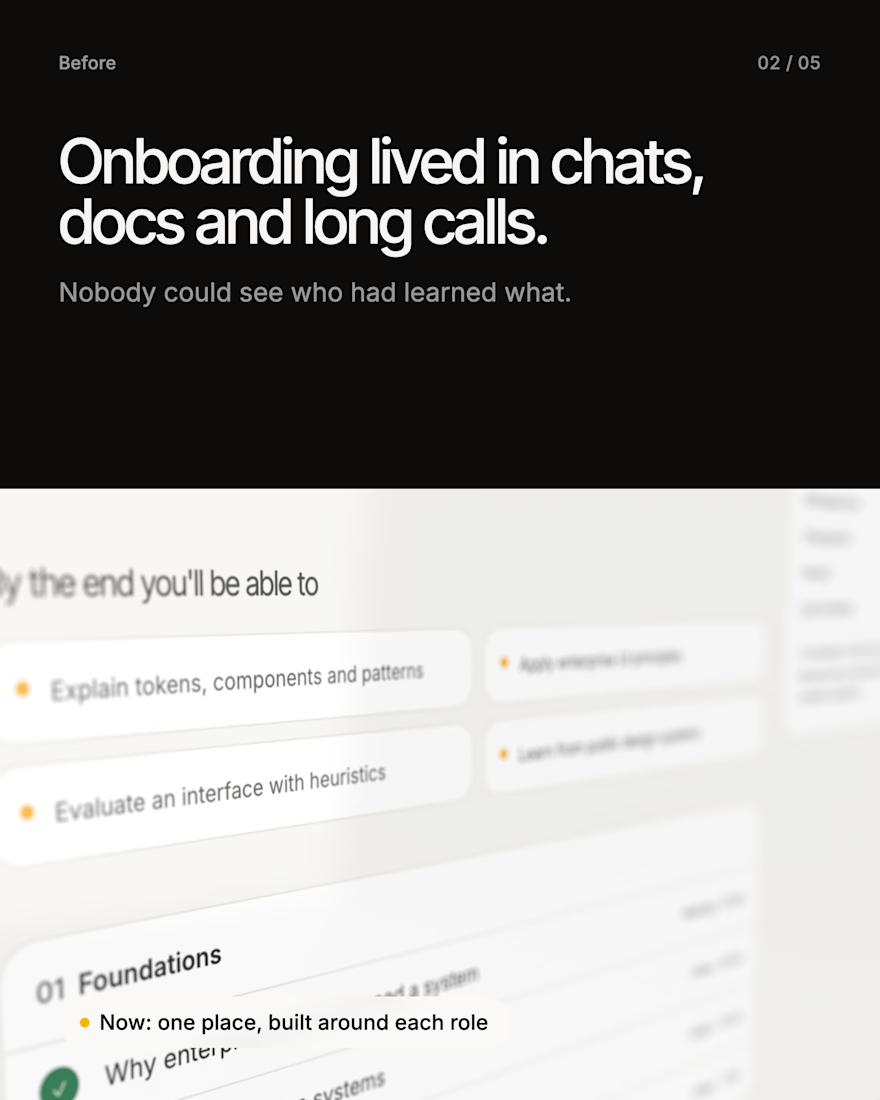
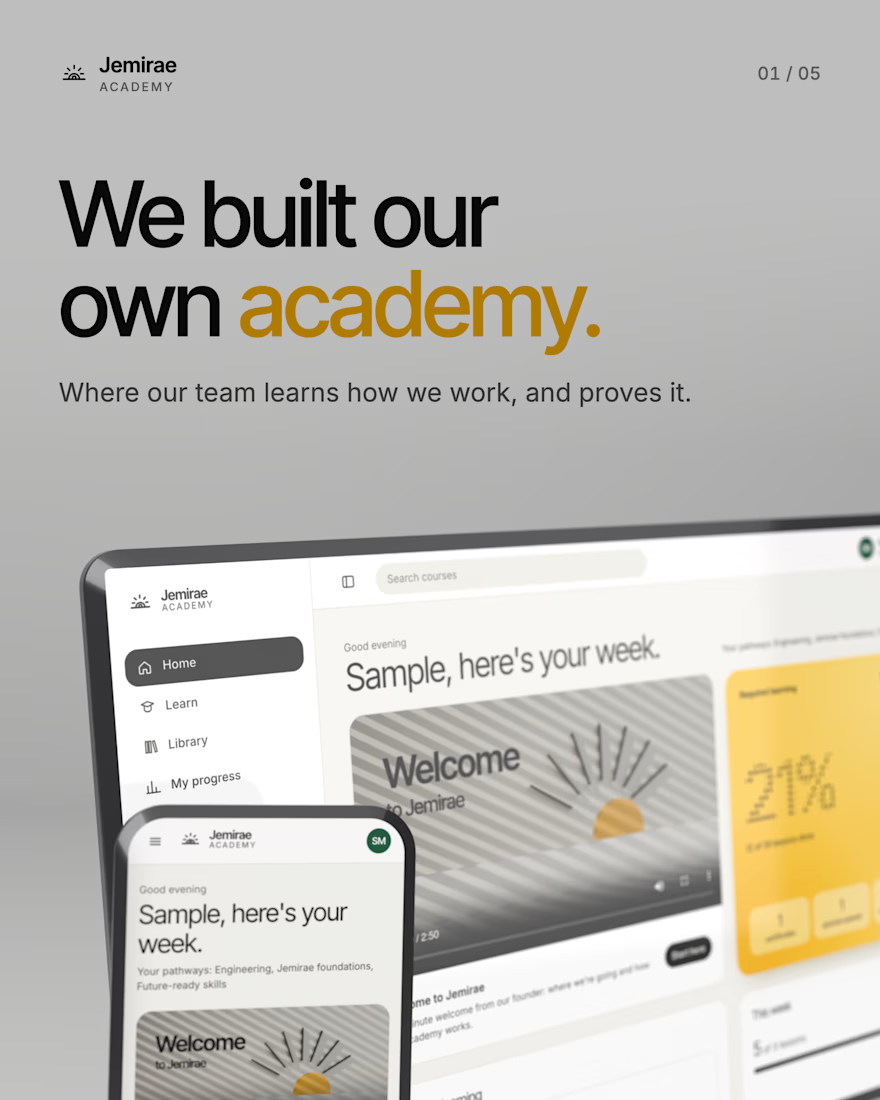
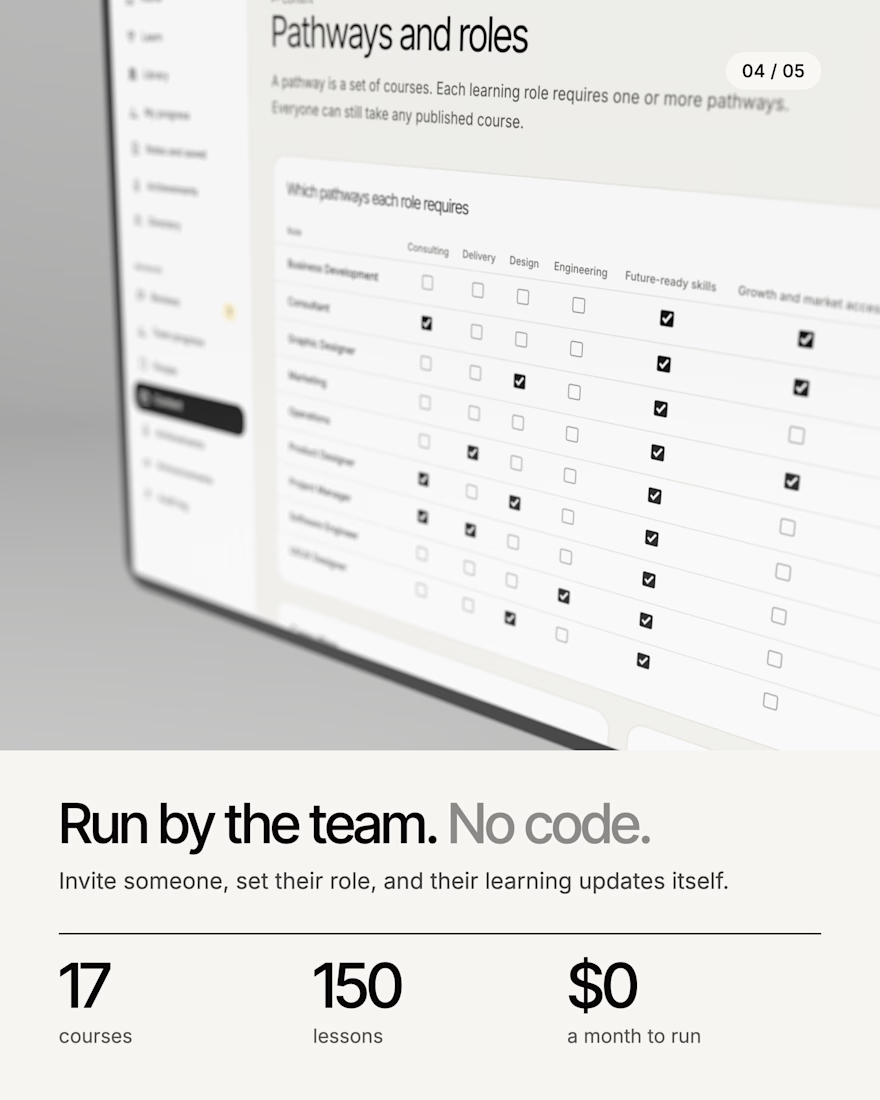
Onboarding at most small teams lives in chats, docs and long calls, and nobody can see who has learned what. I led the design of an academy for our own team to fix that. Each role has a pathway of courses. Finishing a course means passing a quiz, completing a practical exercise that a team lead reviews, and earning a certificate with a code you can check.
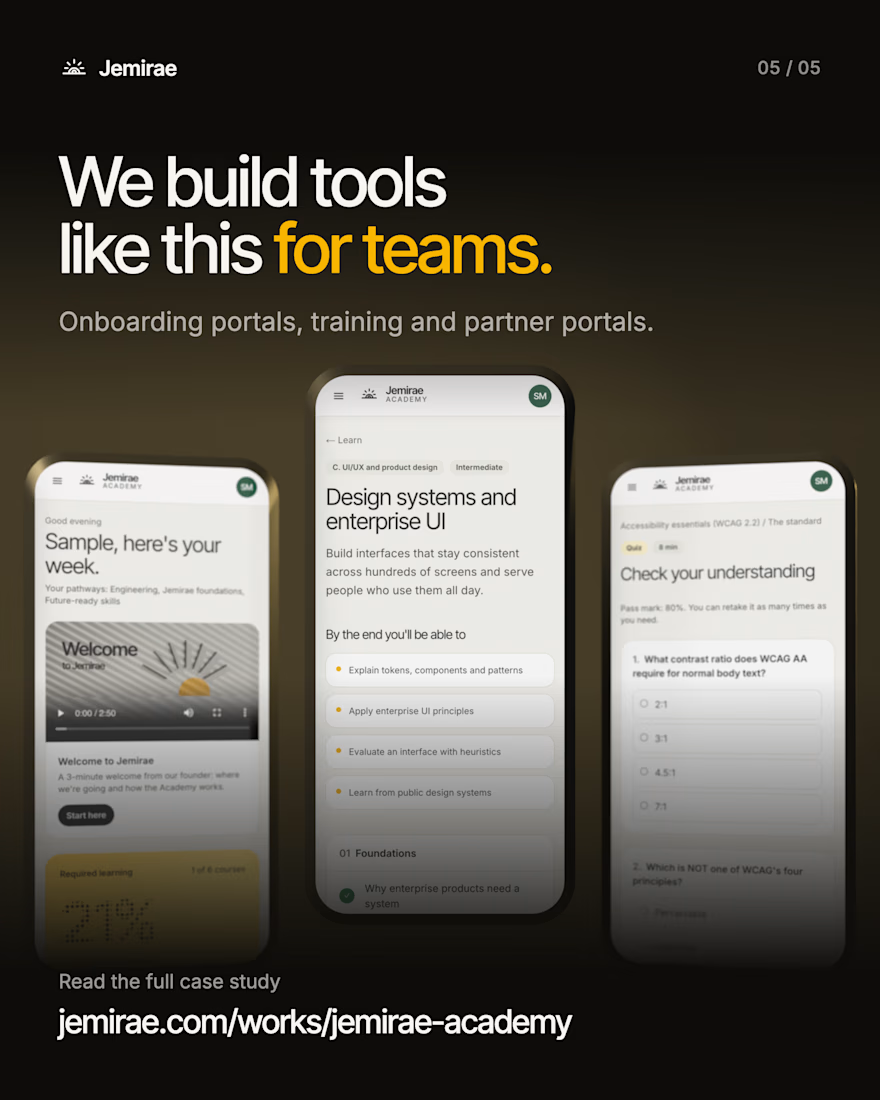
It has 17 courses and 150 lessons, runs on Cloudflare's free plan for $0 a month, and admins manage people and content in the browser without code. It is phone friendly.
This is an internal tool we built for our own team, not a client project, and it was only just built, so I have no results to report yet. If you need an onboarding, training or partner portal for your team, send me a message.
Case study: https://jemirae.com/works/jemirae-academy


Nice one!