The network for creativity
Join 1.25M professional creatives like you
Connect with clients, get discovered, and run your business 100% commission-free
Creatives on Contra have earned over $150M and we are just getting started
Back to feedPost

Let me walk you through what a weak Shopify product page looks like in practice. Because a lot of store owners are running one and do not know it.
A visitor lands on the page. There is a product image and a name at the top. Fine.
They scroll. The description says something like: "Made from premium materials. Available in four sizes. Estimated delivery 5 to 7 days."
That is a spec sheet. It tells the customer what the product is. It does not tell them why they need it, what problem it solves for them, or why they should buy it today from you and not look elsewhere.
They keep scrolling. Eventually there are some reviews. Three or four of them. Text only. At the very bottom of the page.
Then finally the buy button.
This visitor came to the page with buying intent. They were already interested. The page had one job and it did not do it.
No hook. No selling argument. No social proof at the decision point. No urgency. No reason to act.
That visitor is gone. And tomorrow there will be more just like them.
Look at your product page description right now. Does it describe the product or does it sell the outcome? Drop your honest answer in the comments.
The network for creativity
Join 1.25M professional creatives like you
Connect with clients, get discovered, and run your business 100% commission-free
Creatives on Contra have earned over $150M and we are just getting started








Related posts


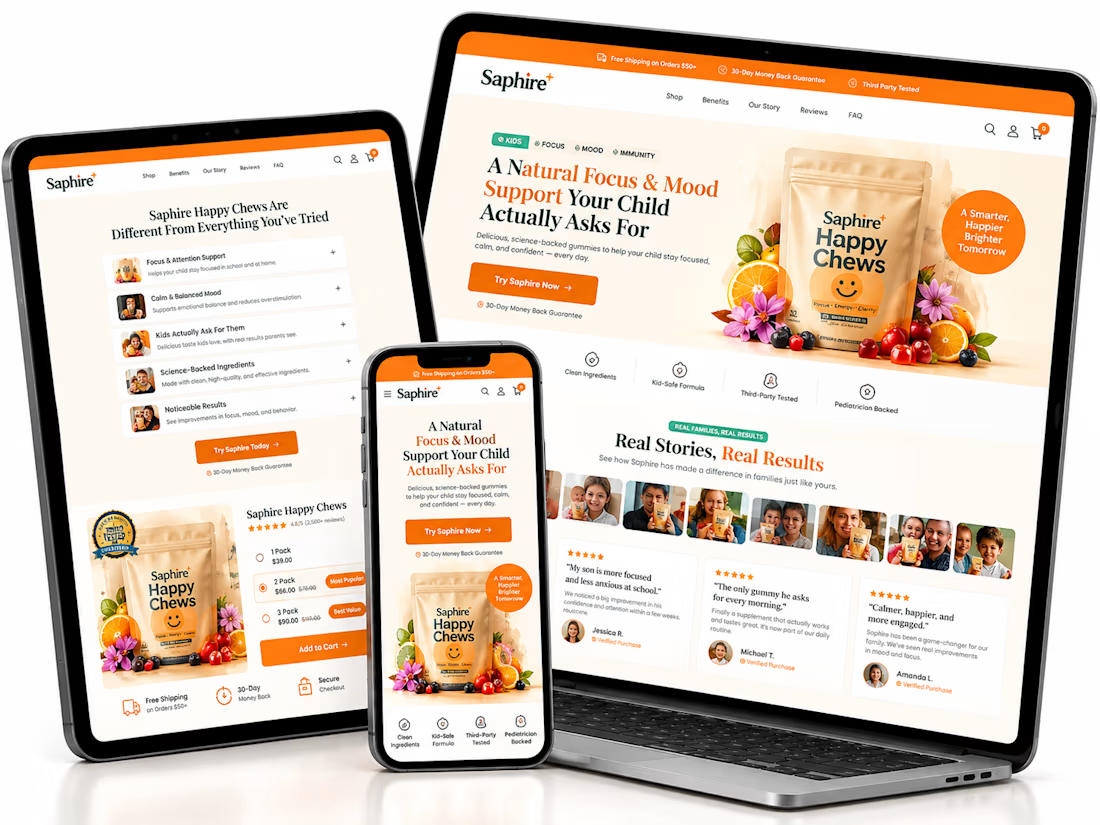
A conversion-focused Shopify product page for Saphire Happy Chews, designed around clearer product storytelling, customer trust, and a smoother shopping experience.
The page features an engaging hero, customer testimonials, expandable product information, bundle selection, prominent Add to Cart buttons, educational content, purchase reassurance, and FAQs.
The CRO approach emphasizes visual hierarchy, reduced decision friction, and improved product discovery to support stronger conversion potential.


The Real Stories, Real Results testimonial block is doing heavy lifting for a kids' product. Pairing the educational content with bundle selection is exactly how you reduce decision friction.

You have about 3 seconds on a Shopify store's hero section before someone scrolls past or bounces — and most stores waste it on a vague tagline like "Quality You Can Trust". Here's the formula I use: what you sell + who it's for + why they should care right now. One clear line that answers all three, then one button that says exactly what happens next. Everything else — sliders, animations, welcome text — is decoration until that line is right. Go check your hero right now and ask yourself: would a stranger know what you sell in 3 seconds? #Shopify #Ecommerce #DigitalMarketing

Founder: I’ll post when the product is ready.
Bro.
Your product has been “almost ready” for 2 years 😶
Your buyers are on LinkedIn today.
They’re checking you out.
And they find a post that says “We’re hiring!” from 14 months ago.
You don’t need a perfect product.
You need one honest story.
Too busy to write it?
handover someone like me
visibility brings sales (ads,Premiums,boost)
But a brand brings long term trust and sales without any post buy from me .



So true! 👏 You don’t need to wait for perfection to start building trust. Consistently sharing your journey helps people connect with you long before they’re ready to buy.