The network for creativity
Join 1.25M professional creatives like you
Connect with clients, get discovered, and run your business 100% commission-free
Creatives on Contra have earned over $150M and we are just getting started
Back to feedPost

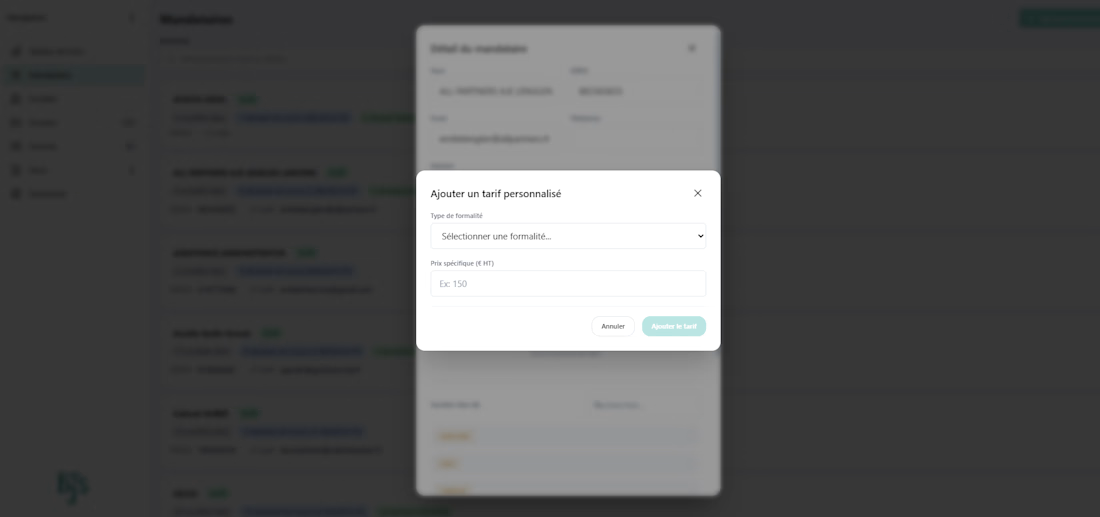
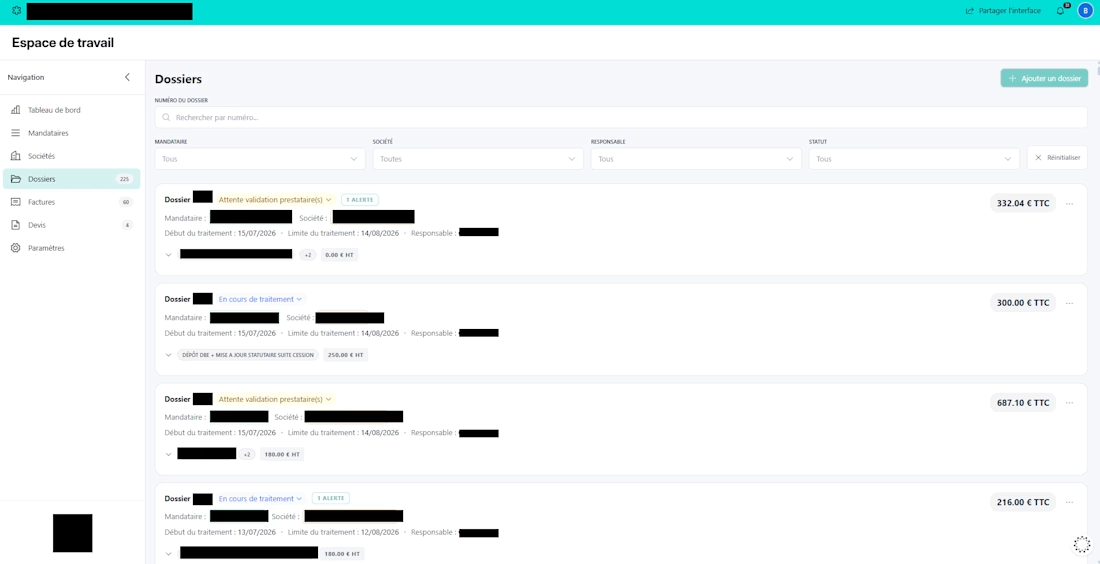
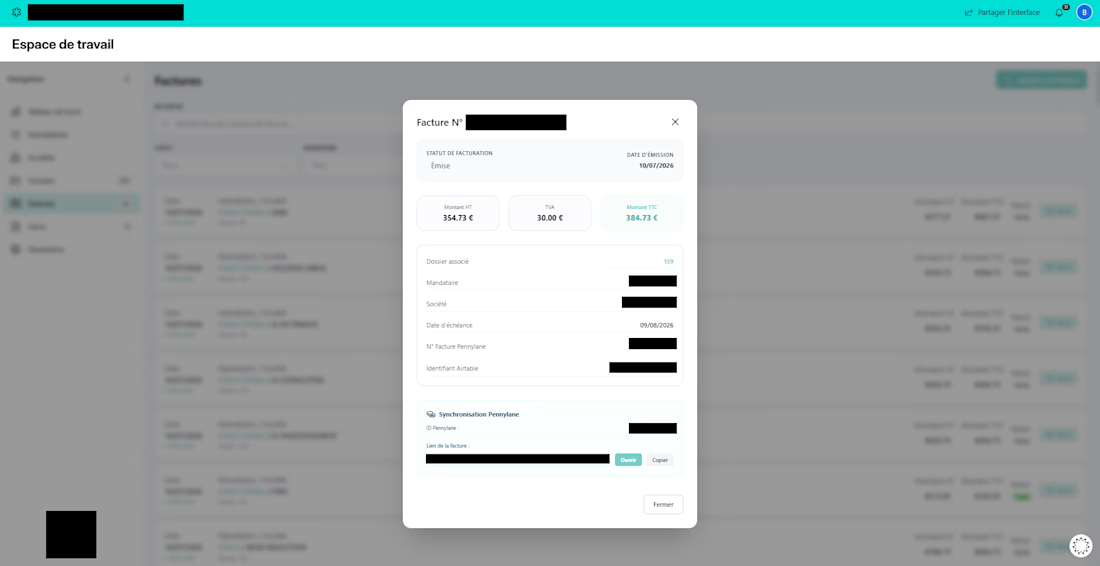
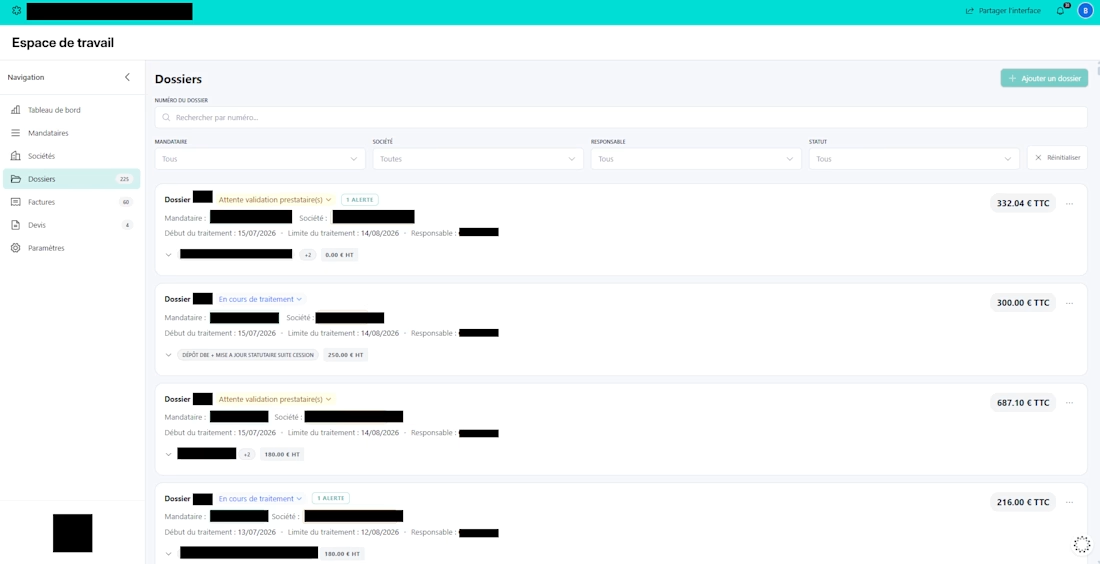
CRM & Automation Platform for Legal Formalities Firms

The network for creativity
Join 1.25M professional creatives like you
Connect with clients, get discovered, and run your business 100% commission-free
Creatives on Contra have earned over $150M and we are just getting started







Related posts


The problem is that small appointment businesses — salons, barbers, clinics, studios — lose money to phone tag, double bookings, no-shows, and requests that arrive after the door is shut. The owner becomes the booking office, and that's hours and revenue they can't afford.
What Tendly does. Every business gets its own booking storefront, open around the clock. A customer picks a service, sees only the times that are genuinely free, and confirms in under a minute — no account, no password, no phone call.
Why it matters to the bottom line. The owner stops being the bottleneck. Scheduling rules, reminders, and confirmations run on their own, so the front desk disappears without anyone being hired to replace it.
How money is protected. A deposit holds the slot before it's confirmed, so a booking is real. If payment doesn't arrive, the hold releases and the time becomes sellable again — nothing sits dead on the calendar. Reminders go out the day before, which is the single most effective way to cut no-shows.
How trust is protected. Payments are checked independently before a booking is confirmed, customer details stay private, and each business's information is fully separated from every other. Nothing is confirmed on a promise; it's confirmed on a verified payment.
How it grows. Staff get their own calendars, owners see everything from one screen, and plans scale from a solo studio to a multi-person practice without changing tools.
The positioning. Tendly is built for the owner who books with their own hands — warm, simple, and mobile-first — not for enterprise chains with administrators.
One last thing: the work dedicated to the children of Palestine.


Breaking News Turned Into Video Before Your Coffee's Cold
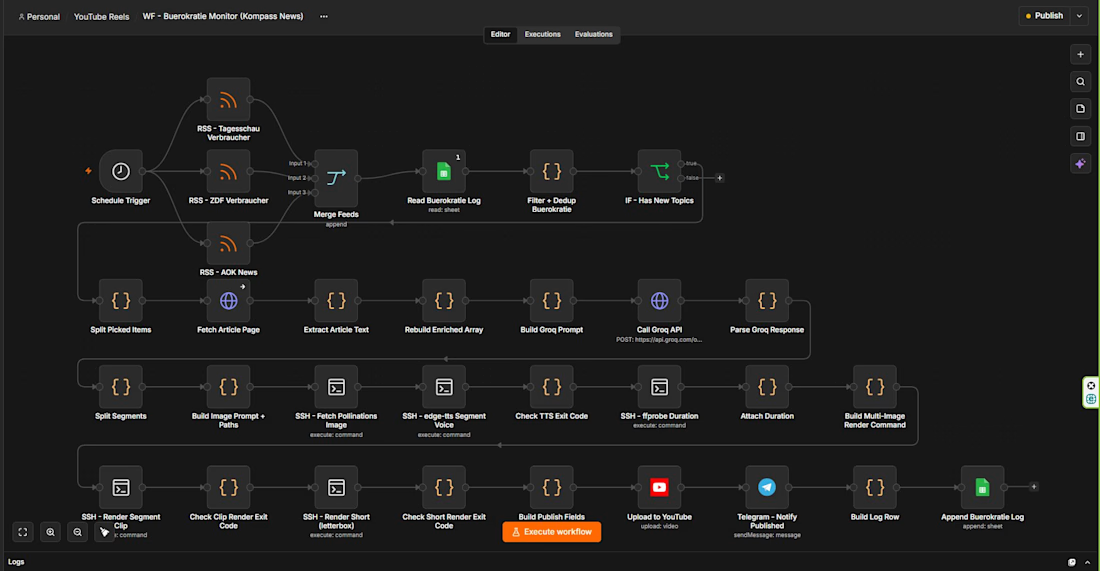
Breaking News Turned Into Video Before Your Coffee's Cold: How long would it take to turn news from three RSS feeds into a finished, voiced-over video short every day? The workflow pulls RSS from Tagesschau, ZDF and AOK, dedupes topics, writes the script via Groq, generates images and voice, renders the short and publishes it to YouTube with a log entry and a Telegram notification.
#n8n #automation #RSS #ScheduleTrigger
Follow for more: https://go.phonezait.de/


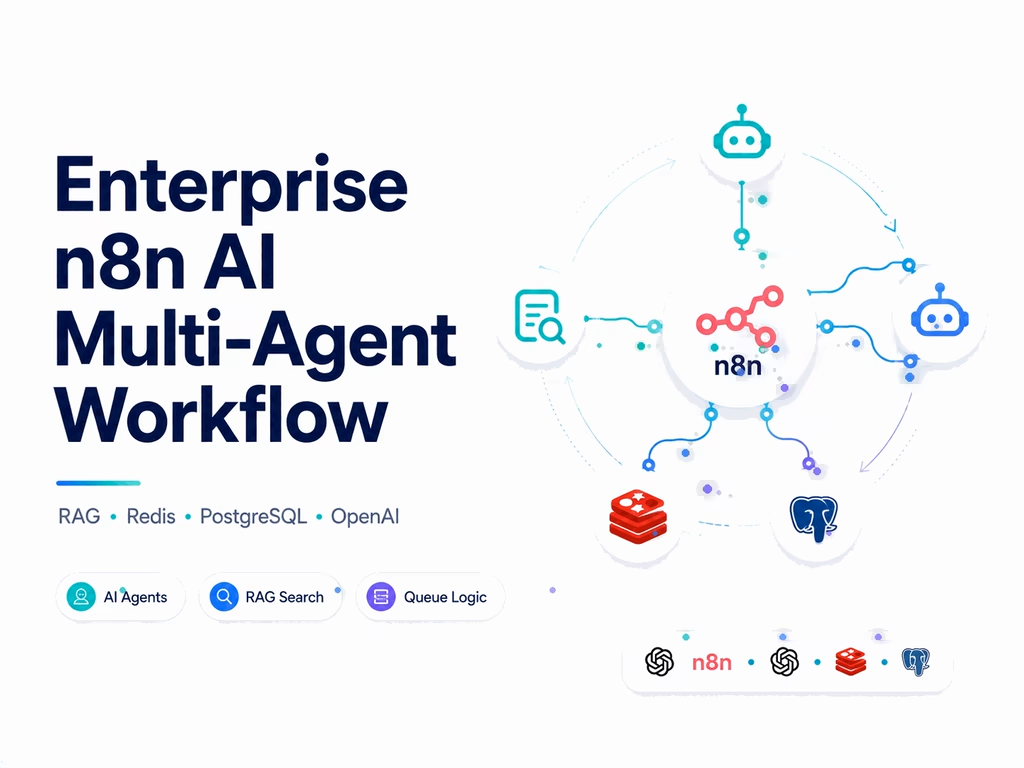
I designed and built an enterprise AI automation system using n8n, AI agents, RAG, Redis, and PostgreSQL to automate complex business workflows, improve decision-making, and create scalable AI-powered operations.
The system uses n8n as the automation orchestration layer, where incoming business events trigger workflows that route tasks to specialized AI agents. A RAG pipeline retrieves relevant knowledge from business data sources, allowing AI agents to generate accurate, context-aware responses and decisions. Redis handles queue-based processing for high-volume tasks, while PostgreSQL stores structured data, workflow history, and audit records.
The automation architecture connects multiple technologies including n8n, OpenAI API, AI Agents, RAG pipelines, Vector Databases, Redis, PostgreSQL, APIs, Webhooks, Slack integrations, Docker, and Python services to create reliable enterprise workflows.
The solution helps businesses reduce manual operations, automate repetitive processes, improve response times, maintain better data accuracy, and scale AI workflows securely. It includes monitoring, validation, error handling, and human approval flows to ensure reliable production usage.
Tech Stack: n8n, OpenAI, AI Agents, RAG, LangChain, Redis, PostgreSQL, Qdrant, Python, FastAPI, Docker, APIs, Webhooks, Slack.