The network for creativity
Join 1.25M professional creatives like you
Connect with clients, get discovered, and run your business 100% commission-free
Creatives on Contra have earned over $150M and we are just getting started
Back to feedPost

Website and local search optimization for an independent massage therapy practice.
This project focused on:
• Local SEO foundations and service page structure
• Clear service messaging and trust signals
• Google Search Console + Analytics setup
• Conversion improvements for appointment booking
The goal was to help a local service business become easier to find in search and easier to trust once visitors arrive.
Digital MarketingMarketing AnalyticsGoogle AnalyticsScreaming Frog SEO SpiderSearch Engine OptimizationGoogle Search Console



The network for creativity
Join 1.25M professional creatives like you
Connect with clients, get discovered, and run your business 100% commission-free
Creatives on Contra have earned over $150M and we are just getting started

Challenges
View all


Related posts

Just dropped a new healthcare web design project – Harbor Health! Focused on clean layouts, patient trust, and seamless booking flows. Would love to hear your feedback! 🌿

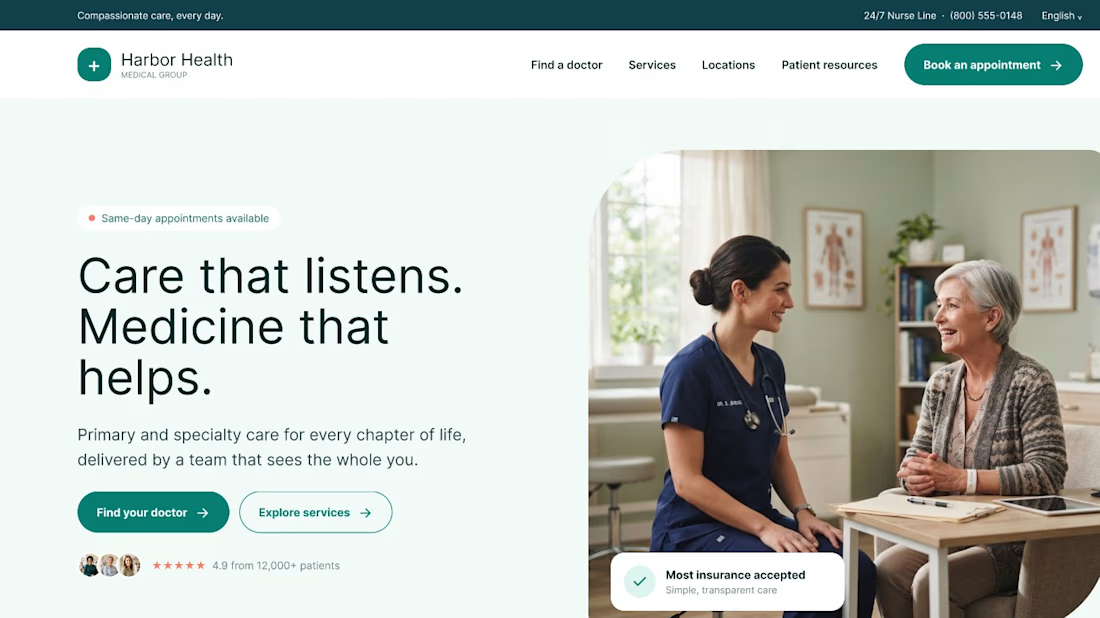
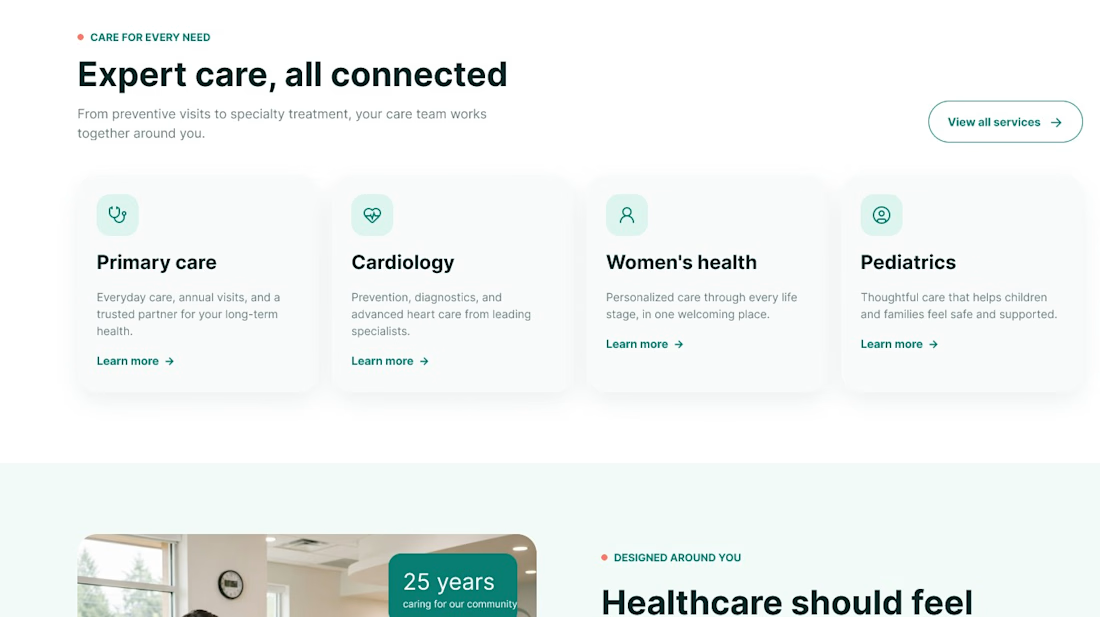
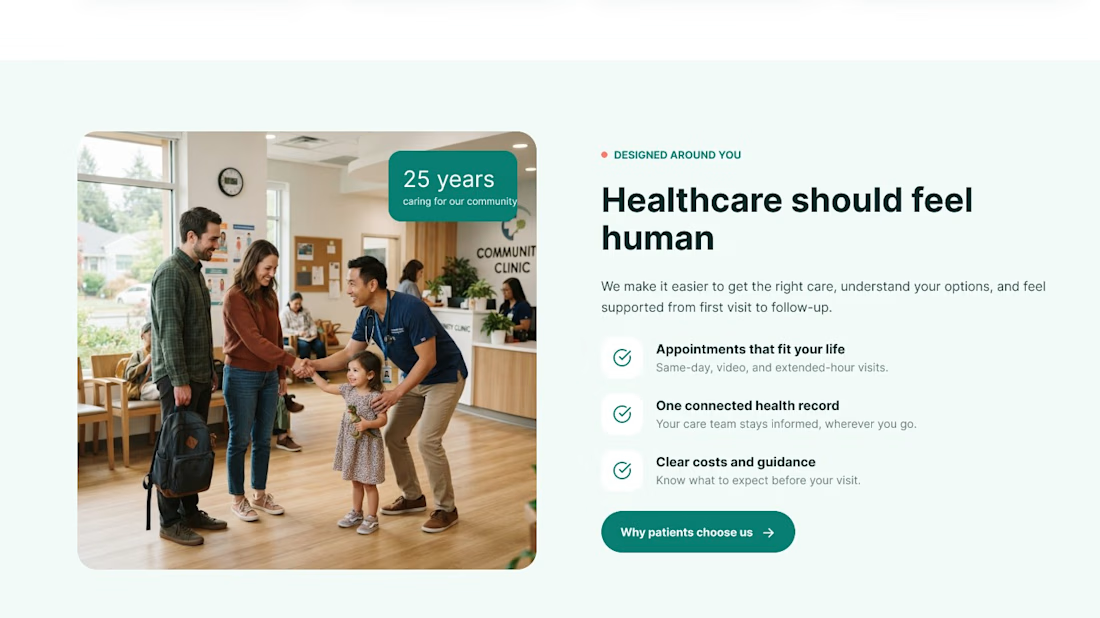
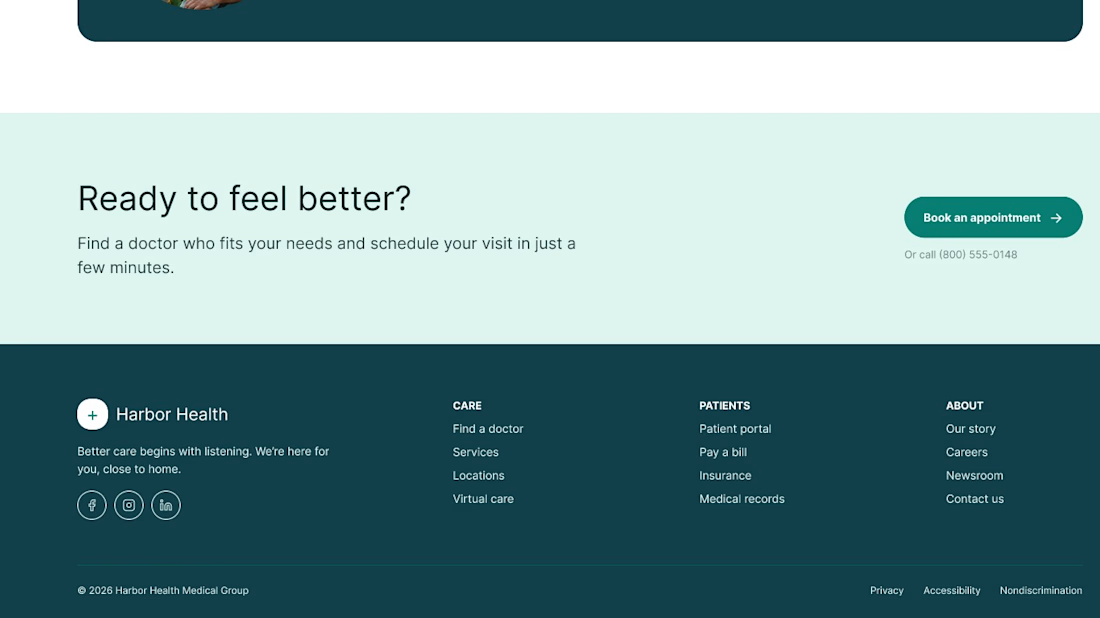

The restrained teal palette and generous spacing make the healthcare content feel calm and trustworthy. I especially like how the booking flow is surfaced without letting the clinical information overwhelm the primary action.


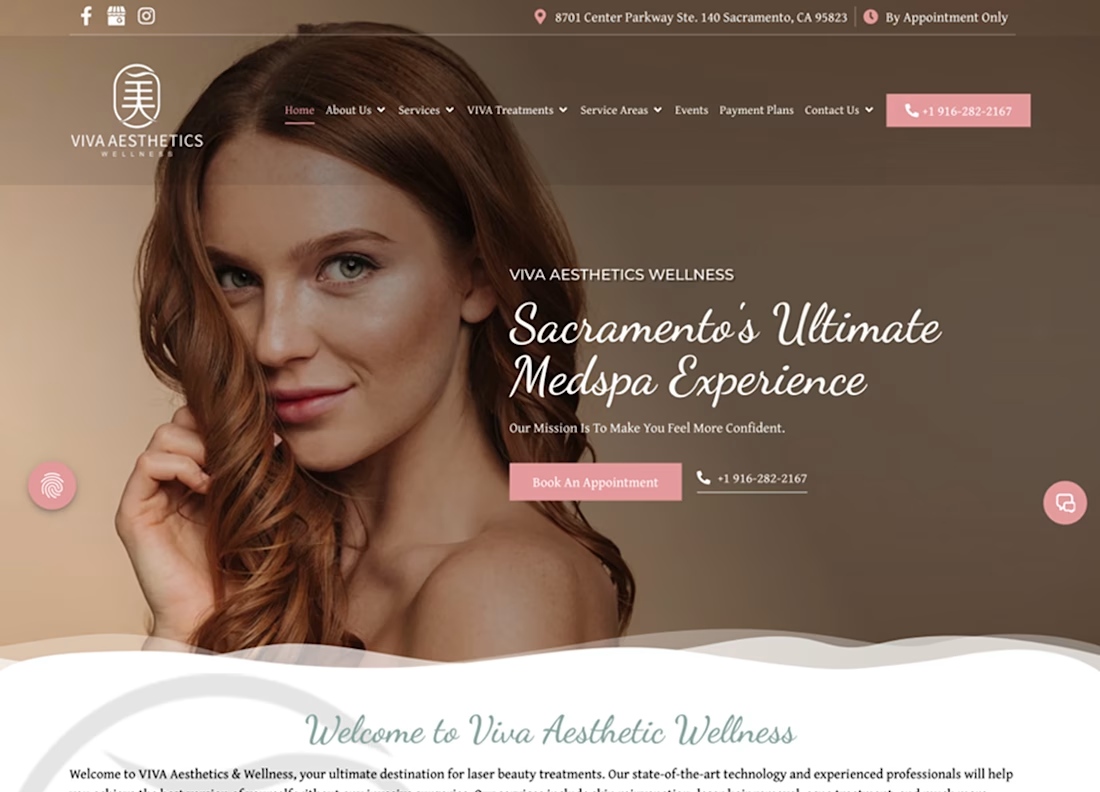
Viva Aesthetics Wellness — WordPress to Framer
A Sacramento medspa with real credentials, running on a site that asked too much of the person using it. Eight items in the navigation, treatments buried a few clicks down, and booking left to a phone number.
We moved them to Framer — not for the platform, but for what it let us do: rebuild the page structure instead of restyling it.
Eight nav items down to five. A hero that names the treatments and the physician-led care rather than promising an experience. Boulevard integrated as the booking platform, so there's one short, consistent path from landing on a page to holding an appointment. Sacramento named as the service area instead of spreading the menu thin.
The migration itself was the unglamorous half — a from/to redirect table built line by line before cutover so nothing already ranking got lost.
Full case study coming soon.





GEO / AI Search Visibility: What We Actually Optimize
A website can rank well in Google and still be almost invisible in ChatGPT, Gemini, Perplexity, Copilot or Google AI Overview.
Why?
Because having the right answer on the page is not always enough.
AI systems also need to clearly understand:
what the page is about;
what answer is being given;
which entity or brand it belongs to;
whether the content is structured well enough to extract and reuse.
That’s why GEO work should go beyond traditional SEO.
Our process
We usually work across 4 areas:
1. Technical foundation
Indexation, crawlability, sitemap, internal linking, schema and other SEO issues that can block visibility.
2. AI visibility audit
We check how the website appears in Google AI Overview, ChatGPT, Gemini, Perplexity, Copilot and Grok, and compare that visibility with competitors.
3. Content structure
We improve pages with things like:
direct-answer blocks;
clearer headings;
FAQ sections;
schema;
better content hierarchy.
The goal is simple:
don’t just have the answer — make it easy for AI to find and use it.
4. Monitoring and iteration
We track AI visibility, citations, traffic and user actions, then update priorities based on real data.
What this looked like in practice
In one recent project:
35 → 217 queries in TOP-10 Google AI Overview
23 → 113 queries in TOP-3
6.2× growth in AI visibility
At the same time, citations changed from period to period, which is why we don’t judge GEO by mentions alone. Visibility, citations and AI traffic are different metrics and should be measured separately.
A GEO audit should answer one practical question:
Why is AI choosing other sources instead of yours — and what should be changed?
If your website ranks in Google but rarely appears in AI-generated answers, that’s exactly what I would check first.
#GEO #AISEO #SEO #ChatGPT #GoogleAIOverview