The network for creativity
Join 1.25M professional creatives like you
Connect with clients, get discovered, and run your business 100% commission-free
Creatives on Contra have earned over $150M and we are just getting started
Back to feedPost

An early discovery call can lose its value before the demo starts.
The founder asks a few broad questions, hears that the product is interesting, then spends the remaining 20 minutes explaining features.
The call ends with: “Send me some information.”
That is not a bad conversation, but it is an incomplete one.
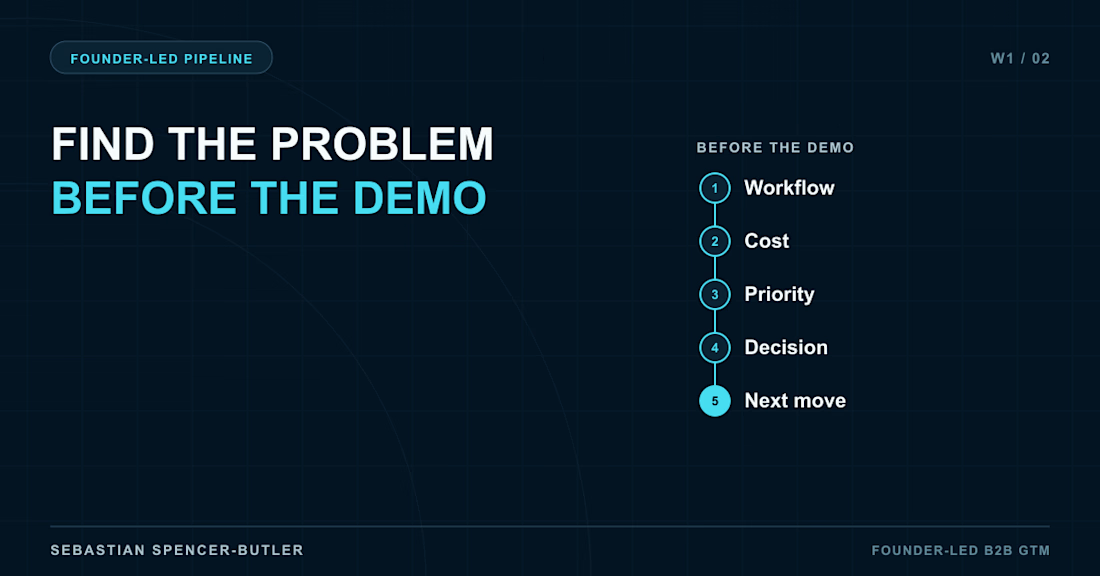
Before you show the product, aim to understand five things:
1. Current workflow: How is the problem handled today? Are there any gaps?
2. Cost: What does that create in time, money, risk or missed revenue?
3. Priority: Why is this worth changing now, if at all?
4. Decision: Who else would need to care before anything changes?
5. Next move: What would a sensible next step need to prove?
The practical difference is stark.
“That is interesting” tells you the buyer is polite.
“Our service director has asked us to reduce this before the next renewal cycle, and they need to see whether it integrates with the current workflow” tells you what to do next.
For the next five calls, write down your hypothesis before the conversation: who has the problem, why it matters and what you expect the next step to be.
Afterwards, record what the buyer actually confirmed, challenged or changed.
That turns discovery into a learning process rather than a succession of demos.
Which part of a first call is hardest for your team: getting past the current workflow, establishing impact, finding the decision owner or agreeing the next move?
The network for creativity
Join 1.25M professional creatives like you
Connect with clients, get discovered, and run your business 100% commission-free
Creatives on Contra have earned over $150M and we are just getting started








Related posts


I'm not a competitive person at all so participating in challenges like these is really difficult for me. There's something about putting your designs out there that still makes me nervous. Instead I try to think of it as challenging myself and making each build better than the last. I've been using Base44 daily for 10 months now and looking back, my work has changed so much. I've spent a lot of time researching and studying design but being part of the community has helped just as much.
Every day I see someone in Discord asking something like “I built my app. Now what?” and that question has been stuck in my head almost like an echo for months now. Mashu is one of those ideas I've redone more times than I'd like to admit. I've wanted to try different ways of solving the problem so Mashu has been my victim and have been through quite a few versions I just end up deleting and starting over 😅
The idea is that you connect your Base44 app along with the social and analytics tools you use and Mashu helps you figure out what to do next. After onboarding, it writes a business plan and helps you turn that into a 12 month goal, milestones and daily tasks to get started. You also need to tell Mashu how things went. What did you learn? Did anyone respond? Did the idea work? That helps it figure out the next step instead of just giving you another task to tick off.
It uses models from both OpenAI and Anthropic powered by in-app agents, Superagents and MCP connectors to monitor your industry, competitors and the tools your business relies on. It gets to know your business better over time, from both its research and what you tell it. I’ve found it difficult to keep up with how everything AI is moving in the world, so I also added daily automated checks for changes such as compliance requirements or Base44 updates from the changelog that might need your attention.
This app is only about two weeks old and this week, I decided to focus on how Mashu looks and feels. I learnt how to create and edit videos (something I've never done before!!) and tried a few new tools. I also JUST got approved access to LinkedIn Developer API after many months of waiting so implementing that into Mashu is next up on my own little roadmap. So entering this challenge has pushed me into doing things I probably wouldn’t have done otherwise. Mashu is a real, functioning app and a passion project of mine but still very much a work in progress. I've changed my mind multiple times and I'm sure I will again but I'm hopeful I'll be able to release it to the world one day.
LinkedIn post: https://lnkd.in/p/d-dtCq9N

Playing around with motion :)

recent website revamp for Founderled.
Founderled is the the trusted GTM partner behind 25+ founders who've raised over $750M from Tier-1 VCs like YC, Sequoia, a16z.
cooking as usual @ clarity design studio
https://cal.com/clarity-design-studio/discovery-call


Great work!

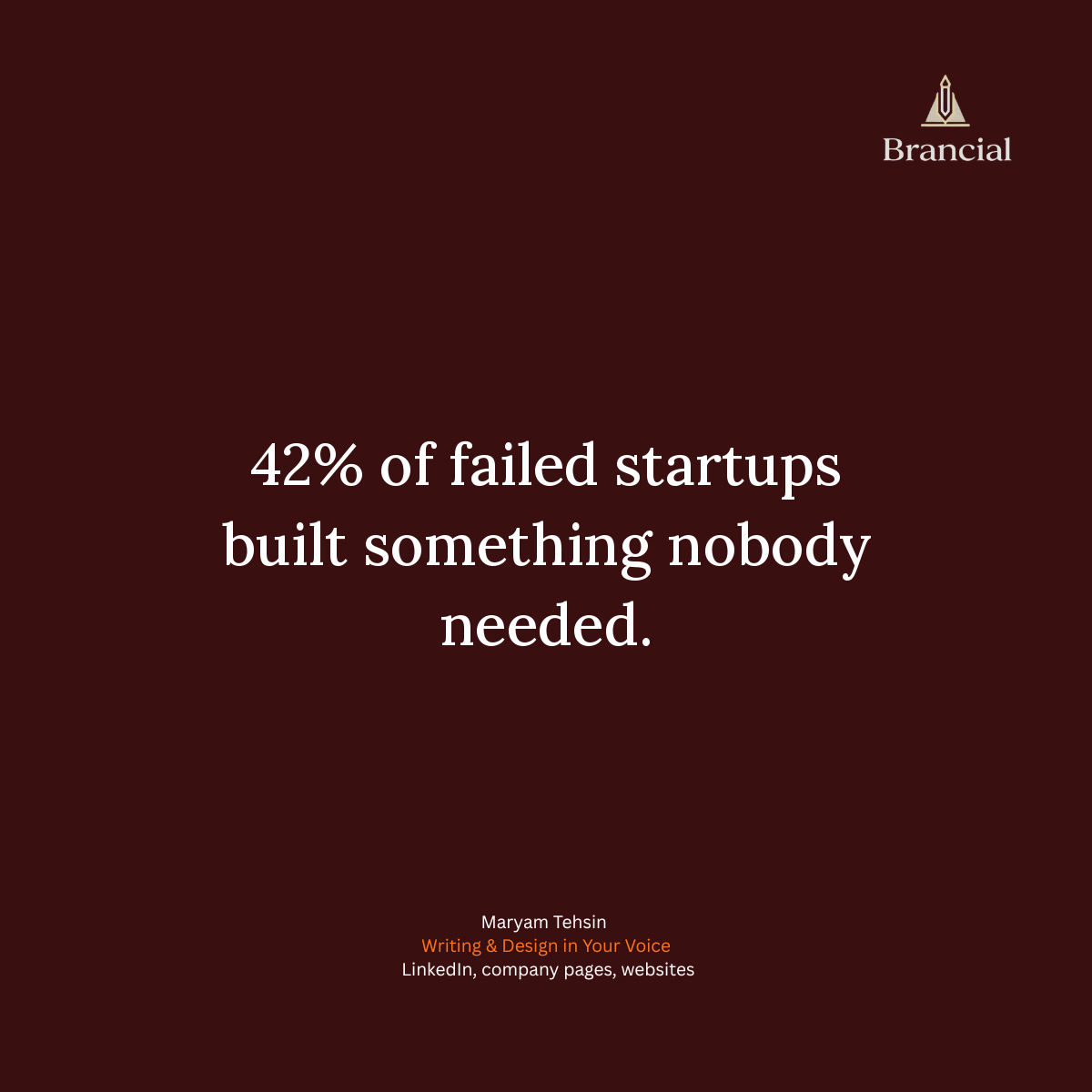
42% of failed startups built something nobody needed.
That is from one CB Insights analysis of 101 founder post-mortems.
Not bad code. Not bad luck. Nobody needed it.
If you are building an AI product...this is the cheapest fix you will ever make...
Ask these 5 questions BEFORE you build...
1. Who exactly has this problem?
Everyone is not an answer. Name a job title.
2. How are they solving it today?
If they are not solving it at all, it may not hurt enough.
3. What does it cost them?
Hours, money or missed deals. Get a number.
4. Would they pay for a fix this month?
Ask for a pre-order or a pilot, not a compliment.
5. Who have you talked to this week?
Aim for 5 real conversations before writing a line of code.
Copy-paste prompt to prepare your interviews:
I am building [product] for [job title]. Write 10 customer interview questions that uncover how they solve [problem] today, what it costs them, and what they have already paid for. No leading questions.
Compliments do not validate a product.
Payments and pilots do.
Save this before your next build sprint.
Follow me to meet again
Daily learn with me (Maryam Tehsin)


Such an important reminder! 👏 It's easy to focus on building a product, but understanding the customer's real problem should always come first. Real feedback is worth more than compliments!