The network for creativity
Join 1.25M professional creatives like you
Connect with clients, get discovered, and run your business 100% commission-free
Creatives on Contra have earned over $150M and we are just getting started
Back to feedPost

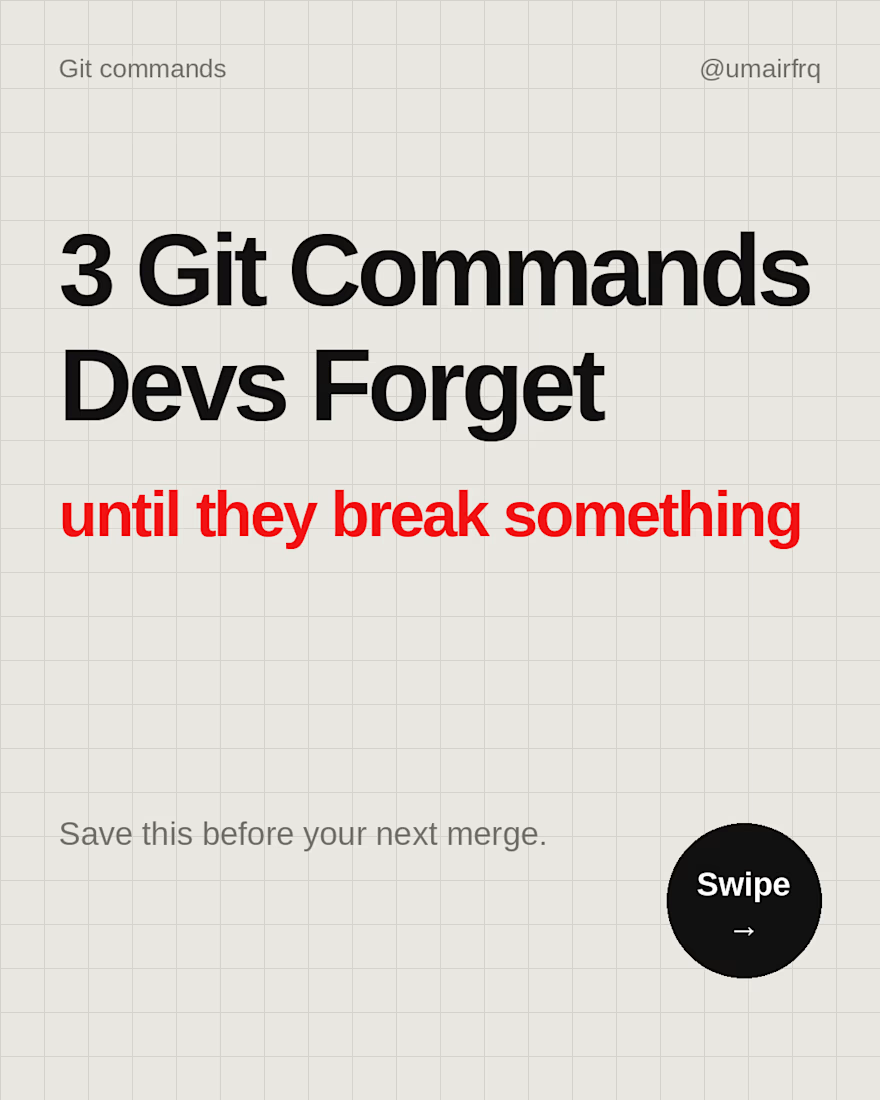
You don’t need to know all of Git. You just need these 3. 👇
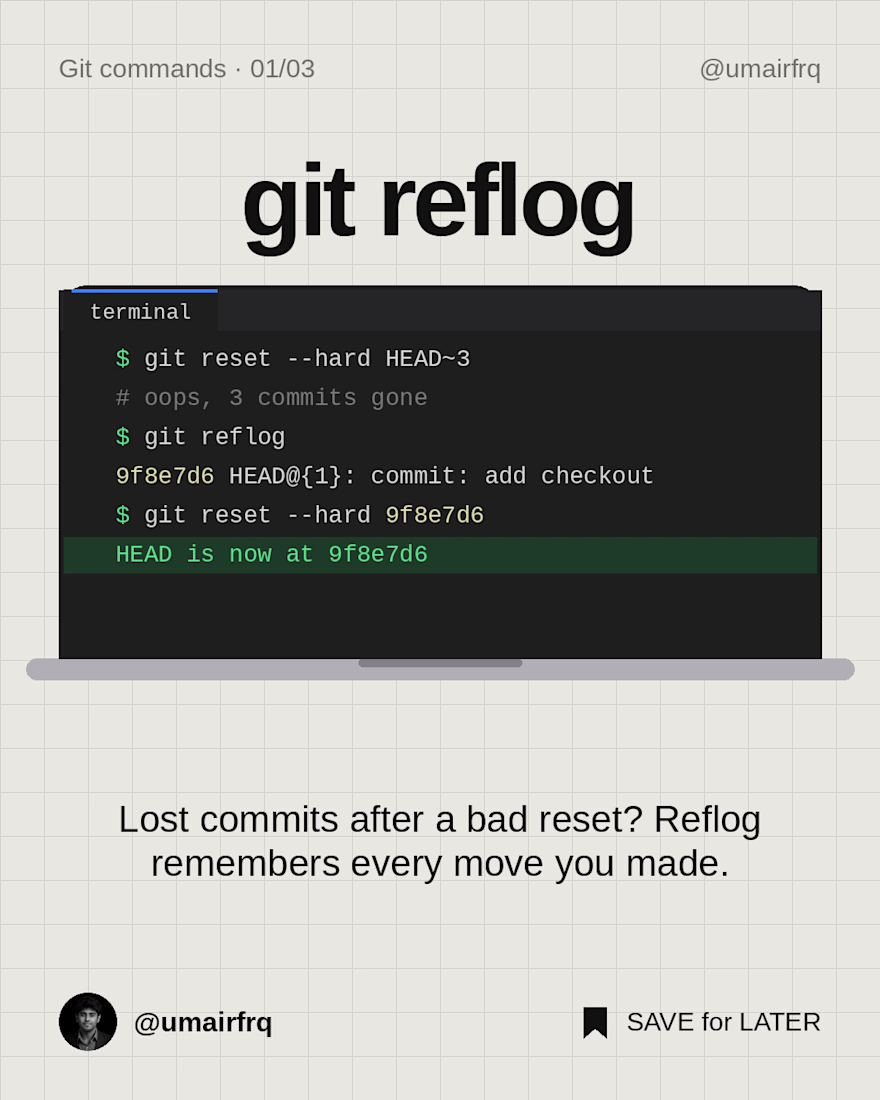
1️⃣ git reflog: got a “lost” commit? It’s still there
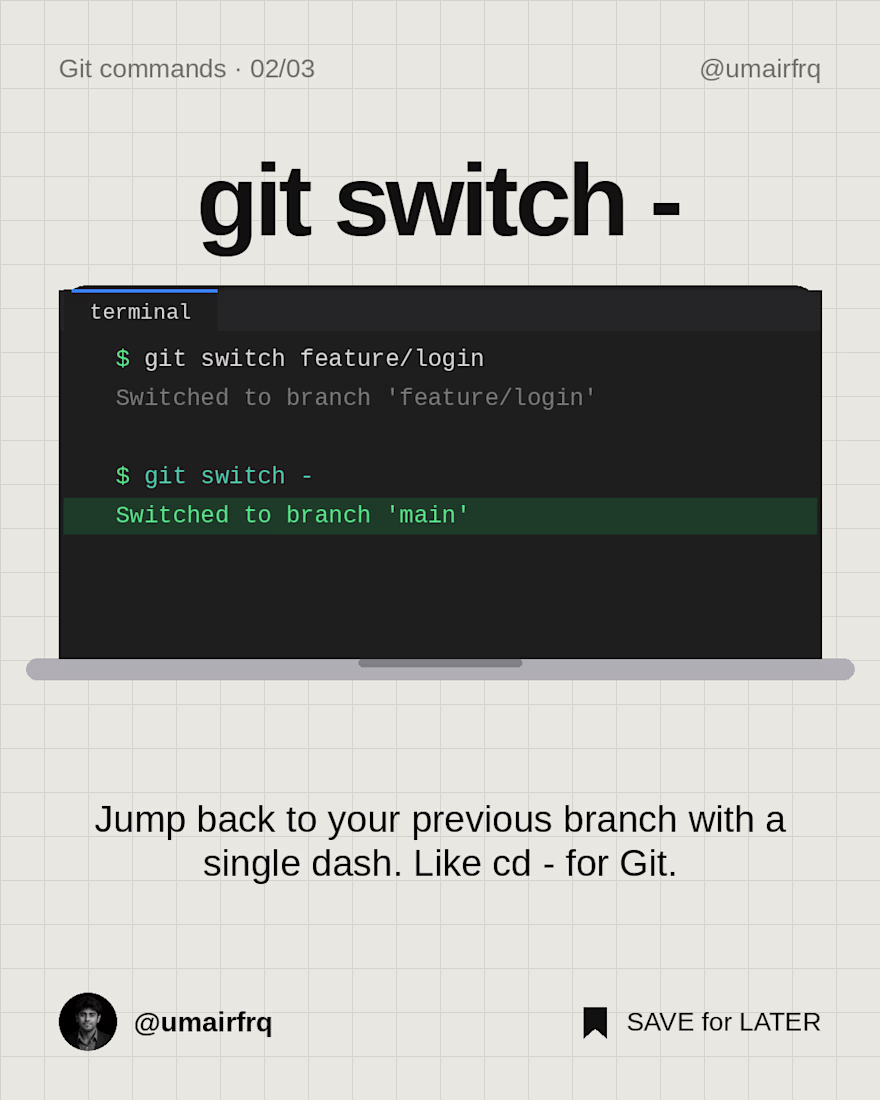
2️⃣ git switch -: jump back to your last branch instantly
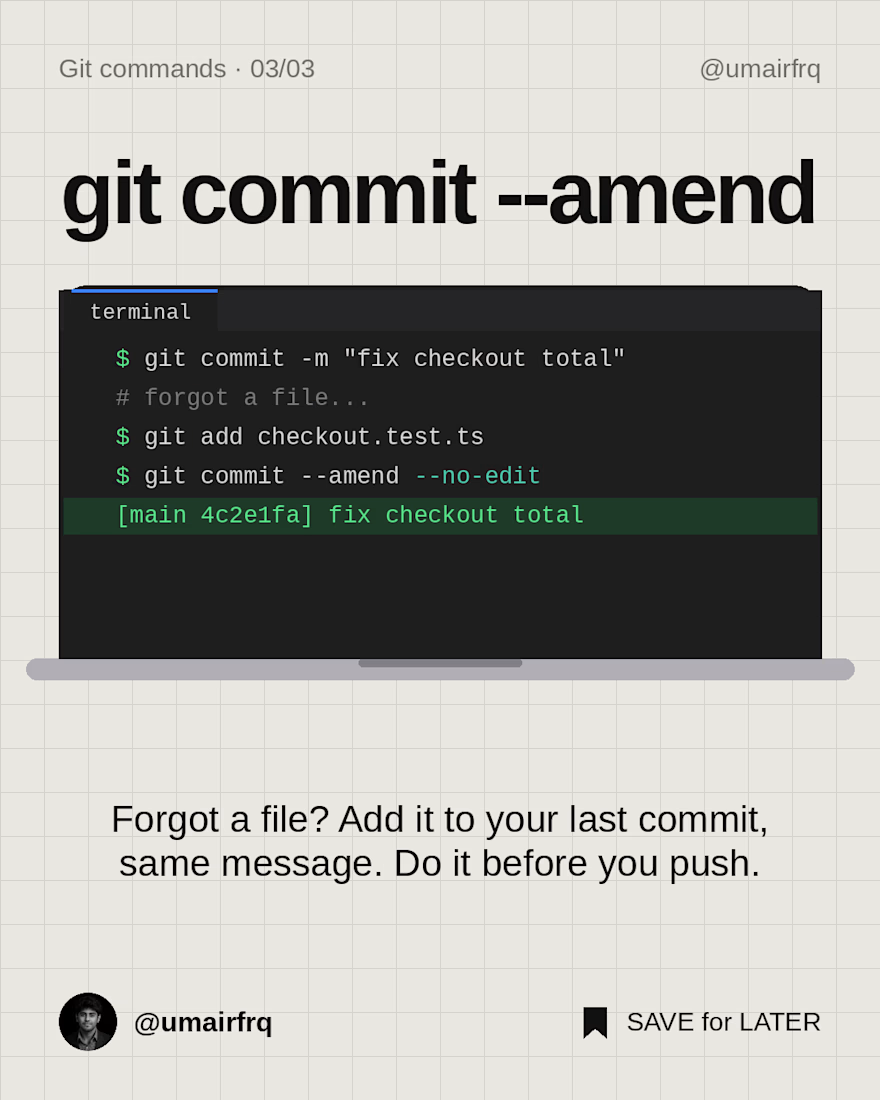
3️⃣ git commit --amend: fix your last commit before you push
Most devs only find these after something breaks. 😅 Save this so you have them when you need them.
💬 Comment “GIT” and I’ll send you part 2.
➕ Follow for more dev tips: https://www.instagram.com/umairfrq/
#git #github #gitcommands #webdevelopment #programming #developer #coding #softwareengineer #devtools #learntocode #cod
The network for creativity
Join 1.25M professional creatives like you
Connect with clients, get discovered, and run your business 100% commission-free
Creatives on Contra have earned over $150M and we are just getting started



Related posts

A migration is not complete when the pages have moved. It is complete when the customer journey still makes sense.
For DVA, the work brought a Wix website, two lead funnels, a client portal, and segmented nurture automations into a clearer Kajabi experience.
Five checks I use before launch:
Map every public page and redirect.
Rebuild forms, tags, and follow-up paths.
Test offers and product access with a real user journey.
Check mobile pages and portal navigation.
Document what the client will manage after handoff.
#Kajabi #PlatformMigration #CourseCreator


two funnels, a portal, and nurture in one move. thats a lot of moving parts

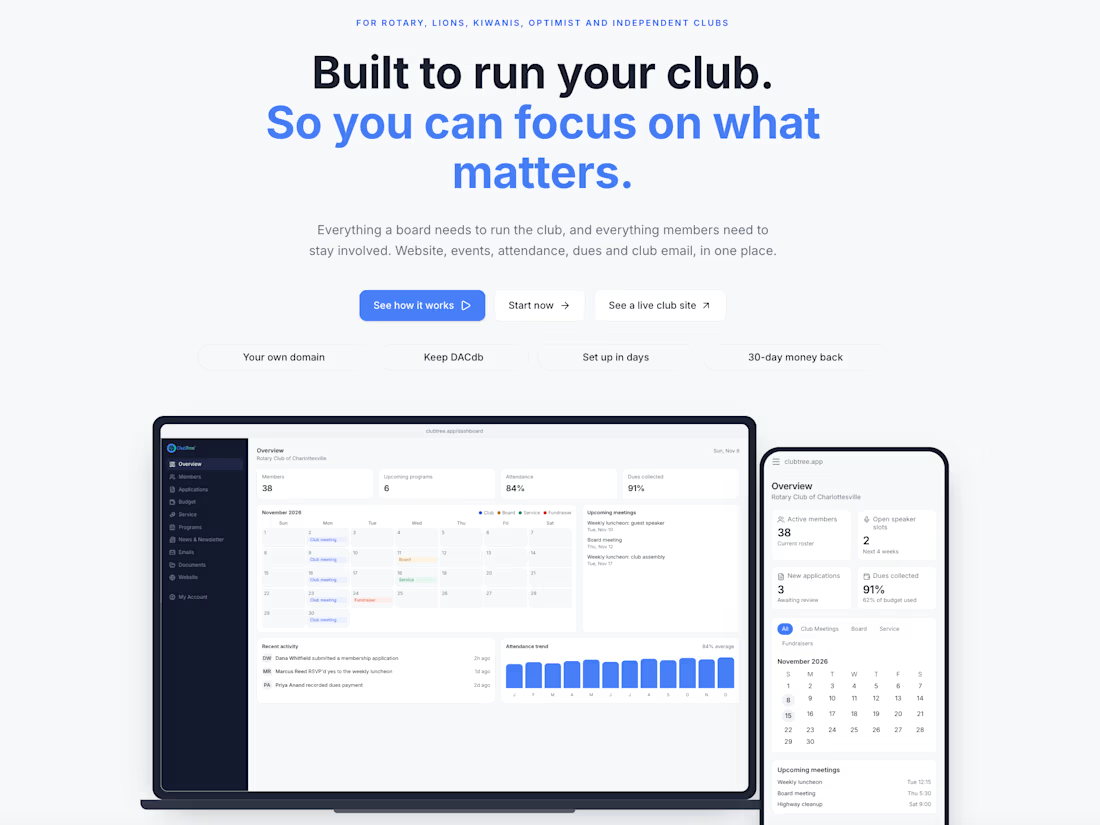
ClubTree | All-in-One Membership Management SaaS
Designed and developed ClubTree, a SaaS platform that helps membership organizations manage their websites, members, events, and communications from one centralized system.
ClubTree combines a public-facing website with an administrative dashboard, giving organizations the tools to manage membership applications, member directories, attendance, newsletters, documents, and organizational workflows.
The platform was designed around real-world service club needs, with an emphasis on intuitive navigation, role-based access, and simplifying administrative tasks.
My role: Product strategy, user research, UI/UX design, full-stack development, testing, and launch.
Key features:
- Membership applications and directories
- Event and attendance management
- Website content management
- Newsletters and member communications
- Role-based access and administrative dashboards
- Integrated organizational workflows
Outcome: A functional membership management platform with a live implementation for the Rotary Club of Charlottesville.



Going live with one real club in Charlottesville and building around how they actually run is the right way to do it. Club admin tools usually feel stuck in 2010, so this looks like a big upgrade. How did you land them, through someone in the club?

I’ve been testing products for nearly half my life, and I still think keeping my knowledge up to date is one of the most important parts of the work.
I recently completed Design Audits Fundamentals on Uxcel. It’s a subject I already work with, but there’s always value in refreshing what I know, seeing how someone else structures their approach, and reconsidering my own habits.
I used to prefer long, in-depth courses. I still value them, including my university studies, for the foundations they build. But they can move slowly in places, especially when I want to revisit something specific and bring it into my work now.
Short, focused courses fill that gap for me. They don’t replace a solid foundation. They help me keep building on it without waiting months to get to the part I need.