The network for creativity
Join 1.25M professional creatives like you
Connect with clients, get discovered, and run your business 100% commission-free
Creatives on Contra have earned over $150M and we are just getting started
Back to feedPost

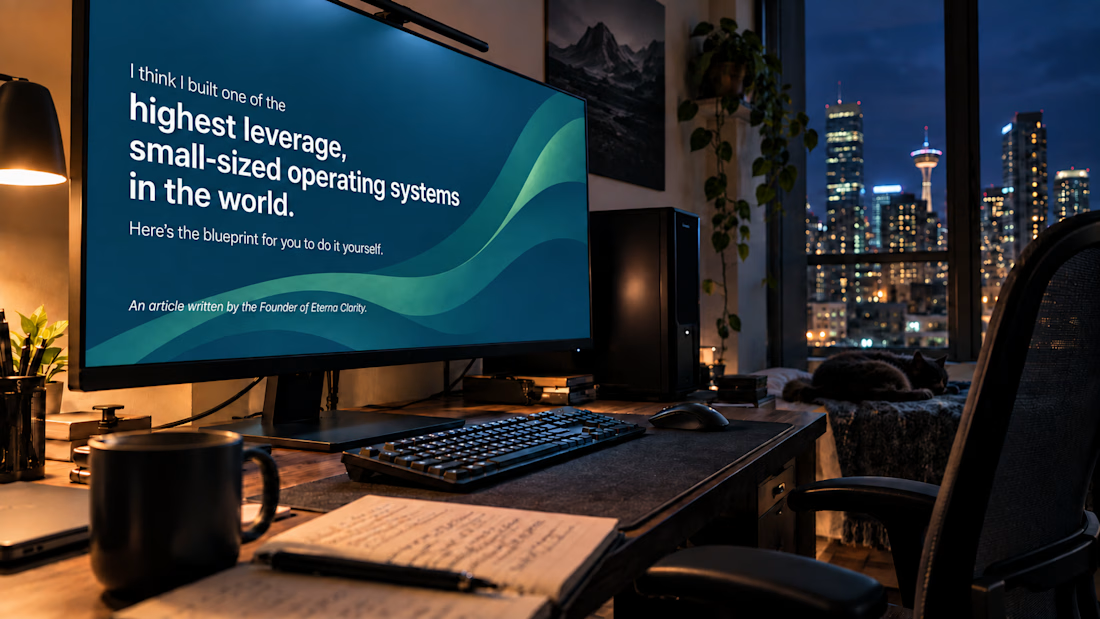
I recently published the most detailed thing I’ve written about how I run Eterna Clarity as a solo founder. It started as an attempt to explain a strange result: in less than three months, I had built an operating environment that could coordinate a surprising amount of real company work from one ordinary Windows PC.
The part I think is most useful is not the amount of automation. It is the boundary I eventually had to draw around the AI itself. Eterna can use different frontier AI providers, a qualified local model, ordinary software, connected services and browser tools, but the company does not live inside any of them. Current work, files, decisions, research and operating state have durable owners outside the conversation.
I learned that distinction through failure. At one point I had systems confidently report that work was complete when the real result was wrong. I had a local-model candidate score 24 out of 24 on its target benchmark and still rejected it because it failed an older adversarial test. I built orchestration that looked sophisticated and then measured it against a simpler approach and found that the simpler system was substantially better.
Those experiences changed what I optimize for. I care much less now about how autonomous an AI looks and much more about whether its work can be verified, whether another model could continue the same job tomorrow, whether a failure leaves the company in a recoverable state, and whether human judgment is still being applied where it actually matters.
The same thinking now reaches into creative work at Eterna. Studio has explicit standards for AI-assisted writing and design, including evidence before claims, accurate attribution, human voice and rejection of output that looks polished but does not survive closer review. I am also constantly testing new models and figuring out where they actually belong in production workflows rather than assuming that a new capability is automatically useful.
I wrote the full blueprint partly because I think other small founders and independent operators can build versions of this without copying Eterna’s complexity. The article includes what worked, what failed, what I would never build again, and a much smaller progression someone could use to start with durable work and gradually add AI around it.
I’m especially curious what people here think because Contra has such an interesting mix of designers, independents, builders and people working directly with AI. If you read it, I’d genuinely value criticism. What feels useful? What looks overbuilt? What would you challenge if you were designing the system yourself?


The network for creativity
Join 1.25M professional creatives like you
Connect with clients, get discovered, and run your business 100% commission-free
Creatives on Contra have earned over $150M and we are just getting started







Related posts

This is the kind of AI workflow that gets me excited as an independent developer.
Faster ideation, faster prototyping, and more room to focus on turning ideas into real products. 🚀


What does sketch to shippable actually look like in real time? 🎥
Honestly, I went in doubting it, and came out convinced, for early concepting at least. 🤔 I recorded the whole process, doodle to final.
Calling all desginers to run it on your own idea and drop the result below....

Being an independent designer means you're also your own toughest critic – no one else is going to catch it if you don't.
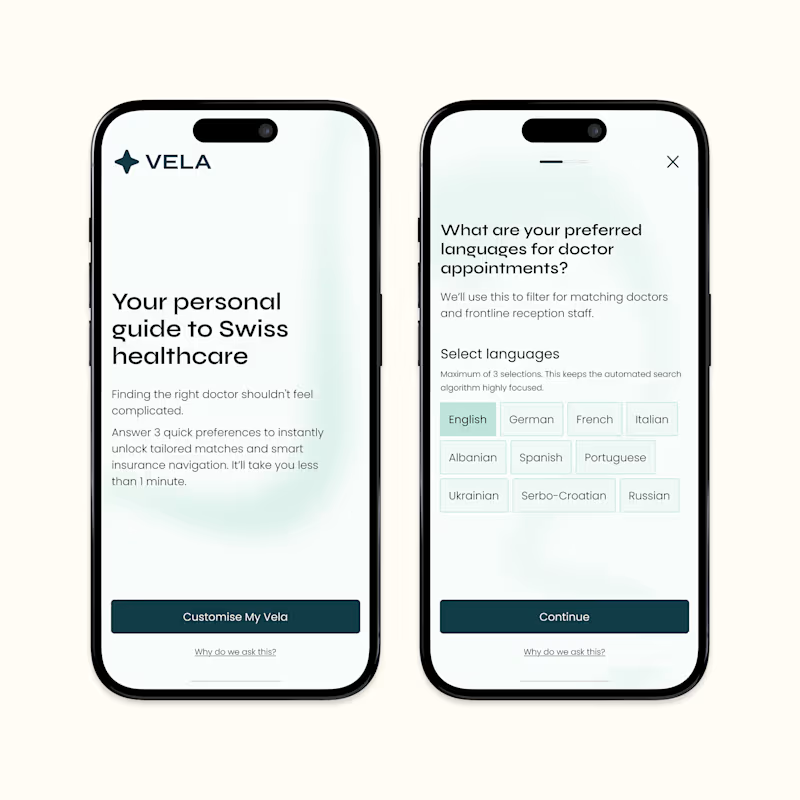
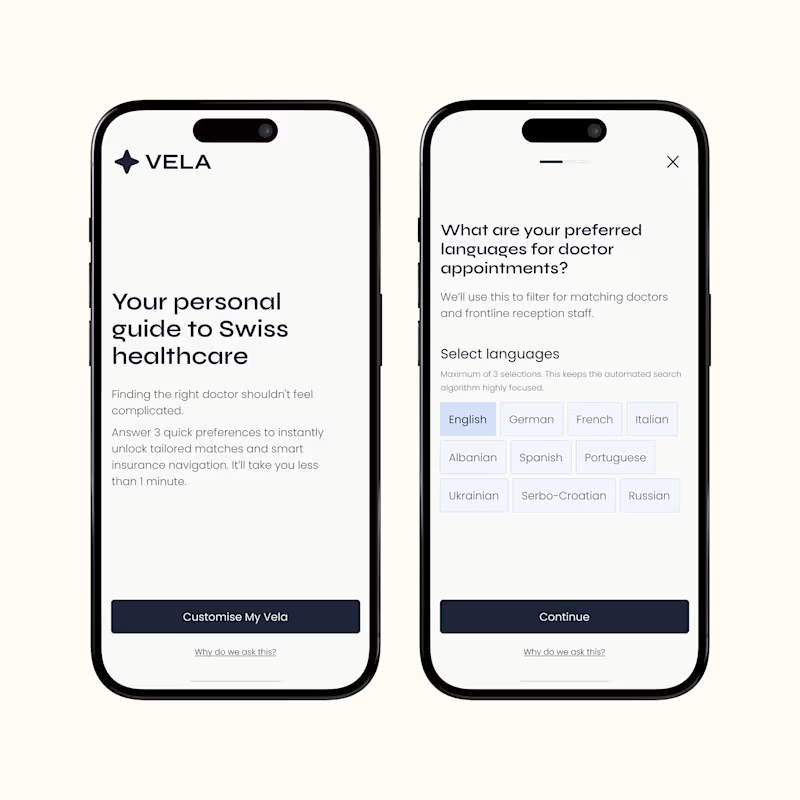
Self-initiated projects give you all the freedom, meaning you can create close-to-perfect work that you think people would love to use. Vela is an app for making doctor appointments and getting insurance guidance with AI assistant. When I started designing it, I wanted it to feel trustworthy and knowledgeable, but also warm, like a friend who explains things without judging you.
Looking back at the initial teal version, I think it landed closer to "doctor's office" than that. Tried a version with less clinical colour, more personality, leaning towards "tech" rather than "health".
Curious what actually reads as more trustworthy to you: A or B?
7 voted
50%
7 voted
50%
14 votes
Closed

version B


I'm building midcode.
a tool that let's you turn code websites into no-code
super useful for AI-led sites where we want to edit things visually