The network for creativity
Join 1.25M professional creatives like you
Connect with clients, get discovered, and run your business 100% commission-free
Creatives on Contra have earned over $150M and we are just getting started
Back to feedPost

Most businesses still measure SEO success by rankings alone. But right now, a growing share of buyer questions never reach a search results page at all — they get answered directly inside ChatGPT, Perplexity, and Google's AI Overviews.
Here's what that changes in practice: it's not enough for your content to rank. It has to be structured in a way these engines choose to cite — clear direct answers near the top, strong schema, content organized around the actual question a buyer is asking rather than the keyword you want to rank for.
I ran into this firsthand auditing a manufacturing brand's site last month. They had strong, genuinely useful content — but almost none of it was formatted in a way AI engines could easily lift and cite. Small structural changes (not new content) closed most of the gap.
If you're investing in content but not seeing it show up anywhere outside traditional search, that's usually the first thing worth checking.
The network for creativity
Join 1.25M professional creatives like you
Connect with clients, get discovered, and run your business 100% commission-free
Creatives on Contra have earned over $150M and we are just getting started



Related posts

Ran technical SEO for a NYC financial advisor, getting more pages indexed, merging competing articles and speeding up the site, which brought in 4x more booked calls.

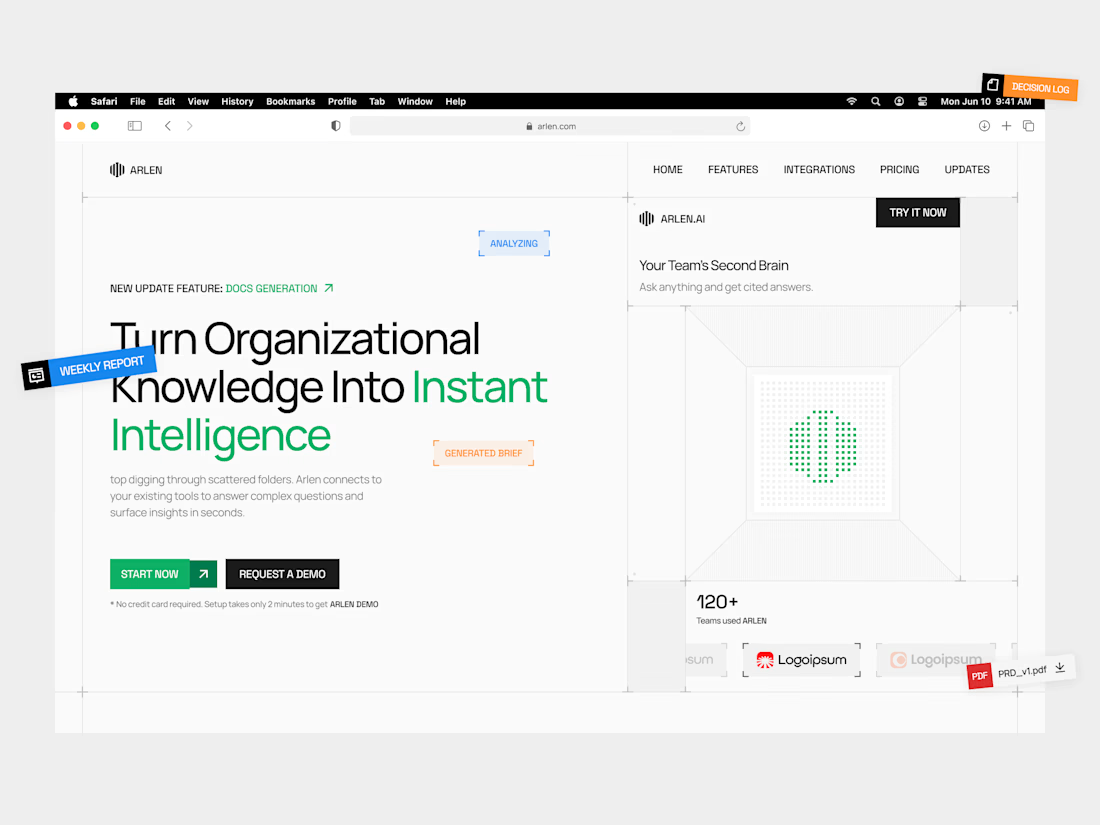
Bringing scattered knowledge into one place. Arlen turns complex information into clear, actionable insights.
Want to create something like this?
Let's Talk!


One of the harder problems in AI product design is the gap between what the AI can do and what users expect it to do. I've been thinking about this a lot while working on conversational commerce interfaces.
The challenge with AI chatbots for eCommerce isn't the intelligence — it's the interaction design. The difference between a product advisor that converts and one that gets dismissed comes down to a few specific things: how quickly it reaches a useful recommendation, whether the language feels human, and whether it asks one question at a time rather than presenting a wall of options at once.
My process starts in Figma, mapping out the conversation as a user journey rather than a technical flow. Each decision point in the chat isn't just a question — it represents a moment where the user either stays in the flow or disengages. I think carefully about what the user knows and what they're uncertain about at that exact moment in the browsing session, and design the agent prompt accordingly.
What I've found works consistently: establish context before asking anything. If the first message explains why the assistant is there and what kind of help it can offer, the user reads every subsequent question differently. That framing changes the entire interaction quality.
This design-first thinking also shaped how I approached the Askflow no-code builder. Campaigns are represented as visual nodes — conversation steps you can see, sequence, and rearrange — so marketers can think about the conversation logic without touching code. The goal was to put design control closer to the people who understand the customer.
If you're building anything with conversational AI, design the interaction model before you touch the tech layer. It's the part that's hardest to fix once you've shipped.