The network for creativity
Join 1.25M professional creatives like you
Connect with clients, get discovered, and run your business 100% commission-free
Creatives on Contra have earned over $150M and we are just getting started
Back to feedPost

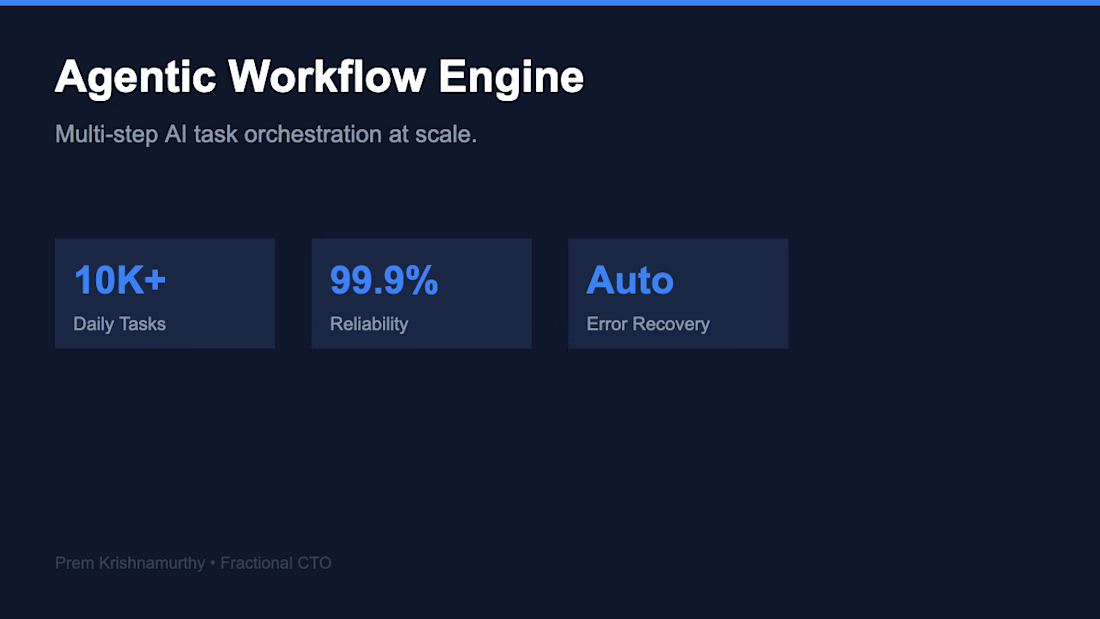
Architected a scalable agentic workflow engine that orchestrates multi-step AI tasks with built-in error recovery and human-in-the-loop checkpoints. Powers complex automation pipelines processing 10K+ tasks daily with 99.9% reliability.

The network for creativity
Join 1.25M professional creatives like you
Connect with clients, get discovered, and run your business 100% commission-free
Creatives on Contra have earned over $150M and we are just getting started

Challenges
View all


Related posts

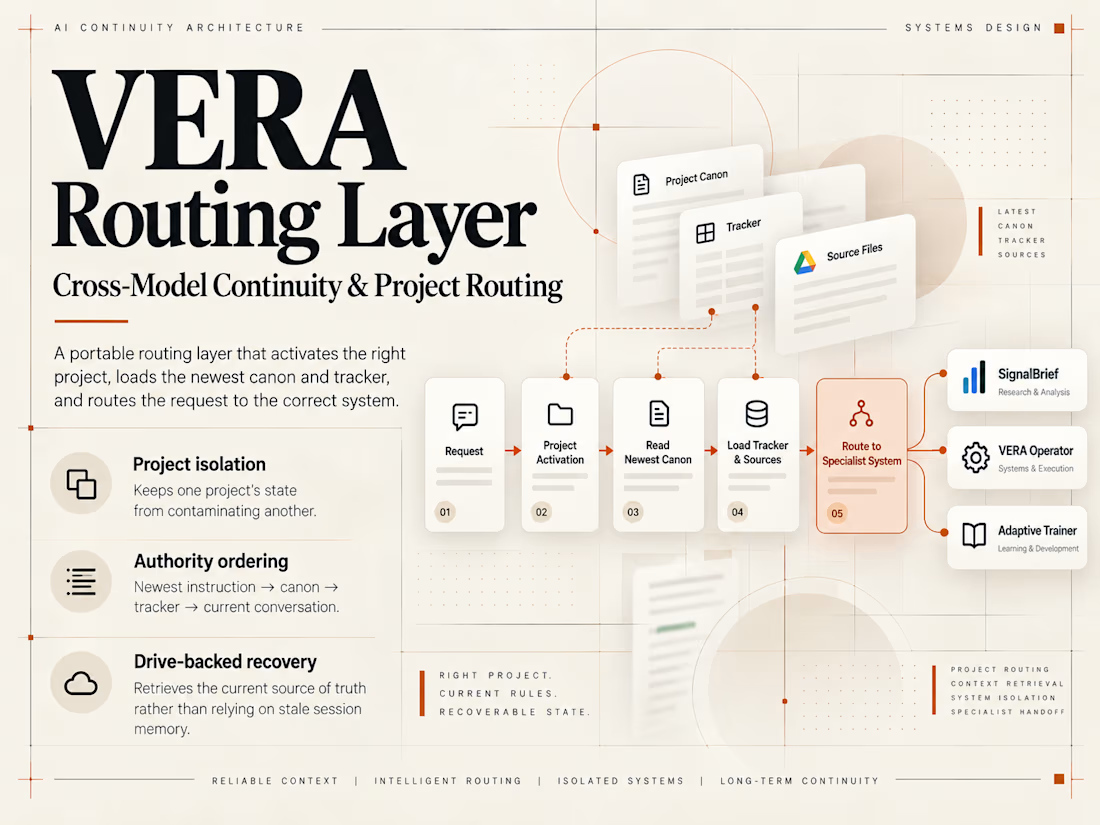
A strong specialist skill is useless if the wrong system gets invoked. Long-running AI work breaks in boring, expensive ways.
That is not a prompting problem. It is a routing and authority problem.
How I can help you:
I build project routers for teams using multiple AI workflows, agents, or specialist assistants so that they work with each other as a team.
I design source-of-truth resolutions so your agents retrieve the current rules instead of improvising or relying on assumptions or stale chat data.
I create reusable skill registries and specialist handoff logic hardened by determined and dedicated flow states reducing the need for model reliance on its own internal and displaced memory context.
I separate project states with individualized canonical states bound by rules living under essential model instructions and routed properly so unrelated workflows do not contaminate one another, but exist with awareness of the role each project plays, enabling a persistently growing ecosystem to develop organically.
I add governance wrappers, escalation hooks, and recovery mirrors around existing AI stacks so that trust is designed at the root, and variance is eliminated with rule based source archiving and implementation.
Trust means closing your eyes at night and sleeping soundly because your agents got your back. And I can put it all together for you, precision results sourced and undisputed because I got tired of doing things the hard way.

Phillip, agree that routing is where it breaks. In our builds the worst bugs came from an agent pulling an old rule from chat history instead of the current source. Pinning one source of truth per project fixed more than any prompt change did.

AI Workflow Architect is now live in the ChatGPT Plugin Directory. 🎉
A lot of businesses know they want to automate more — but the harder question is usually:
What should actually be automated, what needs fixing first, and what should stay human?
That’s what I built AI Workflow Architect to help with.
You can give it a real workflow — client onboarding, approvals, handoffs, internal operations — and it helps identify:
• the main bottleneck
• automation readiness
• missing information
• human responsibilities
• controls and safeguards
• the most important next step
The goal isn’t to automate everything.
It’s to make better decisions about where automation will actually help.
The plugin has now been reviewed and approved and is available publicly in ChatGPT.
If you want to go beyond the initial assessment, I also offer the Complete Automation Blueprint, where I turn the workflow into a structured future-state architecture with ownership, controls, exception paths and an implementation sequence.
AI Workflow Architect — Find what to automate.


“What should stay human” is the right wedge for a ChatGPT plugin — most teams automate the wrong step first. Public directory listing is a nice proof point.

A strong outbound system should not begin with “how many leads can we collect?”
It should begin with:
Who actually deserves to enter the pipeline?
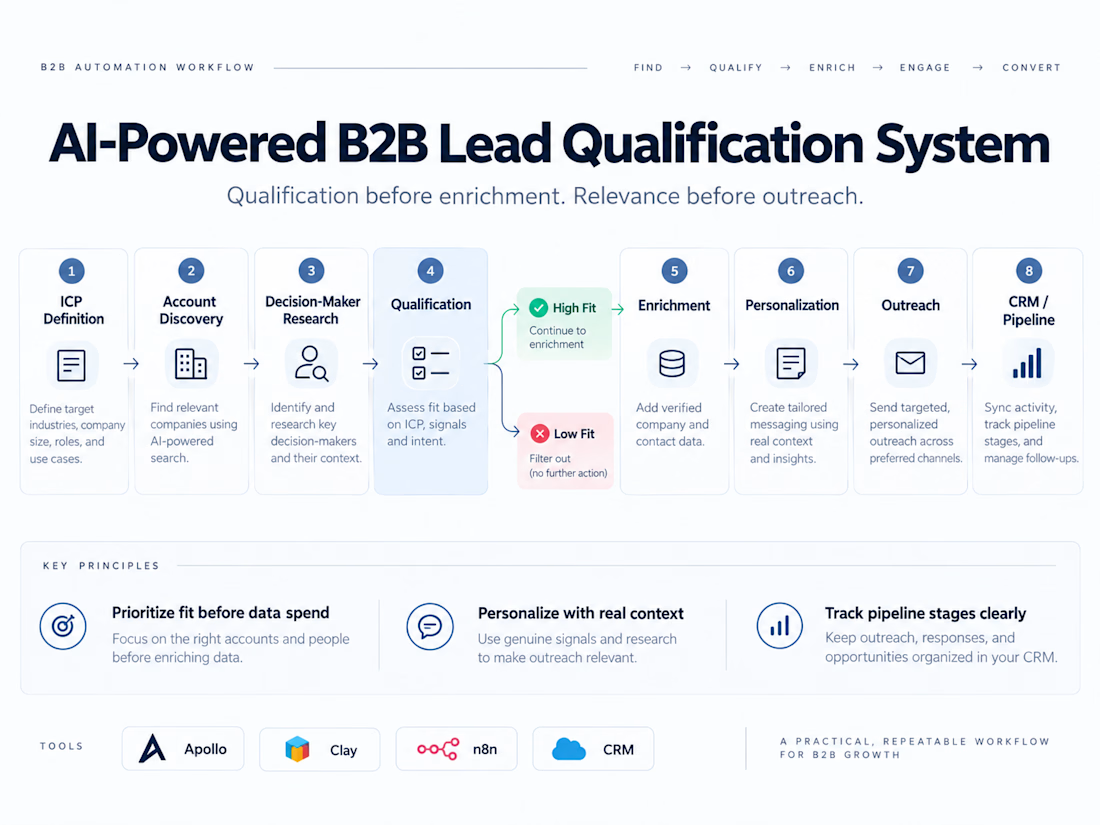
The B2B lead qualification system I built follows this structure:
ICP → Account Discovery → Decision-Maker Research → Qualification → Enrichment → Personalization → Outreach → Follow-Up → Pipeline Tracking
The key decision is simple:
Qualification happens before expensive enrichment.
That helps reduce wasted data, weak-fit prospects, generic messaging, and cluttered CRM pipelines.
The objective is not more contacts.
It is a cleaner pipeline built around relevance, priority, and commercial fit.
#AIAutomation #B2BLeadGeneration #SalesAutomation #Apollo #Clay

I'd keep 'unknown' separate from 'poor fit' at the qualification step, especially when enrichment hasn't run yet. Do incomplete records go into a research queue, or are they filtered out?