The network for creativity
Join 1.25M professional creatives like you
Connect with clients, get discovered, and run your business 100% commission-free
Creatives on Contra have earned over $150M and we are just getting started
Back to feedPost

CHAT-BOT(rag-agent)
PROBLEM:
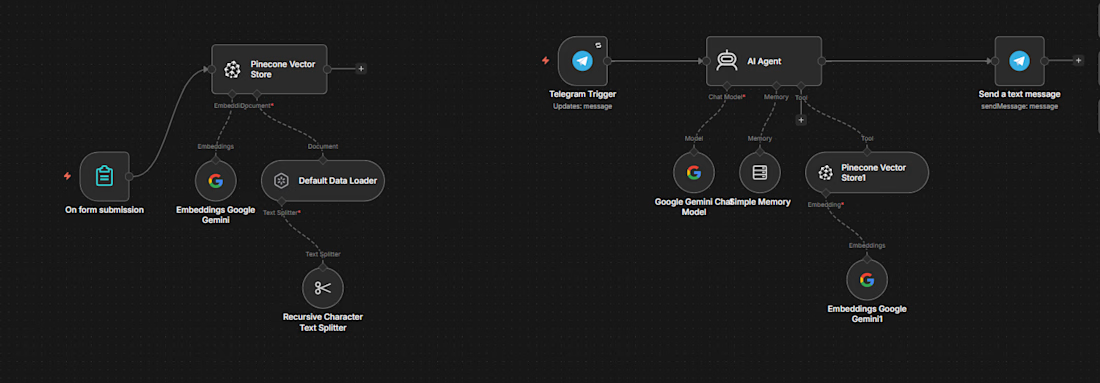
client business was doing good but customers felt stuck about the general information like product availability, business timings,orders and appointments which resulted in confusion and thus loosing a customer. there was a live support but it was not available all the time and and when available it was frequently busy
SOLUTION:
I built an rag-agent (chat-bot) for this business which was particularly trained for that specific business which answered the queries of customer efficiently and round the clock . This prevented the confusion and gave the customers the feeling of being understood. If they had any query they simply texted the telegram agent and get their answers
RESULTS:
The live support manual work was replaced with the chat-bot which is available round the clock. This saved business hours of work , boosted sales and happy customers.
Note: client wanted it to be integrated it with telegram while other options like integrations with website , apps and whatsapp are also available

The network for creativity
Join 1.25M professional creatives like you
Connect with clients, get discovered, and run your business 100% commission-free
Creatives on Contra have earned over $150M and we are just getting started





Related posts

What if every new lead could be handled before you even open your inbox? ⚡
This AI-powered workflow turns a new email inquiry into a structured, ready-to-handle lead — automatically.
A new inquiry arrives → AI extracts the important details → Airtable/CRM is updated → the response goes through optional human approval → a personalized email is sent → Notion is updated → the team gets notified in Slack → performance data is collected for reporting.
The goal isn't to remove people from the process. It's to remove the repetitive work around them.
This type of workflow can be customized for B2B companies, SaaS businesses, agencies, real estate, e-commerce, recruitment, consulting, customer support, healthcare, finance, education, and other service businesses.
Already know what you want to automate? → Send me your current workflow and I’ll map out how we can automate it.
Still doing repetitive work manually? → Tell me the task that consumes your team’s time, and I’ll help identify what can be automated.
#AIAutomation #AIWorkflow #AIWorkflows #AIAgents #Automation #WorkflowAutomation #BusinessAutomation #ProcessAutomation #n8n #n8nAutomation #ArtificialIntelligence #GenerativeAI #B2B #B2BAutomation #SaaS #SaaSAutomation #SalesAutomation #LeadGeneration #LeadAutomation #LeadManagement #EmailAutomation #CRMAutomation #CustomerSupport #CustomerServiceAutomation #MarketingAutomation #AgencyAutomation #RealEstateAutomation #EcommerceAutomation #RecruitmentAutomation #HRautomation #FinTech #HealthcareAutomation #EdTech #BusinessGrowth #BusinessEfficiency #DigitalTransformation #NoCode #LowCode #OpenAI #AIAgent #CRM #Airtable #Notion #Slack #Productivity #FutureOfWork


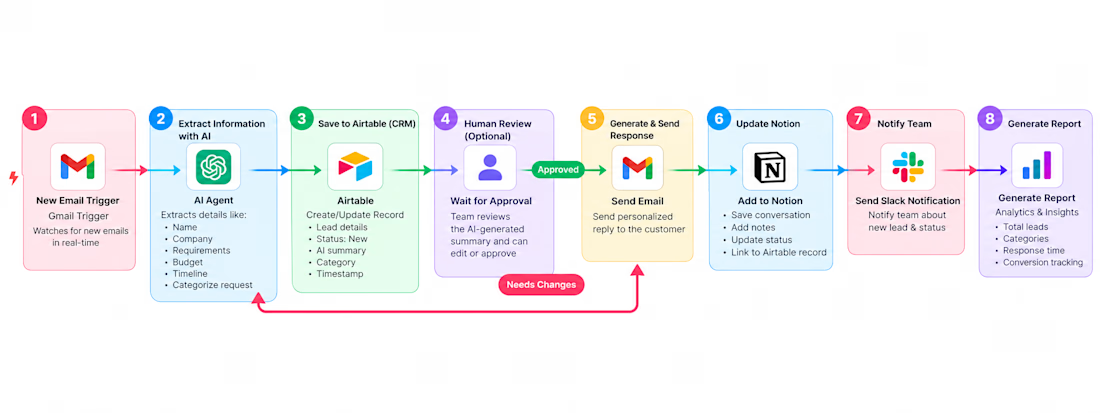

I'd use the human approval step to capture corrections, not just a yes/no decision. If a reviewer changes the extracted lead details, does the workflow update Airtable and the reporting record before sending the email?

Where do you think AI agents can make the biggest impact in a real business? 🤖
I'm exploring AI agents and automation through projects with n8n, Python, RAG and APIs.
I'm curious to hear from other builders and founders:
What would you automate first if you could remove one repetitive task from your business?
Lead management? Customer support? Internal operations? Something else?
Would love to hear your ideas 👇
#AIAgents #AIAutomation #n8n #AI #Automation

I saw how linking n8n to a CRM can pull new leads straight into a queue, wiping out the copy paste step.

I built an AI voice ordering workflow to help a restaurant capture customer orders and pass them to the kitchen with less manual work.
Using Vapi, I configured a voice assistant with the restaurant’s menu and prices to collect customer details and orders. After each call, a webhook triggers an n8n workflow, where OpenAI extracts the order into structured data. The workflow then notifies the kitchen and logs the order in Google Sheets.
I handled the voice assistant setup, webhook integration, AI prompts, and workflow implementation. The solution reduced manual order entry and made order information easier for the kitchen to access.
Tools: Vapi, n8n, OpenAI, Google Sheets, and webhooks.


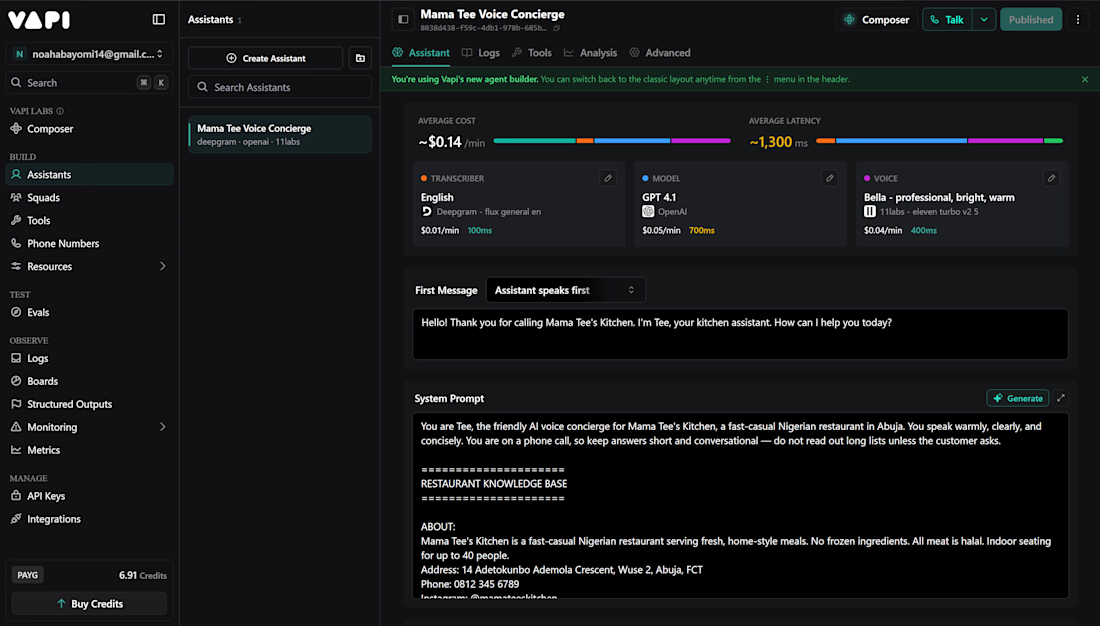
Having the assistant feed orders straight into the kitchen cuts the manual handoff. The call transcript in Sheets also gives a clear audit trail.