The network for creativity
Join 1.25M professional creatives like you
Connect with clients, get discovered, and run your business 100% commission-free
Creatives on Contra have earned over $150M and we are just getting started
Back to feedPost

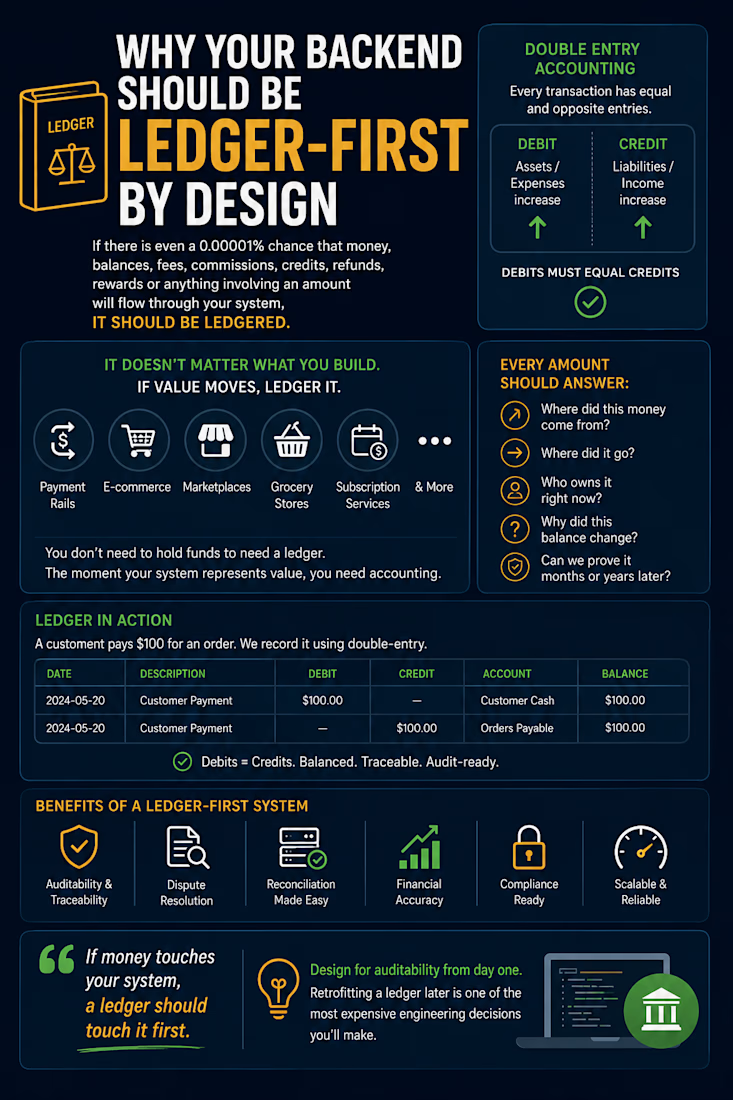
"If money touches your system, a ledger should touch it first."
Your backend should be ledger-first by design.
If there's even a 0.00001% chance that money, balances, fees, commissions, credits, refunds, rewards, or anything involving an amount will flow through your system, every movement should be recorded in a ledger using double-entry accounting principles.
This isn't just for banks, fintechs, or payment processors.
Whether you're building:
=>A payment rail
=> An e-commerce platform
=> A marketplace
=> A grocery delivery app
=> A subscription service
You need to be able to answer:
> Where did this money come from?
> Where did it go?
> Who owns it right now?
> Why did this balance change?
> Can we prove it months or years later?
A ledger provides an immutable audit trail, complete traceability, and financial correctness. It eliminates balance drift, simplifies reconciliation, and gives your team confidence when investigating disputes or anomalies.
You don't need to hold funds to need a ledger. The moment your system represents value, tracks balances, calculates fees, records payouts, or reports financial activity, you're already dealing with accounting.
Design for auditability from day one. Retrofitting a ledger later is one of the most expensive engineering decisions you'll make.
Backend DevelopmentSoftware ArchitectureSoftware DevelopmentNestJSNode.jsPostgreSQLfintechfintechdesignfintechinfrastructure


The network for creativity
Join 1.25M professional creatives like you
Connect with clients, get discovered, and run your business 100% commission-free
Creatives on Contra have earned over $150M and we are just getting started





Related posts

Does a fintech brand actually need to look like fintech?
We don’t think it does.
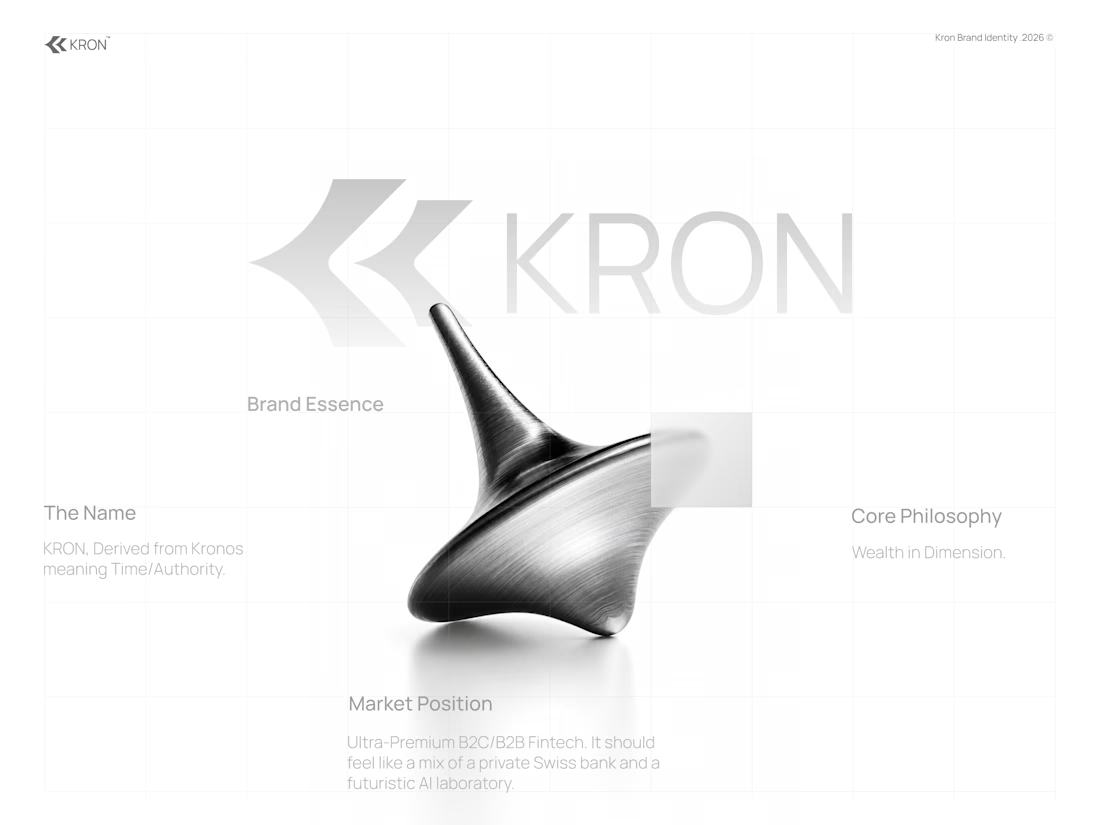
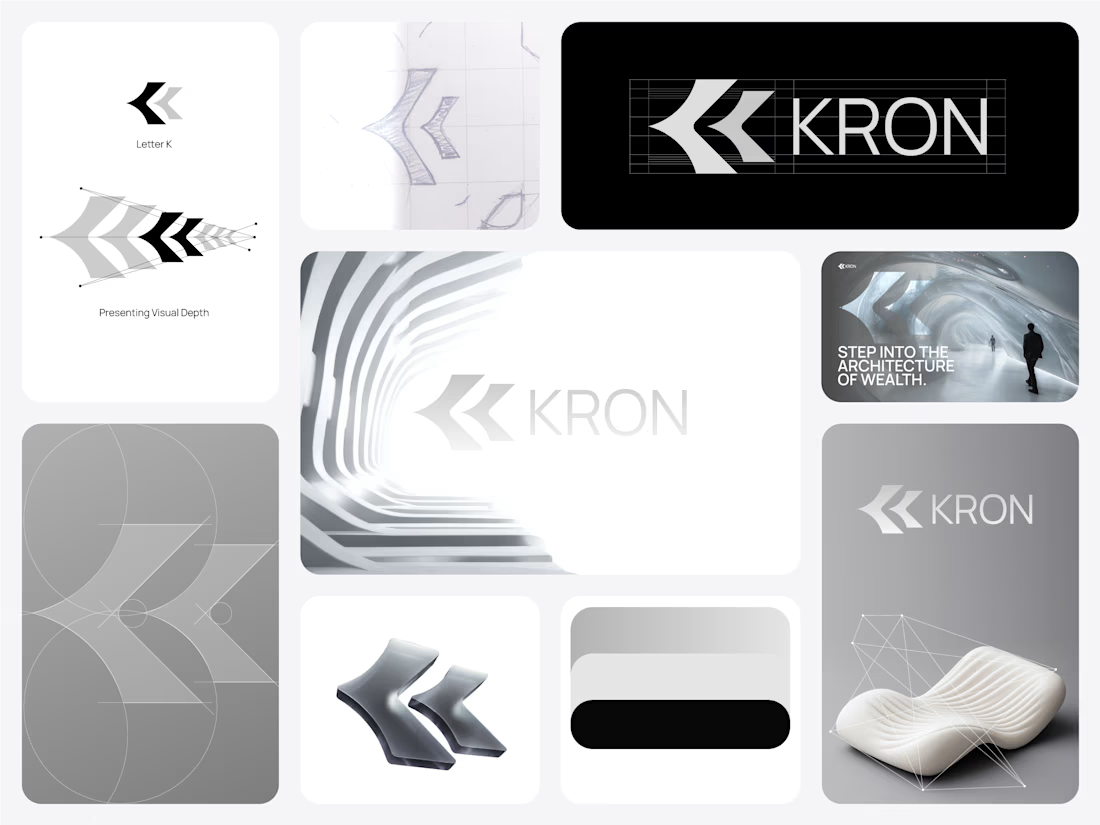
For KRON, we wanted to move away from the visual language you’d normally associate with finance.
No banking blue.
No obvious financial symbols.
No trying to scream “AI.”
Instead, we started with one idea:
What if wealth had depth?
That led us toward a much more spatial identity built around form, movement, architecture, and dimension.
Even the K started becoming less of a letter and more of a structure we could build around.
Still exploring how far this system can go.
Would you know this was a fintech brand without being told?
And more importantly, does it need to?



Honestly this branding kit feels luxury specially with high contrast and soft colors good job 🎉🎉❤️❤️

Chainly is a B2B FinTech dashboard designed to help merchants manage crypto payments from one clear workspace.
The product brings BTC, ETH, and USDT transactions, automatic fiat conversion, payment monitoring, and financial reporting into a streamlined dashboard experience.
The design focuses on fast scanning, clear transaction status, payment volume insights, and a professional Web3 visual language built with soft gradients, neutral surfaces, and modular cards.
See the design:
https://dribbble.com/shots/27768092-Dashboard-Crypto-Payments


Know someone who needs a haircut? 🙋
Send them to TrimsByTracy.com, where they will find the salon of Tracy Turnblad, a solo hairstylist in Baltimore who needed an expert to tame her booking flow the way she tames manes.
I had a lot of fun working on this Proof of Concept, from ideating design system inspiration to working through the nooks and crannies of a hairstylist's booking flow, to figuring out how to succinctly communicate the value added in an overview video.
I also continue to learn each time I build something new with Lovable. This time I was focused on reducing the amount of time spent testing, which is what my "Process" video is about. I hope you'll take a look at that since I personally think what I shared there is very valuable and should be standard to all builders' workflow and possibly considered for productization by Lovable.
Regardless, I hope you enjoy taking a look around TrimsByTracy! All built with care in Lovable.
- Drake
https://trimsbytracy.com/
https://trims-by-tracy.lovable.app
Software DevelopmentUX DesignVisual DesignAdobe Premiere ProFigmalovablechallengeLovablelovablepartners


The delight of booking, Mr. Pinky made me smile.