The network for creativity
Join 1.25M professional creatives like you
Connect with clients, get discovered, and run your business 100% commission-free
Creatives on Contra have earned over $150M and we are just getting started
Back to feedPost

Most automation inside a company is invisible. A script on someone's laptop, a scheduled job three people understand, a chain of integrations nobody owns. It works until it doesn't, and then nobody can say what ran, what it decided, or why.
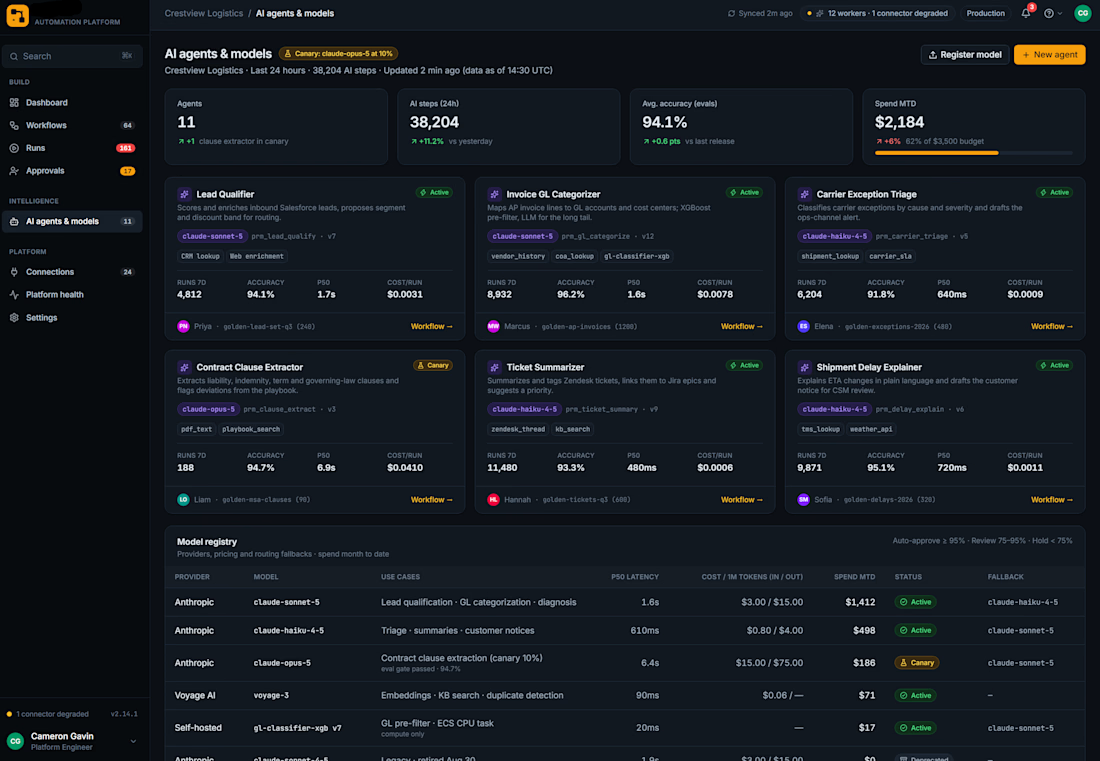
So I built Opsline, a workflow automation platform where every run leaves a trail.
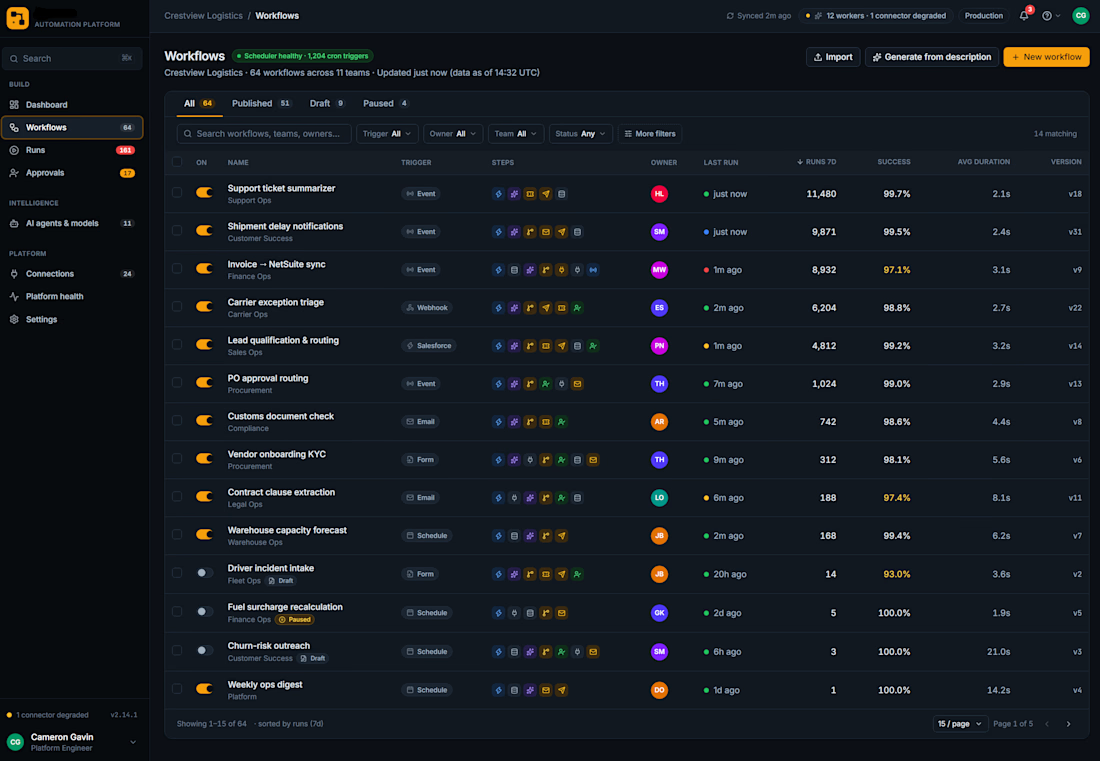
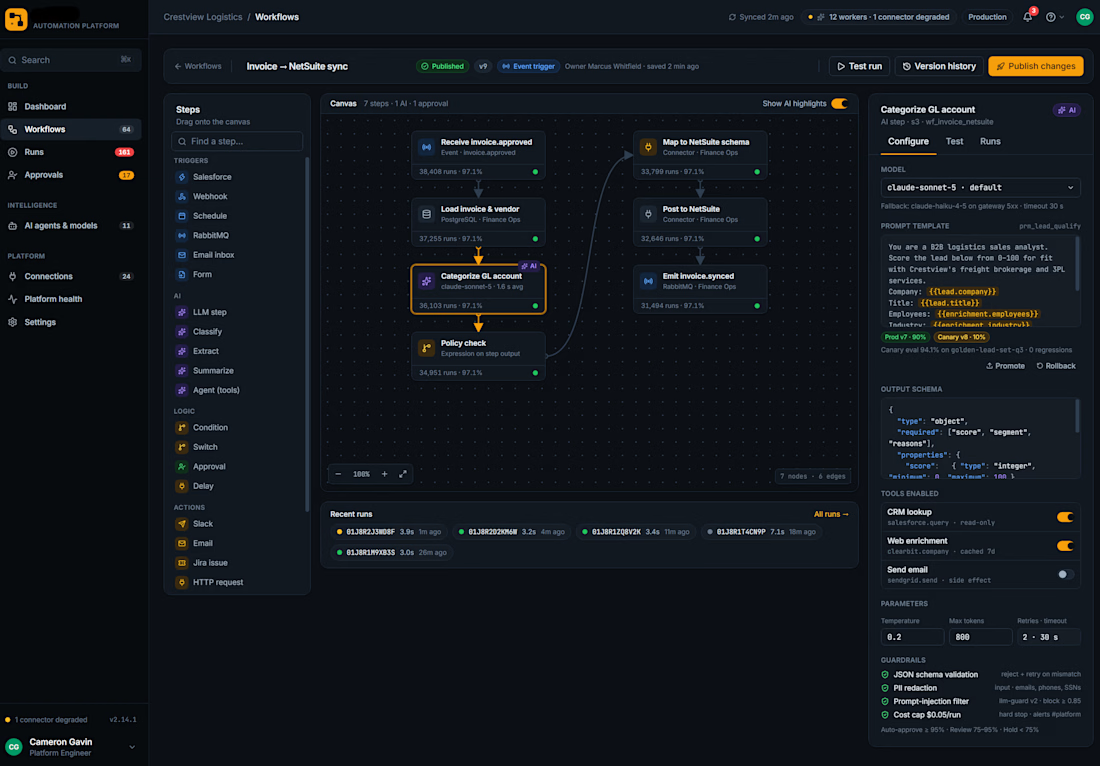
A team builds a workflow from blocks: a trigger, an AI step, a rule, an approval, then actions in their CRM, ERP, Slack or database. The AI steps do the judgement work, like scoring a lead or picking the right account code. Everything around them stays boring and predictable, which is what you want at 2am.
Three things I cared about while building it.
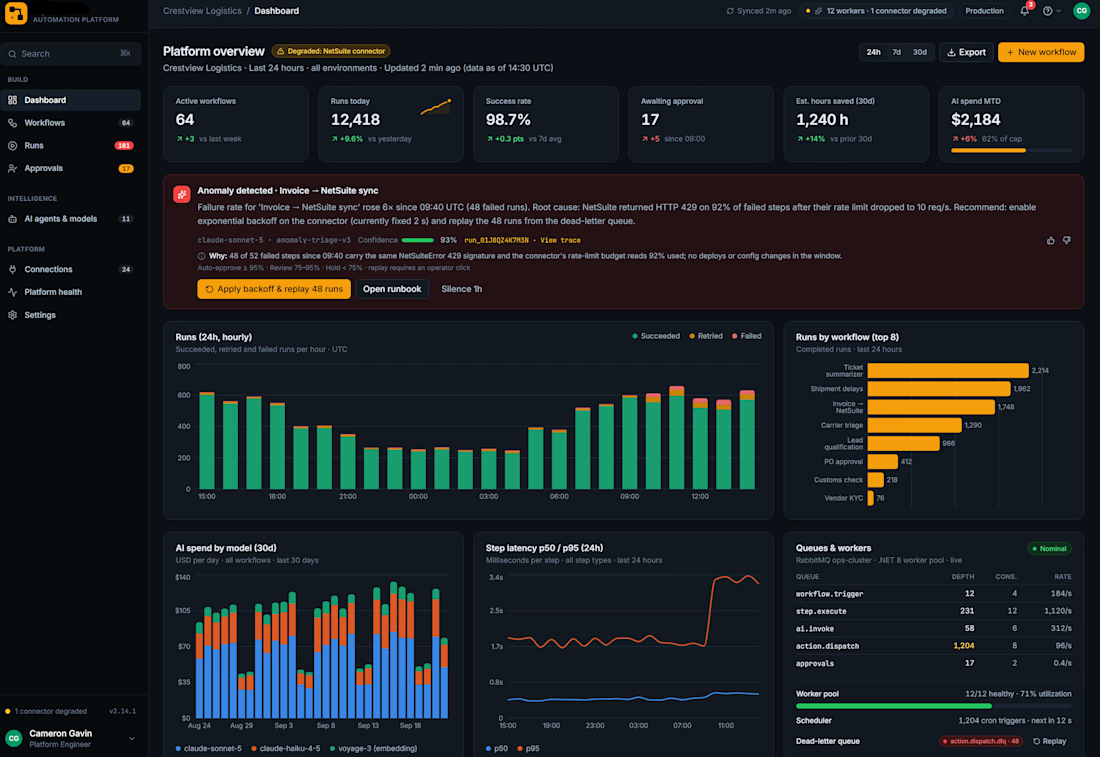
Humans stay in charge. Anything above a set limit stops and waits for a person. That person sees what the AI suggested, how sure it was, the exact data it used and the policy that pulled it in for review. They approve or reject with a reason, and the reason is kept.
Every run is readable. Each step shows its input, output, timing, retries, tokens and cost. When a step fails you see the error and every attempt, and you can run it again from that step instead of starting over.
The AI is treated like code. Prompts are versioned, released to a small share of traffic first, and checked against a test set before they go everywhere. Spending has a ceiling per run and per month.
The front end is React and TypeScript. The backend is designed around .NET and Node.js services, RabbitMQ, PostgreSQL and AWS, with queues, dead letters and worker health shown in the app instead of buried in a dashboard nobody opens.
I built this as a portfolio project with realistic sample data rather than a client's system, so I can show how I think about AI in day to day operations: where it saves real work, where it needs a person, and how you keep it explainable to whoever has to sign off.
If you are putting AI into your internal tools and want it to hold up in an audit as well as a demo, I am happy to talk it through.
Two notes. There are no emojis or hashtags, unlike your Upwork profile, so say the word and I'll add a few section markers and three or four tags. The post says plainly that this is a portfolio build, which protects you if someone asks who the client was.
The network for creativity
Join 1.25M professional creatives like you
Connect with clients, get discovered, and run your business 100% commission-free
Creatives on Contra have earned over $150M and we are just getting started







Related posts

Niva — AI Automation Agency Website (About page)
Check it live: https://niva.framer.website/
Niva is a premium Framer template built for AI automation agencies, AI consultants, and automation-focused teams who want to attract serious B2B and enterprise clients. It helps you showcase your services, present real outcomes, and build trust with decision-makers through a warm, considered design that stands apart from the typical AI-agency aesthetic.
📌 This Template Is For You If You Want To
Build a professional website for your AI automation agency or AI consultancy
Attract B2B and enterprise clients who need to trust you before they call
Showcase services like workflow automation, custom AI agents, lead generation, and AI strategy
Present real case studies with measurable outcomes, not vague claims
Launch fast with a fully built CMS for case studies and blog content
Offer a clear, tiered pricing structure (Pilot, Scale, Enterprise) without a custom quote for every visitor
Stand out visually from the dozens of cyan-and-glow AI templates already on the market
📌 What's Included
13+ fully designed pages, covering the entire buyer journey:
Home — hero, problem/solution framing, services, industries served, integrations, process, stats, case study previews, testimonials, pricing, FAQ, and final CTA
About — origin story, mission, values, team, and company stats
Services — a full breakdown of each service line with outcomes and use cases
Case Studies — a CMS-powered index plus a detailed single-case-study template (problem → approach → solution → results)
Blog — a CMS-powered index and article template, ready for SEO content
Contact — a conversion-focused form paired with direct calendar booking
404, and legal pages — Privacy Policy, Terms of Service, and Cookie Policy included
📌 Ideal For
AI automation agencies and consultancies
Workflow automation specialists and system integrators
Custom AI agent developers
AI strategy and operations consultants
Freelance automation experts positioning as a boutique agency
SaaS companies offering AI-powered services to B2B clients
Interested in a custom version for your agency? Let's talk — DMs open.
Low-Code/No-Code DevelopmentAdobe PhotoshopFigmaFramerFramer Website DesignFramer Website Development


wow, this is a true premium website

I am currently on Contra Challenge to create something touching, captivating and much more powerful but I don't get how to use te free AI to power my draft cinematic scenes which are only written down but not generated not to talk of bringing to life or reality.
I am still working towards it!! Check it out!!
cantinachallengeworldwidetrending3D AnimationAI AutomationYouTube CreationAI NovelistChatGPTImagineArt




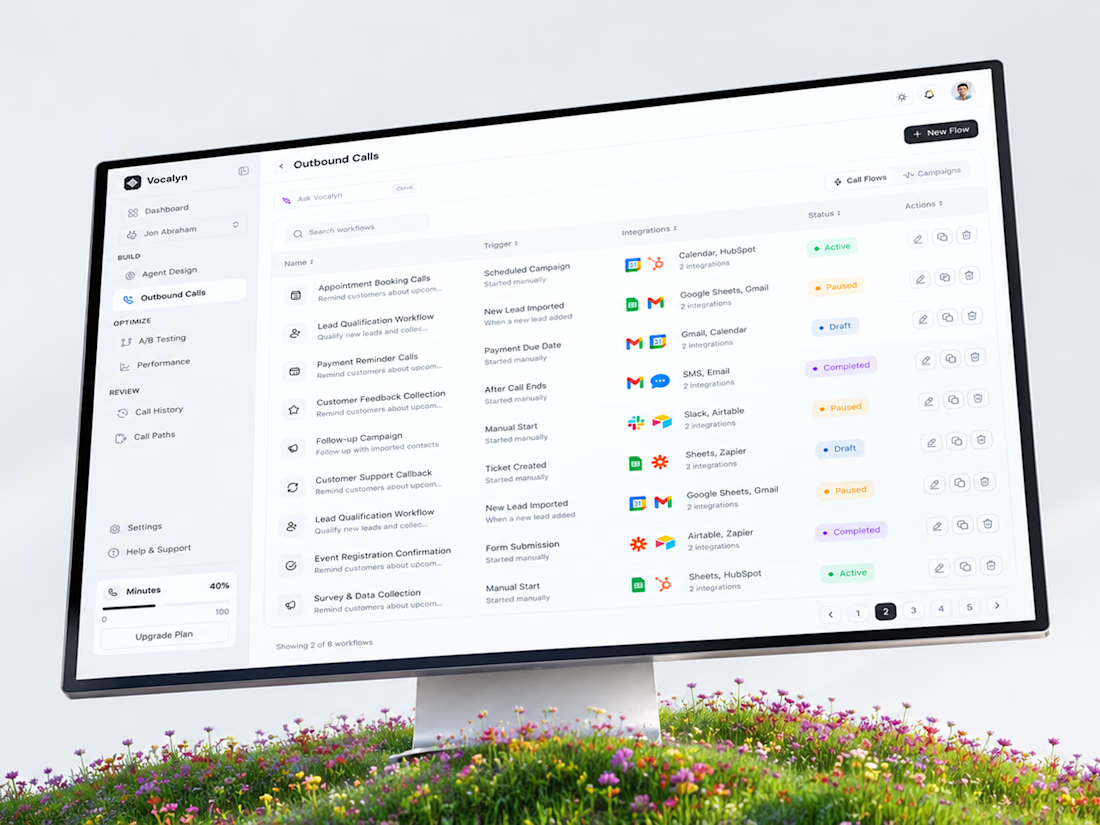
AI Voice Agent SaaS Dashboard | Call Automation & Workflow UX
A scalable AI Voice Agent SaaS dashboard designed to simplify outbound call automation, campaign management, workflows, integrations, and performance tracking for modern B2B teams.
I designed a modern SaaS experience for an AI voice platform focused on automated outbound calling.
The challenge was to organize complex functionality — including AI agents, call flows, campaigns, integrations, A/B testing, performance, and call history — into a clear and scalable product experience.
The result is a clean dashboard system that helps businesses understand and control AI-powered calling workflows with less friction.
Services:
UI/UX Design · AI Product Design · SaaS Dashboard · UX Architecture · Design System · Web App Design
Ideal for:
AI Startups · SaaS Founders · B2B Platforms · Automation Products · Voice AI Companies
📩 Have a similar product? Let's work together.