The network for creativity
Join 1.25M professional creatives like you
Connect with clients, get discovered, and run your business 100% commission-free
Creatives on Contra have earned over $150M and we are just getting started
Back to feedPost

Hey everyone.
Today, I want to walk you through ArenaVerse. A virtual esports stadium.
💡The idea arose from my love for esports, gaming and streaming.
Millions of fans watch streams for games like Valorant, League of Legends, and other esports every day. We have Twitch chats, Discord servers, Reddit communities, and YouTube streams.
But all of these experiences are fragmented.
- The match is in one place.
- The community is somewhere else.
- The discussion happens elsewhere.
- The analytics are on another website.
There is no true digital home for esports spectators.
ArenaVerse is my attempt to solve that problem.
🤔 THE PROBLEM: Traditional sports have stadiums.
When people attend a football match or a basketball game, they don't just watch the game. They experience the atmosphere.
- They hear the crowd.
- They celebrate together.
- They react together.
- They become part of something larger.
Esports has incredible viewership, but most fans still experience events through isolated screens and disconnected communities.
I wanted to explore:
What if esports had its own digital stadium?
Not just another dashboard.
Not another streaming site.
A place where fans could watch, interact, compete, predict, discuss, and feel like they were inside a living esports venue.
🚀 THE VISION: ArenaVerse is designed as a Virtual Esports Stadium.
The goal is to combine:
- Live match viewing
- Community interaction
- AI-powered analysis
- Team fan zones
- Predictions and challenges
- Real-time crowd energy
into one connected experience.
Instead of navigating multiple websites, users enter a single digital venue where everything revolves around the live event.
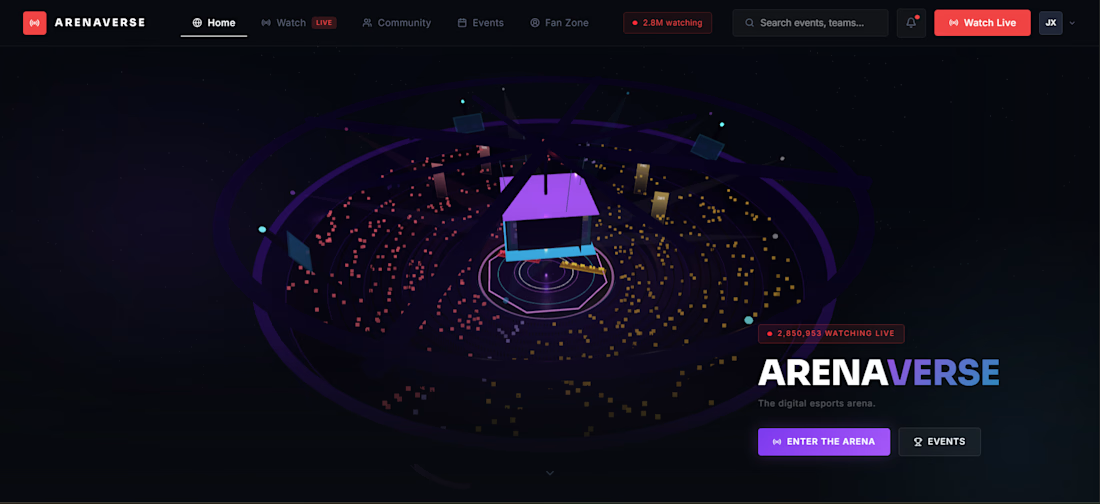
🏠 HOME PAGE
It acts as the visual identity of the platform.
Live audience numbers, crowd energy, lighting effects, and animated stadium elements create the feeling that an event is already taking place before the user even clicks anything.
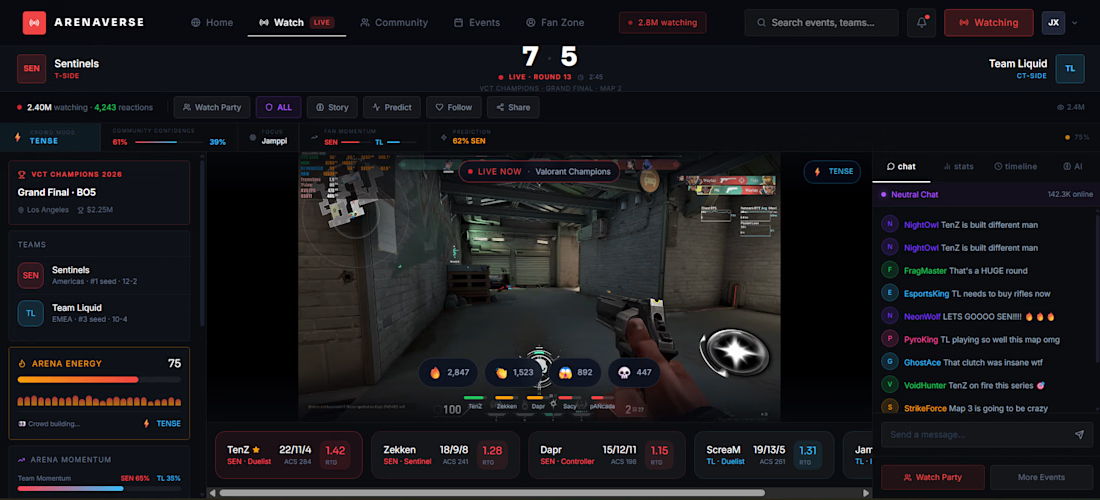
👀 WATCH EXPERIENCE
The Watch section is where the live event happens.
Users can watch actual tournament broadcasts while simultaneously interacting with the surrounding ecosystem.
Instead of forcing users to leave the stream for stats, discussion, or insights, everything exists around the viewing experience.
This creates a more immersive environment similar to attending a live esports event in person.
👥 COMMUNITY LAYER
One of the major goals of ArenaVerse was to bring the community closer to the match.
The Community experience includes:
- Live discussions
- Fan conversations
- Match reactions
- Community engagement
The idea is that fans shouldn't have to jump between Twitch chat, Discord, Reddit, and social media. The conversation should live directly alongside the event.
🧑🤝🧑TEAM FAN ZONES
This became one of the most exciting parts of the project.
Each team has its own Fan Zone.
For example:
- Sentinels
- Fnatic
- Team Liquid
- PRX
and others.
These zones function as digital clubhouses where supporters can gather around their favourite team.
Fans can see community activity, supporter rankings, events, predictions, and match-related discussions.
The goal is to create the feeling of belonging that traditional sports fans experience with clubs and supporter communities.
🤖 AI MATCH COMPANION
Another key component is the Arena AI Analyst.
Many esports broadcasts assume viewers already understand advanced strategies and game terminology.
Arena AI acts as an always-available companion.
Users can ask questions like:
- Why did a team rotate?
- Why was a certain strategy effective?
- What changed the momentum of the game?
The goal is to make esports more accessible while also providing deeper insights for experienced fans.
🖌️ DESIGN PROCESS
The workflow behind ArenaVerse was highly iterative.
I started with:
-Figma Make
- UI experimentation
- AI-assisted design exploration
As the concept evolved, I realized the experience needed more than traditional UI components.
That's when I began incorporating:
- Interactive 3D scenes
- Stadium-inspired environments
- Real-time visual effects
A large part of the process involved repeatedly refining the balance between functionality and immersion.
The challenge wasn't building more screens. The challenge was creating a sense of presence.
🔑 KEY LEARNINGS
One of the biggest lessons from this project was that AI is exceptional at accelerating exploration, but not at replacing design thinking.
Figma Make helped me rapidly generate concepts, experiment with layouts, and explore multiple directions that would have taken significantly longer to create manually. However, the most valuable outcomes came from iteration rather than the first generated result. Prototyping works best when ideas are continuously tested, refined, and challenged rather than accepted as-is.
Built with Figma Make and MCP
Prototype: https://arenaverse.figma.site/
Community link: https://www.figma.com/community/file/1649663751720659037/arenaverse


The network for creativity
Join 1.25M professional creatives like you
Connect with clients, get discovered, and run your business 100% commission-free
Creatives on Contra have earned over $150M and we are just getting started





Related posts

Credit card landing page design for a fintech startup — an interactive 3D claw machine that turns the offer into the hero instead of another floating card at 15 degrees.
Every card brand ships the same hero: a card hovering over a gradient. Clawd sells one card, not a marketplace, and the entire pitch is "stop comparing — we already did the comparing". So the landing page had to make a single-product offer read as a win rather than a shortage of options, and pull early-access sign-ups from people who are deliberate about money: the ones who actually track spending and read the APR line.
The metaphor does the positioning work. A claw machine that never misses, plus "we already picked the best one", means the visual is the argument and the headline doesn't have to explain itself.
I built the scene in Blender as an interactive element rather than a still render — the claw follows the cursor, the card tilts in the grip, and the pile underneath reacts, so a visitor plays with the product's core idea for a few seconds instead of scrolling past it.
Hero plus full page structure, desktop and mobile designed separately, the Blender scene with web-ready exports, interaction notes, and a developer-ready Figma file.


nice work

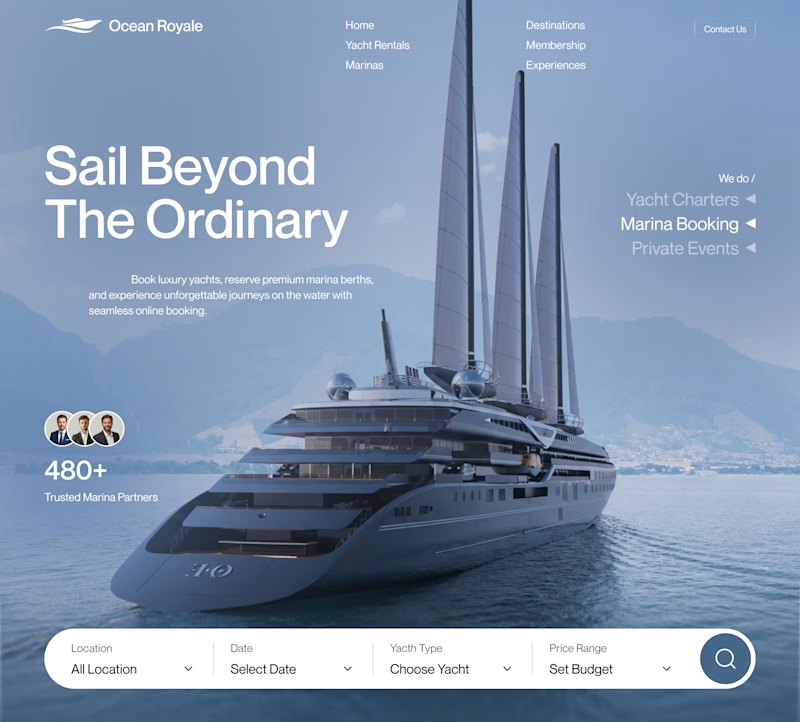
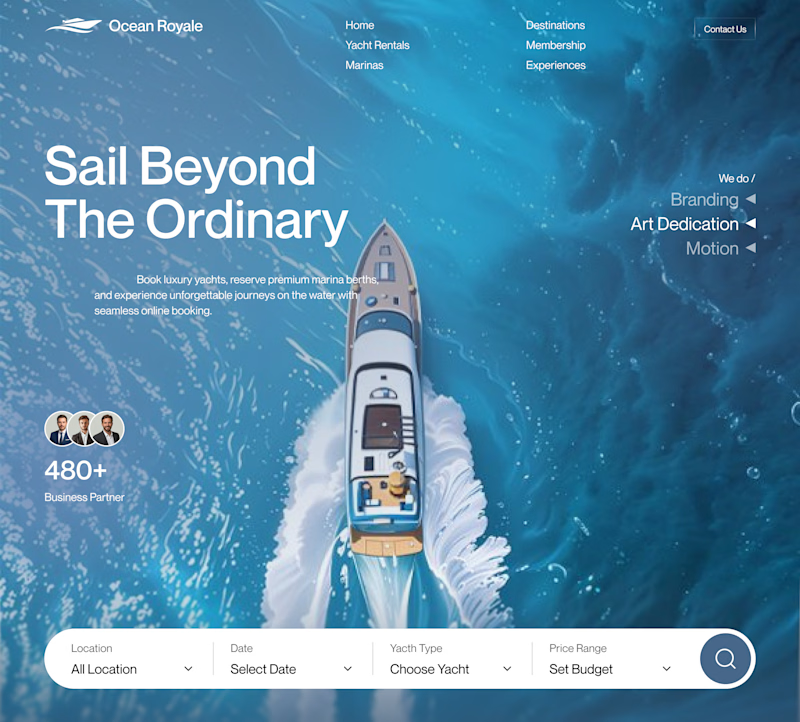

Option B feels nothing but premium


New case study: motion product film for a mobile streaming app. Some shots filmed on camera, some AI generated, the rest built in After Effects
Check it out


This is only high end