The network for creativity
Join 1.25M professional creatives like you
Connect with clients, get discovered, and run your business 100% commission-free
Creatives on Contra have earned over $150M and we are just getting started
Back to feedPost

Most retail traders try to predict the market. After building a few production bots on Polymarket, I'm convinced that's the wrong game.
The right game: don't predict — follow. Specifically, follow the market makers.
Why? In high-frequency venues like Polymarket's BTC 5-min markets, MMs aren't betting on direction — they're managing inventory, hedging, and reacting to flow. When their quotes shift, that's information. When order book pressure changes, that's information. Reading those signals and reacting in milliseconds is a different game than picking up vs down.
So I shipped a signal terminal that does exactly that:
🟢 Real-time WebSocket feed from the Polymarket CLOB
🟢 Low-latency signal engine in Go — Python was too slow for the hot path; every millisecond matters when you're trying to enter before the move is priced in
🟢 Confidence tiers and cooldowns (CONFIRMED_NORMAL, CONFIRMED_ACCELERATED) to filter noise
🟢 Live chart with signals overlaid as they fire
Three takeaways from this build:
1) Latency is the strategy. You can have a perfect model — but if you're 200ms late, you're paying the spread to someone who's at 20ms. The choice of language and architecture is the alpha.
2) Stop trying to predict markets. Detect what's already moving and ride it. Inventory pressure beats vibes, every time.
3) For data analysts who've spent 10+ years in Python — the game is changing. Evaluation used to be a "cold" job: batch, offline, after the fact. Today it has to be precise AND on the hot path — accurate in real time. Locking yourself into a Python-only stack stops being smart at that point. Adding Go for the hot path exceeded my expectations — I'm not abandoning Python, but I am rebalancing where it sits in the stack.
Live demo (press DEMO and watch real signals fire against the real order book):


The network for creativity
Join 1.25M professional creatives like you
Connect with clients, get discovered, and run your business 100% commission-free
Creatives on Contra have earned over $150M and we are just getting started





Related posts


Prediction Markets Are Becoming More Than a Betting Alternative
Prediction Markets Are Becoming More Than a Betting Alternative
Prediction markets are becoming an interesting way to turn collective expectations into market signals.
Instead of simply asking, “What do people think will happen?”, these platforms allow participants to express their expectations around clearly defined outcomes.
Markets can cover areas such as:
Finance and economic events
Sports and entertainment
AI and technology
Blockchain and Web3
Business forecasting
But building a prediction market isn't just about creating a trading interface.
The important questions are:
How is liquidity maintained?
How is the outcome verified?
How does settlement work?
Should the platform use an AMM or order book?
Oracles also play an important role when external data is needed to determine the final outcome.
The bigger opportunity may be moving prediction markets beyond speculation and using them as information and forecasting tools.
What do you think will shape the next generation of prediction markets — liquidity, technology, regulation, or market design?
Explore: https://www.malgotechnologies.com/polymarket-clone-script
#PredictionMarkets #Web3 #Blockchain #FinTech #AI #MarketDesign



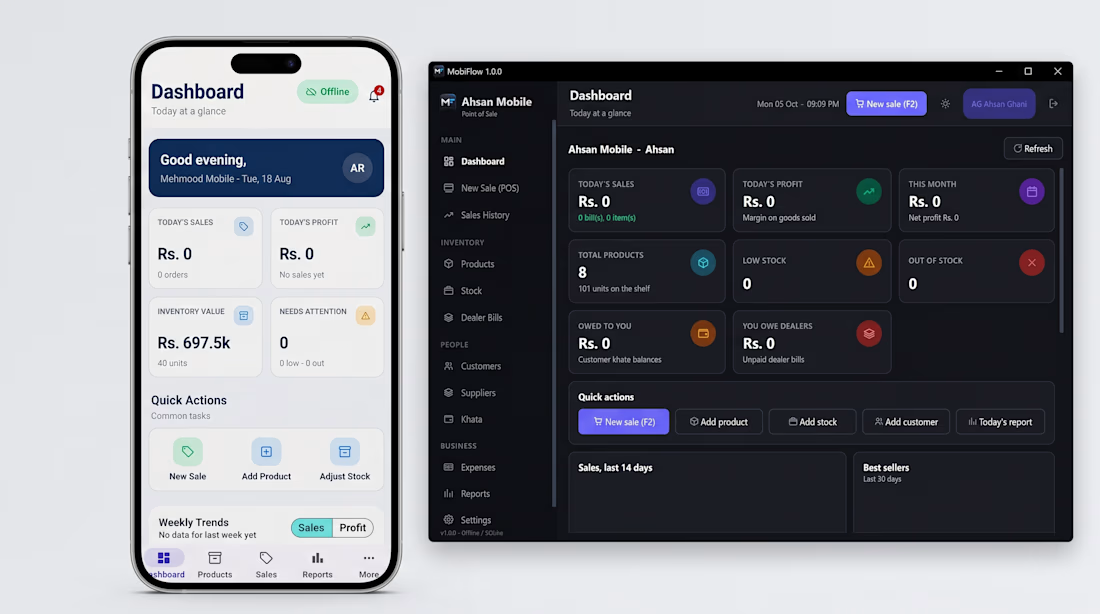
A complete mobile shop management system built across mobile, and desktop platforms, designed to simplify daily shop operations, sales, receipts, customer management, expenses, credit tracking, and business reporting.
The system includes receipt printing and PDF generation, WhatsApp sharing from mobile, monthly business reports, expense and credit management, and a feature-rich dashboard for managing day-to-day operations.



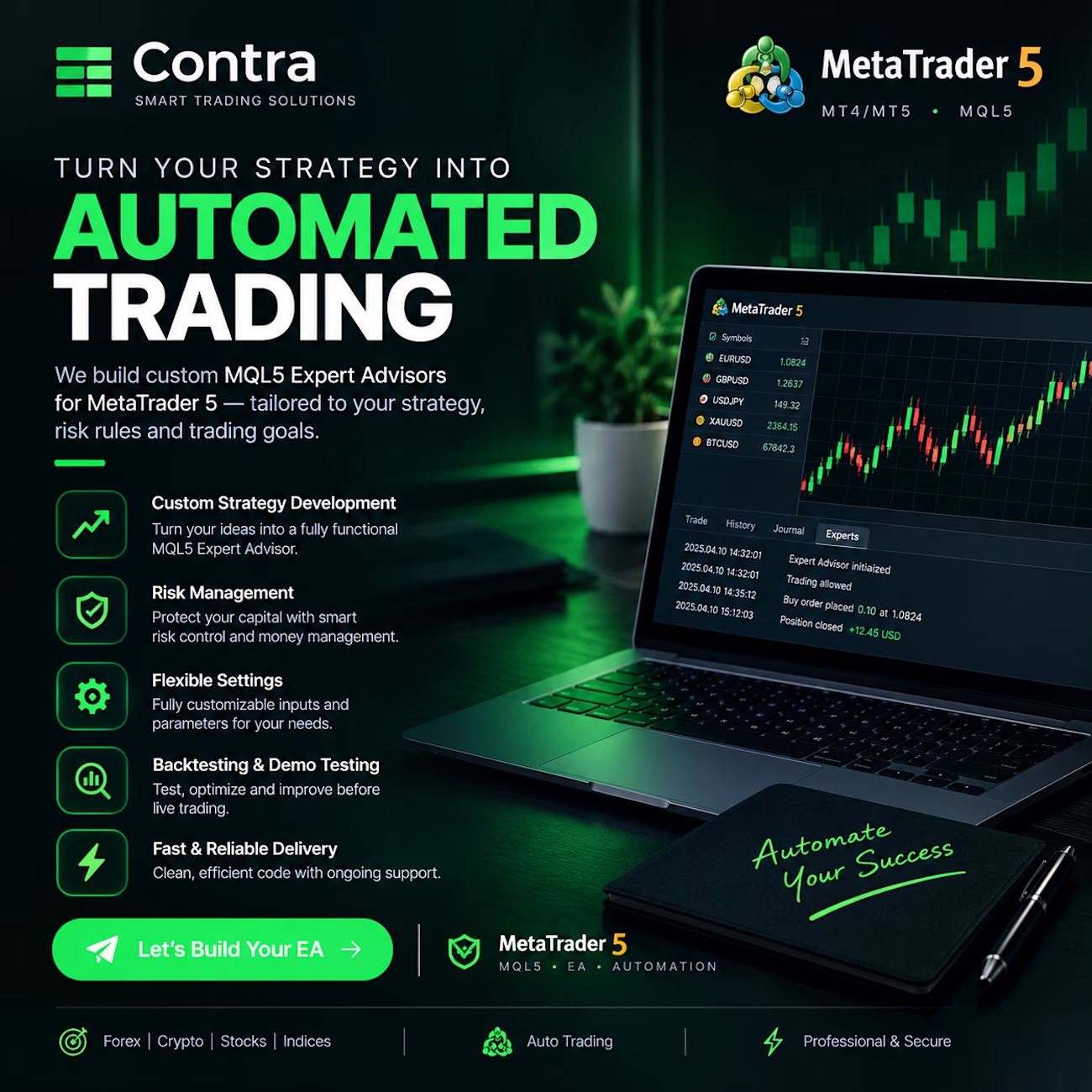
Your Strategy → Our Code → Automated Trading
Stop executing the same strategy manually.
We build custom MQL5 Expert Advisors for MetaTrader 5 — designed around your strategy, risk rules, and trading goals.
⚡ Custom strategy development
🛡️ Risk management
📊 Backtesting & optimization
⚙️ Fully configurable parameters
🚀 Reliable automation
Have a trading strategy you want to automate?
Let’s build it.