The network for creativity
Join 1.25M professional creatives like you
Connect with clients, get discovered, and run your business 100% commission-free
Creatives on Contra have earned over $150M and we are just getting started
Back to feedPost

Here's a bug that ships to production silently and only shows up half the year.
You build an "Add to calendar" link. You test it in winter, it's perfect. Come summer, every event lands an hour off, and nobody can reproduce it on demand because whether it breaks depends on the date.
The cause: the link stamps the time as UTC (a trailing Z on the timestamp), but the time you actually stored is local wall-clock. Google dutifully reads your local time as UTC and shifts it by the offset. In the UK that offset is zero in winter and one hour in summer under BST, so the bug stays hidden for months.
The fix is two parts. Drop the Z so the time is "floating" with no zone attached, and add &ctz=Europe/London to the URL so Google places the event in London and handles the BST/GMT switch itself. Now the time you typed is the time the user sees, all year.
The rule underneath it: a timestamp with no timezone is ambiguous, and the classic mistake is labelling a local time as UTC. Decide explicitly whether your digits are UTC or wall-clock, and never let one pose as the other.
The network for creativity
Join 1.25M professional creatives like you
Connect with clients, get discovered, and run your business 100% commission-free
Creatives on Contra have earned over $150M and we are just getting started





Related posts


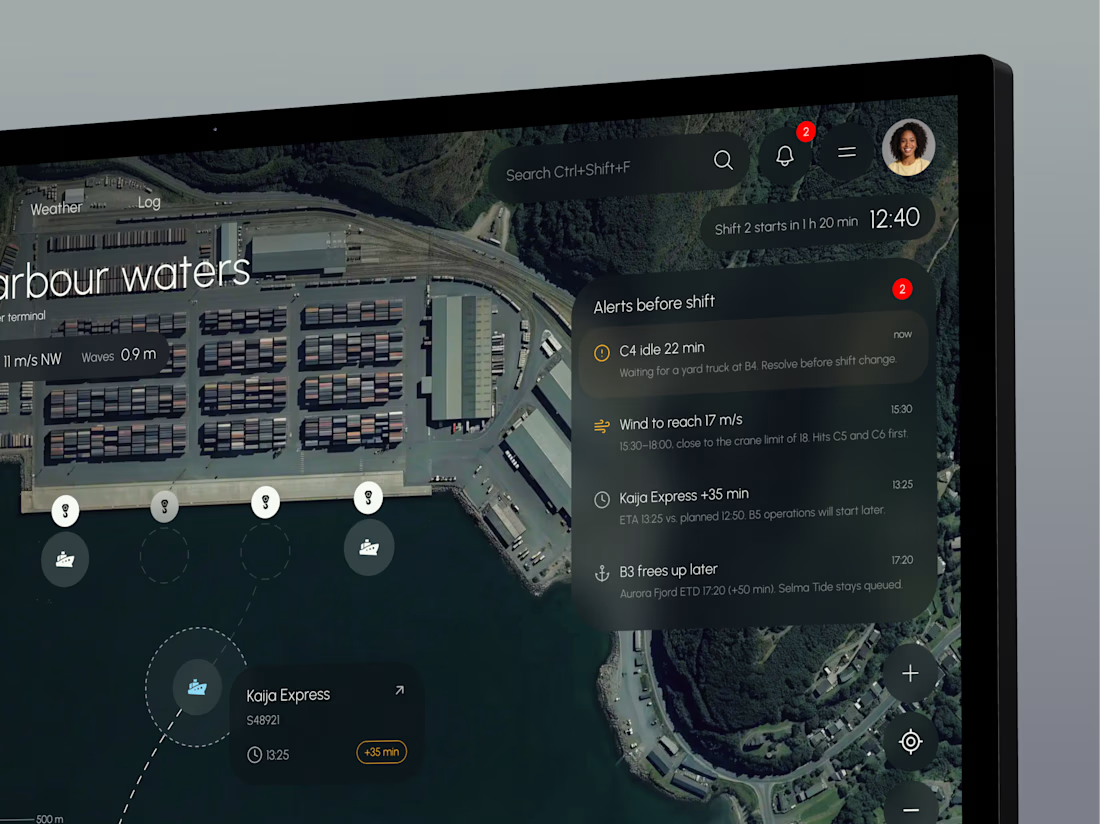
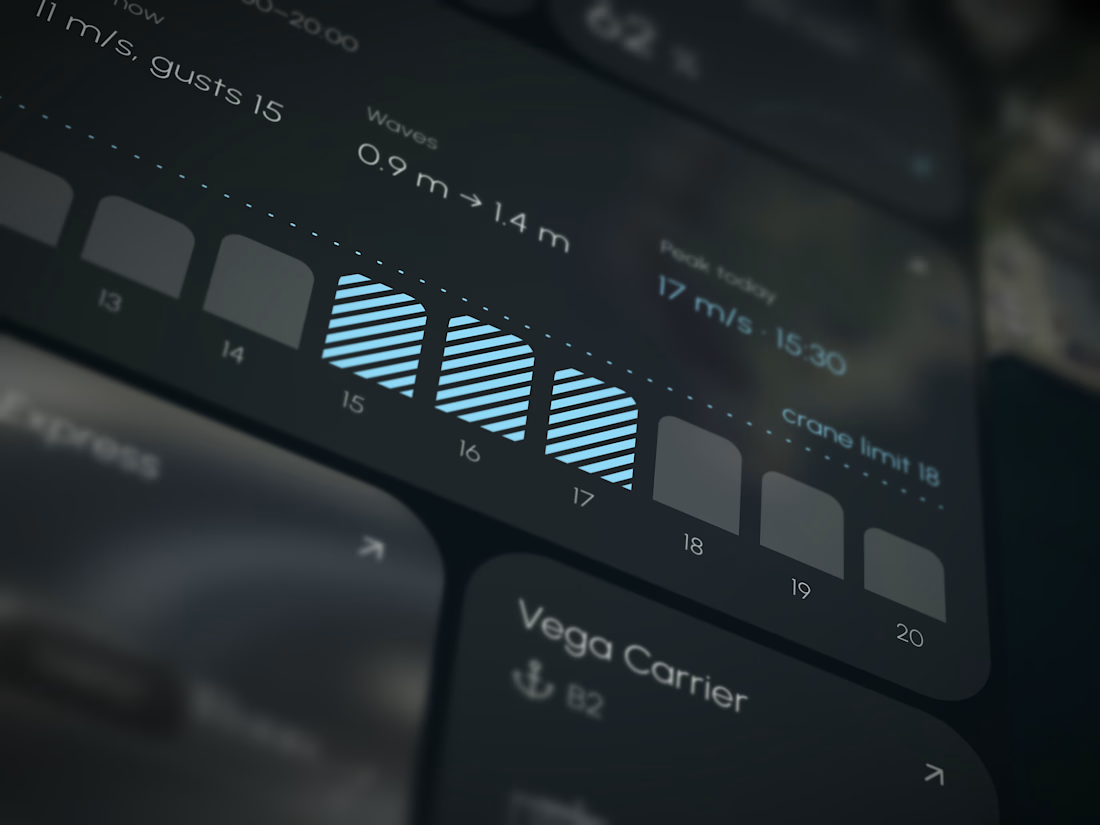
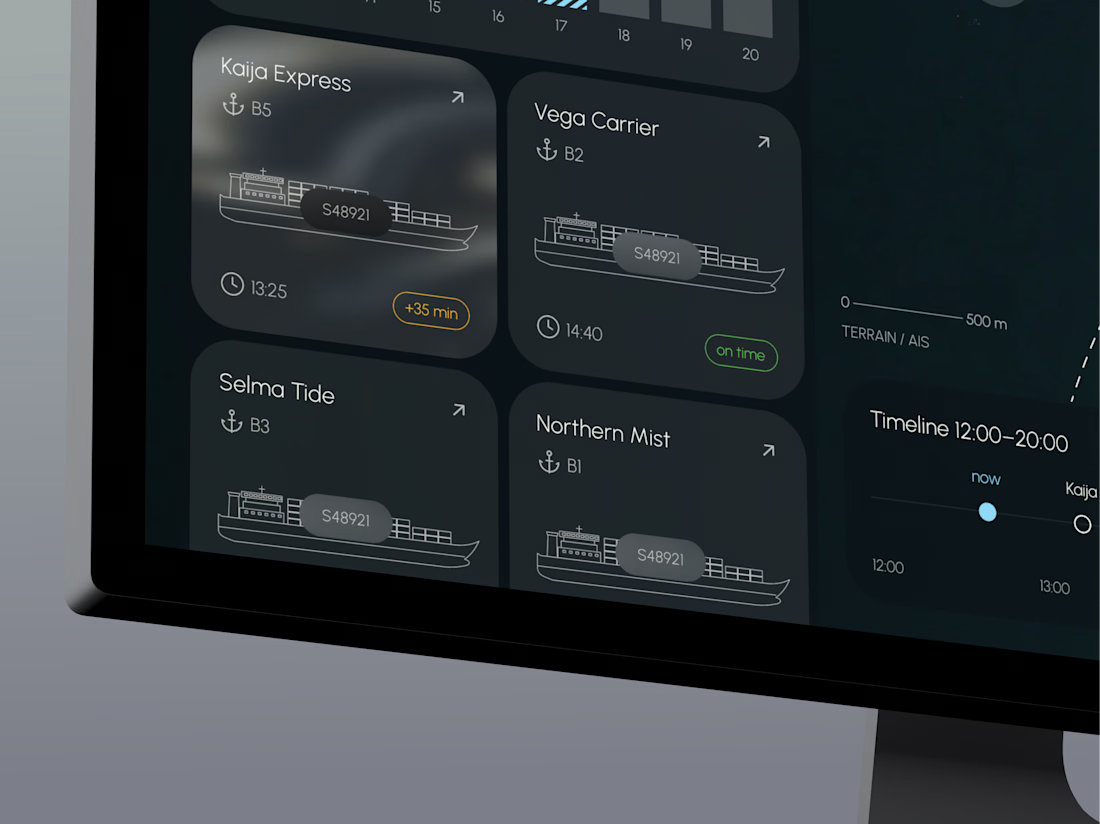
TideGrid – one view of the whole port
Port teams track berths, cranes, vessel ETAs and weather in separate systems, so delays and idle time are often spotted too late.
TideGrid brings everything onto one map. Each vessel shows its ETA, each crane its load, and each berth its occupancy, with wind and waves right beside them. Alerts appear before the shift starts. It runs on existing AIS, crane and sensor data, with a desktop console for operators and a mobile app for foremen on the quay.




This project tackles a real small-business pain point: inventory silently running out because no one's tracking stock in real time.
Order processing (webhook-triggered): Incoming orders (supporting multiple items per order) are received via webhook, split into individual line items, and logged — each order simply appends a new entry to an order log rather than directly overwriting stock numbers.
Live stock calculation: Current stock for each item is computed on the fly, using a formula that subtracts all logged order quantities from the starting count.
Daily stock monitoring (schedule-triggered): A separate scheduled trigger runs once a day, checks every item's live stock against its own custom reorder threshold, and sends a Slack alert for anything running low — so restocking happens before customers ever notice a shortage.


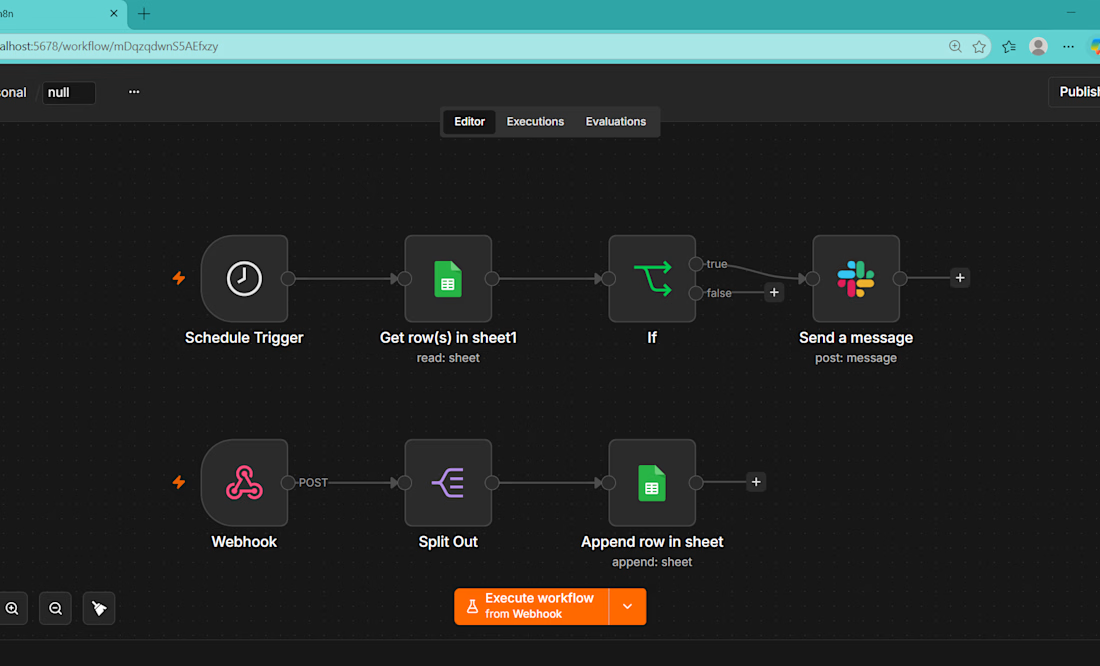

The daily trigger that checks each item's live stock against its own reorder threshold and then pushes a Slack alert seems like a practical way to stay ahead of stockouts.

Orion: AI Sales Assistant + Lead Desk for UI Trax I built Orion, an AI sales assistant that now runs live on my own business website, plus a private Lead Desk to manage every conversation it brings in.
What Orion does:
Replies 24/7 in English and Roman Urdu
Answers questions about services, team and projects
Quotes only from a fixed price list, so it never invents numbers
Collects name, email and WhatsApp, and saves every chat as a lead
"Get instant quote" buttons open Orion with the question already asked
The Lead Desk:
Follow-up queue sorted by who has waited longest
One-tap WhatsApp with a pre-written message, follow-up recorded automatically
Pipeline: New, Contacted, Proposal sent, Won, Lost
Full chat history, notes, search, filters and CSV export
Built with: Gemini AI, Supabase (database, login and edge functions), HTML, CSS and JavaScript, hosted on Hostinger.
Want an assistant like Orion for your business? Message me.
aichatbotautomationWeb DevelopmentAI Agent DevelopmentGoogle GeminiJavaScriptSupabaseAI Chatbot Development


