The network for creativity
Join 1.25M professional creatives like you
Connect with clients, get discovered, and run your business 100% commission-free
Creatives on Contra have earned over $150M and we are just getting started
Back to feedPost

You know exactly what you want.
You have no idea how to make it happen.
That feeling has a name.
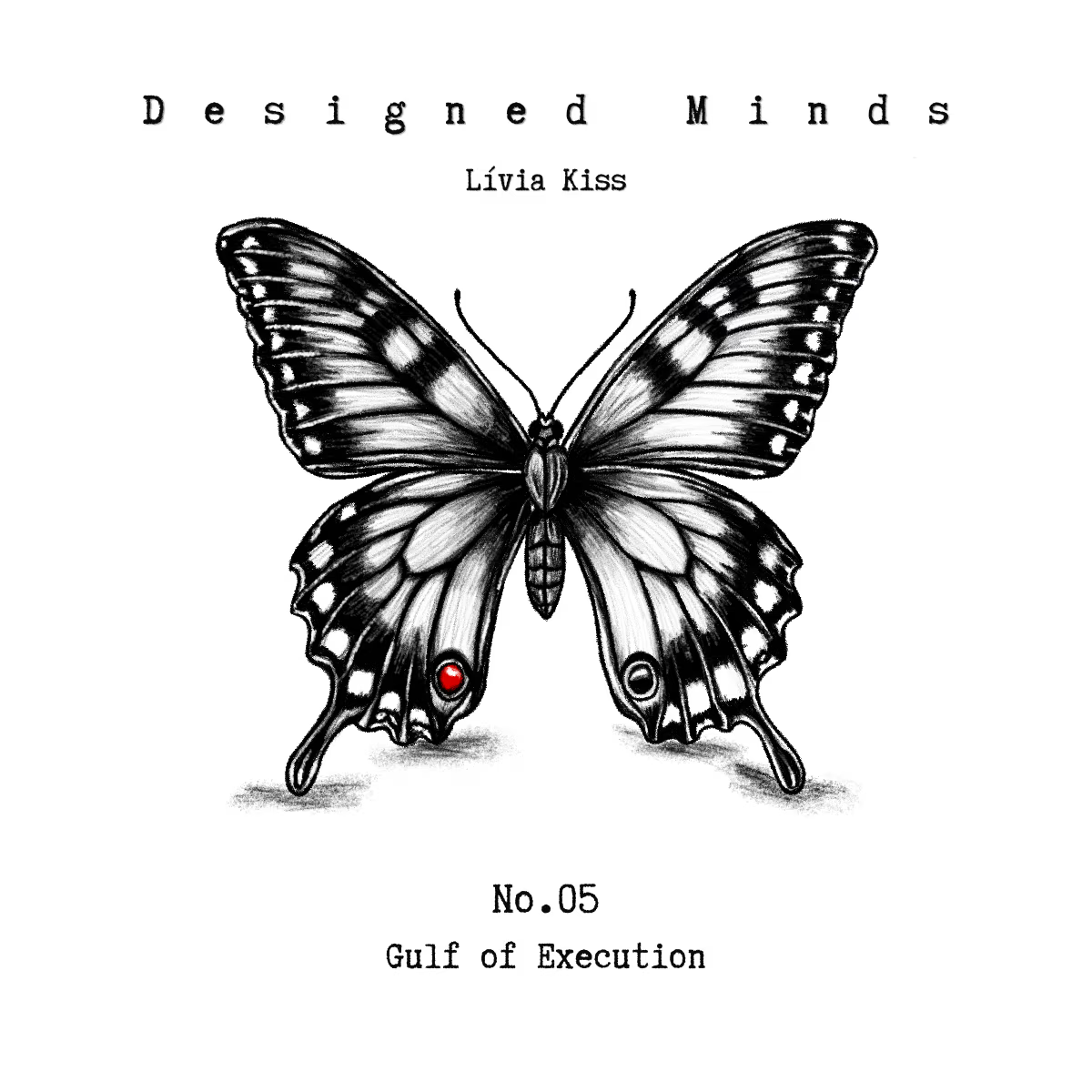
Donald Norman called it the Gulf of Execution — the distance between a user's intention and the actions the interface makes available to carry it out.
But here's what most people miss about this concept.
It's not just about confusing interfaces. It's about the relationship between intention and possibility.
Neisser's work on cognitive processing showed that humans form goals before they form actions. We decide what we want first — then we search for how to get it. The brain works top-down, from intention inward.
Good design works the same direction.
It starts with what the user is trying to achieve — and builds the path backward from there.
Bad design works the opposite way. It starts with the system's logic — and expects the user to translate their intention into the system's language.
That translation cost is the Gulf of Execution.
Every extra step. Every moment of "wait, how do I do this." Every time a user gives up and leaves.
The gulf isn't always dramatic.
Sometimes it's a settings menu buried three levels deep.
Sometimes it's a button labeled with a term only the developer understands. Sometimes it's an action that simply doesn't exist — because nobody asked the user what they actually needed.
Bridging the gulf isn't about making interfaces simpler.
It's about making them speak the user's language — not the system's.
Designed Minds — where psychology meets everyday design. Every Friday.
The network for creativity
Join 1.25M professional creatives like you
Connect with clients, get discovered, and run your business 100% commission-free
Creatives on Contra have earned over $150M and we are just getting started
Related posts


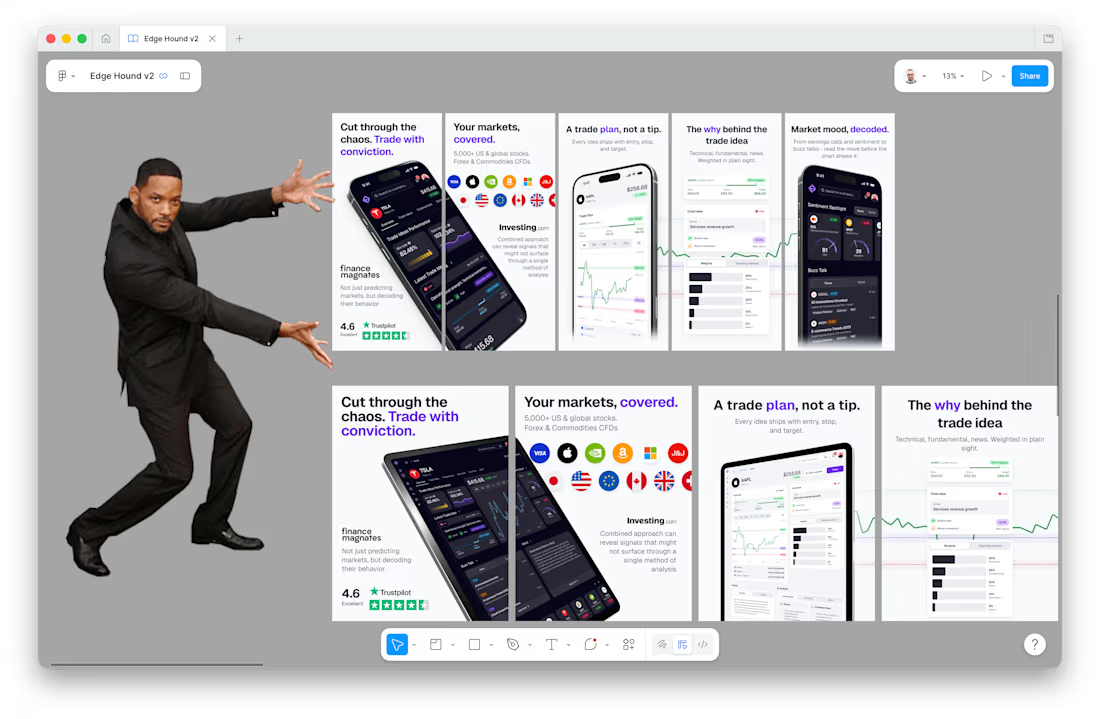
App Store previews for Edge Hound - done ✅
We're now ready to face the final boss (🍎Apple's review) 🤞🔥
Case study coming soon.


Great design


Most designers ruin projects for one reason:
They design for their ego.
Not for the client.
A calm brand doesn’t need chaos just because you’re bored.
And an aggressive brand shouldn’t look like Stripe just because it’s trendy.
Good design isn’t self-expression.
It’s strategy.
Before choosing colors or layouts, ask:
Who’s the audience?
What’s the goal?
What actually moves the needle?
Skip that part…
And you’re not designing.
You’re gambling.
If your brand or website feels off right now, DM me before it becomes an expensive mistake.

Also... "Most clients ruin their brand for one reason: They want designs for their ego. Not for the brand." hahaha

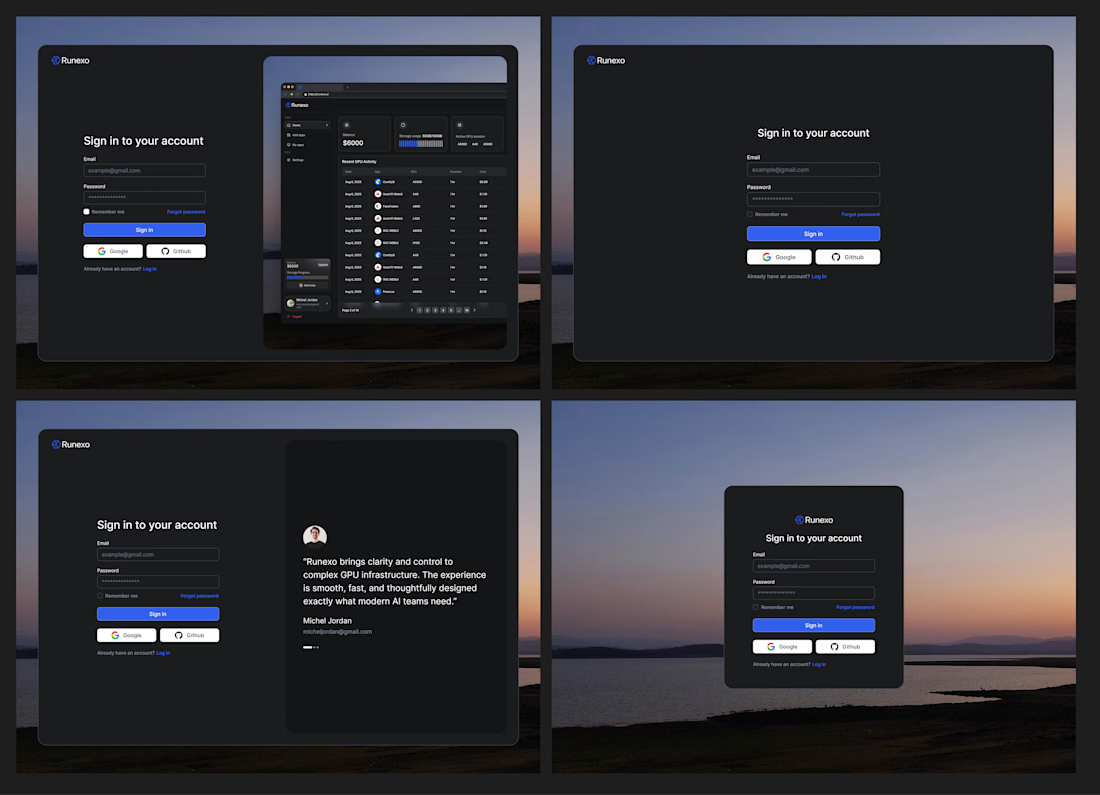
A login page is the first thing your users see.
We designed four directions for the same sign-in screen:
→ Product shot - show them what they're actually getting
→ Testimonial - let someone else make the case
→ Abstract - brand before function
→ Sunset - emotion over information
Most teams pick one background and call it done. We test four because first impressions don't get second chances.



This feels thoughtfully designed from start to finish 👏










Trending

Claude
Claude has entered the design space. How are you using Claude Design?

Contra University
Learn from expert creatives how to earn more using next-gen AI tools.
creativeaiflow
Creative AI workflows are evolving. What tools do you use, and what are their strengths and weaknesses?
portfolioreview
The best portfolios tell a story, not just show a grid. Share yours for feedback.
freelancerlife
Freelancer life is wins, pivots, and everything in between. What’s yours right now?