The network for creativity
Join 1.25M professional creatives like you
Connect with clients, get discovered, and run your business 100% commission-free
Creatives on Contra have earned over $150M and we are just getting started
Back to feedPost

I built this face detection app to run machine learning models directly in the browser inside a clean interactive UI.
Users can upload any photo and get an instant scan. The system draws targeting brackets over the face, maps 68 facial points, estimates age and gender, and shows percentage bars for seven basic emotions. If a photo has more than one person, the app counts them and lets you click through each face to update the readings on screen.
Everything runs on the client side using JavaScript and HTML5. The photos stay on the user's computer and never get uploaded to an external server. The model detects the face position, facial points, age, and emotion expression in one pass. If someone uploads a photo without a visible face or any pics of living creatures other than humans, the app handles the error and updates the status message instead of freezing.
The ragebaiting part was to format and structure out the data so it felt clean and fast. Putting the emotion stats beside the face box makes it easy to read the numbers while looking at the person. No distractions, no drama... Showing the total face count in the corner also helps users know if the model missed anyone in the photo.😊


Looks very futuristic💯
The network for creativity
Join 1.25M professional creatives like you
Connect with clients, get discovered, and run your business 100% commission-free
Creatives on Contra have earned over $150M and we are just getting started





Related posts

Built the site for Linea — a boutique rail brand where the whole UI is made of the same rule as the print system.
Every route card's red line isn't decoration, it's that route's actual elevation profile. Fare tiers aren't styled, they're the same data at different density.
The logo's sparkle mark even resolves from the exact same contour-drawing logic, live on the page.
One idea, all the way down → Here
Every route has a shape. Most travel brands decorate over it.
For Linea, I built the whole system — ticket, app, uniform, packaging, site — around one rule: trace the actual terrain. Even the logo mark is generated by the same line that draws the mountains.
System, not just style.

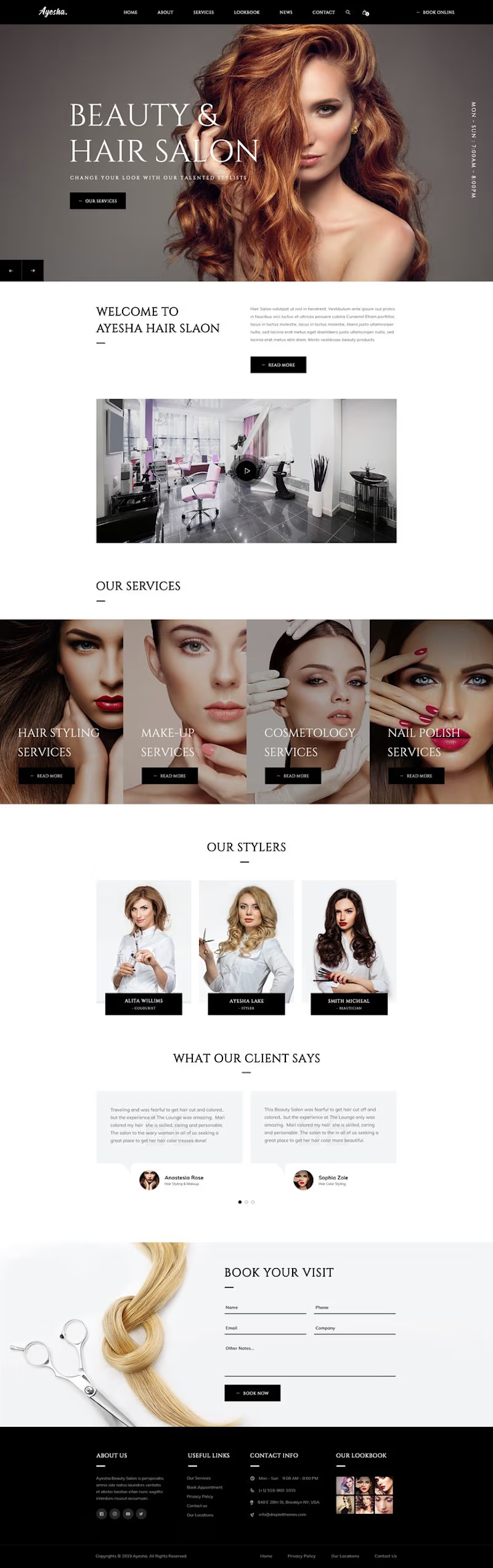
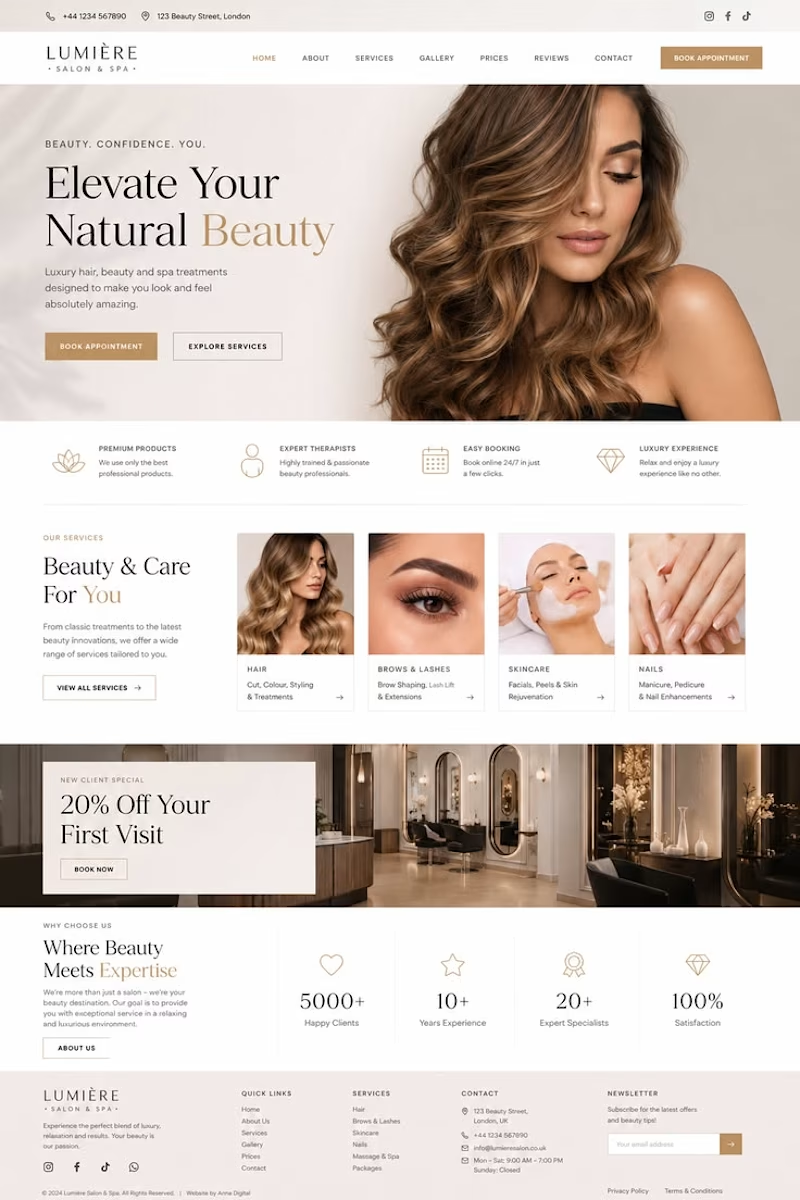
Your salon deserves a website as beautiful as your business.
we create sleek, modern and premium websites designed to turn visitors into bookings.17
Salon & beauty websites
Mobile-friendly design
Online booking integration
Premium, professional look
Built to help your business grow
Ready to give your salon the online presence it deserves?
2 voted
67%
1 voted
33%
3 votes
Closed

Option 1 is most appropriate