The network for creativity
Join 1.25M professional creatives like you
Connect with clients, get discovered, and run your business 100% commission-free
Creatives on Contra have earned over $150M and we are just getting started
Back to feedPost

You can add more workers, more servers, or more processing power and still have a slow system.
Sometimes the real limitation is dependency.
Imagine a process with five steps, where each step needs the result of the previous one before it can begin.
No matter how much capacity you add, those steps still have to wait for each other.
That creates a different engineering question.
Instead of asking: “How can we process more things at once?”
I ask: Which parts actually depend on each other?
Which work can happen independently?
Are we forcing tasks to wait when they do not need to?
Can the critical path be shortened?
This matters because unnecessary dependencies increase response time, reduce throughput, and make scaling more expensive.
Sometimes the best performance improvement is not adding more resources.
It is redesigning the workflow so independent work can happen independently.
Scaling is not only about adding capacity. It is also about removing unnecessary dependencies that prevent the capacity you already have from being useful.
The network for creativity
Join 1.25M professional creatives like you
Connect with clients, get discovered, and run your business 100% commission-free
Creatives on Contra have earned over $150M and we are just getting started



Related posts

Why your AI writes six kinds of checkboxes
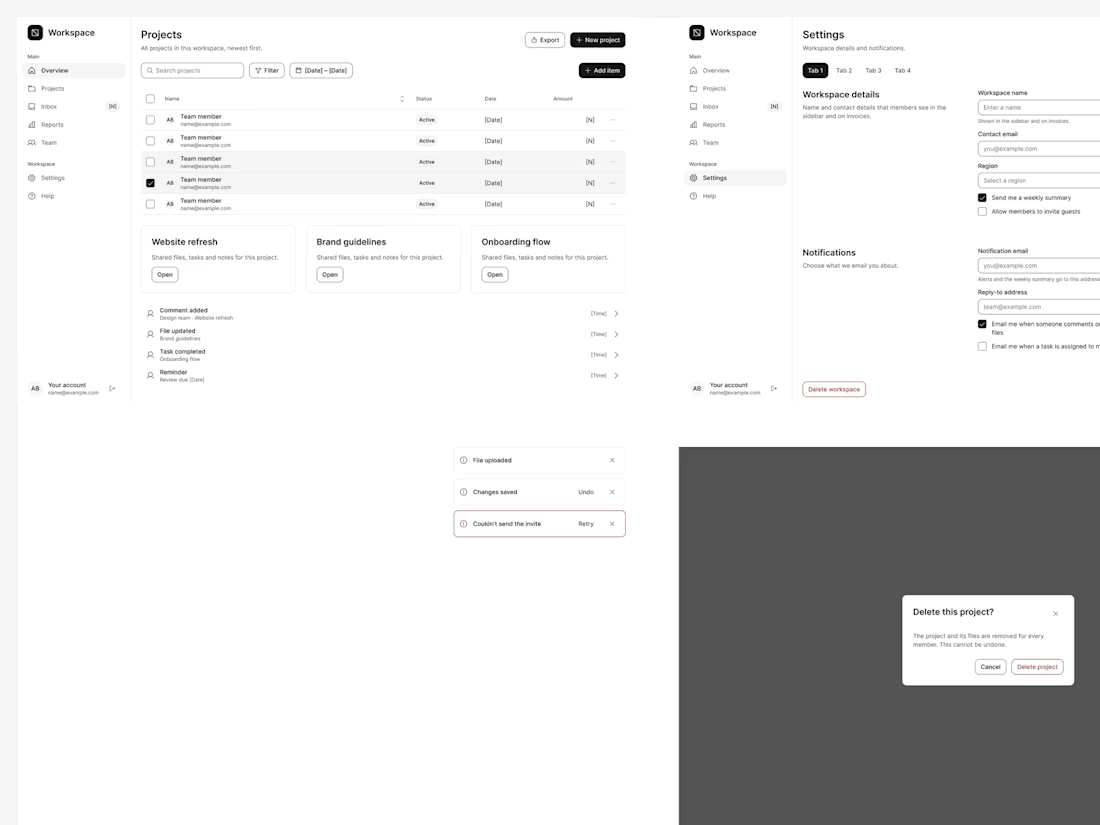
If an AI tool can't see your components, it writes its own. Ask it for a settings page and you can get a checkbox your team never designed. Ask six times and you can end up with six kinds of checkboxes.
So I see a design system as a limit for AI code. A good limit.
At PASV I built our first design system with a front-end engineer: 120 documented components with states, usage guidance and accessibility notes. It is one shared source for design and engineering. An AI tool needs the same base. The components should live in code with clear names, and colors should come from tokens, not raw hex values. Then the usage rules go into a short text file the tool reads before it builds.
It also helps with accessibility. We brought 300+ screens to WCAG 2.1 AA by fixing about 15 critical contrast and keyboard-focus issues at the design-system level. When AI builds from the same components, its screens get those fixes too.
Before you ask AI to build more screens, make sure it builds from your components.


Every client build we did started with the same pieces: sign-in, a database, integrations, automations and a portal.
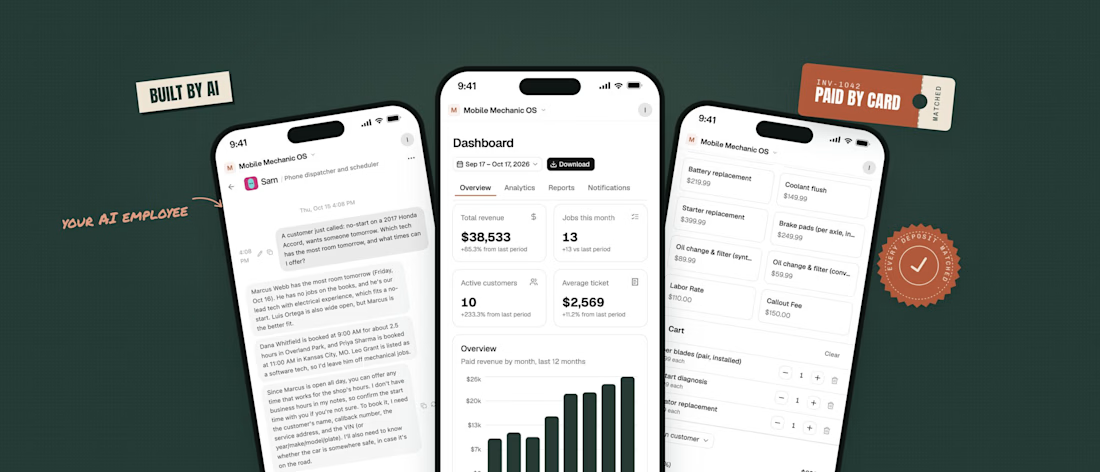
So we turned it into Unstack. A business describes what it needs and gets the tables, pages, automations, AI employees, customer portal and website to run on. It runs on the web, Mac, Windows and iPhone.
80+ workspaces created so far, and my agency runs on it too.



Component states for an analytics platform
Each state is decided before the build, so the team isn't stopping mid-sprint to ask how it works.