The network for creativity
Join 1.25M professional creatives like you
Connect with clients, get discovered, and run your business 100% commission-free
Creatives on Contra have earned over $150M and we are just getting started
Back to feedPost

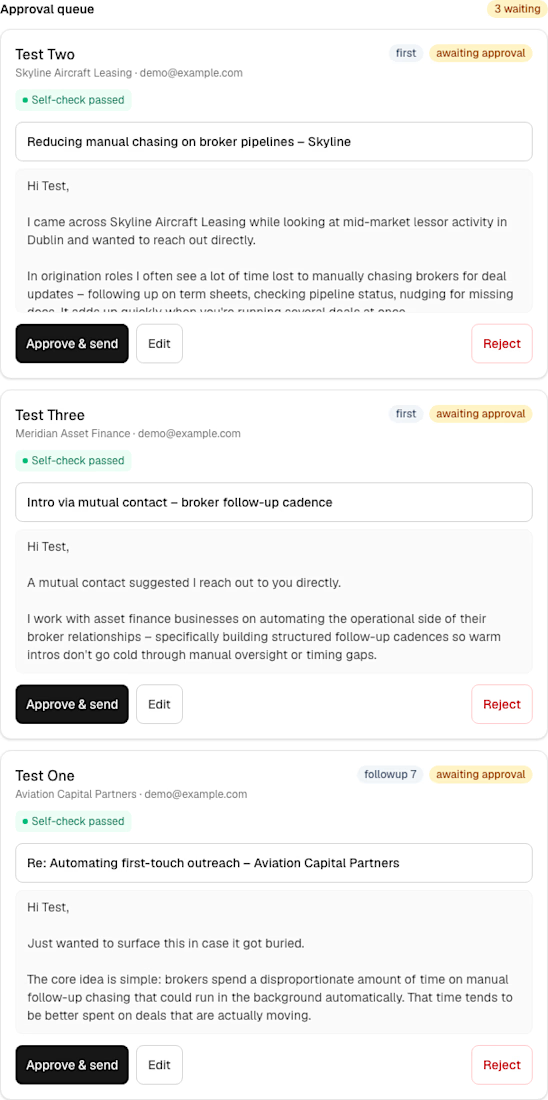
I've been building a small autonomous outreach agent as a portfolio case study: https://lnkd.in/ewygDbuS
The idea was not to build a “fully autonomous AI salesperson”. I’m more interested in the practical version of agents: systems that do the repetitive operating work in the background, but still keep a human in control when something external-facing or reputational is involved.
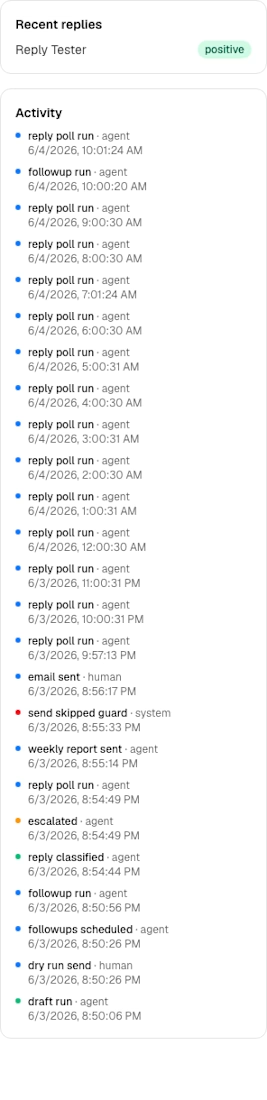
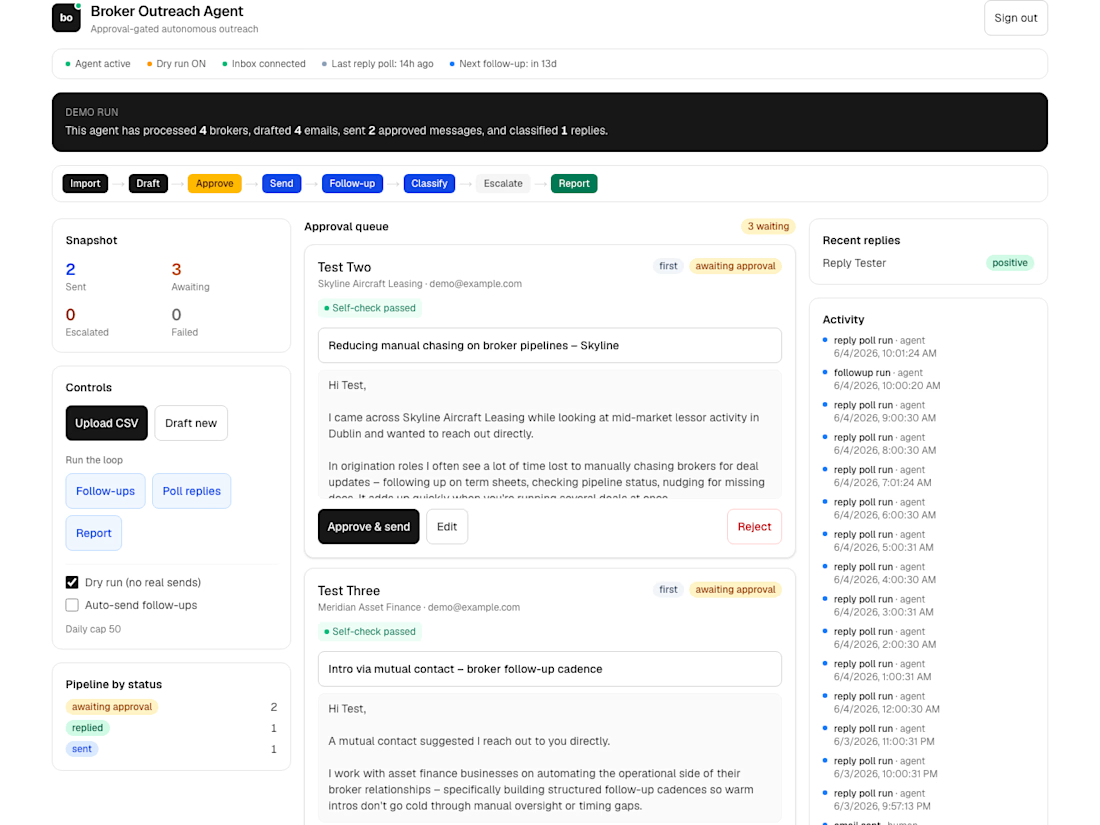
This one imports broker records, drafts personalised emails with Claude, queues them for approval, sends from a dedicated inbox, schedules follow-ups, reads replies, classifies them, escalates the useful ones and produces a weekly report.
The part I care about most is the architecture. The workflow logic handles the things that need to be reliable: status, timing, retries, limits, approvals, suppression rules and reporting.The LLM handles the judgement-heavy parts: drafting, classification and suggested replies.Everything important is logged. Nothing sensitive goes out without approval.
What was useful is that the build caught real issues during testing:
One was a silent database write failure, where the system reported success but had not actually written the record.
Another was a send guard that was too strict and blocked an approved reply. That is exactly why I think these systems need proper workflow design, not just prompts.
For me, the useful pattern is:
Not a chatbot.
Not a black box.
A backend workflow system with an LLM inside it, an approval layer around it, and a dashboard for visibility, exceptions and trust.

The network for creativity
Join 1.25M professional creatives like you
Connect with clients, get discovered, and run your business 100% commission-free
Creatives on Contra have earned over $150M and we are just getting started
Related posts

How I Saved a Venture-Backed Founder 15 Hours a Week by Auditing Their Inbox Noise
If you look at a busy founder’s calendar, you will usually find a bottleneck. They are trapped spending 3–4 hours a day answering baseline queries, sorting calendar invites, and managing basic operational friction instead of closing sales or scaling their product.
When I took over operations for a growth-stage tech startup founder last quarter, their inbox was a war zone, over 200 unread messages a day, mixing critical investor updates with low-tier software notifications.
Here is the exact 3-step administrative framework I used to clear the noise, protect their time, and optimize their daily workflow:
1. The 3-Tier Labeling Architecture
We built an asynchronous protocol where emails are strictly filtered into three categories upon arrival:
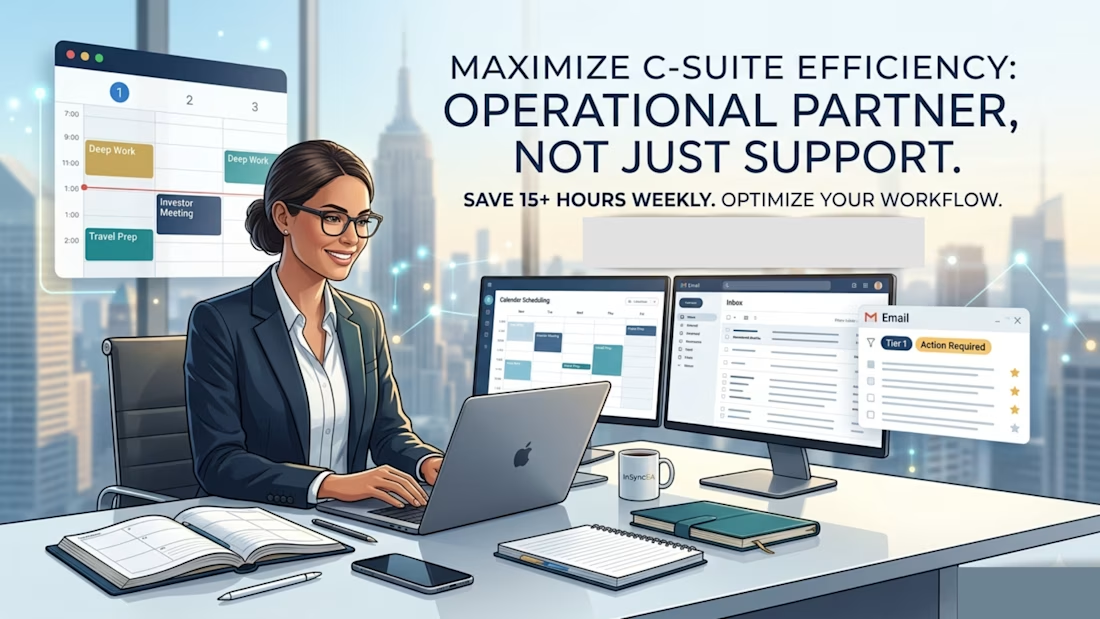
Action Required (Tier 1): Time-sensitive matters requiring the founder’s personal sign-off.
Watchlist (Tier 2): Industry updates, project tracking, or team movements to be reviewed in a single 15-minute block at the end of the day.
Handled (Tier 3): Administrative, scheduling, or vendor tasks that I resolve entirely without interrupting their focus.
2. Guarding the Calendar Like a Gatekeeper
We stopped allowing external tools to book meetings directly onto the main calendar without a buffer. Every meeting request now undergoes an intensive alignment check: Is there a clear agenda? Can this be handled via a brief Slack update or video memo? By enforcing asynchronous rules, we cut down active meeting time by 35%.
3. Creating Predictable Communication Blocks
Instead of checking notifications every 10 minutes, the founder now operates on two dedicated 30-minute communication windows daily. The rest of the day is preserved for deep work and high-level strategy.
Need to offload your operational bottleneck?
If you are a founder or executive drowning in administrative tasks, you don't need a basic data-entry clerk, you need a strategic operational partner who understands how to build efficient workflows.
You can review my full service packages and operational frameworks by exploring my executive assistant services at InSyncEA. Let’s clear your schedule so you can focus entirely on growth.



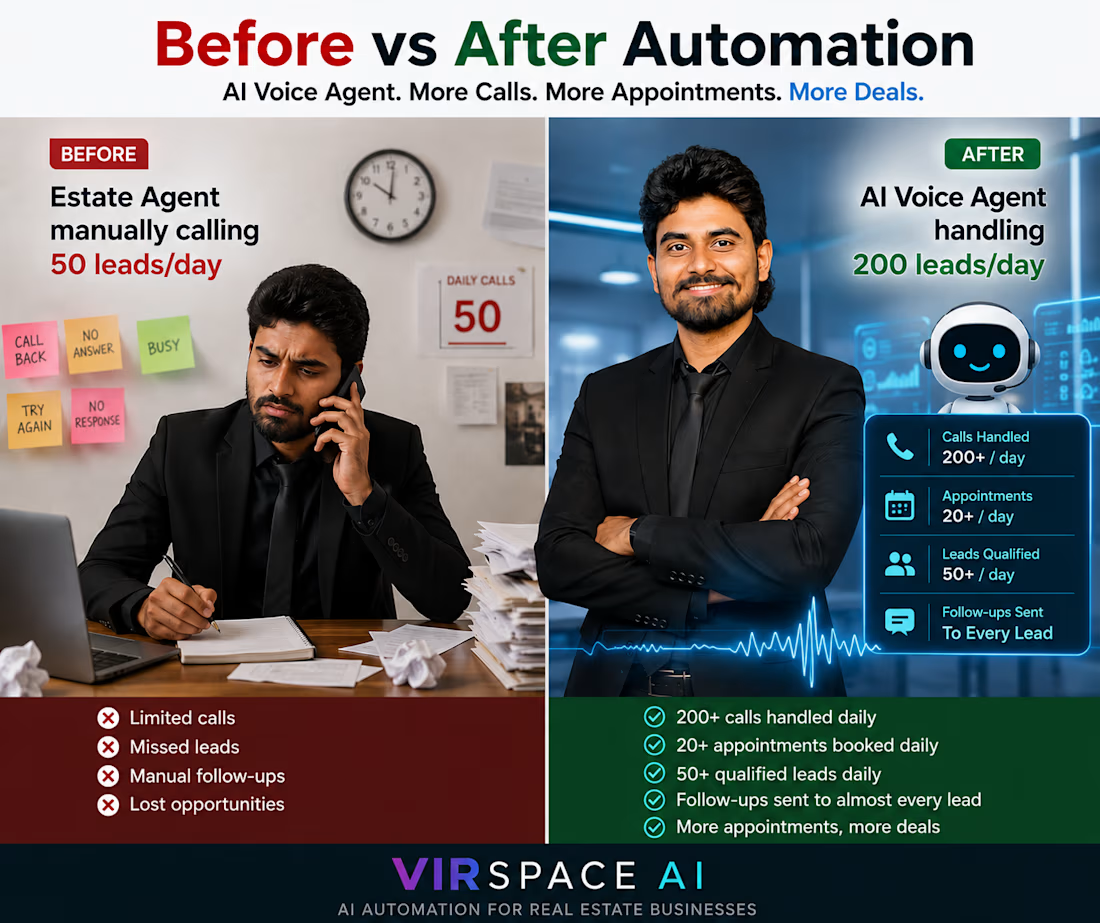
50 leads/day → 200+ calls/day.
Most real estate teams don't lose deals because of bad leads.
They lose deals because follow-ups happen too late.
Our AI Voice Agent sounds and engages like a real human, follows up within seconds, qualifies prospects, answers common questions, and books appointments automatically.
No missed opportunities.
No manual chasing.
No extra hiring.
More conversations.
More appointments.
More deals.
DM "Deals" to see how it works
#Voice agent #Workflow automation

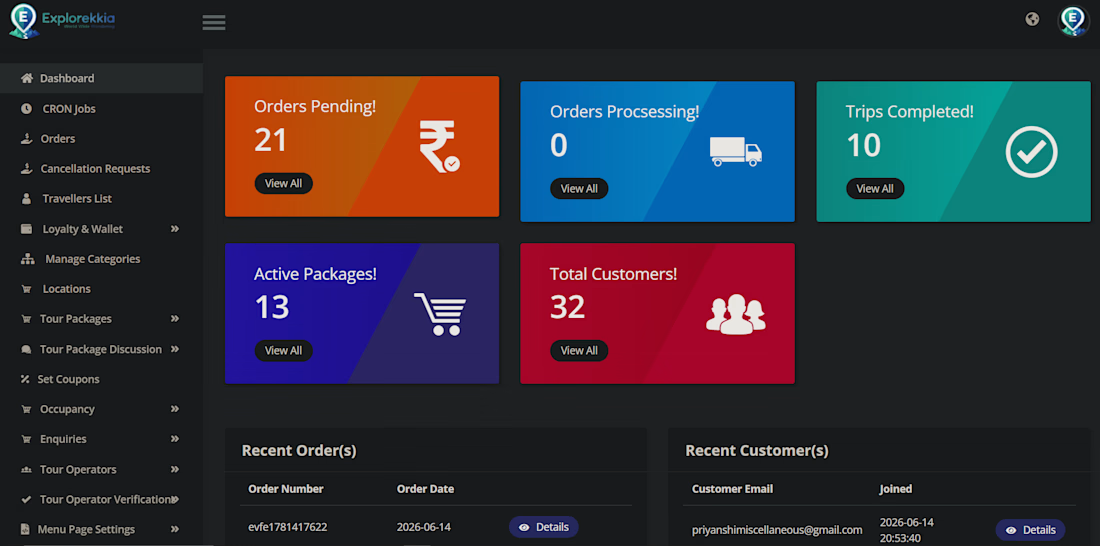
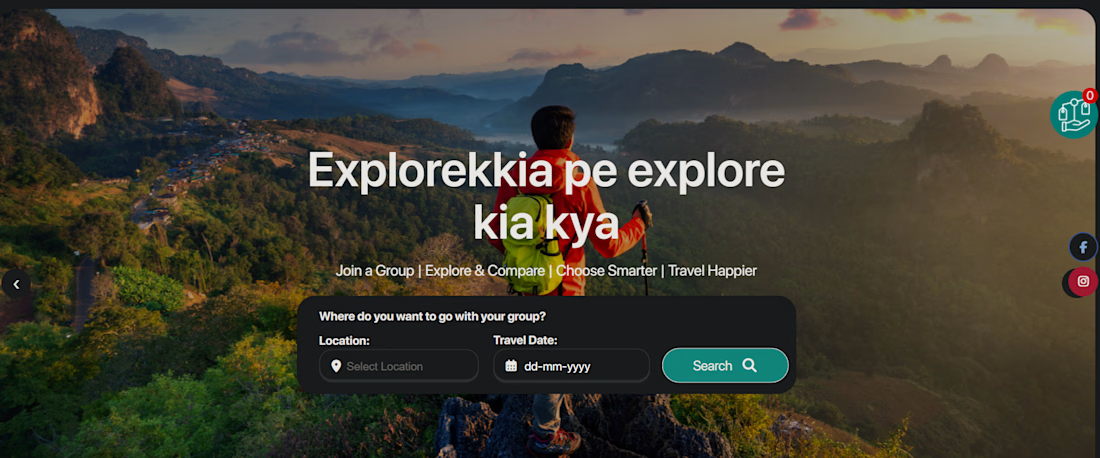
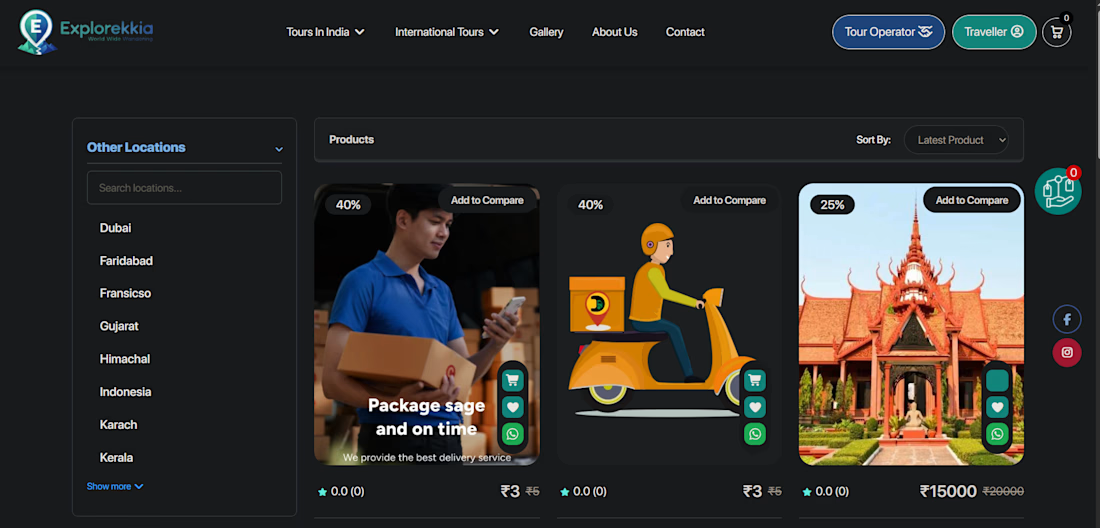
Delivered a production-grade tour & travel booking platform for a client, currently live. Built end-to-end at Bitstreaks Technology.
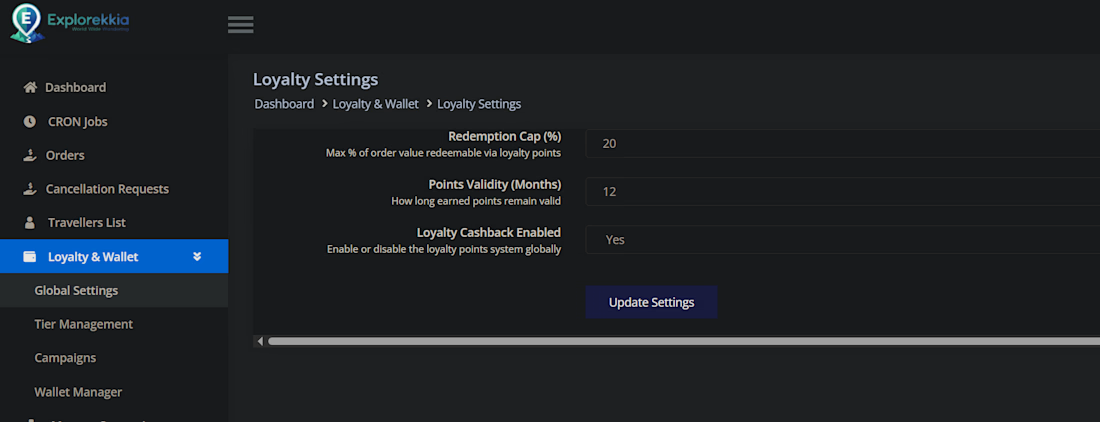
Loyalty System: Implemented a 3-tier cashback engine (Explorer → Traveller → Globetrotter) that automatically calculates and credits cashback to users on order success based on their tier status.
AI Automation (n8n + ChatGPT): Built a vendor-facing package creation pipeline — vendors can either add packages manually or paste any third-party travel website URL. n8n fetches the page source, ChatGPT extracts and structures the package details, and a new listing is auto-created on the platform. Eliminated manual data entry for vendors entirely.









Trending

Claude
Claude has entered the design space. How are you using Claude Design?

Contra University
Learn from expert creatives how to earn more using next-gen AI tools.

MagicPath
The canvas is infinite, and exploration is becoming the workflow. How are you using MagicPath?
creativeaiflow
Creative AI workflows are evolving. What tools do you use, and what are their strengths and weaknesses?
freelancerlife
Freelancer life is wins, pivots, and everything in between. What’s yours right now?