The network for creativity
Join 1.25M professional creatives like you
Connect with clients, get discovered, and run your business 100% commission-free
Creatives on Contra have earned over $150M and we are just getting started
Back to feedPost

Most products hide their mistakes. I'm designing a screen that shows them.
Right now I'm working on Bonaca — a revenue copilot for boat charter fleets, currently in design. It reads bookings, seasonality and competitor prices, then tells the operator when to hold their price and when to drop it.
But no tool is right every time. Sometimes Bonaca will say "keep your price" — and the boat still ends up empty that week.
The operator just lost money because they listened.
Most products would stay quiet about that and hope you forget. My first instinct was the same: show the good results, hide the bad ones.
Then I realized — the operator doesn't need a report to know they lost money. They already know. What they don't know is whether the tool will be honest about it.
So at the end of the season, Bonaca shows them everything:
→ Where its advice made them money.
→ Where its advice cost them money — and exactly how much.
→ No excuses.
It sounds risky. Why would a product point out its own failures?
Because that's how trust works. Nobody trusts something that claims to be perfect. People trust what's honest with them — especially about the bad news.
A tool that hides its mistakes gets used once. A tool that admits them gets used again.
And that's exactly the kind of problem I want more of — AI products where someone has to trust an expensive decision. If you're building one, my inbox is open.
Full case study on my portfolio; https://bozenabulat.com/projects/bonaca-revenue-copilot-for-charter-fleets

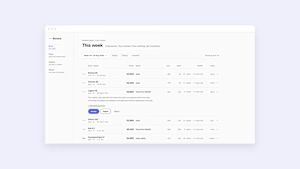
bozenabulat.com
Bonaca — A Revenue Copilot for Charter Fleets
Bonaca is a revenue-decision copilot for professional yacht charter fleets. It reads bookings, seasonality and competitor pricing, and tells an operator when to hold a price and when to let it go, with the reasoning shown. The operator decides. Bonaca just makes the call legible. The design problem underneath: how do you build a tool for someone who is already panicking?
The network for creativity
Join 1.25M professional creatives like you
Connect with clients, get discovered, and run your business 100% commission-free
Creatives on Contra have earned over $150M and we are just getting started







Related posts

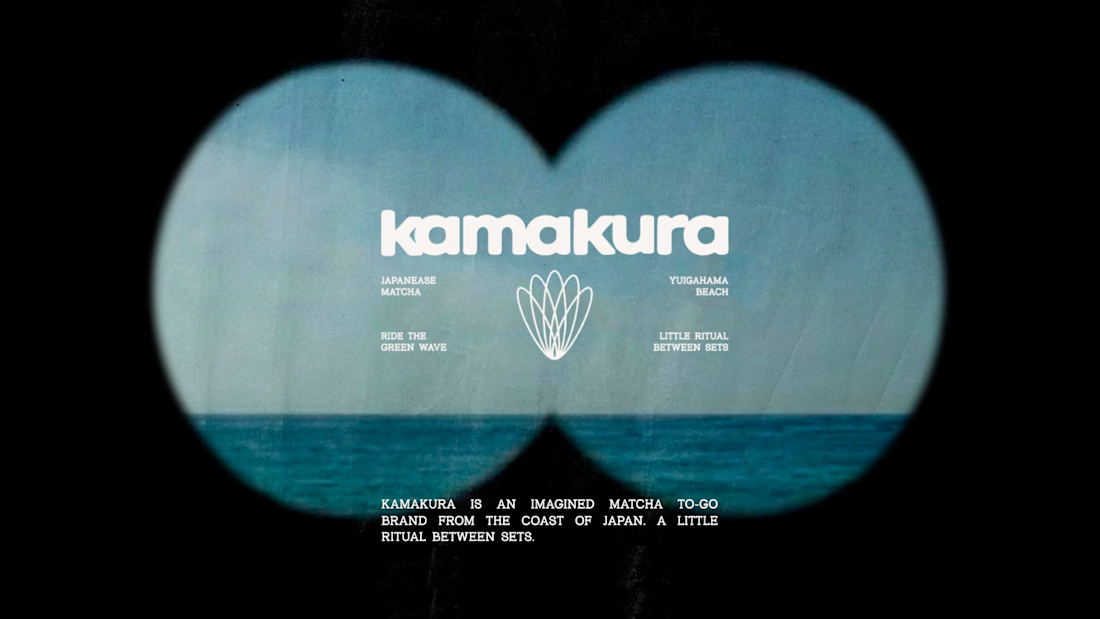
Somewhere between Japan, surf culture, and a very unnecessary amount of matcha. 🍵🌊
This passion project was created for @designerbriefs , but the direction became a little personal.
I visited Kamakura earlier this year, and fell in love with the whole vibe. It’s Japan, but with a slower, more relaxed energy. Surf culture, cozy streets, friendly people, and that easygoing coastal feeling where nobody seems to be in too much of a rush. Basically, my kind of place. 🫶
So when I saw the brief for a Japanese matcha brand, I knew I wanted to take it in that direction. Not just traditional Japanese tea culture, but the meeting point between ritual and relaxation, structure and spontaneity, matcha and surfboards.
And that’s how KAMAKURA came to life.
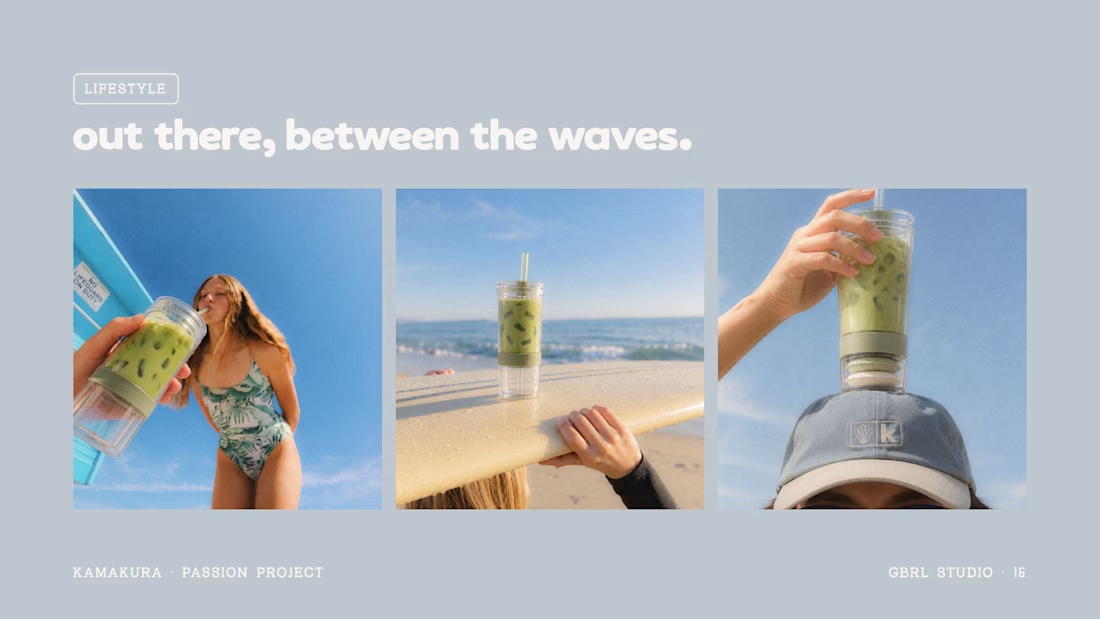
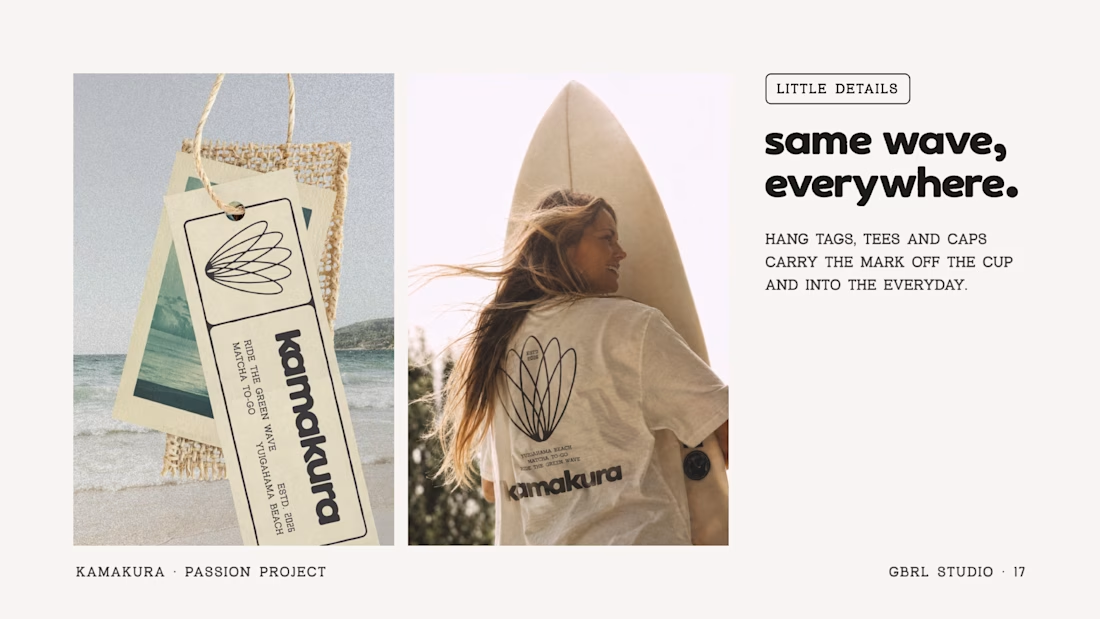
A Matcha To-Go Kit designed for your post-surf pause, with ceremonial matcha, oat milk, a bamboo whisk, a reusable cup, and packaging you can plant after use. 🌱
The icon brings both worlds together, with surfboards arranged into the shape of a matcha whisk. Because, naturally, even the logo had to catch a wave.
Ride the green wave. 🌊
#Kamakura #MatchaBranding #BrandIdentity #PassionProject #dbckamakura



Love this Gabriela! 🤍
I you don't mind sharing, what's the display font?


I'm building midcode.
a tool that let's you turn code websites into no-code
super useful for AI-led sites where we want to edit things visually

Being an independent designer means you're also your own toughest critic – no one else is going to catch it if you don't.
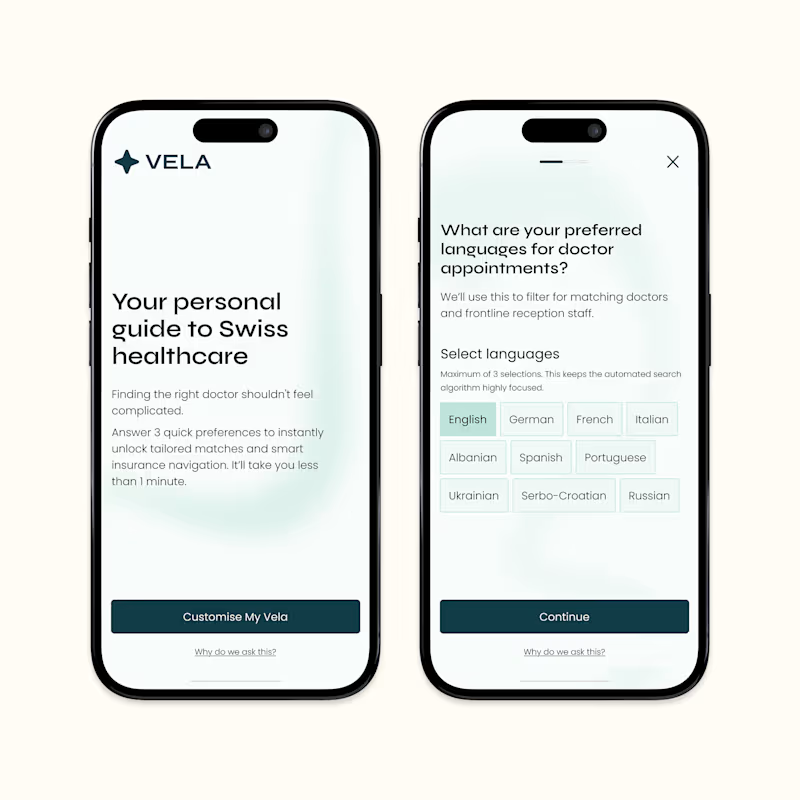
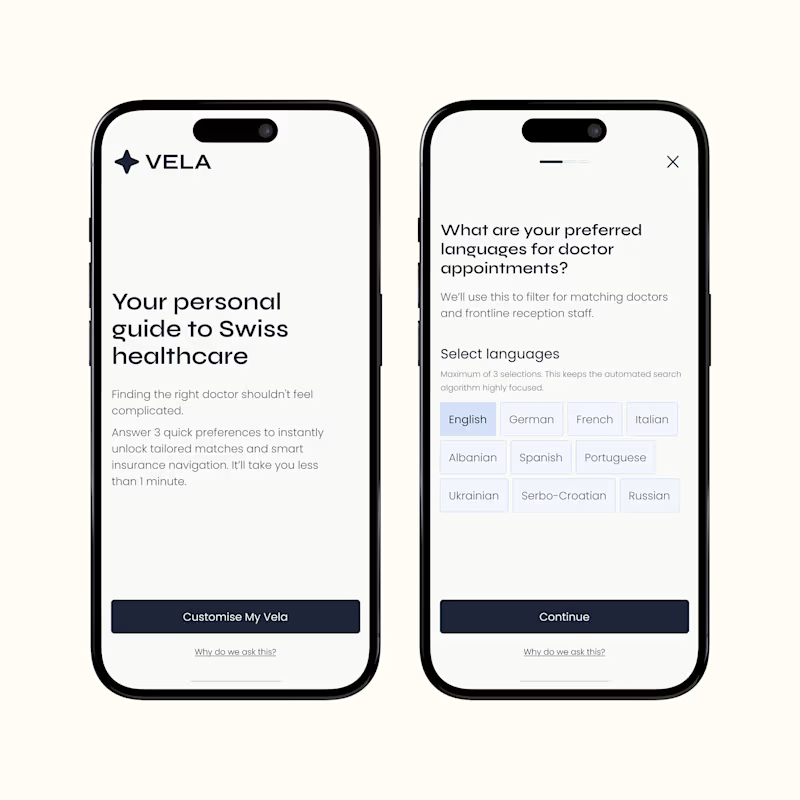
Self-initiated projects give you all the freedom, meaning you can create close-to-perfect work that you think people would love to use. Vela is an app for making doctor appointments and getting insurance guidance with AI assistant. When I started designing it, I wanted it to feel trustworthy and knowledgeable, but also warm, like a friend who explains things without judging you.
Looking back at the initial teal version, I think it landed closer to "doctor's office" than that. Tried a version with less clinical colour, more personality, leaning towards "tech" rather than "health".
Curious what actually reads as more trustworthy to you: A or B?
7 voted
50%
7 voted
50%
14 votes
Closed

version B