The network for creativity
Join 1.25M professional creatives like you
Connect with clients, get discovered, and run your business 100% commission-free
Creatives on Contra have earned over $150M and we are just getting started
Back to feedPost

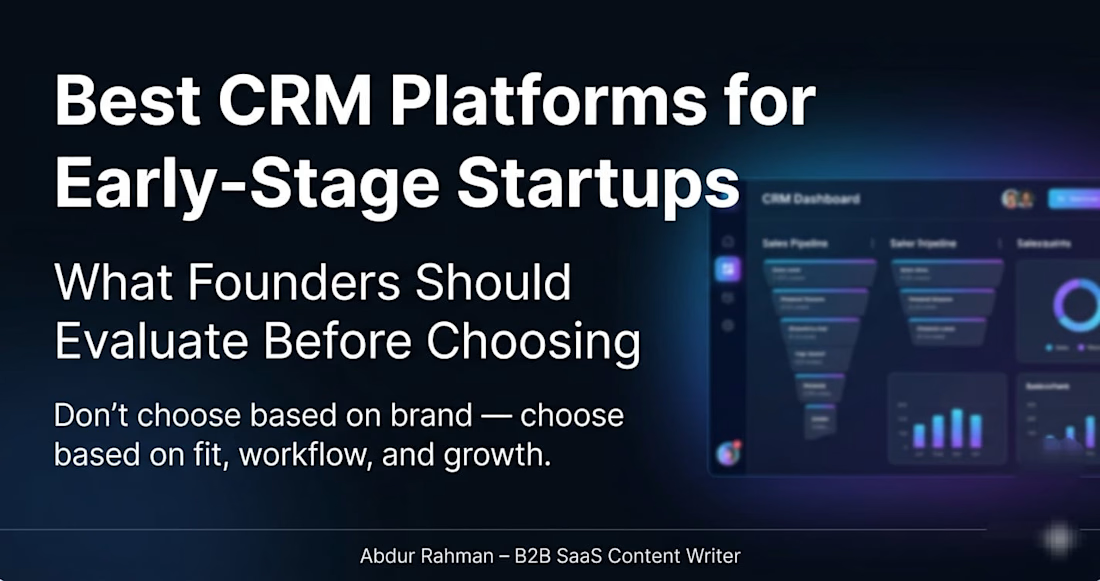
Best CRM Platforms for Early-Stage Startups: What Founders Should Evaluate Before Choosing
Choosing a CRM system when your startup is still young can seem like a decision that you can make quickly. It usually is not that simple. For startups, the CRM system becomes a big part of how you manage your revenue. If you pick the wrong one, you may end up dealing with workflows that are hard to use, poor visibility, or a painful migration later on.
If you pick the CRM system, it can support your growth long before you need a large sales team. The mistake many founders make is choosing a CRM system based on how known the brand is.. Being popular and being a good fit are not the same thing.
This article looks at three known CRM options and more importantly how to figure out which one makes sense for your startup at its current stage.
Why CRM Decisions Matter Earlier Than Founders Think
When you first start out using spreadsheets and manual follow-up often seems good enough. Until it is not enough. As the number of leads increases things can start to fall quietly. Deals go untracked, follow-ups get missed and pipeline visibility weakens.
That is usually when founders realize that a CRM system is not software it is infrastructure. A solid CRM system can help your team manage opportunities, consistently track deals across stages, improve follow-up discipline, support forecasting and build systems that can scale.
The goal is not to find the powerful tool; it is to find the right tool for where your startup is right now.
HubSpot is often one of the platforms that startups consider largely because it is easy to use. That matters a lot. Early-stage teams rarely have time for implementation. One reason founders like HubSpot is that it often balances ease of use with functionality to support growth.
Where It Often Makes Sense
HubSpot can be a fit for startups looking for pipeline management, basic automation, marketing and sales alignment, and reporting without heavy technical setup. Its ecosystem can also reduce tool sprawl for growing teams.
What To Consider
As your needs expand, the pricing can rise. Some advanced use cases may require additional investment. Still for startups, simplicity is part of the value of using HubSpot.
Salesforce has a different reputation. It is often associated with scale and deep customization. That can be powerful especially if your sales process is complex or enterprise-focused.
Where It Can Fit
Salesforce may be worth considering if you need customization, sophisticated reporting, complex workflows or enterprise-level scalability. For the company that flexibility can be a major asset.
What To Consider
Its strength can also introduce complexity.. Early-stage teams sometimes adopt enterprise-grade systems before they need them. That can create operational weight. Sometimes the smartest move is not to use the powerful system but to use the system that your team can use well right now.
Pipedrive Pipedrive often appeals to startups that want simplicity first.. That is not a small advantage. For teams straightforward deal management can be more valuable than having a lot of features.
Where It Often Works Well
Pipedrive may suit teams that prioritize adoption, simpler sales pipelines, ease of use and sales-focused workflows. Sometimes less complexity creates execution.
What To Consider
If your needs expand into automation or integrated growth systems you may eventually outgrow Pipedrive.. For some teams, starting simple is exactly the right move.
What Founders Should Evaluate Before Choosing
Checking off features on a list can be misleading. How well the CRM system fits into your operations usually matters more. Here are a few things worth evaluating.
Integration Needs
What does this CRM system need to work with? Think about tools like email platforms, marketing software, support systems and analytics tools. Weak integrations often create friction.
Automation Requirements
Some startups need automation. Others need routing and workflows. Know which problem you are solving before paying for complexity.
Reporting Needs
Founders sometimes overestimate how reporting sophistication they need early on. Often basic visibility is enough. The question is whether the CRM system helps you make decisions.
Future Growth
Choose a CRM system for today.. Keep tomorrow in view. A useful question is: will this CRM system still support us in two years? That framing is often more practical than chasing the platform.
Common Mistakes Startups Make
Choosing Based on Reputation
A well-known brand does not automatically mean the best fit for your startup.
Overbuying Early
Too much software too soon can slow teams down.
Ignoring Adoption
Even a powerful CRM system fails if nobody uses it consistently. Adoption matters a lot.
A Better Way To Decide
of asking which CRM system is the best, ask which CRM system fits your workflow, stage and growth model best. That question tends to lead to decisions. You can even score options across ease of adoption, integration fit, automation needs reporting needs, scalability and cost efficiency. Simple frameworks often beat decisions based on instinct.
Final Takeaway
There is rarely one best CRM system for startups. There is usually a fit. For some teams usability matters most. For others, flexibility or scale may matter more. The right choice is less about choosing the platform with the reputation and more about choosing the CRM system that your team can actually use consistently and well. Because, in practice the best CRM system is often the one that your team uses every day without any problems.


The network for creativity
Join 1.25M professional creatives like you
Connect with clients, get discovered, and run your business 100% commission-free
Creatives on Contra have earned over $150M and we are just getting started
Trending
retrofuturism
Share your favorite designs from the past exploring the distant future. Or your own take on the aesthetic 🚀
halftone
Dots. Texture. Grain. Let's see your designs using the halftone technique.

Midjourney
Creatives are showing off what they're making with Midjourney.
colorgrade
Video editors sound off: How do you enhance the mood of your video in color grading?





Related posts

Webflow project that's already bringing in the customers.


Developed a high-end promo visual presentation for a luxury lipstick collection. The main objective was to showcase product shades and texture while pairing them with compelling, emotion-driven product descriptions designed to drive engagement and visual appeal.
Scope of Work & Strategy
Persuasive Copywriting: Authored elegant, benefit-focused messaging highlighting formula quality, skin versatility, and confidence.
Visual Styling & Art Direction: Curated a sophisticated color story using deep burgundy and soft rose silk textures to communicate luxury.
Content Presentation: Structured high-impact visual slides featuring real-life shade swatches and textured product shots.


somewhere a founder is on round 3 of making the blue feel more trustworthy, the blue is doing its job, but the sentence next to it is doing nothing


