The network for creativity
Join 1.25M professional creatives like you
Connect with clients, get discovered, and run your business 100% commission-free
Creatives on Contra have earned over $150M and we are just getting started
Back to feedPost

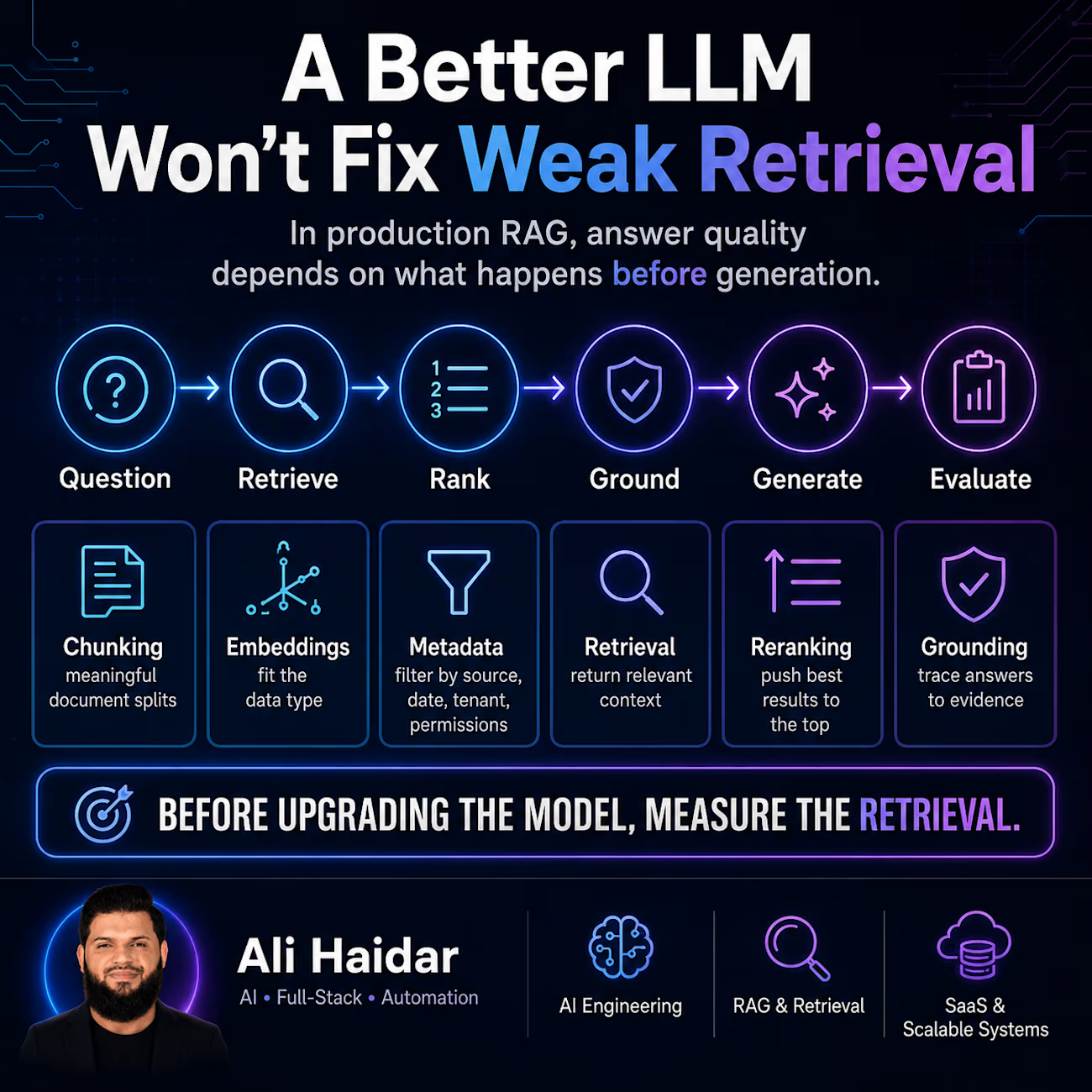
A better LLM won’t fix a weak retrieval pipeline.
In production RAG systems, answer quality depends heavily on what happens before the prompt reaches the model.
Chunking, embeddings, metadata filters, retrieval, reranking, grounding, permissions, and evaluation all determine whether the LLM receives the right context.
I build AI workflows with the full retrieval path in mind — not just the final model call.
If your RAG application works in demos but gives inconsistent answers on real company data, the retrieval architecture is usually the first place worth investigating.
#RAG #AIEngineering #LLM #VectorSearch #GenerativeAI
The network for creativity
Join 1.25M professional creatives like you
Connect with clients, get discovered, and run your business 100% commission-free
Creatives on Contra have earned over $150M and we are just getting started

Challenges
View all


Related posts

What does luxury look like?
A cinematic AI product of a modern apartment designed to make you stop, look, and imagine yourself there. ✨
Would you live here?


Been building a medical assistant for a client, where you can ask a question and get answers from sources like MedlinePlus, StatPearls, and FDA drug labels, with citations you can check yourself.
This is the empty state. Added a few suggested questions so you have somewhere to start instead of staring at a blank box.
How does the UI feel for a medical product, too sparse, or does the simplicity work?


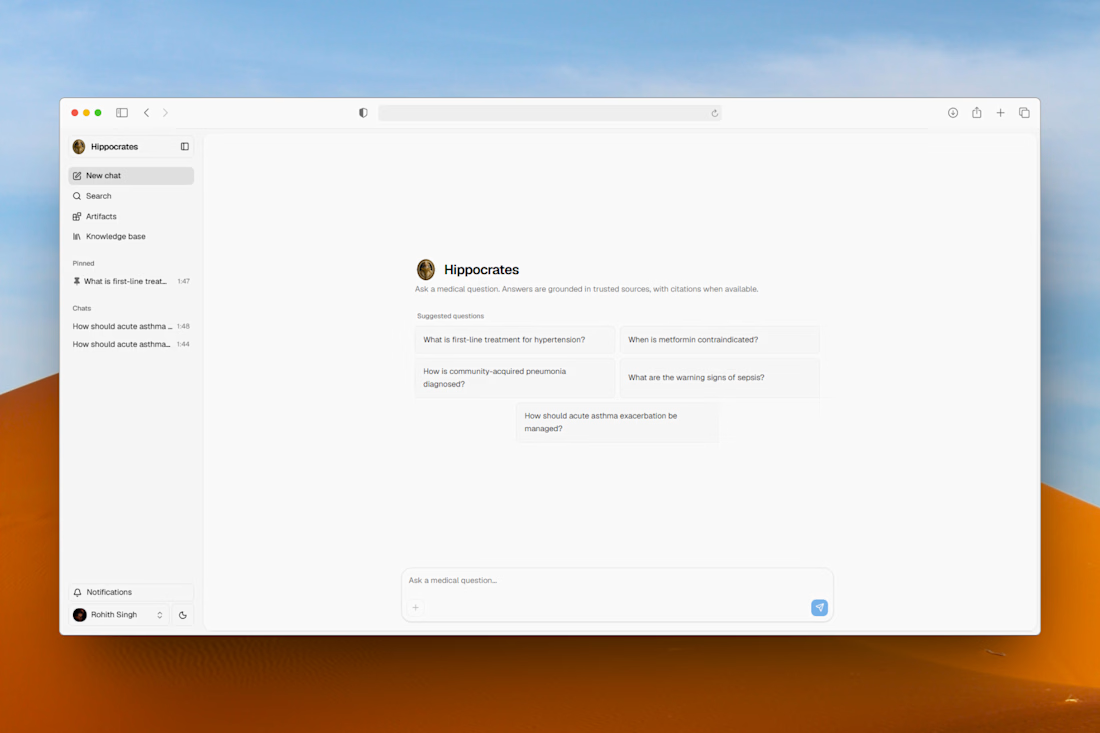

The empty state doesn't wait for a blank query box - it seeds real suggested questions so the first interaction is answering, not figuring out what to ask.

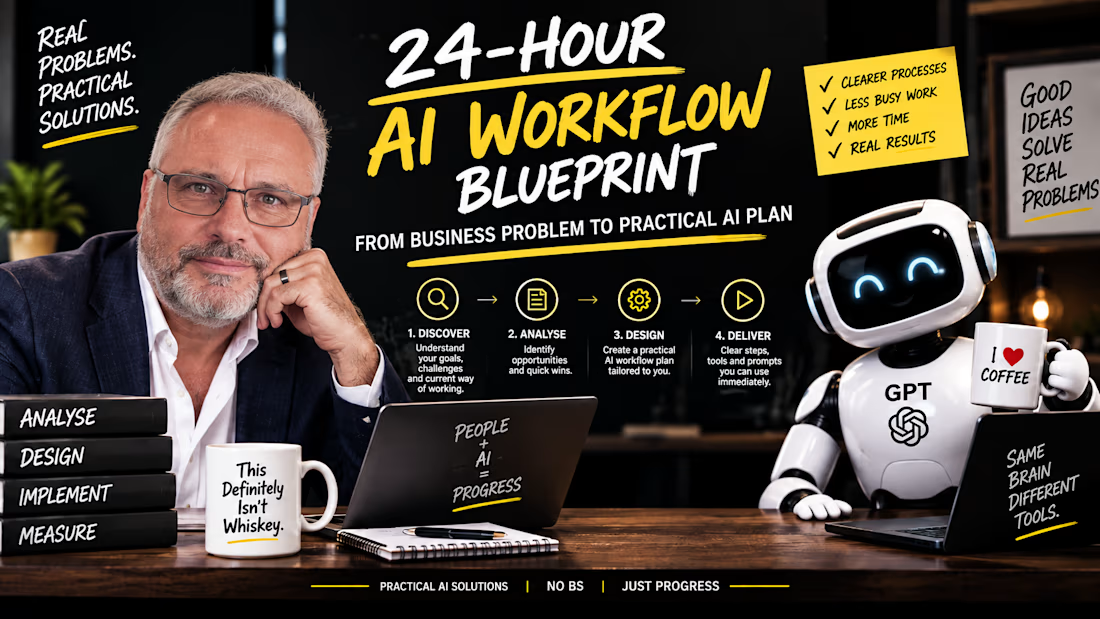
24-Hour AI Workflow Blueprint — From Business Problem to Practical AI Plan
I developed a practical workflow-review system designed to help small businesses identify where AI can genuinely save time — and, just as importantly, where human judgement should remain in control.
The process starts with a structured business questionnaire covering repetitive tasks, existing software, time-consuming processes, desired improvements and areas that should not be automated.
That information is then analysed to identify bottlenecks, quick wins and realistic opportunities for AI assistance. The resulting Blueprint provides prioritised recommendations, practical workflows, suggested tools and prompts, implementation steps, and clear human/AI boundaries.
I also built and tested the supporting intake and delivery workflow so the complete review can be produced within 24 hours of receiving the required information.
The objective isn't “AI everywhere”. It's less repetitive work, clearer processes and practical improvements that a business can actually use.
This workflow was developed and internally tested as part of a live 30-day commercial AI experiment. No invented client results or hypothetical savings are presented here.