The network for creativity
Join 1.25M professional creatives like you
Connect with clients, get discovered, and run your business 100% commission-free
Creatives on Contra have earned over $150M and we are just getting started
Back to feedPost

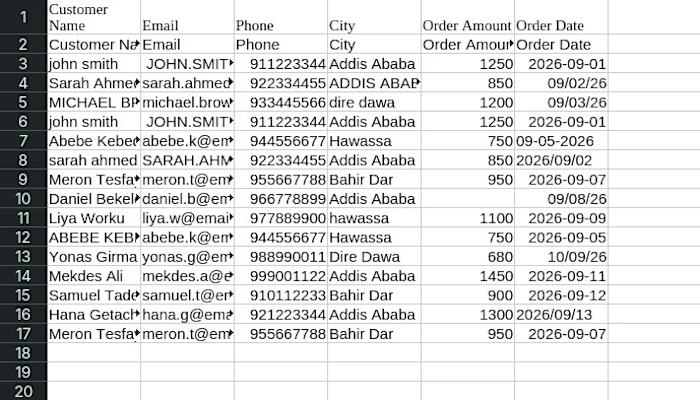
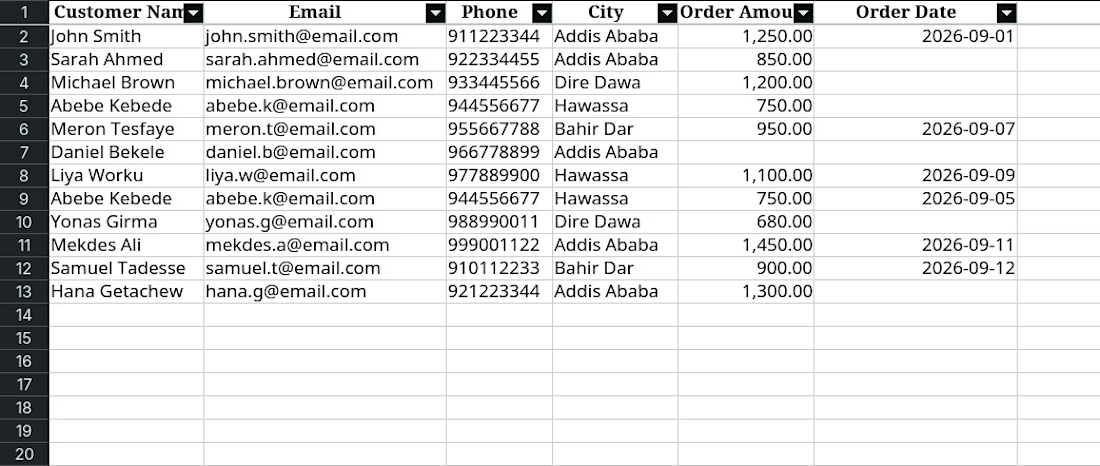
Customer Data Cleaning & Automation
before and after screenshot


The network for creativity
Join 1.25M professional creatives like you
Connect with clients, get discovered, and run your business 100% commission-free
Creatives on Contra have earned over $150M and we are just getting started





Related posts

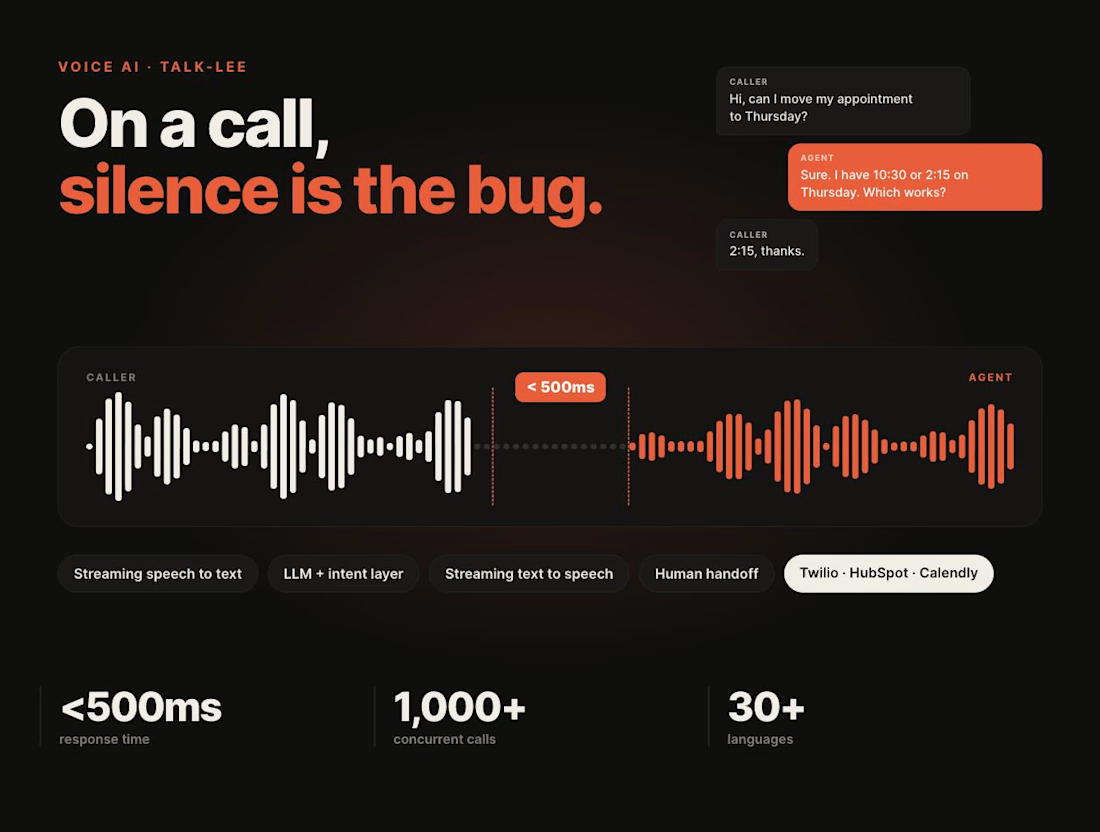
On a phone call, silence is the bug.
A text chatbot can take three seconds to reply and nobody minds. A voice agent can't. Leave a caller in silence for a beat too long and they say "hello?", start talking over it, or hang up.
That one fact shaped everything we built on Talk-Lee, an AI voice agent that answers business calls for healthcare, real estate and finance teams. Scheduling, support, lead qualification, around the clock.
The goal was a reply in under 500ms. You don't get there with a faster model. You get there by making sure nothing waits for anything else.
→ Speech to text streams while the caller is still talking
→ An LLM and intent layer keeps track of what they actually want
→ Text to speech streams back, so the agent starts talking before the whole answer is ready
→ An orchestrator decides in real time whether to answer, book or hand off to a person
Then it has to do something useful. It books into Calendly, logs the lead in HubSpot, and passes the hard calls to a human with the context already attached.
Where it landed. Under 500ms responses, 1,000+ concurrent calls, 30+ languages, GDPR and TCPA compliant.
Third project in a row with the same lesson. The model is the easy part. The plumbing around it decides whether anyone keeps using it.

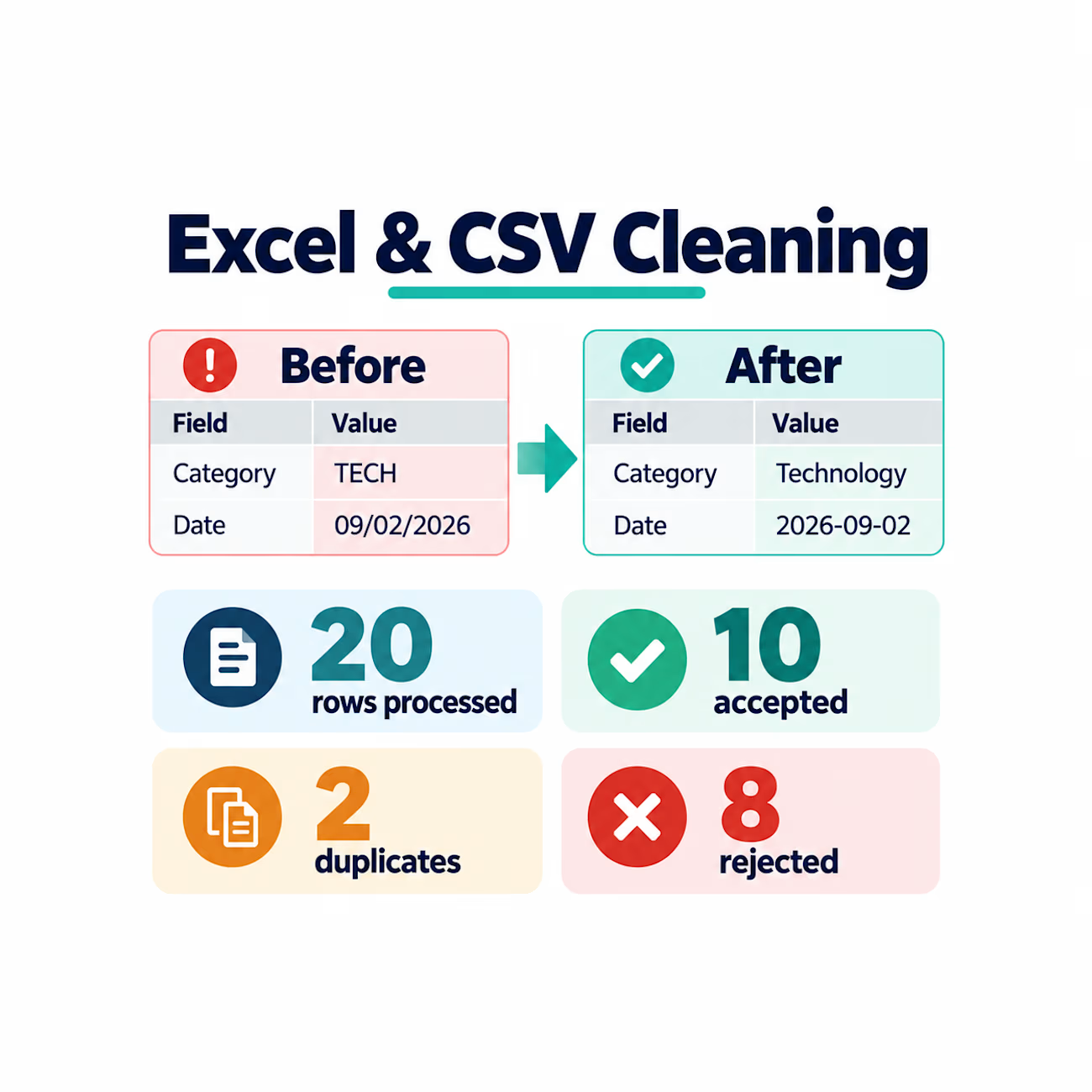
Built a reusable Python workflow for cleaning and validating messy Excel and CSV data. It normalizes categories, dates, and text, removes duplicates, flags invalid records, and exports cleaned files with audit summaries.

Cold B2B outreach for a manufacturing plant
Goal: sell a Hosokawa Alpine industrial granulation line to buyers abroad.
What was built: a buyer database by segment (manufacturers, dealers, OEM); a separate email for each segment in local languages (EN, PL and others), no templates; a touch sequence: first email → reminder → final; stop list and bounce tracking; a log of all replies.
Result: 1,997 emails, 91% delivered, 68 replies from potential buyers.