The network for creativity
Join 1.25M professional creatives like you
Connect with clients, get discovered, and run your business 100% commission-free
Creatives on Contra have earned over $150M and we are just getting started
Back to feedPost


MessyAPI is a production-ready developer infrastructure platform I built to eliminate repetitive data utility work. It gives developers one API to clean, validate, match, transform, protect, and analyze messy data instead of rebuilding those capabilities for every application.
I designed the platform around real production requirements, including API-key authentication, tenant isolation, usage metering, rate limiting, idempotency, asynchronous jobs, retries, webhooks, observability, and secure data handling.
MessyAPI also includes JavaScript and Python SDKs, OpenAPI, MCP support, CLI tooling, RapidAPI integration, interactive testing, and composable workflows for chaining multiple data operations together.
The goal was simple: turn common data infrastructure developers repeatedly build themselves into one reliable API.


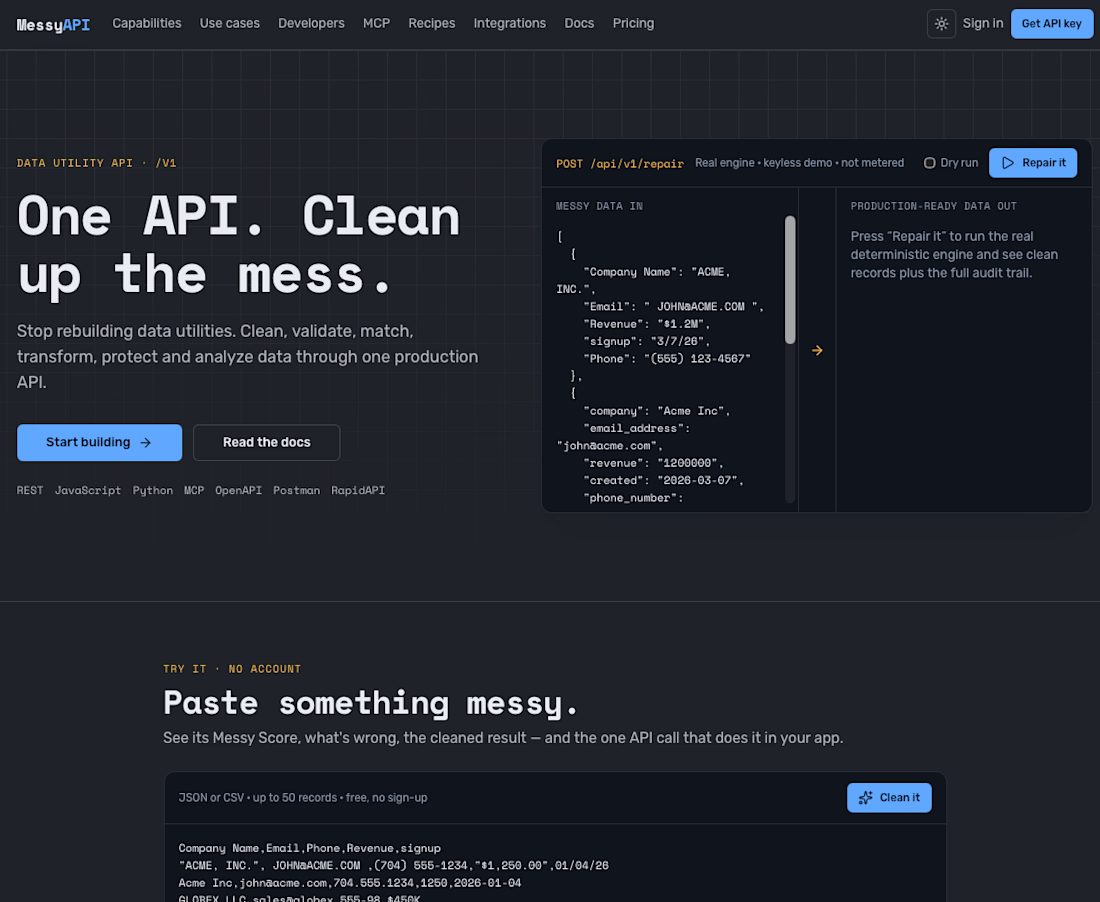

one API for messy data instead of rebuilding it every project is a big win
The network for creativity
Join 1.25M professional creatives like you
Connect with clients, get discovered, and run your business 100% commission-free
Creatives on Contra have earned over $150M and we are just getting started



Related posts

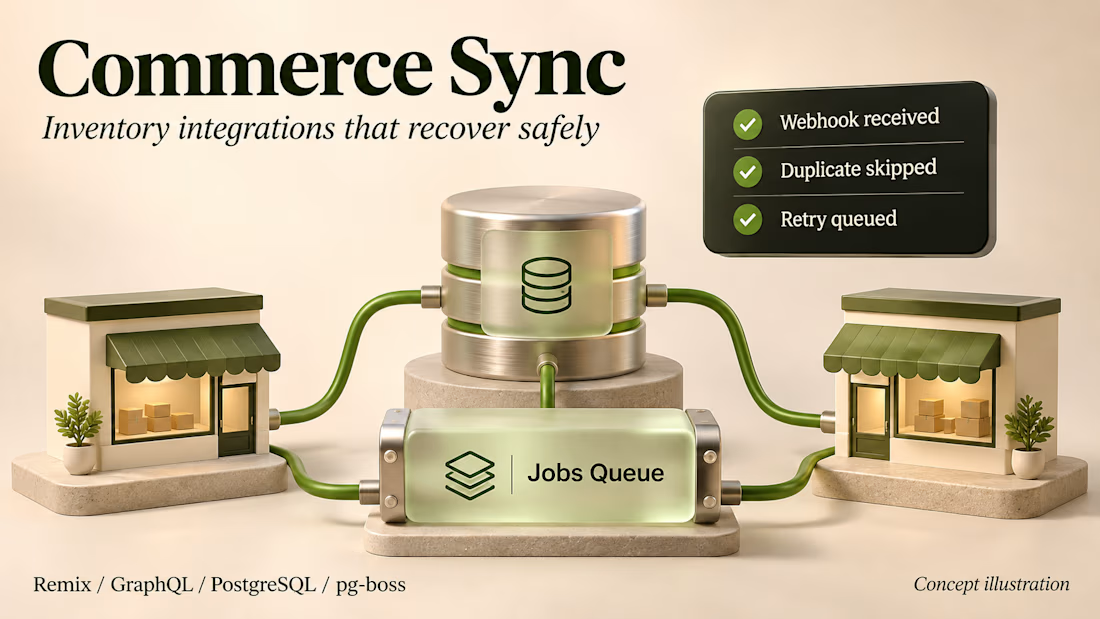
A duplicate webhook should not change inventory twice.
Commerce Sync is my multi-store Shopify integration example. Product changes move between storefronts, and inventory updates make their way back to the parent store.
The part I care about is what happens when something fails. PostgreSQL catches duplicate deliveries, pg-boss keeps jobs durable, and separate workers handle throttling and retries. Partial syncs have a rollback path.
I put the architecture and implementation decisions in the case study below. Client details are removed, and the render is a concept illustration.
I am taking on Shopify app integrations and backend maintenance, remotely from India, up to 20 hours a week.


ClubTree | All-in-One Membership Management SaaS
Designed and developed ClubTree, a SaaS platform that helps membership organizations manage their websites, members, events, and communications from one centralized system.
ClubTree combines a public-facing website with an administrative dashboard, giving organizations the tools to manage membership applications, member directories, attendance, newsletters, documents, and organizational workflows.
The platform was designed around real-world service club needs, with an emphasis on intuitive navigation, role-based access, and simplifying administrative tasks.
My role: Product strategy, user research, UI/UX design, full-stack development, testing, and launch.
Key features:
- Membership applications and directories
- Event and attendance management
- Website content management
- Newsletters and member communications
- Role-based access and administrative dashboards
- Integrated organizational workflows
Outcome: A functional membership management platform with a live implementation for the Rotary Club of Charlottesville.


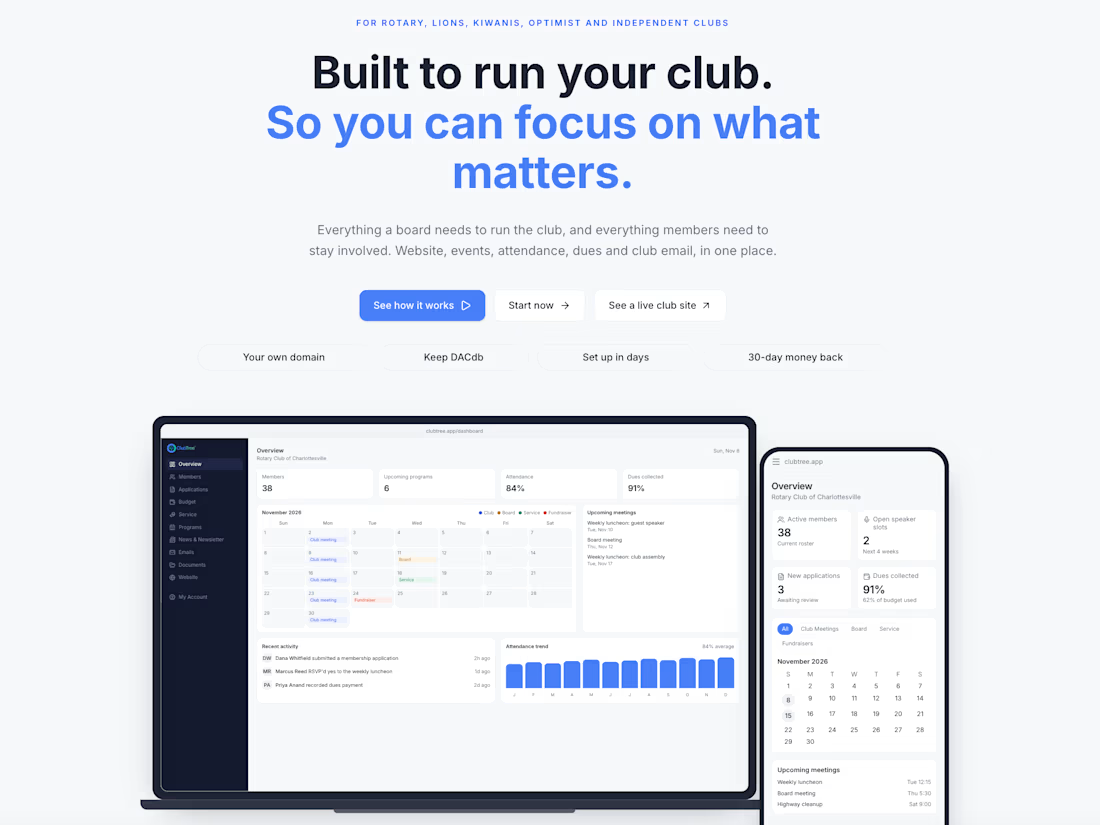

Going live with one real club in Charlottesville and building around how they actually run is the right way to do it. Club admin tools usually feel stuck in 2010, so this looks like a big upgrade. How did you land them, through someone in the club?

Building another CRM!!🔥


Love this, most local businesses do not lose clients because of no leads, they lose them because there is no follow up. A clean lead pipeline like this changes everything, once a lead is in the system it never gets forgotten. Really curious to see how you handle follow ups and reminders in this CRM.