The network for creativity
Join 1.25M professional creatives like you
Connect with clients, get discovered, and run your business 100% commission-free
Creatives on Contra have earned over $150M and we are just getting started
Back to feedPost
If you sell B2B software, you've heard it: "you need to show up in ChatGPT."
And the fix going around is to write more blog posts.
But for a lot of companies, that's not the real problem.
The real problem: ChatGPT can't read their website.
The site looks fine to you.
But some websites only show their words after the page loads in a browser.
ChatGPT doesn't wait for that. It sees an almost empty page.
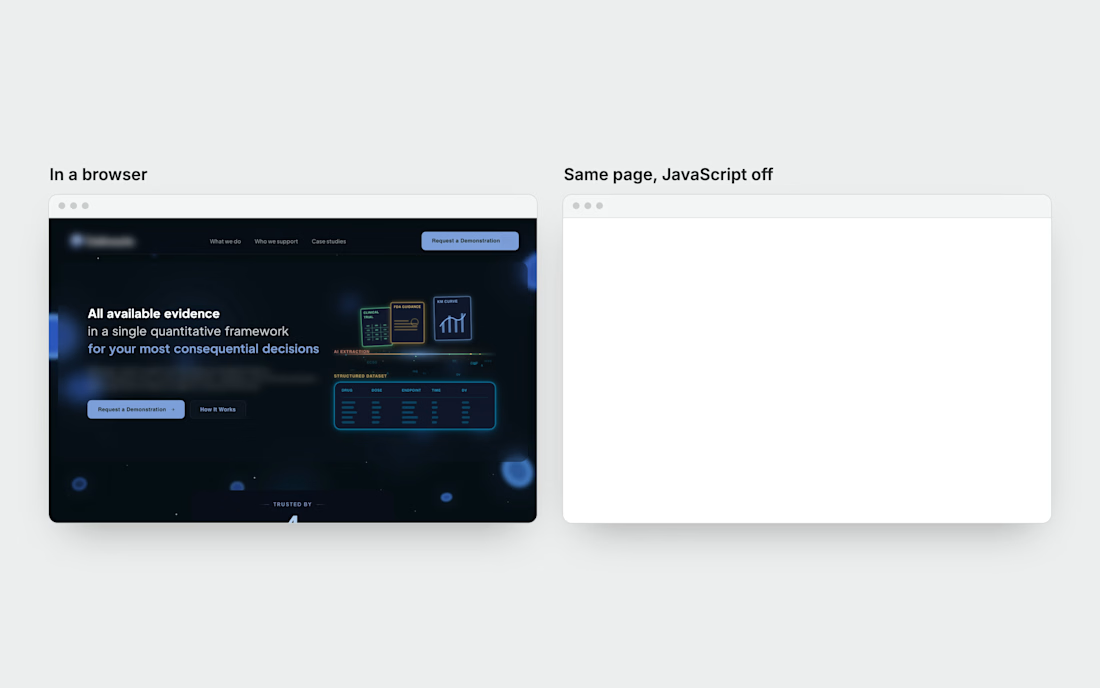
I found a B2B AI company whose homepage has about 1,500 words in a browser.
Turn JavaScript off, and the page is completely blank.
AI tools get the title and a one-line description. That's it.
It's built with a tool that can do this right. It just isn't set up that way.
And buyers are using it.
In one survey of 1,169 business buyers, nearly 3 in 10 said they now start with AI tools more often than Google.
Here's the fix 👇
#1 - Test it. Open your homepage, right-click, "View page source", and search for your headline. If it's not there, ChatGPT can't see it either.
#2 - If it's missing, rebuild the marketing pages so the words are in the page from the start.
#3 - Get other sites talking about you. Reviews, lists, Reddit, LinkedIn. AI answers lean on them a lot.
Bottom line: more blog posts won't help if ChatGPT can't read your homepage.
We build websites ChatGPT can actually read.
Reply with your link and I'll tell you what it sees.
The network for creativity
Join 1.25M professional creatives like you
Connect with clients, get discovered, and run your business 100% commission-free
Creatives on Contra have earned over $150M and we are just getting started






Related posts


This UI was really great nice job Piotr🔥🔥🔥

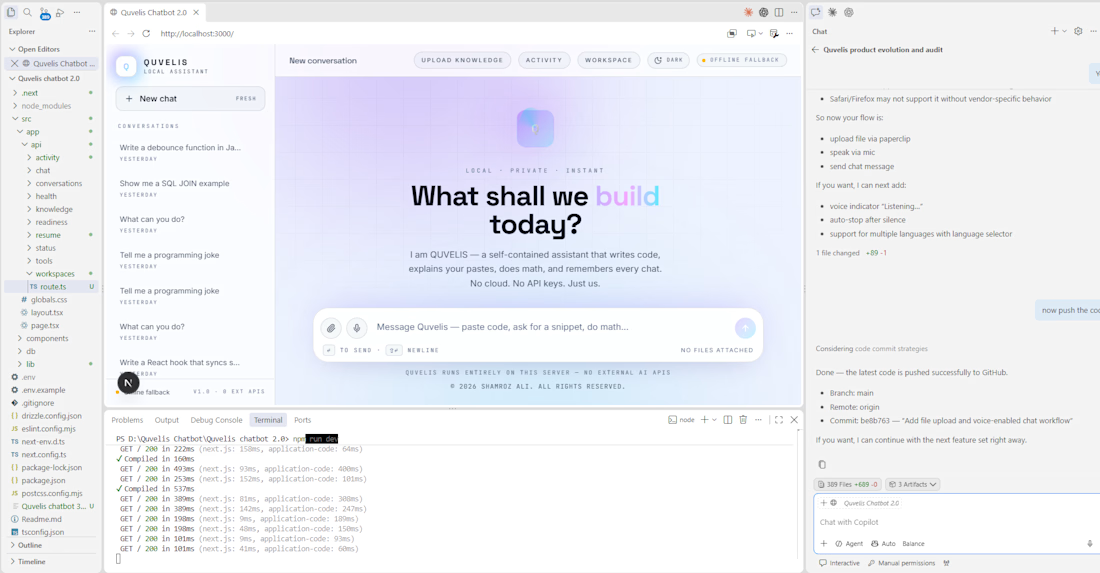
I Built Quvelis Chatbot 2.0 — An AI Assistant That Runs on Your Own Server. 🚀🤖
What if your AI assistant didn't depend on expensive cloud APIs, external AI subscriptions, or sending every conversation to a third-party service?
That's the idea behind QUVELIS — a self-hosted AI assistant designed for developers, students, and businesses.
Today, I'm sharing a look at Quvelis Chatbot 2.0, a project I'm building to make AI assistance more accessible, private, and customizable.
❌ The Problem with Many AI Applications
Businesses and developers often face:
Recurring API costs and unpredictable usage expenses.
Dependence on external AI providers.
Limited control over where their conversations are processed.
Disconnected tools for coding, document analysis, and knowledge management.
Difficulty customizing AI assistants for specific workflows.
Limited control over AI infrastructure and data.
My goal was to approach these problems differently.
⚡ Introducing Quvelis Chatbot 2.0
A modern, self-hosted AI assistant built with Next.js, featuring a ChatGPT-inspired interface and local-first architecture.
Here's what I've been building:
🧠 1. Local-First AI Assistance
Designed to operate on your own infrastructure without requiring external AI API keys.
💻 2. AI Coding Assistant
Ask programming questions, generate code snippets, understand technical concepts, and get help with development tasks.
📚 3. Knowledge Uploads
A dedicated knowledge interface for working with information and documents.
💬 4. Conversation History
Create new chats, revisit previous conversations, and organize your interactions.
🎙️ 5. Voice-Enabled Chat
Microphone input support for a more flexible way to interact with the assistant.
📎 6. File Attachments
An attachment interface for including files in your chat workflow.
🗂️ 7. Workspaces
Dedicated workspace functionality to support organized AI-assisted work.
🌙 8. Modern AI Chat Interface
A clean, responsive interface with dark-mode controls, activity access, and an integrated developer-friendly experience.
🔌 9. Local API Architecture
Built around a self-hosted approach, giving developers more control over how the application is deployed and extended.
🛠️ Built with Modern Web Technologies
The development stack includes:
Next.js and React
TypeScript
Tailwind CSS
Local API routes
Self-hosted application architecture
Git and GitHub for version control
💡 Why Am I Building Quvelis?
Because I believe AI tools should be more customizable and accessible.
Not every developer wants to depend on multiple external services.
Not every business wants to send sensitive information to third-party AI platforms.
And not every useful AI application needs to start with an expensive subscription.
Quvelis is my attempt to explore a different approach.
🚀 What's Next?
I'm continuing to develop Quvelis with a focus on stronger knowledge workflows, improved AI capabilities, reliable file handling, better voice interactions, and a smoother developer experience.
The long-term vision is to create a flexible AI platform that can support developers, businesses, and custom automation use cases.
This isn't just another chatbot interface. It's a foundation for a more customizable AI workspace.
💬 Two Questions for Developers & Business Owners
🔹 If you could run your own AI assistant, what feature would you want first?
🔹 Would you prefer a self-hosted AI assistant or a cloud-based solution for your business?
I'd love to hear your thoughts as I continue building Quvelis.
Building products. Solving problems. Exploring what AI can do.
🔎 SEO Keywords & Hashtags
#Quvelis #QuvelisChatbot #AIChatbot #AIChatbotDevelopment #AIAssistant #LocalAI #SelfHostedAI #PrivateAI #PrivacyFirstAI #OfflineAI #AIApplication #AIWebApp #AIPlatform #AIWorkspace #AIForDevelopers #CodingAssistant #AICoding #VibeCoding #AIEngineering #AIDevelopment #Nextjs #NextjsDevelopment #ReactJS #TypeScript #TailwindCSS #FullStackDevelopment #WebDevelopment #SaaSDevelopment #SaaSPlatform #ChatGPTAlternative #OpenSourceAI #LocalLLM #LLMDevelopment #GenerativeAI #MachineLearning #KnowledgeBase #DocumentAI #VoiceAI #ConversationalAI #AIProductDevelopment #AIStartup #BuildInPublic #IndieHacker #SoftwareEngineering #DeveloperTools #CustomAI #BusinessAI #DigitalTransformation #AutomationEngineer #AIInnovation #Contra



Self-hosting gives you control over where data lives, but uploads, temp files, logs and backups still define the privacy boundary. Are knowledge files kept on the same server as the model?


If you sell to enterprises, deals feel slow right now.
And the fix going around is "send more emails."
More cold emails. More ads. An AI that sends them for you.
But that's rarely the real problem.
The real problem: buyers decide before they talk to you.
One big survey of business buyers found most of them pick their shortlist before they speak to any salesperson.
And they almost always buy from that list.
Where do they make that list.
On your website. Before you even know they exist.
So more emails just send more people to the same page.
If the page doesn't work, you just get more people leaving.
Here's the fix 👇
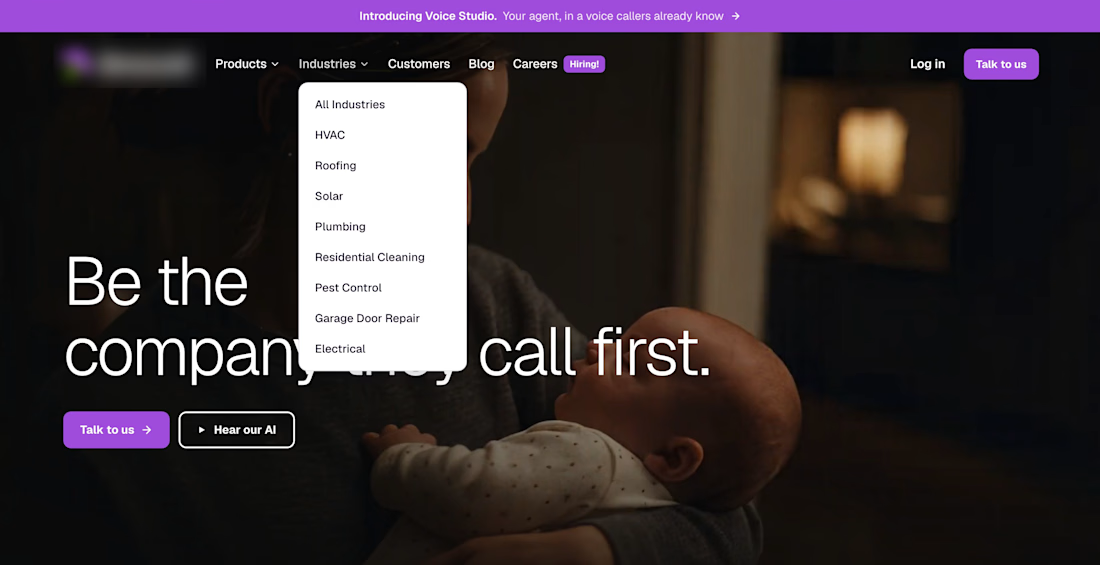
#1 - Make it clear who it's for. A stranger should get it in 5 seconds. One voice AI company lists 8 trades right in its menu. A roofer finds roofing in one click.
#2 - Show proof from a company like theirs. Their size, their industry, one real number.
#3 - If you handle their data, show how you keep it safe.
Bottom line: fix the page first. Then send more people to it.
This is the work we do.
We write and design the page your buyers land on. DMs open.