The network for creativity
Join 1.25M professional creatives like you
Connect with clients, get discovered, and run your business 100% commission-free
Creatives on Contra have earned over $150M and we are just getting started
Back to feedPost

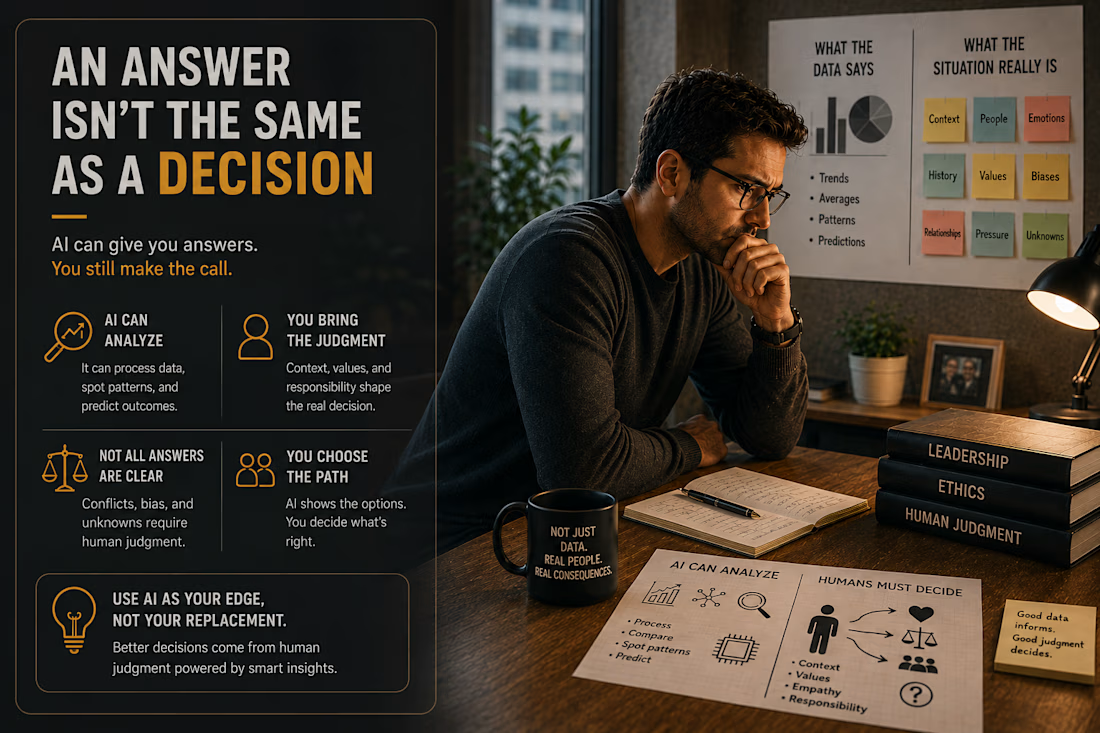
:An Answer Isn't the Same as a Decision 🤖🧠
AI can give you an answer in seconds.
It can process the data, compare options, spot patterns, and tell you what is most likely to happen.
⚠️ But here's the problem:
Knowing the answer doesn't always tell you what to do.
A manager can have all the performance data and still miss what's happening to the person behind the numbers.
A doctor can know exactly what the results say and still have to decide how to deliver difficult news to a family. ❤️
Then there are decisions where no answer is completely right. ⚖️
What if following the rules feels unfair?
What if loyalty conflicts with responsibility?
What if two choices make sense, but you can't predict what either one will cost? 🧩
AI can show you the possibilities.
Someone still has to choose. 🎯
And when that choice goes wrong, the algorithm doesn't carry the weight of it.
A person does.
That's why I think human judgment becomes more valuable—not less—as AI improves.
The advantage won't always be knowing how to find an answer.
It will be knowing:
What to trust.
What to question.
What's missing from the data.
And when the situation needs a human decision. 🧠
Because the hardest decisions aren't always about finding the right answer.
🤖 AI can do the research.
🧠 You still have to decide what's right.
The network for creativity
Join 1.25M professional creatives like you
Connect with clients, get discovered, and run your business 100% commission-free
Creatives on Contra have earned over $150M and we are just getting started
Related posts

What if you could reduce AI infrastructure costs by 82% without sacrificing performance? 🤔
Chinese open-source AI models are changing the economics of AI.
Would you trust open-source models over expensive commercial APIs?
Full breakdown: https://blog.webdevlab.org/chinese-open-source-ai-models-cut-ai-costs

Built image search for a furniture catalogue with 50,000+ products.
The problem with big catalogues: people know what they want but not what it's called. "That curved velvet chair with brass legs" doesn't match any product title.
So the customer uploads a photo, and the site finds the closest items in the catalogue.
Numbers after launch:
the right product shows up in 99% of searches
15.6% of all visits use the photo search
17,000+ searches so far
Then a second feature on the same base: AI try-on. The customer uploads a photo of their room and sees the piece in it before buying.
The model is the easy part. Clean catalogue data is where these projects live or die.

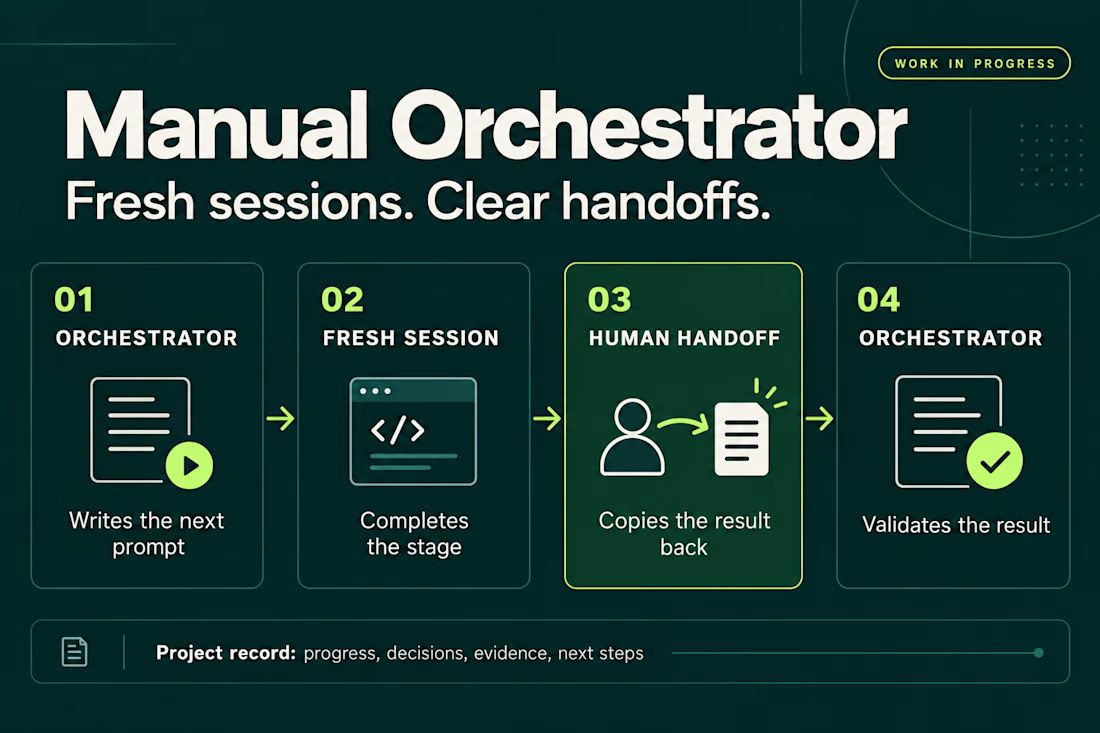
I’ve been working on a small skill called Manual Orchestrator to make longer projects with AI agents easier to manage.
The problem started with a familiar situation: one chat would accumulate plans, implementation details, corrections, and test results. By the time I was ready for the next phase, I wanted a fresh conversation without losing the decisions we’d already made.
Manual Orchestrator gives that process some structure. One chat acts as the orchestrator: it breaks the work into stages and writes a prompt for the next one. I run that prompt in a new session, then bring the result back. The orchestrator reviews it against the stage’s criteria before preparing the next prompt. If something needs fixing, I go back to the same worker session.
The skill also keeps a record in the project with the current stage, decisions, evidence, and next steps. That makes it easier to pause, resume, or hand the work to another session.
The handoff is manual. I choose when to open a session and carry the result back. The orchestrator and worker sessions can also use different agent CLIs, with the prompt adapted to the capabilities available.
It’s open source and still a work in progress. I’m using it to learn what helps in practice and where the workflow needs to improve. Installation has been checked for Codex, Claude Code, and Gemini CLI, but the full workflow hasn’t been tested across every CLI or version.
If you try it, I’d be interested in hearing what works and where it gets in your way.